The Communication Skills in Recovery: Expressing Needs Without Conflict

In the recovery journey, rebuilding relationships damaged by addiction requires more than sobriety alone. It demands intentional communication skills in recovery that foster understanding, respect, and connection. Many individuals enter rehab carrying years of miscommunication, broken trust, and unresolved conflict. Yet with the right tools, these same individuals can learn to express needs clearly and compassionately—without triggering arguments or resentment.
Master Communication Skills in Recovery – Call Now
At our programs, we emphasize that effective communication is not optional; it is foundational to lasting recovery and healthier relationships. This article explores how nonviolent communication empowers people in recovery to voice their needs, set boundaries, and restore bonds with loved ones, sponsors, and colleagues. You will discover practical strategies that have helped countless individuals transform conflict into collaboration.
The Impact of Addiction on Communication and Relationships
Addiction often erodes the very foundation of healthy interaction. During active use, conversations frequently become defensive, accusatory, or entirely avoided. Promises are broken, emotions are numbed, and loved ones learn to walk on eggshells. These patterns leave deep relational wounds that persist even after sobriety begins.
Rebuilding relationships after addiction starts with recognizing that past behaviors were symptoms of the disease—not reflections of your character. The good news is that communication skills in recovery can be learned and strengthened at any stage. When you master the ability to express needs without conflict, you reduce the risk of relapse triggered by unresolved family tension or isolation. You also create space for genuine intimacy and support—elements proven to sustain long-term sobriety.
Introducing Nonviolent Communication: A Powerful Framework for Recovery
Nonviolent communication (NVC), developed as a practical process for compassionate dialogue, offers a clear roadmap for expressing needs without blame or judgment. In rehab settings, we teach NVC because it directly addresses the communication breakdowns common in addiction recovery.
Unlike traditional communication that often escalates conflict, NVC shifts focus from “who is right” to “what is needed.” This approach helps individuals in recovery move from reactive patterns to responsive, relationship-nourishing exchanges. The result? Fewer arguments, stronger boundaries, and deeper trust.
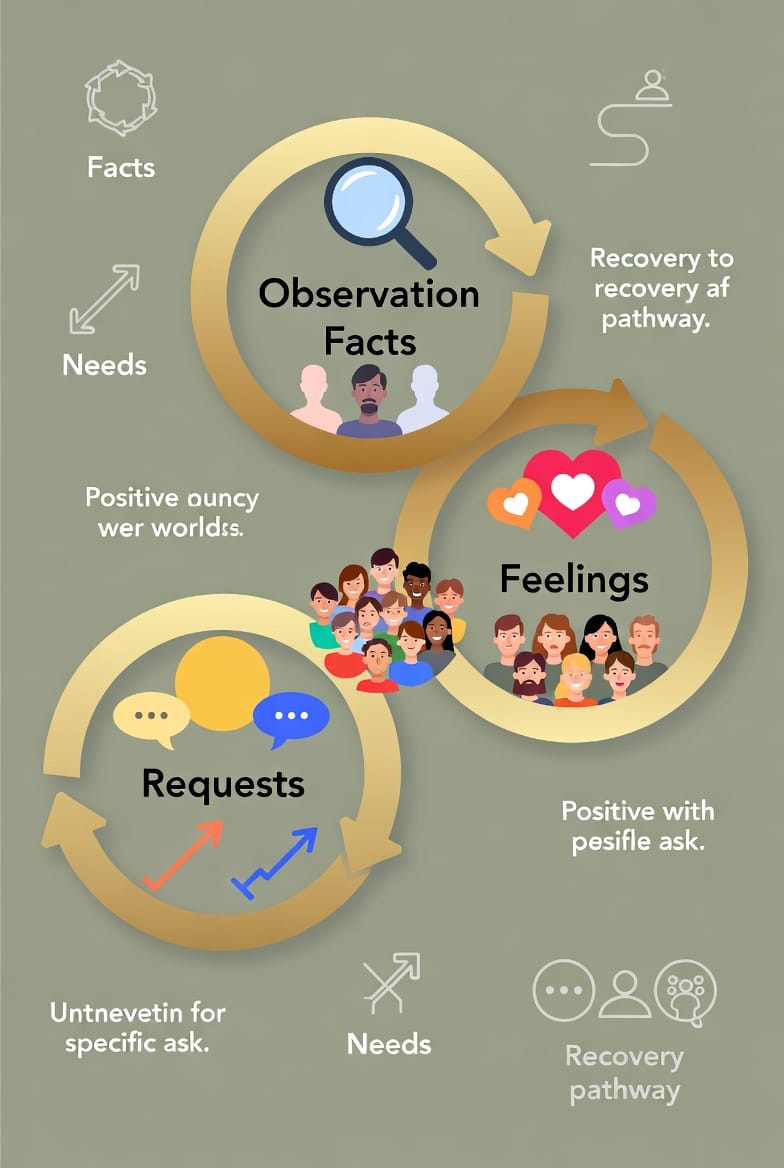
Breaking Down the Four Components of Nonviolent Communication
NVC rests on four simple yet transformative components. When practiced consistently, they become second nature and dramatically improve relationship skills in recovery.
1. Observations
Begin by stating what you actually see or hear—without evaluation or judgment. Instead of “You never help around the house,” try “I notice the dishes have been in the sink for two days.” This neutral starting point prevents defensiveness and keeps the conversation factual.
2. Feelings
Next, honestly name the emotion you experience. Recovery often involves reconnecting with feelings that were once suppressed by substances. Phrases like “I feel anxious” or “I feel lonely” create vulnerability that invites empathy rather than argument.
3. Needs
Identify the universal human need behind the feeling. Common needs in recovery include safety, respect, support, and connection. For example, “I feel anxious because I need reassurance that we are committed to this recovery plan together.”
4. Requests
Finally, make a clear, positive, actionable request—not a demand. “Would you be willing to check in with me each evening about our shared goals?” This invites cooperation rather than resistance.
By structuring conversations around these four steps, individuals in recovery learn to express needs without conflict. The process reduces shame and promotes mutual understanding—key elements for repairing relationships strained by addiction.
Expressing Needs Without Conflict: Real-Life Applications in Recovery
Consider a common scenario: a person in early recovery returning home after treatment. Family members may still carry resentment from past relapses. Using NVC, the individual might say:
“I observed that the family dinner started without me last night (observation). I felt hurt (feeling) because I need inclusion and support during this transition (need). Would you be willing to wait ten minutes for me next time? (request).”
This approach prevents escalation and opens the door for collaborative problem-solving. In group therapy sessions, we role-play these scenarios so participants gain confidence before facing real-life situations.
Another powerful application involves setting boundaries with sponsors or peers in recovery meetings. Instead of withdrawing silently when feeling overwhelmed, a clear NVC request maintains connection while protecting personal well-being.
Setting Healthy Boundaries with Compassion
Setting boundaries in recovery is an act of self-respect that also honors others. NVC makes boundary-setting feel safe rather than confrontational. You learn to express limits without blame, reducing the guilt that often accompanies boundary work in early sobriety.
For instance, when a loved one asks you to handle a stressful family obligation that risks your recovery, you can respond: “I see you need help with the event (observation). I feel overwhelmed (feeling) because I need to protect my sobriety routine (need). Would you be willing to find another family member to assist? (request).”
This compassionate boundary-setting preserves relationships while safeguarding your progress.
Advanced Communication Tools That Complement NVC
Beyond the four components, several proven techniques enhance communication skills in recovery.
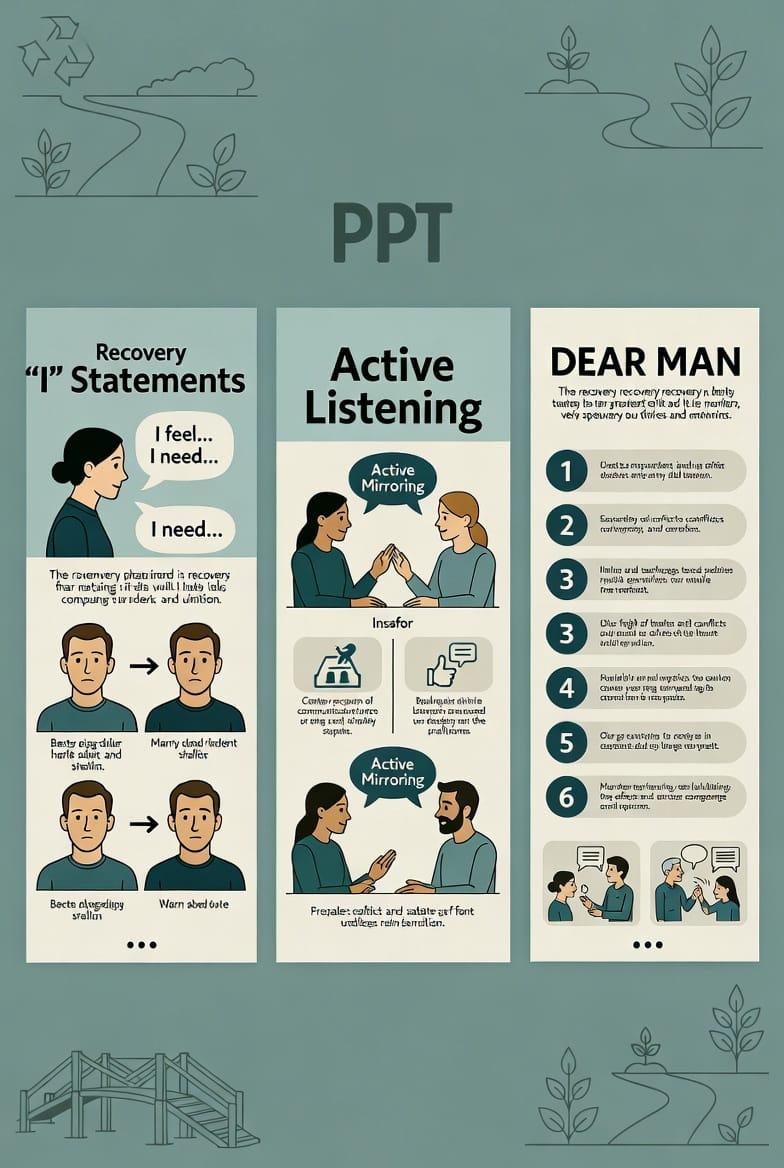
- “I” statements keep the focus on your experience rather than accusing others.
- Active listening involves fully concentrating, reflecting back what you hear, and asking clarifying questions—skills that rebuild trust rapidly.
- The DEAR MAN technique (from dialectical behavior therapy, widely used in rehab) provides a structured way to make requests effectively: Describe, Express, Assert, Reinforce, Mindful, Appear confident, Negotiate.
These tools work synergistically with NVC to create comprehensive relationship skills.
Overcoming Common Communication Challenges in Recovery
Many people in recovery initially struggle with NVC because old patterns of defensiveness or people-pleasing resurface. Practice in safe therapy environments helps overcome these hurdles. We encourage daily journaling of observations, feelings, needs, and requests to build fluency.
Another challenge is fear of vulnerability. Yet sharing feelings authentically is what repairs the very relationships addiction once damaged. With consistent support from counselors and peers, these fears diminish and confidence grows.
The Role of Therapy Programs in Developing These Skills
Structured therapy programs provide the ideal environment to practice and refine communication skills in recovery. Group sessions, individual counseling, and family therapy workshops allow real-time feedback and role-playing in a supportive setting. Participants leave with personalized strategies they can apply immediately upon returning home.
Success Stories: Lives Transformed Through Better Communication
One participant, after six weeks focusing on NVC, repaired a relationship with his adult daughter that had been severed for years. Another learned to express needs to her sponsor, preventing isolation during a high-risk period. These stories remind us that change is possible when communication becomes a tool for healing rather than harm.
Rebuild Relationships with Better Communication
Mastering these skills opens doors to deeper, more authentic connections—essential for a fulfilling sober life.
Rebuild Trust & Strengthen Relationships – Call Today