The Grain Weevil: Common Pest of Stored Grains and Corn
Grain weevils may seem like minor nuisances, but these tiny beetles can quietly compromise entire pantries and stored food supplies. As a field pest that readily moves indoors, the grain weevil poses a significant challenge for homeowners who value food safety and kitchen organization. Understanding their behavior, spotting early warning signs, and taking decisive action are essential steps to protect your home.
Protect Your Pantry from Grain Weevils – Call Now!
In this comprehensive guide, we explore everything you need to know about grain weevils — from their life cycle to effective, practical control strategies. Whether you’re dealing with an active infestation or want to prevent one, reliable solutions exist to restore peace to your pantry.
Understanding the Grain Weevil
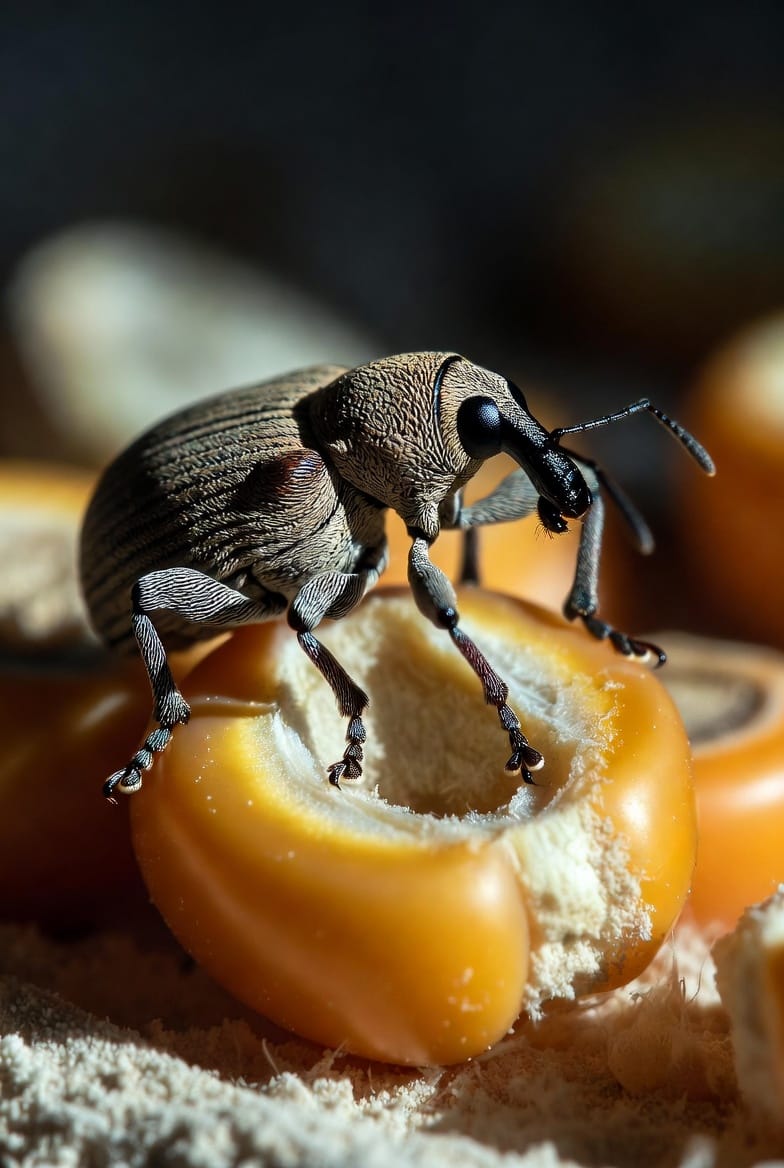
The grain weevil, scientifically known as Sitophilus granarius, is a small, reddish-brown to black beetle measuring about 3 to 5 millimeters in length. What makes this pest particularly effective is its specialized snout, which it uses to drill into whole grains.
Unlike many other pantry pests that feed on the surface, grain weevils prefer intact kernels. Females use their long snouts to bore precise holes into grains such as wheat, rice, corn, barley, and oats. They then deposit a single egg inside the kernel and seal the opening with a gelatinous secretion. This hidden strategy protects the developing larva from detection and external threats.
Once the egg hatches, the larva feeds voraciously on the starchy interior of the grain, hollowing it out from within. After pupating, the adult weevil chews its way out, leaving behind a characteristic exit hole and a small pile of powdery residue known as frass. This internal development cycle allows infestations to build unnoticed until significant damage has occurred.
Grain weevils are highly adaptable and thrive in warm, humid environments typical of many kitchens and storage areas. A single female can lay up to 300 eggs during her lifespan, meaning a small unnoticed problem can rapidly escalate into a widespread infestation.
How Grain Weevils Invade Homes
Although grain weevils originate in agricultural fields and storage facilities, they frequently hitchhike into homes through purchased pantry staples. Bulk purchases of whole grains, birdseed, popcorn, dried beans, and even decorative corn arrangements can introduce these pests.
Common entry points include:
- Grocery store packaging that already contains eggs or larvae
- Bulk bins at health food stores or co-ops
- Bird feeders and pet food stored near the house
- Improperly sealed containers brought home from warehouses
Once inside, weevils seek out dark, undisturbed storage areas. They can survive for several months under the right conditions, patiently waiting for the opportunity to reproduce.
Recognizing the Signs of a Grain Weevil Infestation
Early detection is key to limiting damage. Look for these telltale indicators:
- Small circular holes in individual grains or kernels
- Fine, dust-like powder (frass) accumulating at the bottom of packages or shelves
- Clumped or sticky grains caused by larval activity
- Adult weevils crawling on pantry surfaces, especially near windows or light sources
- Musty or unusual odors emanating from stored food containers
Because larvae develop entirely inside kernels, visual inspection of whole grains is crucial. Shake packages gently and examine contents under bright light. Infested items often feel lighter than expected because the interior has been consumed.
Pro Tip: Place suspect packages in a clear plastic bag and monitor them for a few days. Any emerging adults will be easy to spot against the transparent surface.
The Risks and Hidden Costs of Ignoring Grain Weevils
Beyond the obvious loss of food, grain weevil infestations carry several important risks:
- Food contamination — Frass and cast-off skins can trigger allergic reactions in sensitive individuals.
- Secondary pest attraction — Weevil activity often draws other pantry pests such as flour beetles and moths.
- Financial waste — Repeatedly discarding expensive bulk grains and specialty items adds up quickly.
- Reputation concerns — For families who entertain or bake regularly, discovering weevils in front of guests can be embarrassing.
The reassuring news is that grain weevils do not bite humans, spread diseases, or damage structural elements of your home. Their impact remains limited to stored food products — making targeted control both effective and straightforward.
Effective Control Strategies for Grain Weevils
Successful management combines immediate action with long-term prevention. Here’s a proven step-by-step approach:
1. Inspection and Disposal
Thoroughly examine every package of whole grains, corn products, birdseed, pasta, and cereals. Discard any infested items immediately by sealing them in plastic bags and removing them from your property. Do not attempt to salvage heavily infested materials.
2. Freezing Treatment
For items you wish to save but suspect may contain eggs:
- Place packages in a deep freezer at 0°F (-18°C) or below for at least four days.
- This extreme cold kills eggs, larvae, and adults at all life stages.
- Allow packages to return to room temperature before opening to prevent condensation.
3. Deep Cleaning
After removal of infested goods:
- Empty all pantry shelves completely.
- Vacuum cracks, crevices, and shelf edges thoroughly.
- Wash surfaces with hot soapy water or a vinegar solution.
- Pay special attention to corners and areas behind appliances.
4. Proper Storage Solutions
Prevention starts with smart storage:
- Transfer all susceptible items into airtight glass, metal, or heavy-duty plastic containers with secure lids.
- Use clear containers so you can easily monitor contents.
- Label everything with purchase dates to practice first-in, first-out rotation.
- Consider smaller batch purchases until you’re confident the infestation is resolved.
5. Natural Deterrents
Many homeowners find success with:
- Bay leaves placed in storage containers (natural repellent)
- Diatomaceous earth (food-grade) sprinkled in pantry corners
- Regular rotation and inspection of stored goods
Important note: Chemical treatments inside food storage areas should be approached with caution. Always prioritize mechanical and temperature-based methods for safety around food.
The Grain Weevil Life Cycle: Knowledge Is Power
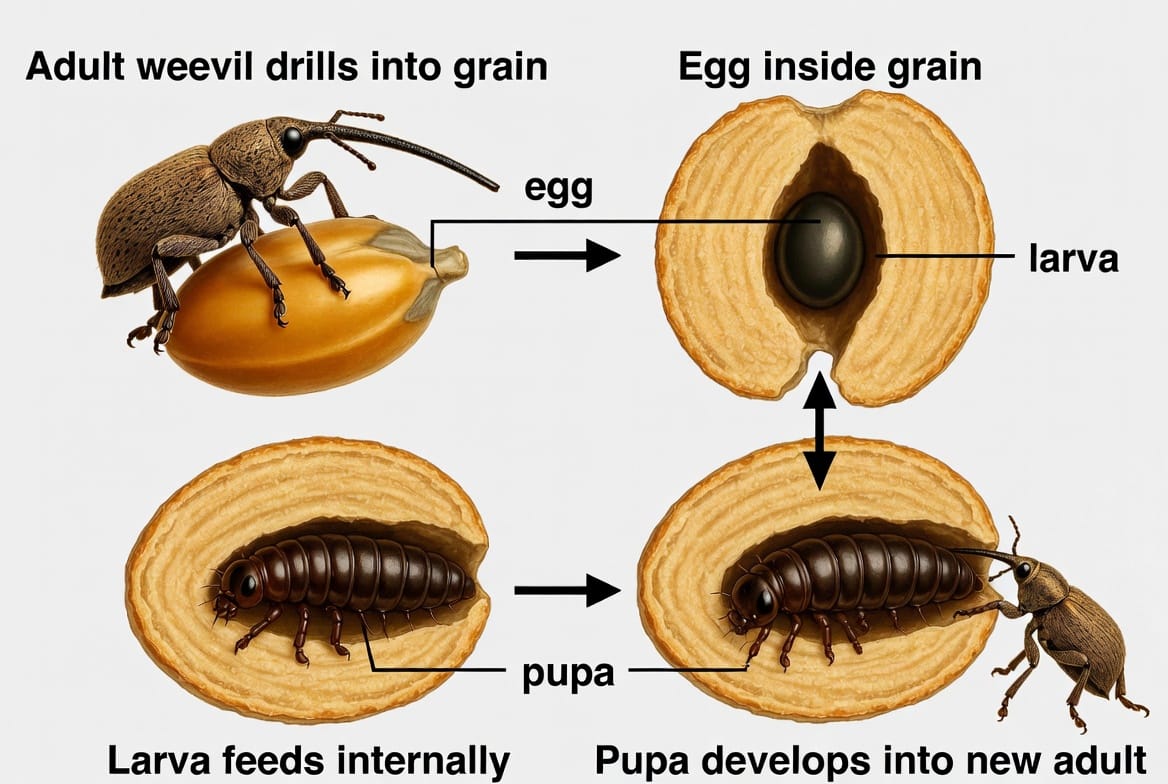
Understanding the approximately 30- to 40-day life cycle (temperature dependent) helps you time your control efforts effectively. Because all early stages occur inside kernels, freezing or discarding remains the most reliable method for breaking the cycle.
Vulnerable Items That Require Special Attention

Pay extra attention to these high-risk products:
- Whole wheat berries and other unmilled grains
- Dried corn and popcorn
- Birdseed and wildlife feed
- Organic or artisanal rice and barley
- Nuts and seeds stored in bulk
- Decorative Indian corn or dried floral arrangements
When to Call Professional Pantry Pest Control
While many mild infestations can be handled through diligent home efforts, persistent or widespread problems benefit from professional intervention. Trained technicians can identify hidden harborages, apply targeted treatments safely, and provide customized prevention plans tailored to your home and storage habits.
Professional services also offer peace of mind through follow-up inspections and ongoing monitoring — ensuring your pantry remains protected long-term.
Whole grains can hide weevils. Don’t let these silent invaders compromise your food safety and kitchen confidence. Our experienced team delivers fast, effective, and discreet solutions so you can enjoy a pest-free home with complete confidence.
Long-Term Prevention: Building Weevil-Resistant Habits
Maintaining a grain weevil-free pantry requires consistent habits:
- Buy smaller quantities more frequently rather than large bulk stores.
- Inspect new purchases at the store when possible and immediately upon returning home.
- Store grains in the refrigerator or freezer during warmer months.
- Maintain cool, dry conditions in your pantry — use dehumidifiers if necessary.
- Keep floors and shelves immaculately clean to eliminate spilled grains that attract pests.
- Consider pantry organization systems with clear bins and labels for better visibility.
By implementing these strategies, you create an environment that is naturally inhospitable to grain weevils and other pantry pests.
The Bottom Line: Take Control of Your Pantry Today
Grain weevils represent a manageable challenge when met with knowledge and prompt action. Their preference for whole grains and internal development makes them sneaky, but their dependence on specific food sources also makes them vulnerable to targeted control methods like thorough inspection, freezing, and proper storage.
Remember: A clean, well-organized pantry isn’t just more pleasant — it’s your first and best line of defense against stored product pests. By staying vigilant and addressing issues early, you protect your family’s food supply and maintain the peace of mind that comes with a truly pest-free home.
Don’t wait for a small problem to become overwhelming. Whole grains can hide weevils. For reliable, professional pantry pest control services. Our experts are ready to help you reclaim your pantry and enjoy worry-free storage of all your favorite grains and pantry staples.
Grain Weevil Control Experts – Call Today for Help!