The Foreign Grain Beetle: Pest of Moist, Moldy Grain

Foreign grain beetles can quickly turn a well-stocked pantry into a source of frustration and potential food waste. These small but persistent pests thrive in specific conditions, making moisture control the cornerstone of effective management. In this comprehensive guide, we explore everything homeowners need to know about this pantry pest, from identification to proven control strategies that restore peace and safety to your kitchen.
Get Rid of Foreign Grain Beetles Fast – Call Now!
Whether you're noticing tiny beetles in your cereal or want to safeguard your home against future invasions, understanding their preferences for damp, moldy environments empowers you to act decisively. Professional pantry pest control offers reliable solutions when DIY efforts fall short.
Understanding the Foreign Grain Beetle
The foreign grain beetle, a member of the silvanid family, is a common but often overlooked invader in households across various climates. Unlike some more aggressive pantry pests, this species specifically targets areas where mold and high humidity create ideal feeding grounds.
These beetles do not primarily consume dry, intact grains like some other species. Instead, they feed on the fungi and mold that develop on moist or improperly stored food products. This behavior makes them a clear indicator of underlying moisture problems in your storage areas.
Homeowners often discover them when opening packages of flour, cereal, or pet food that have been exposed to even slight dampness. Their presence signals that conditions in the pantry have become favorable for mold growth, which in turn supports beetle populations.
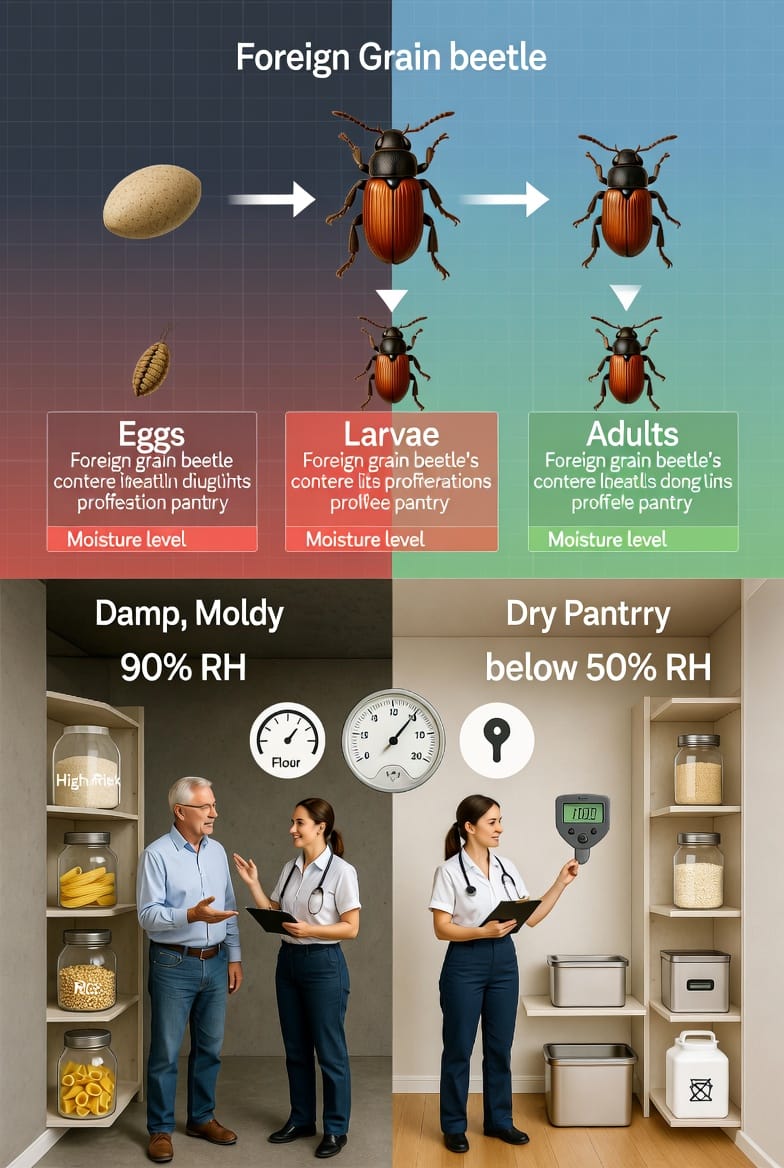
Key Fact: Foreign grain beetles are particularly active in environments with relative humidity above 60-70%, where mold readily forms on organic materials.
By addressing the root cause – excess moisture – you not only eliminate the current infestation but also prevent recurring issues that could affect food safety and home comfort.
Identifying Foreign Grain Beetle Infestations
Accurate identification is the first step toward successful control. Foreign grain beetles are small, measuring approximately 1/10 to 1/8 inch in length. They appear reddish-brown to dark brown, with a distinctly flat, elongated body shape that allows them to slip into tight crevices.
Their antennae are relatively long and clubbed at the ends, a feature that helps distinguish them from similar-looking beetles. Under close inspection, you might notice their smooth, shiny wing covers.
Common Signs to Watch For:
- Tiny beetles crawling on pantry shelves, walls, or near food packages.
- Small clusters around areas with visible moisture or condensation.
- Fine dust or frass (insect waste) near affected food items.
- Moldy odors emanating from stored grains, flour, or cereals.
Because they are attracted to mold rather than the food itself, infestations often go unnoticed until populations grow. Early detection through regular pantry checks can save significant time and resources.
Pro Tip: Use a bright flashlight and magnifying glass during inspections to spot these tiny pests hiding in seams or under shelf liners.
The Critical Role of Moisture and Mold
Foreign grain beetles have a unique dependency on high-humidity environments. They require moist conditions not just for survival but for reproduction as well. Without adequate moisture, their eggs and larvae struggle to develop, leading to natural population decline.
This pest does not bore into whole grains like weevils. Instead, it feeds opportunistically on the mold that flourishes when humidity levels rise due to leaks, poor ventilation, or improper food storage.
Why Moisture Reduction is Essential:
- Reduces breeding sites by eliminating mold growth.
- Dries out existing infestations, making survival difficult for all life stages.
- Protects your entire pantry from secondary issues like bacterial growth or structural damage.
In regions with seasonal humidity fluctuations, such as during rainy periods or in poorly insulated homes, vigilance is key. Simple actions like using dehumidifiers and ensuring proper airflow can dramatically lower risk.
Vulnerable Items and High-Risk Storage Areas
Certain household staples are particularly susceptible to attracting these beetles due to their tendency to absorb ambient moisture.
High-Risk Items Include:
- Flour and baking mixes that clump when exposed to humidity.
- Cereals and breakfast grains stored in original cardboard packaging.
- Pet food and birdseed, often kept in large bags that retain moisture.
- Dried fruits, nuts, and spices that can develop surface mold.
- Bulk grains, rice, and pasta in non-airtight containers.
Pantries, kitchen cabinets, and even garage storage areas with fluctuating temperatures are prime locations. Storing items on the floor or against exterior walls increases vulnerability to condensation.
Taking proactive steps to reorganize and upgrade storage solutions pays dividends in long-term protection.
Signs of a Developing Problem and Associated Risks
Beyond visible beetles, other indicators include subtle changes in food texture or unexpected musty smells. Larvae are even smaller and harder to spot, often feeding deep within packages.
Potential Risks of Ignoring Infestations:
- Food contamination leading to waste and higher grocery costs.
- Allergen concerns from mold and insect debris.
- Spreading to other areas of the home if conditions persist.
- Damage to stored goods, affecting meal planning and family nutrition.
While foreign grain beetles do not bite or transmit diseases directly, their presence disrupts household routines and can indicate broader issues like plumbing leaks or ventilation deficiencies. Acting promptly restores confidence in your kitchen's cleanliness and safety.
Reassuring Note: Most infestations are manageable with targeted moisture control and professional support when needed.

Effective Control Strategies for Homeowners
Successful management begins with discarding infested materials. Seal affected items in plastic bags and remove them from the home immediately to prevent spread.
Next, focus on thorough cleaning:
- Vacuum all shelves, cracks, and crevices.
- Wash surfaces with mild soap and water, followed by a vinegar solution for natural mold inhibition.
- Dry everything completely before restocking.
Moisture-Reduction Techniques:
- Install dehumidifiers or use moisture-absorbing products in pantries.
- Ensure good ventilation by avoiding overcrowding shelves.
- Transfer foods into airtight glass or plastic containers.
- Check for and repair any sources of water intrusion nearby.
Regular monitoring with sticky traps can help track remaining activity. These non-chemical tools provide valuable insights without introducing unnecessary substances into food storage areas.
For persistent issues, integrated pest management combines these steps with professional evaluation to address hidden moisture sources effectively.
When to Call Professional Pantry Pest Control
DIY methods work well for minor cases, but larger or recurring infestations benefit from expert intervention. Trained technicians can identify hidden entry points, assess structural moisture problems, and apply targeted treatments safely.
Benefits of Professional Service:
- Comprehensive inspection using specialized tools.
- Customized treatment plans focused on long-term prevention.
- Expert advice on storage upgrades and home maintenance.
- Peace of mind knowing the job is done thoroughly.
Moisture attracts these beetles. If you're dealing with foreign grain beetles or suspect a pantry pest issue, don't hesitate to seek reliable help. Our experienced team delivers fast, effective solutions tailored to your home, ensuring your pantry stays protected.
Long-Term Prevention for a Beetle-Free Pantry
Prevention is always more efficient than treatment. Adopt these habits to maintain a pest-resistant environment:
- Rotate stock regularly, using older items first.
- Store properly in sealed containers elevated off the floor.
- Monitor humidity with affordable gauges.
- Inspect deliveries of bulk foods immediately.
- Maintain cleanliness with scheduled deep cleans.
By prioritizing dry conditions and proper storage, you create an inhospitable environment for foreign grain beetles and similar pests. This proactive approach not only safeguards your food but also contributes to overall home health.
Many families report significant improvements after implementing these strategies, enjoying worry-free access to their pantry staples.
Additional Insights on Pantry Pest Management
Expanding your knowledge about related pests can enhance overall vigilance. For instance, understanding how temperature fluctuations interact with humidity helps in choosing optimal storage locations.
Seasonal changes often bring increased risks, particularly after humid weather or during holiday baking periods when more goods are stored.
Advanced Tips:
- Consider silica gel packets in containers for extra moisture absorption.
- Use bay leaves or other natural repellents as supplementary measures (though not substitutes for cleanliness).
- Schedule annual professional pantry inspections for high-risk homes.
Educating family members on proper storage practices ensures everyone contributes to a pest-free household.
The foreign grain beetle serves as an excellent "canary in the coal mine" for moisture issues. Addressing it promptly often resolves other subtle problems before they escalate.
With the right combination of awareness, maintenance, and occasional professional support, you can maintain a clean, safe, and efficient pantry year-round.
Remember, moisture control remains your most powerful tool. By keeping humidity in check and responding quickly to early signs, you protect your investment in groceries and your family's well-being.
For expert assistance with any pantry pest concerns, including foreign grain beetles, reach out to trusted professionals who specialize in these issues.
Your pantry deserves the best protection – take action today for lasting results.
Protect Your Kitchen from Pantry Pests – Call Today!