The Earwig Infestation: Why They Invade and How to Control Them
Earwigs are among the most misunderstood household pests. Their pincer-like forceps and sudden nighttime appearances startle many homeowners, yet these insects are far more of a nuisance than a genuine threat. Understanding why they invade and how to control them allows you to protect your home with confidence rather than alarm. This guide explains earwig behavior, the conditions that invite them inside, the clearest signs of an infestation, and the practical steps—moisture reduction, sealing, and perimeter treatment—that restore comfort and peace of mind.
Call Now for Fast, Professional Earwig Control
Understanding Earwig Behavior
Earwigs are nocturnal. During daylight hours they hide in dark, moist crevices; after dusk they emerge to forage. Their preference for moisture is the single most important factor driving their movement toward human structures. They do not seek out people or food in the same way cockroaches or ants do. Instead they follow humidity gradients, moving from dry outdoor soil into the cooler, damper microclimates found around foundations, basements, bathrooms, and mulched garden beds.
The forceps at the end of an earwig’s abdomen look intimidating, yet they function primarily as defensive tools and mating structures. An earwig may pinch if handled roughly, but the pinch is rarely strong enough to break skin and carries no venom. In short, earwigs are harmless to people and pets even while they remain undeniably creepy when they appear on a bathroom floor at midnight.
Because they are scavengers, earwigs feed on decaying plant matter, fungi, and occasionally smaller insects. This diet explains why they congregate in leaf litter, under flower pots, and along the damp edges of lawns. When outdoor conditions become too dry or too crowded, the nearest source of consistent moisture—your home—becomes the logical next stop.
Why Earwigs Invade Homes
An earwig infestation almost always begins with an environmental invitation rather than a sudden population explosion. Prolonged rain followed by warm nights, over-irrigated landscaping, leaking downspouts, and poorly ventilated crawl spaces all create the humid conditions earwigs require. Once a few individuals locate a reliable damp harborage, others follow the same chemical and moisture cues.
Common outdoor harborage sites include:
- Thick layers of mulch or wood chips piled against the foundation
- Stacks of firewood or lumber stored directly on the ground
- Dense ground-cover plants that stay wet after watering
- Clogged gutters that overflow onto siding
From these locations earwigs exploit the smallest openings: gaps around utility penetrations, cracks in mortar, spaces under door thresholds, and unsealed vents. A single unsealed crack the width of a credit card is sufficient. Once inside, they gravitate toward bathrooms, laundry rooms, basements, and any area where condensation or minor leaks persist.
The invasion is therefore predictable. Homes that maintain high indoor humidity or allow water to pool near the foundation experience far more earwig activity than well-drained, tightly sealed properties. Recognizing this pattern lets homeowners address the root cause instead of merely reacting to individual sightings.
Signs of an Earwig Infestation
The most obvious sign is the insects themselves. Because earwigs are nocturnal, daytime sightings usually indicate a larger hidden population. Look for them in:
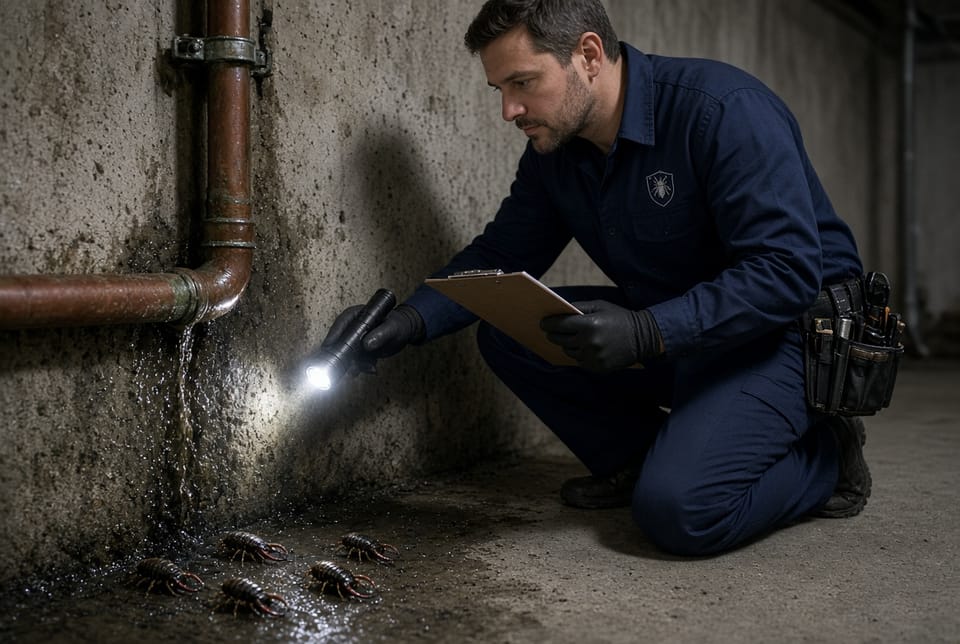
- Damp corners of basements and crawl spaces
- Under sinks, around washing machines, and behind toilets
- Along baseboards in bathrooms and kitchens after dark
- Inside potted plants that have been overwatered
Additional indicators include:
- Small, dark fecal specks in moist hiding spots
- Shed skins left behind after molting
- Clusters of earwigs under boards, mats, or stored items that have been sitting on concrete
A sudden increase in sightings after a stretch of wet weather is classic. If you notice more than an occasional individual, the conditions inside or immediately around the structure are supporting a resident population.

Moisture Reduction: The First and Most Effective Control Step
Because moisture is the primary attractant, lowering humidity both indoors and immediately outdoors produces the fastest, longest-lasting results. Begin with these targeted actions:
- Repair leaking faucets, pipes, and appliance connections promptly.
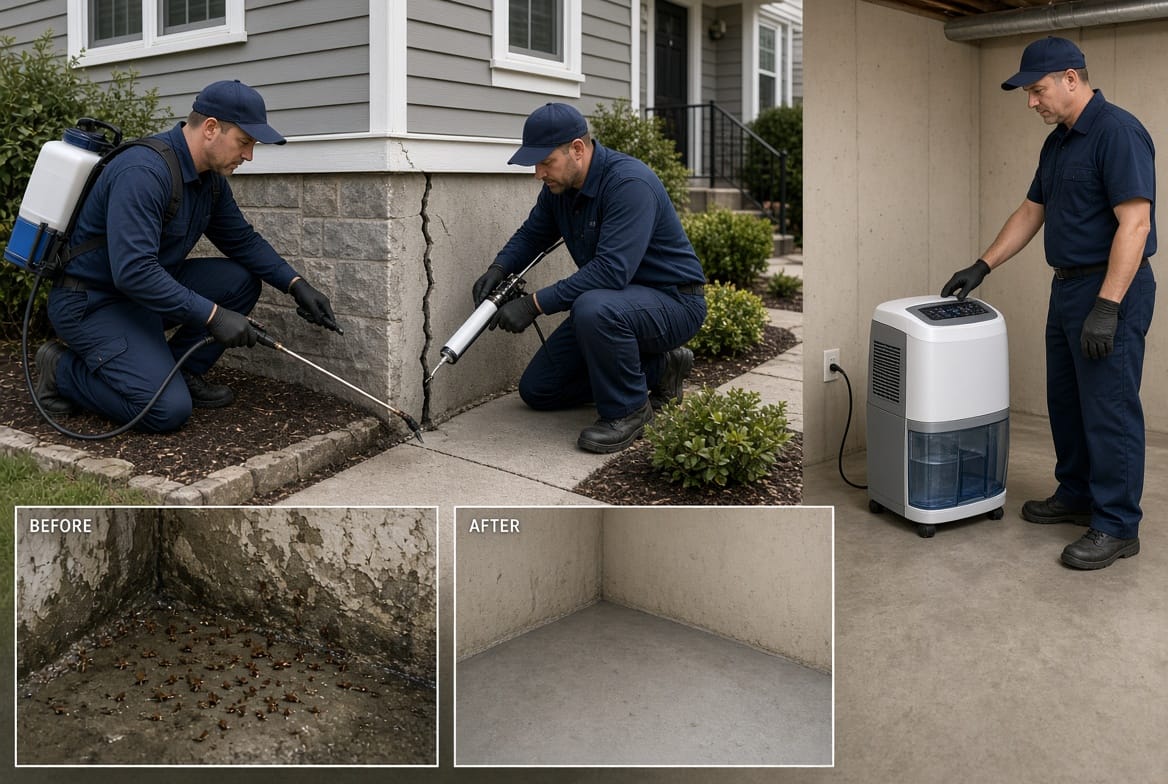
- Run a dehumidifier in basements and crawl spaces until relative humidity stays below 50 percent.
- Improve ventilation in bathrooms and laundry rooms with exhaust fans that vent outdoors.
- Grade soil away from the foundation so water drains rather than pools.
- Keep gutters clean and extend downspouts at least four to six feet from the house.
- Replace heavy mulch against the foundation with a six-to-twelve-inch gravel or stone barrier.
These measures do more than discourage earwigs; they also reduce conditions favorable to other moisture-loving pests and help protect building materials from rot. Consistency matters. A single wet weekend can re-attract earwigs if drainage and indoor humidity have not been permanently corrected.
Sealing Cracks and Gaps
Physical exclusion complements moisture control. Walk the exterior of the home and seal every opening larger than 1/16 inch. Pay special attention to:
- Cracks in the foundation and mortar joints
- Gaps around pipes, cables, and air-conditioning lines
- Spaces under garage doors and entry-door thresholds
- Damaged window and door weather-stripping
- Unscreened vents and utility openings
Use silicone or polyurethane caulk for small cracks and expanding foam or metal flashing for larger gaps. Install door sweeps and repair torn screens. These steps not only keep earwigs out but also improve energy efficiency and block other crawling insects.
Indoors, reduce clutter in damp areas. Cardboard boxes, stacks of newspapers, and unused items stored on basement floors create additional harborage. Elevating stored goods on shelves and keeping floors clear makes inspection and cleaning far easier.
Perimeter Treatment and Integrated Control
When moisture reduction and sealing have been completed, a targeted perimeter treatment provides an extra layer of protection. Professional-grade products applied in a band around the foundation and along likely travel routes interrupt the movement of earwigs from outdoor harborage into the structure. Timing the application after rain, when earwigs are most active, increases effectiveness.
Homeowners can support the treatment by:
- Removing leaf litter and debris within two feet of the foundation
- Trimming vegetation so it does not touch siding
- Storing firewood at least twenty feet from the house and off the ground
- Avoiding overwatering of foundation plantings
An integrated approach—moisture management plus exclusion plus perimeter treatment—addresses every stage of the earwig life cycle and travel path. Isolated spraying without the other two components rarely produces lasting results.
When Professional Pest Control Makes the Difference
Many earwig problems resolve once moisture and entry points are corrected. Persistent or heavy infestations, however, benefit from professional assessment. Trained technicians identify hidden harborage that homeowners often miss—voids inside walls, poorly ventilated crawl spaces, or irrigation systems that keep soil perpetually wet. They also apply treatments in a manner that maximizes residual effect while remaining sensitive to children, pets, and beneficial outdoor insects.
A thorough service typically includes:
- Inspection of interior damp zones and exterior harborage
- Recommendations for structural and landscaping corrections
- Targeted application of appropriate materials along the foundation and key indoor areas
- Follow-up visits to confirm that activity has declined
Choosing a reputable provider ensures that control methods are both effective and responsible. The goal is not merely to kill visible earwigs but to remove the conditions that allow them to thrive.
Long-Term Prevention and Peace of Mind
Once an infestation has been brought under control, maintenance is straightforward. Continue monitoring indoor humidity, keep the foundation area clear of organic debris, and inspect seals after severe weather. Seasonal checks in spring and fall catch small problems before they become noticeable infestations.
Earwigs will always exist in the outdoor environment. The objective is not eradication of a species that plays a minor ecological role, but exclusion from living spaces. Homes that stay dry, tightly sealed, and free of unnecessary harborage simply do not support indoor earwig populations.
The presence of an occasional earwig after a heavy rain is normal and does not signal failure. Consistent application of the three core principles—reduce moisture, seal cracks, apply perimeter treatment when needed—keeps numbers so low that most residents never notice them.
Taking Action Today
Earwig infestations are solvable. They respond reliably to changes in habitat and to well-executed exclusion and treatment. You do not need to live with the unsettling sight of pincer-bearing insects on your bathroom floor or basement walls. By addressing the moisture that draws them in, closing the gaps they use to enter, and applying professional-grade perimeter protection, you restore a clean, comfortable home.
Control earwigs around your home. A prompt inspection identifies the specific conditions inviting earwigs onto your property and outlines a clear, effective plan. Relief is closer than you think, and the steps outlined here give you both immediate tactics and lasting confidence.
Call Today for Expert Earwig Inspection and Treatment