The Silverfish vs. Firebrat: How to Tell Them Apart
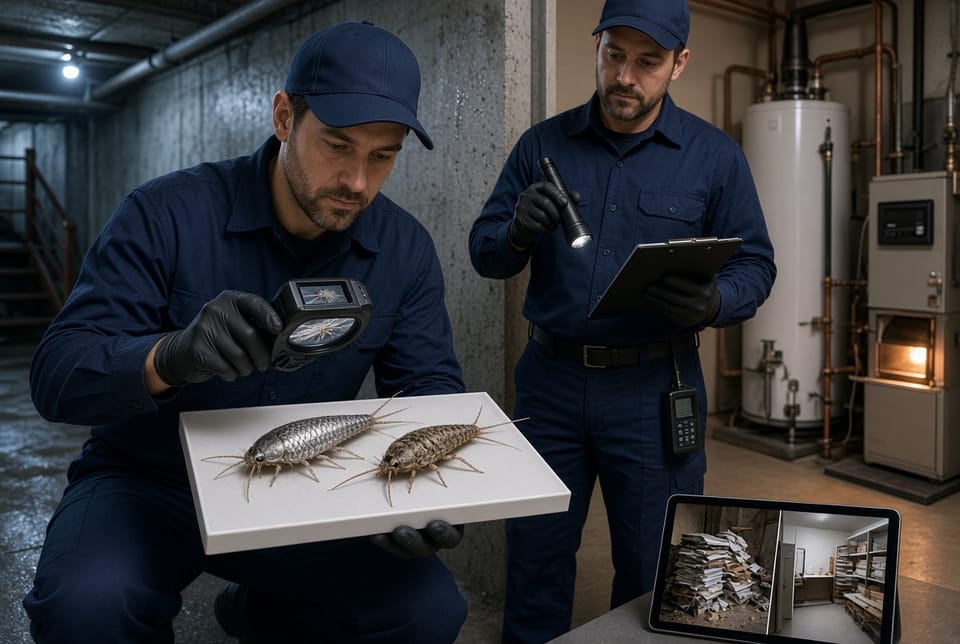
Homeowners frequently notice small, quick, wingless insects scurrying across bathroom floors, basement walls, or areas near heating equipment. These sightings often lead to the same question: is it a silverfish or a firebrat? The two pests look remarkably similar at first glance, which creates widespread identification confusion. Both have elongated, carrot-shaped bodies, long antennae, and three tail-like appendages. Yet they thrive in distinctly different conditions and therefore require different treatment approaches.
Stop Silverfish and Firebrat Damage Today
Silverfish prefer cool, damp areas. Firebrats prefer hot, humid areas. Mistaking one for the other can result in incomplete control because the pests occupy different zones of the home. Accurate identification protects books, wallpaper, clothing, stored papers, and food packaging from ongoing damage while allowing targeted, efficient solutions. This guide explains every practical difference so you can recognize what you are dealing with and take the right next step.
Why Accurate Identification Matters
Misidentification is common because both insects hide during the day and move rapidly when disturbed. A homeowner who treats only the bathroom for what they believe are silverfish may leave a firebrat population untouched near the furnace or water heater. Conversely, focusing only on hot zones can allow silverfish to continue damaging items in cooler, moist rooms.
Correct identification delivers three immediate benefits:
- Treatments can be applied in the precise locations each pest actually uses.
- Moisture and temperature corrections can be tailored to the right rooms.
- Follow-up monitoring becomes more effective because you know where to look.
Professional inspection removes guesswork. Technicians examine actual specimens, note environmental conditions, and design a plan that addresses the specific insect present.
Shared Physical Traits That Cause Confusion
Both insects belong to the same primitive group of wingless household pests. Adults typically measure 12 to 19 millimeters in length. Their bodies taper from a broader thorax to a narrower abdomen, creating the classic carrot or teardrop outline. Three long, bristle-like appendages extend from the rear, and a pair of long antennae projects forward.
Additional shared features include:
- Nocturnal activity and a strong preference for darkness
- Fast, wriggling movement when lights are turned on
- A covering of tiny scales that can rub off on surfaces
- A diet that includes starches, sugars, glue, paper, fabric sizing, and dried foods
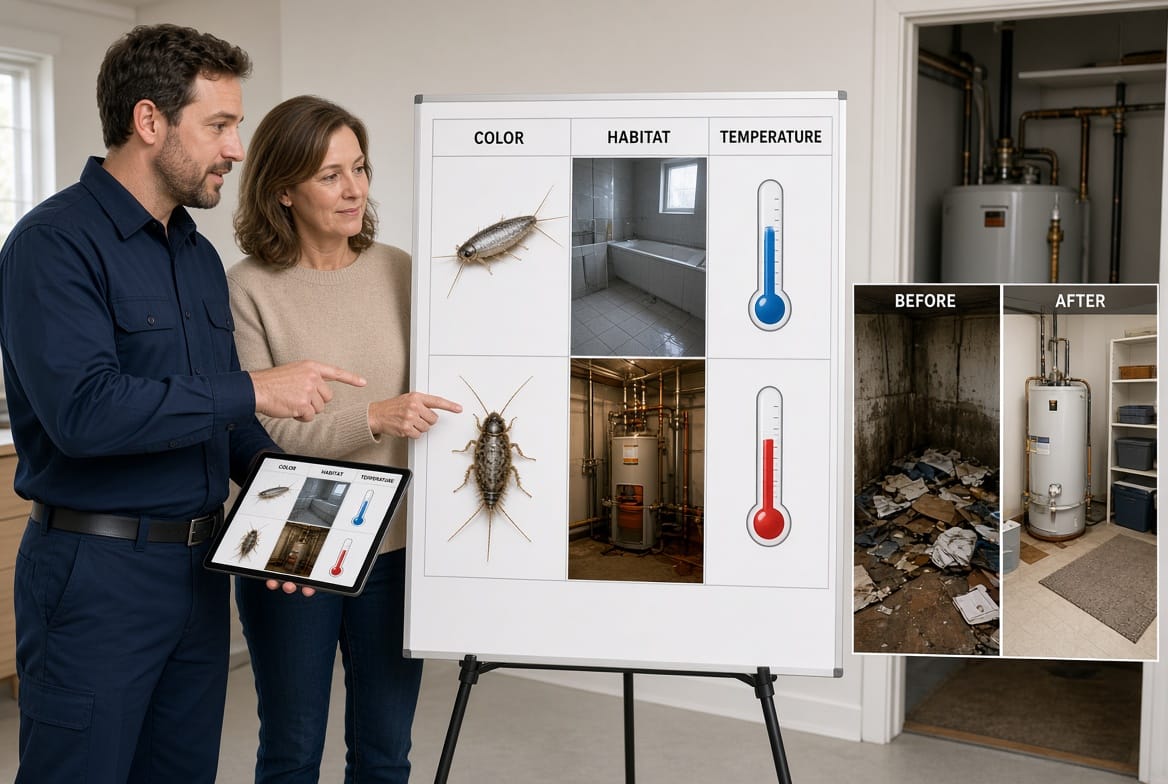
These overlapping traits explain why many people use the names interchangeably. The differences become clear only when color, habitat, and temperature preference are examined together.
Key Visual Differences
Silverfish display a more uniform metallic silver or pearly-gray coloration. Their scales often produce a noticeable sheen under direct light. Firebrats show a mottled pattern of gray and brown scales that gives them a duller, less reflective appearance. The mottling is most visible on the thorax and abdomen.
Body proportions are similar, yet firebrats sometimes appear slightly stockier. Both insects lose scales over time, so older individuals of either species can look faded. Close examination of a freshly captured specimen under good lighting or magnification remains the most reliable visual method.
Habitat Preferences: Cool and Damp Versus Hot and Humid
Silverfish seek out cool, damp areas with stable moisture. Common locations include:
- Basements and crawl spaces
- Bathrooms, especially around tubs, toilets, and leaking pipes
- Laundry rooms and utility sinks
- Closets or storage rooms with poor ventilation
- Areas beneath leaking roofs or around plumbing penetrations
Firebrats seek out hot, humid areas. Typical sites include:
- Spaces surrounding furnaces, boilers, and water heaters
- Attics during warm months
- Areas near ovens, clothes dryers, or hot-water pipes
- Steam rooms, saunas, or poorly insulated mechanical rooms
- Upper floors or ceiling voids that retain heat
The same house can support both pests if it contains both cool damp zones and hot humid zones. A leaking pipe in a basement can attract silverfish while an uninsulated water heater in a utility closet supports firebrats.

Temperature Thresholds That Separate the Species
Temperature is one of the most reliable distinguishing factors. Silverfish remain active and reproduce most successfully in moderate temperatures, generally between the mid-60s and low 80s Fahrenheit. They tolerate cooler conditions better than firebrats and often persist in unfinished basements year-round.
Firebrats require higher temperatures. They thrive between approximately 90 and 106 degrees Fahrenheit and become less active or stop reproducing when conditions cool. This heat preference explains their concentration around heating equipment and in attics during summer.
Humidity complements temperature. Both insects need elevated moisture—typically 75 percent relative humidity or higher—to prevent desiccation. Silverfish obtain that moisture in cooler rooms; firebrats obtain it in warmer rooms that still retain steam or condensation.
Signs of Infestation Unique to Each Pest
Look for these location-based clues:
- Silverfish evidence: irregular holes in books, wallpaper paste, or stored linens found in bathrooms, basements, or ground-floor closets; small pepper-like droppings in cool, dark corners.
- Firebrat evidence: similar feeding damage plus shed scales near the water heater, furnace closet, or attic access; activity noticed when the heating system cycles on.
Cast skins, yellowish stains, and a faint musty odor can appear with either species. The room in which these signs occur supplies the strongest hint about identity.
Damage Risks and Why Prompt Action Helps
Both pests feed on items that contain carbohydrates or protein. They can:
- Chew irregular holes in books, important papers, and photographs
- Damage wallpaper by consuming the paste
- Stain or weaken cotton, linen, and silk fabrics
- Contaminate stored dry goods and pet food
- Leave droppings and shed scales that create an unsanitary appearance
Neither insect typically bites people or pets, yet their presence indicates excess moisture that can also encourage mold. Early identification limits the extent of damage and reduces the chance that a small population becomes a widespread problem.
Practical Identification Steps You Can Take Today
Follow this straightforward process:
- Note the exact location of every sighting and any damage.
- Observe the room’s temperature and moisture level—cool and damp versus hot and steamy.
- Capture a specimen if possible (a piece of clear tape works) and examine color and mottling under bright light.
- Check nearby plumbing, insulation, and heating equipment for leaks or heat sources.
- Record whether activity increases when the furnace or water heater runs.
These observations usually distinguish the two pests without laboratory analysis. When uncertainty remains, a professional inspection confirms the species and maps every harborage site.
Treatment Approaches That Differ by Species
Because the insects occupy different micro-environments, treatment focus changes.
For silverfish:
- Repair plumbing leaks and improve bathroom and basement ventilation.
- Reduce humidity with dehumidifiers in cooler rooms.
- Apply targeted treatments along baseboards, under sinks, and in storage areas.
- Store papers, books, and fabrics in sealed containers.
For firebrats:
- Inspect and maintain heating equipment and hot-water lines.
- Improve insulation around furnaces and water heaters to reduce localized heat and condensation.
- Treat cracks and voids immediately adjacent to heat sources.
- Monitor attic and upper-floor spaces during warmer months.
General sanitation, sealing entry points, and reducing clutter benefit both. The difference lies in where those steps receive the greatest emphasis. A single whole-house spray that ignores temperature zones often leaves one of the two pests untouched.
Prevention Strategies That Last
Long-term success depends on environmental correction:
- Fix dripping faucets, sweating pipes, and roof leaks promptly—these conditions favor silverfish and can also raise humidity that firebrats exploit.
- Use exhaust fans in bathrooms and kitchens.
- Keep stored items off basement floors and away from heat-producing appliances.
- Maintain heating and cooling systems so they do not create unnecessary hot or damp pockets.
- Schedule periodic professional inspections, especially after plumbing work or HVAC changes.
Consistent moisture management and habitat modification make the home far less attractive to both insects.
The Value of Professional Pest Control
DIY products can reduce visible numbers for a short time, yet they rarely address hidden harborages or the underlying moisture and temperature conditions. Trained technicians identify the exact species, locate every active site, apply products only where needed, and recommend structural or plumbing corrections that prevent return.
A professional visit typically includes:
- Thorough inspection of both cool damp and hot humid zones
- Specimen confirmation
- Moisture and temperature readings
- A customized treatment and prevention plan
- Follow-up to verify results
This systematic approach delivers faster, more complete, and longer-lasting control than scattered consumer treatments.
Take the Next Step Today
You now have the knowledge to distinguish silverfish from firebrats by appearance, preferred habitat, and temperature range. Identification is the foundation of elimination. Once you know which pest is present, targeted treatment and environmental corrections can restore comfort and protect your belongings.
Identify and eliminate silverfish and firebrats. Do not let identification confusion allow damage to continue. Experienced technicians will inspect your home, confirm the species, and implement a plan designed for the specific conditions these insects require. Prompt action protects your property and gives you lasting peace of mind.
Call Today for Targeted Silverfish and Firebrat Treatment