The Generator Interlock Kit Installation: DIY vs. Professional
Power outages strike without warning. Storms, grid failures, or equipment breakdowns can leave families without lights, refrigeration, medical devices, or heating for hours or even days. For homeowners seeking a budget generator solution, a portable generator paired with a generator interlock kit offers an accessible path to backup power. This approach costs far less than a full automatic transfer switch system while still enabling safe connection of generator power to the home’s electrical panel. Yet the choice between DIY installation and professional installation carries serious implications for safety, code compliance, and long-term reliability. This article examines exactly what an interlock kit is, how installation works, the risks involved, and why professional service remains the recommended route for most households.
Get Safe Generator Interlock Installation – Call Now!
Understanding the Budget Generator Solution
A portable generator produces electricity when the utility grid fails. The challenge lies in delivering that power safely into the home’s circuits. Simply plugging extension cords into individual appliances works for limited needs, but it leaves critical systems such as furnaces, well pumps, or sump pumps unpowered. A more complete solution requires feeding generator power into the main electrical panel so selected circuits can operate as they normally would.
The generator interlock kit provides this capability at a fraction of the cost of a traditional transfer switch. Instead of installing a separate transfer panel or automatic switchgear, the interlock kit modifies the existing main breaker panel. It creates a mechanical interlock that physically prevents the main utility breaker and the generator breaker from being closed at the same time. This single feature enables safe backfeeding through the panel while eliminating the most dangerous risk associated with generator use: utility line energization.
Because the kit uses the home’s existing panel and breakers, material costs stay low. Many kits retail for under two hundred dollars, and a portable generator can be purchased for a few hundred more. Together they form a practical budget generator solution that many homeowners find attractive. The savings, however, come with trade-offs in complexity and safety that must be understood before any work begins.
What Exactly Is a Generator Interlock Kit?
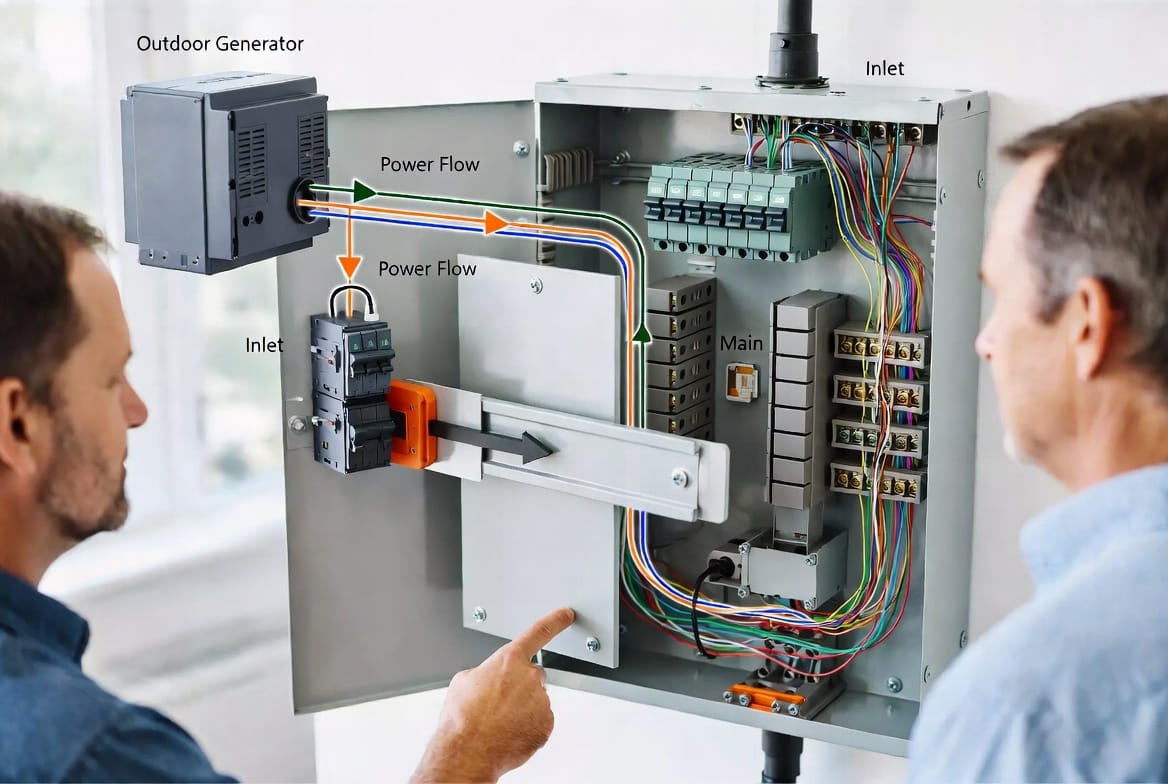
A generator interlock kit is a mechanical device designed to fit specific brands and models of electrical panels. It typically consists of a sliding or pivoting metal plate or bracket that attaches to the panel cover or breaker area. When the main utility breaker is in the “on” position, the interlock blocks the generator breaker from being turned on. Conversely, when the generator breaker is on, the main breaker cannot be closed.
This mechanical lockout achieves two critical safety goals. First, it prevents backfeeding electricity from the generator into the utility lines. Backfeeding can energize downed power lines and create a lethal hazard for utility workers restoring service. Second, it ensures that the home’s electrical system receives power from only one source at a time, avoiding dangerous parallel operation that can damage equipment or start fires.
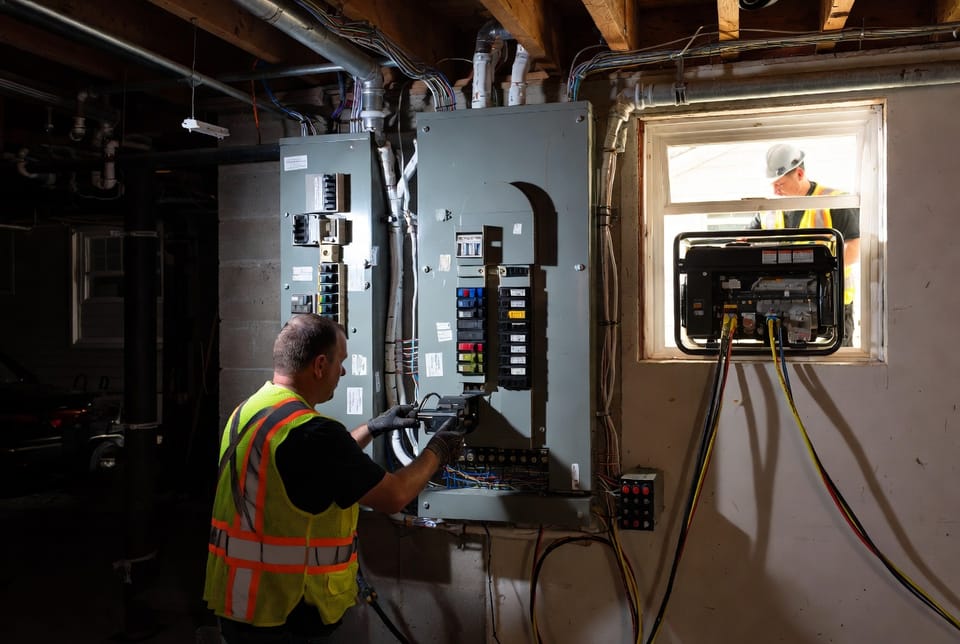
The kit does not generate power itself. It simply manages the connection path. Power still enters through a properly installed generator inlet box mounted on the exterior of the home, runs through dedicated wiring to a double-pole breaker in the panel, and then distributes through the interlocked system. When installed correctly, the arrangement allows selected circuits—refrigerator, lights, furnace, outlets—to operate from generator power while the rest of the panel remains isolated from the utility.
How an Interlock Kit Enables Safe Backfeeding
Safe backfeeding requires more than flipping breakers. The process follows a strict sequence once the kit is in place.
When utility power fails, the homeowner first turns off the main breaker. The interlock plate then slides or pivots, freeing the generator breaker. The generator is started outdoors, allowed to warm up, and connected via a heavy-duty cord to the inlet box. Only after the generator is running stably is the generator breaker turned on. Power now flows into the panel and to the chosen circuits.
When utility power returns, the sequence reverses. The generator breaker is opened first, the interlock shifts, and the main breaker can be closed again. The generator is then shut down and disconnected. This orderly process, enforced by the physical interlock, is what makes backfeeding through the panel acceptably safe under normal conditions.
Without the interlock, a homeowner might accidentally leave both breakers on, creating a parallel path between generator and utility. That condition can destroy the generator, damage appliances, or send voltage back onto the grid. The kit’s simple mechanical design eliminates that possibility by design.
Installation Requirements: Panel Modification and Code Compliance
Installing a generator interlock kit is not a simple bolt-on project. It requires panel modification. The cover of the electrical panel must often be altered or replaced with a kit-specific cover that accommodates the interlock mechanism. Breakers may need repositioning so the generator breaker sits directly adjacent to the main breaker. In some panels the main breaker itself must be relocated or a new double-pole breaker added for the generator feed.
Wiring from the exterior inlet box to the generator breaker must be run according to local electrical codes, typically using properly sized conductors in conduit or approved cable. The inlet box itself needs weatherproof mounting and a matching cord set rated for the generator’s output. Grounding and bonding must be verified so the generator and house share a common ground reference.
Code compliance is non-negotiable. The National Electrical Code (NEC) and local amendments govern generator installations. Many jurisdictions require a permit and inspection for any permanent modification to the service panel. Some areas prohibit interlock kits entirely in favor of listed transfer switches. Others accept them only when installed by a licensed electrician and documented with the proper paperwork. Failure to meet these requirements can result in failed inspections, insurance claim denials, or liability if an incident occurs.
Because every panel brand and model has unique spacing, bus configurations, and cover designs, the correct interlock kit must be matched precisely. Using an incompatible kit can leave gaps that defeat the interlock function or create clearance violations. These technical details explain why the installation process demands both the right parts and skilled execution.
The DIY Approach: Steps, Temptations, and Hidden Risks
Many homeowners consider DIY installation attractive because the kit instructions appear straightforward and online videos make the process look manageable. A typical DIY sequence includes identifying the panel model, ordering the matching kit, shutting off utility power, removing the panel cover, mounting the interlock hardware, relocating breakers if needed, installing the inlet and feeder wiring, and testing the mechanical action.
The appeal is understandable. Completing the work personally can save several hundred dollars in labor. For a homeowner with strong electrical experience, the project may feel within reach. Yet the risks are substantial and often underestimated.
Working inside an energized or recently de-energized panel exposes the installer to electrocution hazards. Even with the main breaker off, residual voltage or incorrect assumptions about isolation can prove fatal. Misidentifying neutral and ground conductors, undersizing the feeder cable, or failing to torque breaker connections to specification can create future fire hazards. An improperly fitted interlock may allow both breakers to close simultaneously under certain conditions, defeating the entire safety purpose.
Code violations represent another serious concern. An installation that looks functional to the homeowner may still fail inspection or violate local amendments. Insurance carriers frequently require licensed work for any permanent electrical modification; a DIY interlock can void coverage related to fire or electrical damage. In the event of injury to utility workers caused by accidental backfeeding, the homeowner may face legal liability.
These risks accumulate quickly. What begins as a cost-saving project can escalate into expensive corrections, denied claims, or worse. The mechanical simplicity of the kit does not eliminate the need for professional judgment about panel capacity, load calculation, and safe work practices.
Why Professional Installation Is Strongly Recommended
Professional installation removes the majority of these hazards. A licensed electrician brings training, insurance, and familiarity with local code interpretations. The electrician first evaluates whether the existing panel can accept an interlock kit at all. Some older panels lack the physical space or bus capacity; in those cases a transfer switch or panel upgrade may be advised instead.
Once suitability is confirmed, the professional selects the exact kit listed for that panel, obtains any required permits, and performs the work under proper lockout-tagout procedures. The inlet location is chosen for convenient generator placement while maintaining required clearances. Feeder conductors are sized according to the generator’s continuous output rating and voltage drop limits. After mechanical installation, the electrician tests the interlock action repeatedly and verifies that no simultaneous closure is possible.
Documentation is another advantage. A professional provides labeled diagrams, torque records, and inspection paperwork that satisfy both the authority having jurisdiction and the homeowner’s insurance carrier. Should future service or expansion be needed, the records simplify the work.
From a safety standpoint, the difference is decisive. Professionals understand how to maintain the integrity of the service entrance, how to handle bonding correctly, and how to integrate the generator system so that critical loads receive priority without overloading the generator. They also educate the homeowner on the correct operating sequence, reducing the chance of user error during an actual outage.
While labor costs increase the total investment, the reduction in personal risk, the assurance of code compliance, and the protection of insurance coverage make professional installation the more responsible choice for the vast majority of households.
Key Considerations Before Choosing an Interlock Kit
Several practical factors should guide the decision.
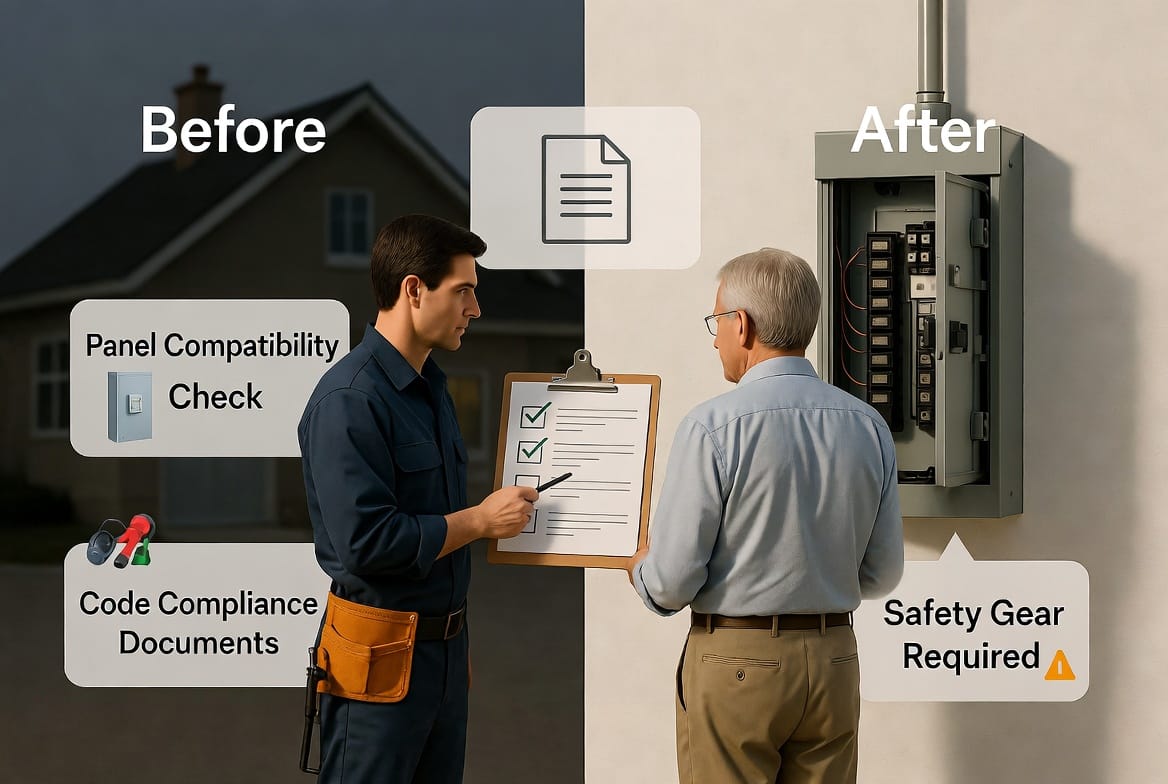
- Panel compatibility is the first filter. Not every panel accepts an interlock kit. Confirm the exact manufacturer, model number, and main breaker amperage before purchasing any hardware.
- Code compliance varies by location. Contact the local building department to learn whether interlock kits are permitted and what inspection process applies.
- Safety remains paramount. Even a correctly installed kit requires disciplined operation. The generator must always be started and stopped in the proper order, and only outdoor, properly ventilated placement is acceptable.
- Generator sizing must match the intended loads. An undersized unit will stall under demand; an oversized unit wastes fuel and money.
- Future needs matter. If the household later adds air conditioning, electric vehicle charging, or medical equipment, the interlock arrangement may prove insufficient and a more robust transfer system may become necessary.
Balancing Cost, Convenience, and Responsibility
The generator interlock kit remains a legitimate budget generator solution for homeowners who need selective backup power without the expense of a full transfer switch. When correctly specified and installed, it delivers reliable service and meaningful peace of mind during outages. The mechanical interlock itself is an elegant engineering answer to the backfeeding problem.
Yet elegance does not equal simplicity of execution. Panel modification, precise matching of components, adherence to electrical codes, and safe work practices all demand expertise that most homeowners do not possess. The financial savings of a DIY approach can vanish quickly if corrections, insurance issues, or injuries arise.
Choosing professional installation transforms the project from a high-stakes gamble into a controlled, documented upgrade. The electrician assumes responsibility for technical accuracy and code adherence, leaving the homeowner free to focus on generator selection, fuel storage, and operating procedures. In return, the household gains a system that performs as intended when the lights go out and that stands up to scrutiny from inspectors and insurers.
Final Guidance and Next Steps
Interlock kits offer an accessible entry point into home generator power. They prove that effective backup capability does not always require the highest-priced equipment. At the same time, the electrical panel is not a place for experimentation. The consequences of error—personal injury, property damage, or harm to others—are too severe to justify cutting corners.
For any homeowner considering this route, the prudent path is clear: begin with a professional assessment. A licensed electrician can confirm whether an interlock kit suits the specific panel, explain local code requirements, and provide a transparent quote for complete installation. That conversation costs little and prevents costly mistakes.
Speak with experienced technicians who can evaluate your panel, recommend the correct kit, and complete the work to code. Reliable backup power begins with a safe installation—do not leave that step to chance.
Secure Your Backup Power – Call a Pro Today