The Garage Door Track Lubrication: Which Lubricant to Use
A garage door is one of the largest moving parts of your home. When it operates smoothly, most homeowners barely notice it. When it begins to grind, squeak, or bind, the problem is often simple: the moving parts need proper lubrication. Garage door track lubrication is not an optional extra. It is a core maintenance task that protects the opener, reduces wear, improves safety, and extends the life of the entire system.
Call Now for Expert Garage Door Lubrication Service
Choosing the wrong lubricant can do more harm than good. Heavy greases collect dirt. Penetrating sprays such as WD-40 provide only short-term relief and can leave parts drier than before. The two products that consistently deliver reliable results on residential garage doors are silicone spray and white lithium grease. Used in the right places and in the right amounts, they keep tracks, rollers, and hinges working as designed.
This guide explains exactly which lubricant to use, where to apply it, what to avoid, and how to perform the work safely. Follow these steps and your door will open and close more quietly, with less strain on the springs and opener.
Why Proper Lubrication Matters
Garage doors cycle thousands of times each year. Every opening and closing creates friction at the rollers, hinges, and along the tracks. Without lubrication that friction produces three costly problems:
- Premature wear on rollers, hinges, and the torsion or extension springs.
- Increased strain on the garage door opener motor and gears.
- Safety risks from a door that sticks, slams, or fails to reverse properly.
A well-lubricated door also runs quieter. Neighbors and family members notice the difference immediately. Regular lubrication is inexpensive preventive maintenance that delays expensive repairs.
Key Components That Need Attention
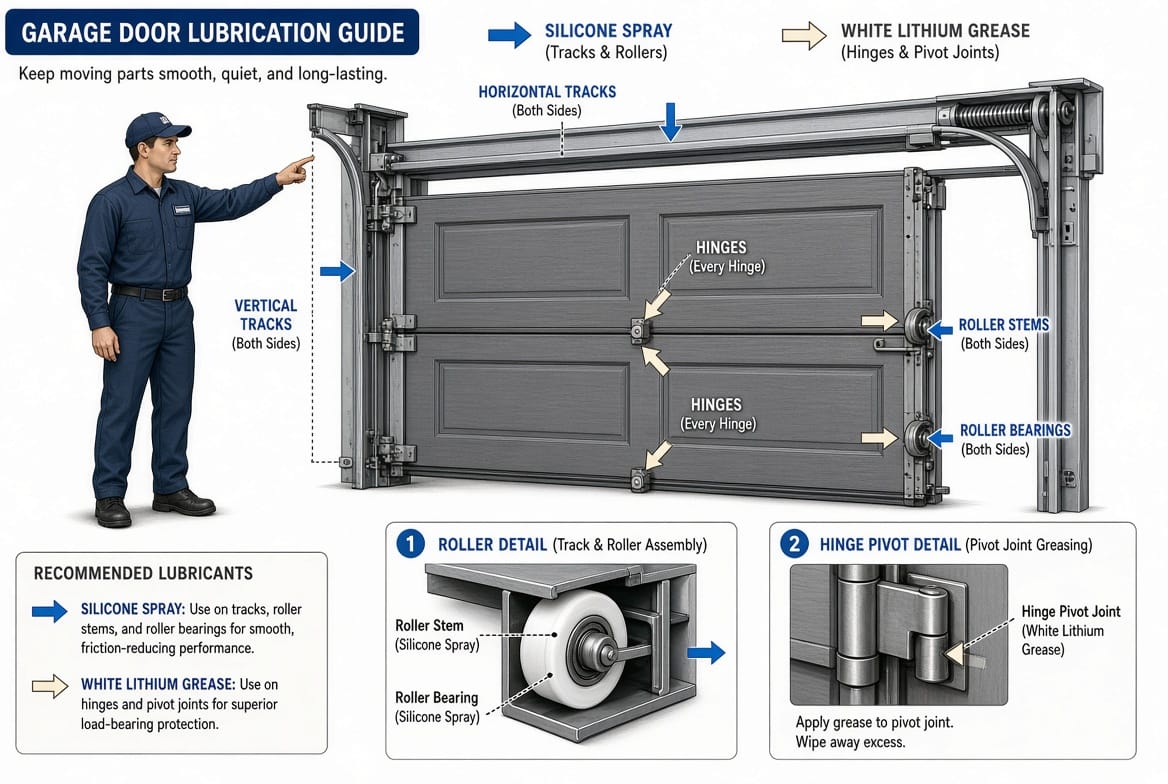
Focus on three areas specified for this maintenance routine: the tracks, the rollers, and the hinges. Each has different material and movement characteristics, which is why one lubricant does not fit every part.
Tracks are the vertical and horizontal channels that guide the rollers. They should stay clean and lightly coated so rollers travel freely. Excess product in the tracks quickly becomes a dirt magnet.
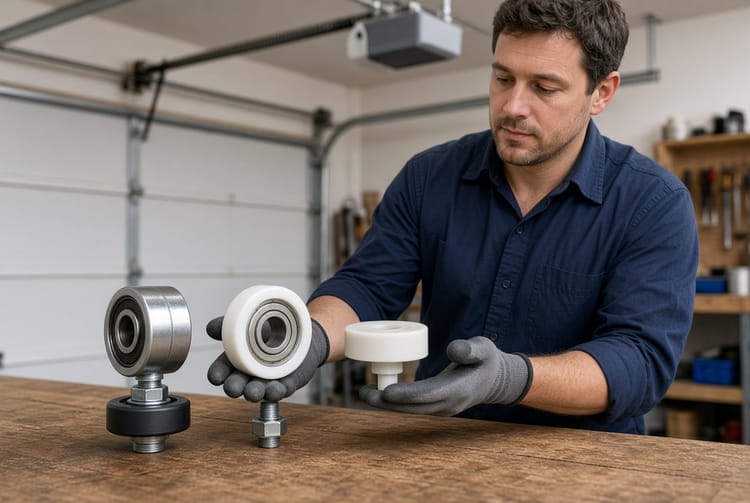
Rollers may be nylon or steel. Nylon rollers benefit from a dry-film lubricant. Steel rollers can accept a slightly heavier product.
Hinges are metal-to-metal pivot points. They need a lubricant that stays in place under repeated movement and temperature changes.
Other parts such as springs and lock mechanisms also benefit from lubrication, but the tracks, rollers, and hinges form the foundation of a smooth-operating door.
Silicone Spray or White Lithium Grease: Which One to Choose
Both products are widely recommended by garage door technicians. They serve complementary roles.
Silicone spray creates a thin, dry film. It resists water, does not attract dust as aggressively as petroleum products, and works well on nylon rollers and along the tracks. It remains effective in both hot and cold weather. Because it dries, it is less likely to drip or collect grit.
White lithium grease is a thicker, white-colored grease that clings to metal surfaces. It is excellent for hinges and steel rollers where a longer-lasting film is needed. It withstands pressure and does not run off as quickly as thin oils.
A practical approach used by professionals is to keep both products on hand:
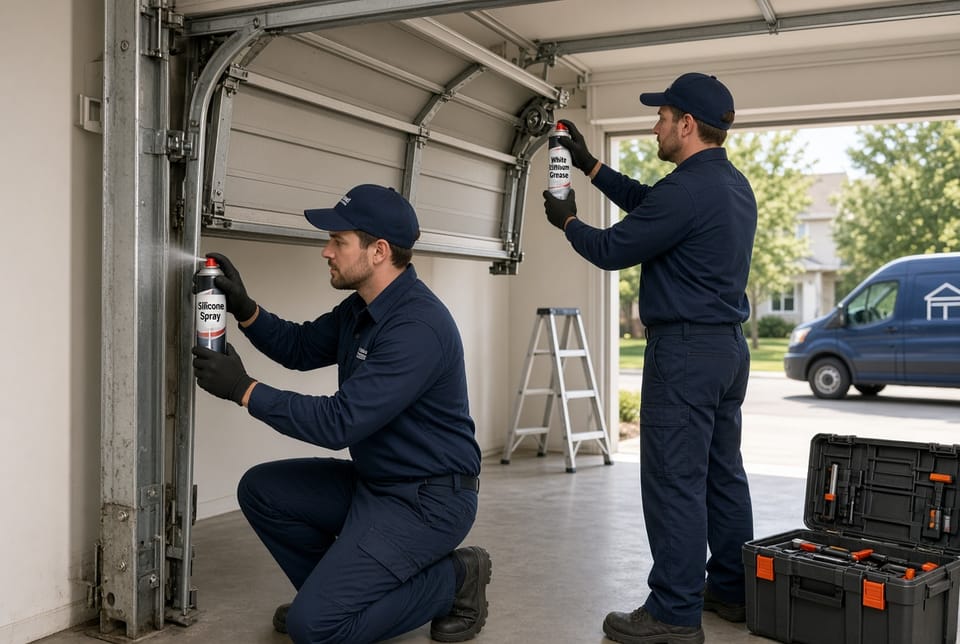
- Use silicone spray on the tracks and nylon rollers.
- Use white lithium grease on hinges and steel rollers.
Never mix the two products on the same surface in the same session. Apply one, allow it to set, and only then consider a second product if the manufacturer of a specific part recommends it.
Garage-door-specific lubricants sold by major manufacturers are usually silicone-based or lithium-based formulations designed for this exact use. They are a safe choice when you want a single can labeled for the job.
Where to Apply Lubricant
Precision matters more than quantity. A light, even coat outperforms a heavy glob that later collects dirt.
Tracks
Wipe the tracks first with a clean cloth to remove dust, old grease, and debris. Then apply a light mist of silicone spray along the inner surfaces where the rollers travel. Do not flood the channel. Move the door up and down a few times so the product distributes evenly. Wipe away any excess that pools at the bottom.
Rollers
For nylon rollers, spray silicone spray directly onto the roller stem and the rolling surface. Spin the roller by hand so the product coats the bearing. For steel rollers, a small amount of white lithium grease on the stem and bearings is appropriate. Avoid coating the entire roller face if it will pick up debris from the floor.
Hinges
Apply white lithium grease to the pivot points of each hinge. Work the door slowly so the grease works into the joint. Wipe off any squeeze-out so it does not drip onto the door panels or the floor.
Always lubricate with the door in the closed or partially open position so you can reach every point safely. Never stand under an open door while working on the hardware.
Step-by-Step Lubrication Process
Follow this sequence for consistent results.
- Disconnect the opener or pull the emergency release so the door can be moved by hand.
- Inspect the tracks, rollers, and hinges for damage, missing fasteners, or excessive rust. Address structural problems before lubricating.
- Clean all surfaces with a dry or slightly damp cloth. Remove old, dirty grease.
- Apply silicone spray to the tracks and nylon rollers.
- Apply white lithium grease to the hinges and steel rollers.
- Cycle the door fully open and closed several times.
- Wipe away excess product.
- Reconnect the opener and test the door’s travel and reversal features.
The entire process usually takes 15–25 minutes for a standard single-car door when no repairs are required.
What to Avoid
Two products cause the majority of lubrication-related complaints.
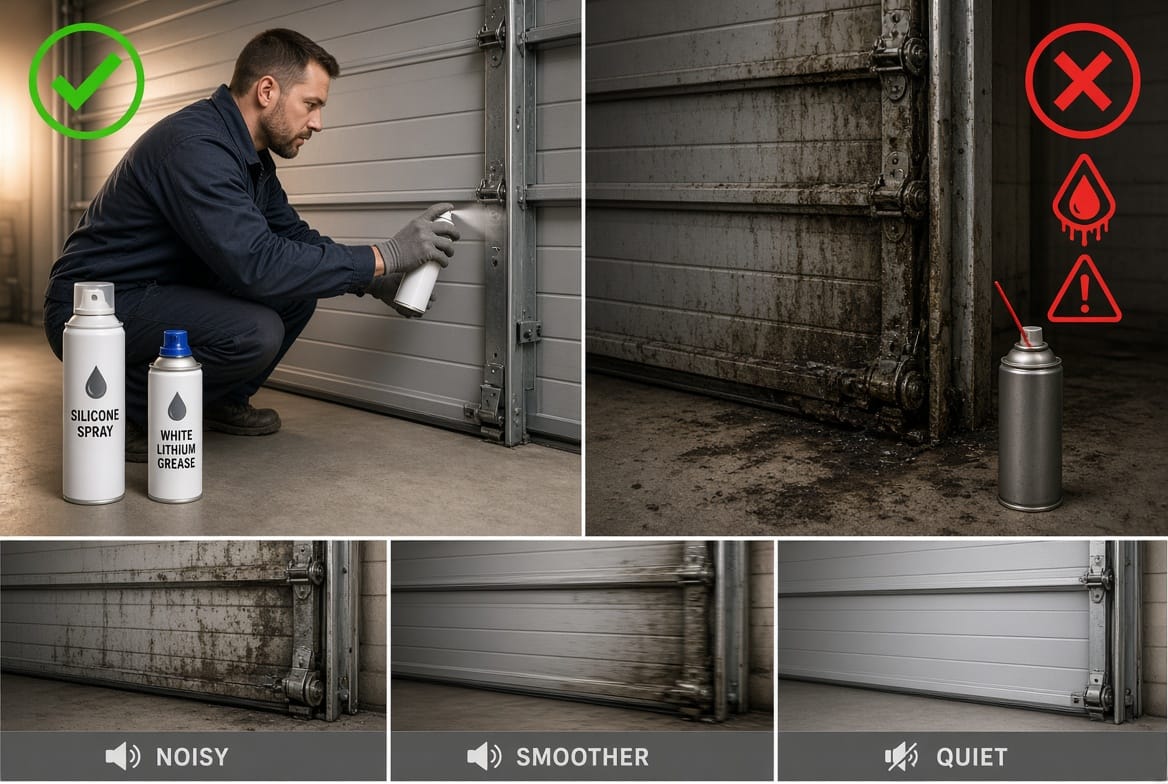
WD-40 is a water-displacing solvent and short-term penetrant. It is not a lasting lubricant. After the carrier evaporates, little protective film remains. Repeated use can actually increase friction and attract dirt. Save WD-40 for freeing a stuck bolt, then follow immediately with a proper garage-door lubricant.
Heavy greases that attract dirt include many general-purpose automotive greases and thick petroleum products. They hold grit against the rollers and inside the tracks. The grit acts like sandpaper and accelerates wear. If a product feels sticky or looks dark and grainy after a few weeks, it is the wrong choice.
Also avoid:
- Over-application. More product does not equal better protection.
- Lubricating the tracks with thick grease.
- Spraying lubricant onto the photo-eye sensors or the opener rail (unless the opener manufacturer specifically allows it).
- Working on a door with damaged cables or broken springs. Those conditions require a professional.
How Often Should You Lubricate?
Most residential doors benefit from lubrication every six months. Homes in dusty, coastal, or extreme-temperature climates may need attention every three to four months. Listen for new squeaks or watch for slower travel; those are early signals that the film has worn away.
Pair lubrication with a visual inspection. Check that rollers turn freely, hinges are not bent, and the tracks remain aligned. Small issues caught early stay inexpensive.
Signs You Need Service Beyond Lubrication
Lubrication solves friction problems. It does not fix:
- Bent or misaligned tracks
- Worn or seized rollers that no longer turn
- Broken or weakened springs
- A door that is off-balance
- An opener that struggles even after the hardware is freshly lubricated
If the door still binds, jerks, or makes grinding noises after a proper lubrication, the hardware itself may be worn. Continuing to operate a damaged door risks further injury or property damage.
Safety Notes for Homeowners
Wear eye protection when spraying. Keep children and pets away from the work area. Never place your fingers between the door sections or in the track while the door is moving. If the door is heavy or the springs look damaged, stop and call a trained technician. Torsion springs store dangerous energy and should be adjusted only by qualified personnel.
The Long-Term Benefits of Doing It Right
Consistent use of silicone spray and white lithium grease on the correct parts produces measurable results:
- Quieter operation
- Reduced opener strain and longer motor life
- Slower wear on rollers and hinges
- Better weather sealing because the door closes fully and evenly
- Lower likelihood of emergency service calls
Homeowners who treat lubrication as a scheduled task rather than a reaction to noise typically enjoy years of trouble-free use.
Conclusion and Next Step
Garage door track lubrication is straightforward when you use the right products in the right places. Choose silicone spray for tracks and nylon rollers. Choose white lithium grease for hinges and steel rollers. Clean first, apply lightly, cycle the door, and wipe away excess. Never substitute WD-40 or heavy dirt-attracting greases.
A few minutes of correct maintenance twice a year protects one of the most frequently used systems in your home. If you prefer to leave the work to experienced technicians, or if you discover worn parts during inspection, professional service is the safest option.
Lubricate your garage door properly.
Protect Your Door from Costly Damage – Call Today