The Garage Door Panel Repair: Fixing Dents and Cracks
A well-maintained garage door does more than provide security and weather protection. It forms a major visual element of your home’s curb appeal. Over time, cosmetic damage such as dents and cracks can appear from everyday accidents, hail, or shifting materials. The good news is that many of these imperfections can be corrected without replacing the entire door. This guide focuses exclusively on cosmetic panel repair, explaining proven methods for restoring appearance while helping you decide when a full panel replacement becomes the smarter choice.
Get Professional Panel Repair – Call Today
Homeowners often worry that visible damage will permanently lower property value or force an expensive full-door replacement. In reality, targeted repairs using body filler, paint, epoxy, or a single new panel frequently return the door to an attractive, uniform look. Approaching the work methodically and knowing your limits keeps both the door and your investment protected.
Understanding Common Cosmetic Damage on Garage Door Panels
Garage door panels are manufactured from steel, aluminum, wood, or composite materials. Steel remains the most widespread choice because of its strength and relatively low cost, yet it is also the material most prone to dents. Wood and some composites are more likely to develop cracks from moisture, impact, or age.
Typical causes include:
- Accidental vehicle contact while parking
- Sports equipment or falling objects
- Severe weather such as hail or high winds
- Natural expansion and contraction of wood
- Settling of the door structure over years of use
Minor dents usually appear as shallow depressions that do not affect the door’s operation. Cracks may start small and remain surface-level or travel across a panel. Distinguishing purely cosmetic issues from those that compromise strength or weather sealing is the first essential step. A panel that still opens, closes, and seals properly is often an excellent candidate for appearance-only restoration.
Ignoring even small damage can allow moisture to enter, leading to rust on steel or rot on wood. Early intervention therefore protects both looks and longevity.
Assessing the Extent of Damage Before Starting Work
Begin with a thorough visual and tactile inspection in good daylight. Run your hand across the surface to feel depth and sharpness of edges. Measure the affected area. Note whether the damage sits in the center of a panel, near a joint, or close to the edges where structural rigidity is higher.
Key evaluation points include:
- Depth and width of the dent or length of the crack
- Presence of rust, peeling paint, or exposed metal
- Whether the panel remains flat and aligned with neighboring sections
- Condition of any insulation behind the panel
- Impact on the door’s overall movement or weather seal
If the door still travels smoothly on its tracks and the springs and cables show no related stress, the issue is likely confined to cosmetics. Large, sharp creases, multiple overlapping dents, or cracks that have begun to separate the panel material usually signal that repair materials alone will not produce a durable or attractive result.
Photograph the damage from several angles. These images help when discussing options with a professional and serve as a before record once work is complete.
Essential Tools and Materials for Cosmetic Repairs
Successful garage door panel repair depends on using the right products formulated for exterior metal or wood. Gather everything before beginning so the process stays continuous and clean.
For dent repair you will typically need:
- Automotive-grade body filler
- Plastic spreaders and mixing board
- Progressive sandpaper (80-grit through 400-grit)
- High-quality primer compatible with the door’s original finish
- Color-matched exterior paint and optional clear coat
- Cleaning solvent and tack cloth
- Protective gloves, respirator, and eye protection
For crack repair add:
- Two-part epoxy designed for the panel material
- Clamps or tape to hold edges while curing
- Wood filler or metal-compatible epoxy paste for larger gaps
- Sealant for weather protection after finishing
Always work in a well-ventilated area and follow manufacturer cure times exactly. Rushing any chemical step is one of the most common reasons cosmetic repairs fail later.
Repairing Minor Dents with Body Filler and Paint
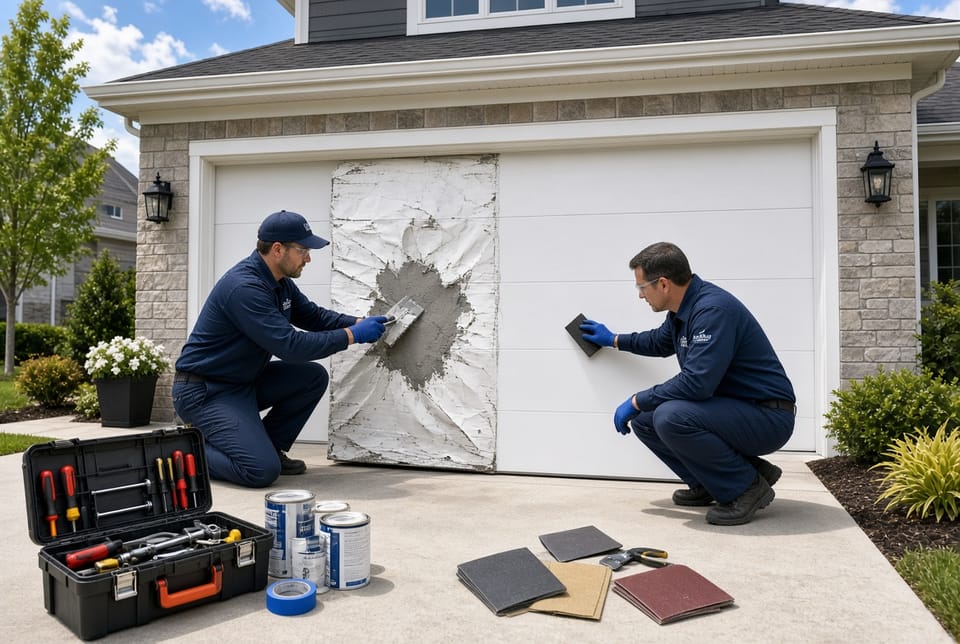
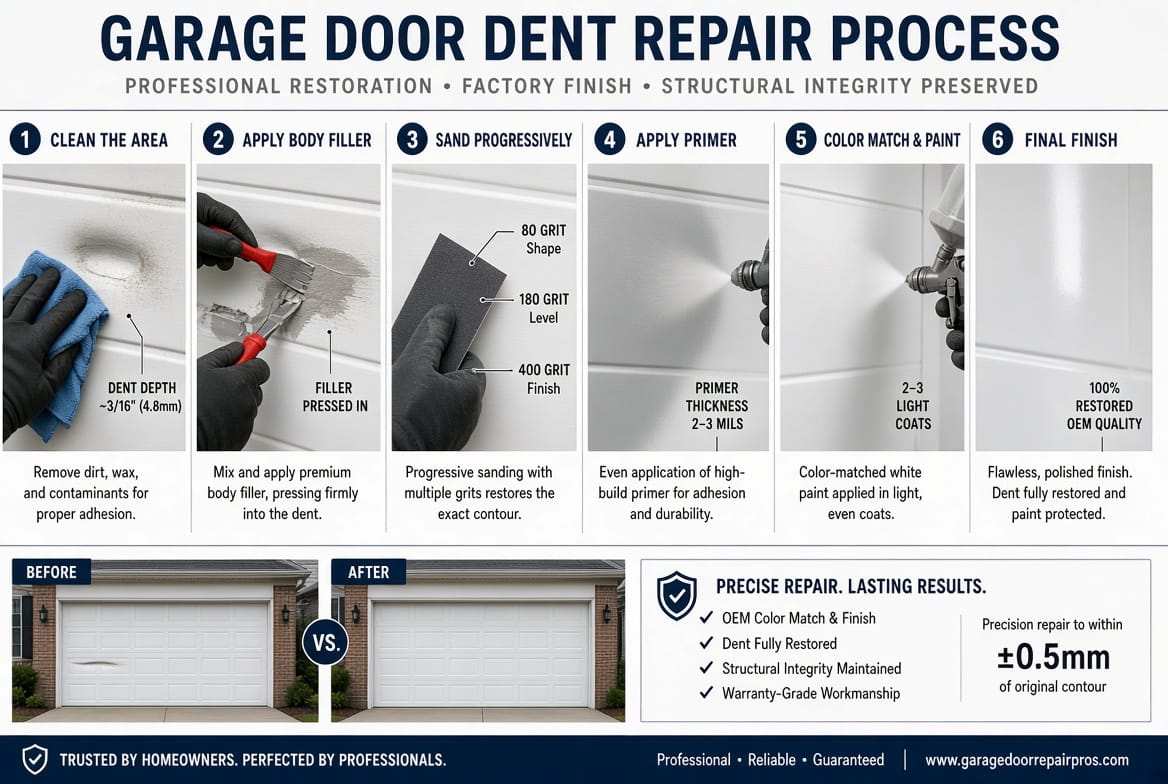
Minor dents that have not torn the metal or created sharp folds respond well to traditional body-filler techniques similar to those used in automotive refinishing. The goal is to rebuild the original contour so that, after painting, the repair becomes invisible from normal viewing distances.
Start by thoroughly cleaning the area with a degreaser to remove dirt, wax, and oxidation. Lightly sand the dent and a few inches of surrounding paint to create a mechanical bond. Mix a small amount of body filler according to the product directions and press it firmly into the depression with a spreader, slightly overfilling so that sanding can restore the exact curve of the panel.
Allow the filler to cure completely. Begin sanding with coarser grit to knock down high spots, then move through finer grits until the surface feels perfectly flush and smooth under your fingertips. Wipe away all dust. Apply a thin, even coat of primer, let it dry, and sand again with fine paper. This step reveals any remaining low spots that need a second thin layer of filler.
Once the primed surface is flawless, apply the color-matched paint in light, overlapping coats. Many steel garage doors use a factory baked-on finish; achieving an exact match often requires professional color-matching equipment. After the color coats dry, a clear protective layer adds durability and sheen consistency with the rest of the door.
The finished repair should be indistinguishable when the door is closed and viewed from the street. Patience during sanding and painting is what separates an amateur-looking patch from a truly professional result.
Addressing Cracks with Epoxy or Panel Replacement
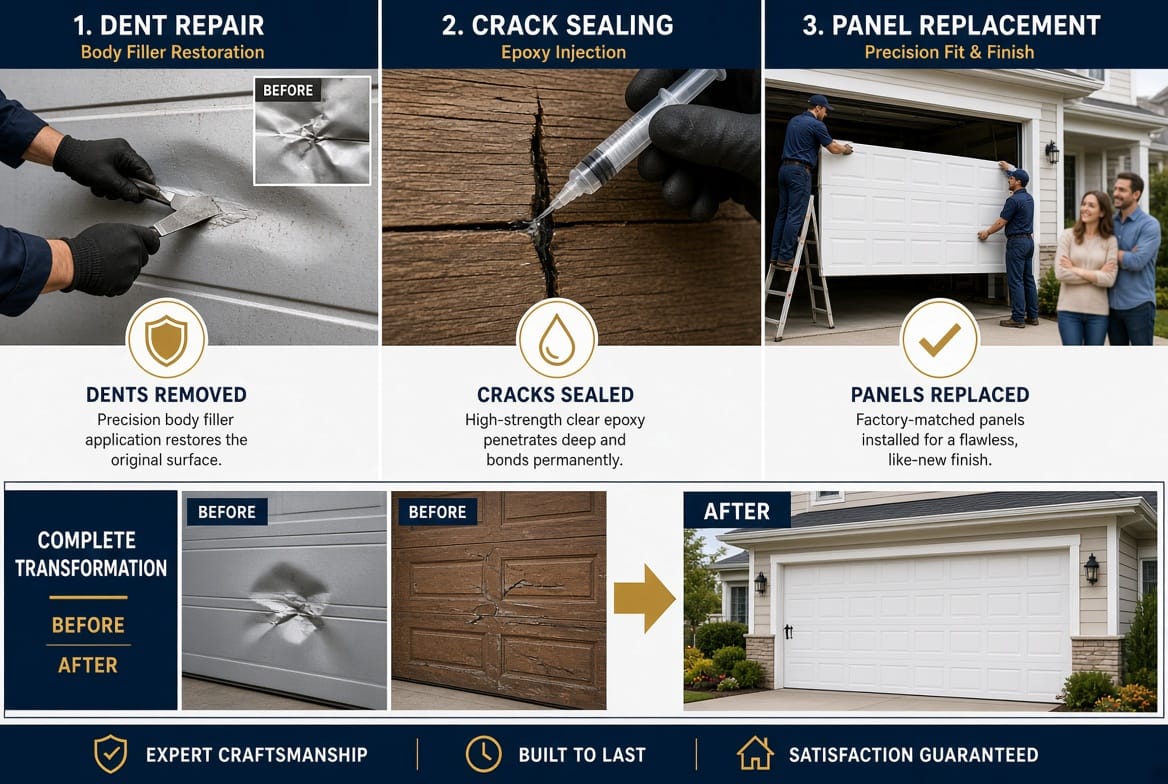
Cracks behave differently from dents and require a material-specific approach. On wood or composite panels, a hairline crack can often be stabilized with epoxy. Clean the crack thoroughly, then force a high-quality two-part epoxy into the opening using a syringe or fine applicator. Clamp or tape the panel so the edges remain aligned while the epoxy cures. After curing, sand the excess flush and refinish the area to match surrounding grain or color.
On steel panels a true crack (as opposed to a deep crease) is less common but more serious because it indicates the metal has been stretched beyond its elastic limit. Small, stable cracks may be bridged with metal-compatible epoxy and then finished as described for dents. However, once a crack begins to propagate, the structural integrity of that section is compromised.
Larger or spreading cracks almost always call for panel replacement rather than continued filling. Attempting to disguise extensive cracking with successive layers of filler produces a repair that looks uneven and is likely to fail again after a few seasons of temperature change and door movement.
When a Garage Door Panel Needs Full Replacement
Not every damaged panel can or should be repaired cosmetically. Replacement becomes the recommended path under several clear conditions:
- The damaged area exceeds a size that filler or epoxy can reliably conceal
- The panel is bent enough to interfere with smooth travel or weather sealing
- Rust has eaten through the metal or rot has softened wood around the crack
- Multiple repairs would be required on the same panel
- Color matching after extensive filling would be noticeably imperfect
- The cost and time of repeated cosmetic work approach the price of a new factory panel
Modern sectional garage doors are designed so that individual panels can be removed and replaced without discarding the entire door, tracks, or opener. A qualified technician can source a matching panel, transfer any windows or hardware, and install it so the door looks and operates as a single unit again.
Choosing replacement at the right moment actually saves money and frustration. A poorly executed filler job that later cracks or peels draws more attention than the original damage and may require the panel to be replaced anyway.
Professional Repair Versus Do-It-Yourself Attempts
Cosmetic work on a garage door may appear straightforward, yet several factors favor calling experienced technicians. Precise color matching, access to commercial-grade fillers and paints, and knowledge of how different panel materials react to temperature and movement all influence the final look. Professionals also understand when a seemingly minor dent hides a deeper alignment issue that should be corrected at the same time.
DIY repairs remain reasonable for very small, shallow imperfections on an older door whose exact color match is less critical. Even then, proper safety practices are essential: the door’s torsion springs store significant energy, and any work that requires raising or lowering sections should be approached with caution.
A reputable service provider will inspect the entire door system, not just the visible damage, and will explain whether a simple cosmetic fix or a panel swap delivers the best long-term appearance and value.
Maintaining the Repair and Preventing Future Damage
After any successful repair, protect the investment with routine care. Wash the door periodically with mild soap to remove contaminants that can degrade paint. Inspect weather seals and lubricate moving parts so the door continues to travel without extra stress on individual panels.
Simple habits reduce the chance of new dents and cracks:
- Park with adequate clearance
- Keep sports equipment and tools away from the door’s swing path
- Address small chips in paint before moisture can reach the substrate
- Have the door professionally balanced and inspected annually
These steps keep both repaired and original panels looking consistent for years.
A garage door that presents a clean, uniform face to the street quietly improves daily enjoyment of your home and supports its market presentation. Whether the solution is careful body-filler work, targeted epoxy treatment, or a single new panel, restoring cosmetic integrity is almost always more practical than living with visible damage or replacing the entire door.
Fix your garage door’s appearance.
Call Today to Fix Dents, Cracks & More