The Garage Door Roller Replacement: Nylon vs. Steel vs. Plastic
A properly functioning garage door depends on more than just the opener and springs. The rollers that travel along the tracks play a critical role in smooth travel, reduced strain, and everyday safety. When those rollers wear out, homeowners often notice grinding noises, jerky movement, or extra effort from the opener. Replacing them with the correct material restores performance and can prevent more expensive repairs later.
Choose Quiet Nylon Rollers – Call for Fast Service
This guide compares the three most common roller types used in garage door roller replacement: steel, nylon, and plastic. You will learn the strengths and limitations of each, the risks of choosing poorly, and clear recommendations so you can select rollers that deliver quiet operation and long-term reliability.
Why Garage Door Rollers Matter
Garage door rollers sit inside the vertical and horizontal tracks. As the door opens and closes, they carry the weight of the door panels and keep the door aligned. Quality rollers reduce friction. Worn or cheap rollers increase friction, which forces the opener to work harder, accelerates track wear, and can even affect spring balance.
Typical warning signs that replacement is due include:
- Loud rumbling, squeaking, or metallic grinding during operation
- The door hesitating, sticking, or traveling unevenly
- Visible flat spots, cracks, or rust on the roller wheels
- Increased vibration felt through the door or walls
- The opener straining or reversing unexpectedly
Ignoring these signs creates safety risks. A failing roller can cause the door to bind, jump off the track, or place uneven load on the torsion or extension springs. Professional replacement eliminates those hazards and restores smooth travel.
Steel Garage Door Rollers: Durable but Noisy
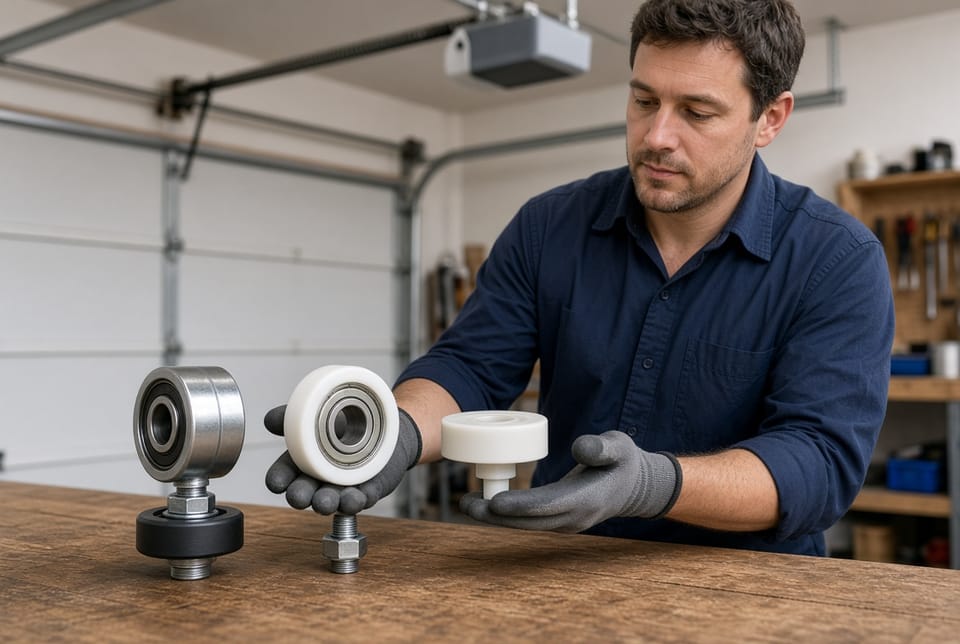
Steel rollers have been used for decades, especially on heavier commercial doors and older residential systems. They consist of a steel wheel, often with a steel or zinc-plated stem, and sometimes include ball bearings.
Advantages of steel rollers
- Exceptional strength for heavy or oversized doors
- Resistance to crushing under high load
- Generally lower upfront cost than premium nylon options
- Suitable for high-cycle commercial environments when properly maintained
Drawbacks and risks
- Noisy operation is the most common complaint. Metal-on-metal contact with the track produces rumbling that travels through the house.
- Bare or poorly coated steel can rust in humid or coastal climates, leading to binding and premature failure.
- They transmit more vibration than polymer wheels.
- Regular lubrication is essential; neglected steel rollers become louder and wear tracks faster.
Steel rollers remain a practical choice when the door is unusually heavy or when budget is the primary concern and noise is acceptable. For most modern homes, however, the noise trade-off is significant.
Nylon Garage Door Rollers: Quiet and Long-Lasting
Nylon rollers (sometimes called nylon-tire or polymer rollers) feature a durable nylon wheel mounted on a steel or nylon stem, almost always with sealed ball bearings. This combination has become the preferred residential standard.
Advantages of nylon rollers
- Dramatically quieter operation because nylon absorbs vibration and rolls smoothly against the track
- Excellent wear resistance; quality nylon rollers often last 10–15 years or longer under normal residential use
- Weather-resistant and less prone to rust than untreated steel
- Reduced strain on the opener and springs, which can extend the life of the entire system
- Smoother start and stop motion that feels more refined
Considerations
- Slightly higher initial cost than basic steel or plastic
- Very cheap “nylon” versions may use thin plastic instead of true engineered nylon — quality matters
- Still require periodic inspection and light lubrication of the stems and bearings
For homeowners who value peace and want the door to last, nylon rollers are the strongest overall recommendation. They deliver the best balance of quiet performance, durability, and value.
Plastic Garage Door Rollers: Inexpensive but Short-Lived
Plastic rollers are the lowest-cost option. They typically use a simple molded plastic wheel, often without quality bearings.
Advantages of plastic rollers
- Lowest purchase price
- Lightweight and easy to install in theory
Serious drawbacks and risks
- They wear quickly. Plastic flattens, cracks, or develops flat spots after only a few years of daily use.
- Once worn, they become noisy and can bind in the track.
- Sudden failure is more common; a cracked plastic wheel can cause the door to drop or jump.
- They offer little vibration damping and transfer more stress to the tracks and opener.
- In hot garages the material can soften; in cold garages it can become brittle.
Plastic rollers are rarely recommended except as a temporary emergency fix. The short lifespan and higher chance of unexpected problems usually make them more expensive over time.
Direct Comparison: Performance, Cost, and Longevity
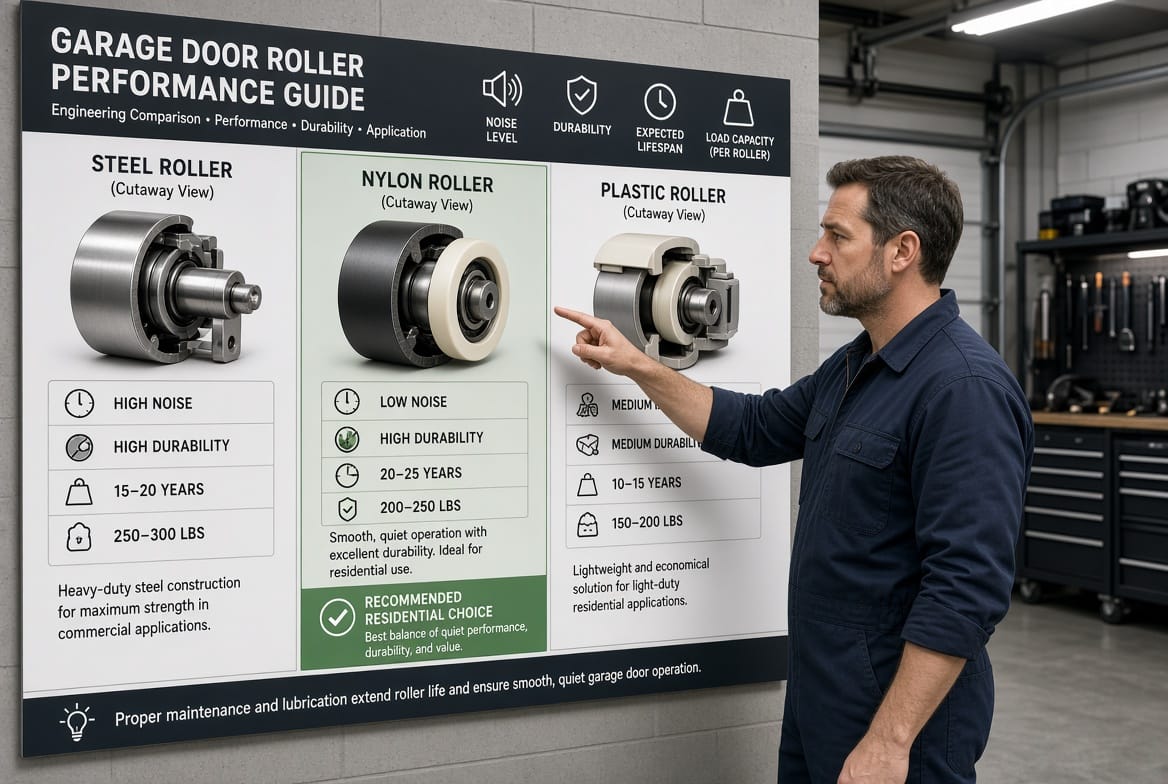
When homeowners compare options for garage door roller replacement, three factors usually decide the purchase: noise, expected life, and total cost of ownership.
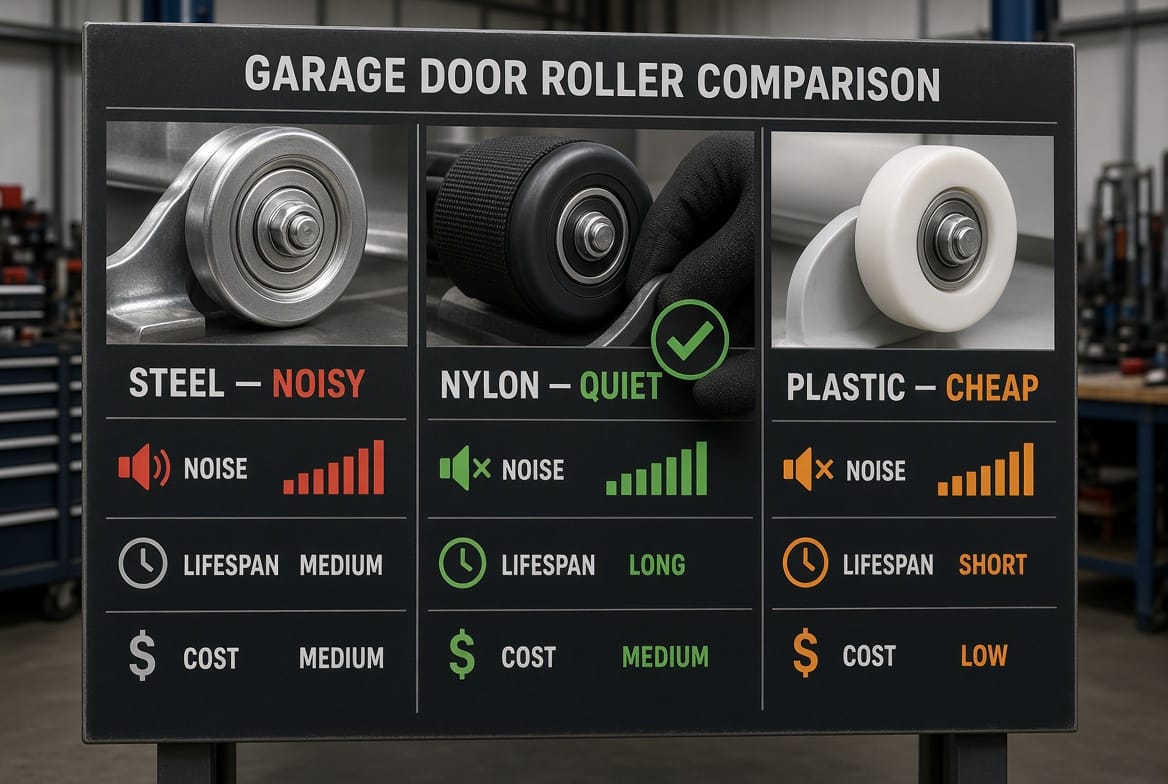
- Noise: Steel is typically the loudest. Nylon is the quietest. Plastic starts quiet but quickly becomes noisy as it wears.
- Durability: Steel handles the heaviest loads. Quality nylon lasts longest in residential settings. Plastic fails first.
- Cost: Plastic is cheapest upfront. Steel sits in the middle. Nylon costs more initially but often costs less over a 10-year period because it needs replacement less often.
- Maintenance: All types benefit from annual lubrication, but steel demands it most. Nylon is the most forgiving.
- Best use case: Steel for commercial or very heavy doors; nylon for nearly all homes; plastic only when budget is extremely tight and replacement is planned soon.
Choosing the wrong type does not just affect comfort. A noisy steel set can disturb sleep or conversations. A failing plastic set can create safety risks if the door binds at the wrong moment. Nylon minimizes both problems for the majority of residential doors.
How to Choose the Right Rollers for Your Door
Start with three questions:
- How important is quiet operation? If the garage is attached to living space or you work from home, nylon is almost always the answer.
- How heavy is the door and how frequently is it used? Extra-heavy or high-cycle doors may still benefit from steel.
- What is the climate? Humid or salty air favors nylon or well-coated steel over untreated metal or cheap plastic.
Also match the physical specifications:
- Wheel diameter (commonly 2-inch or 3-inch)
- Stem length and style (short-stem vs. long-stem)
- Bearing type (sealed ball bearings are preferred)
- Number of rollers required (most standard doors use 10–12)
A professional technician measures these details on site and confirms compatibility with your existing tracks and opener. Guessing from photos or generic kits often leads to poor fit and wasted money.
The Professional Replacement Process
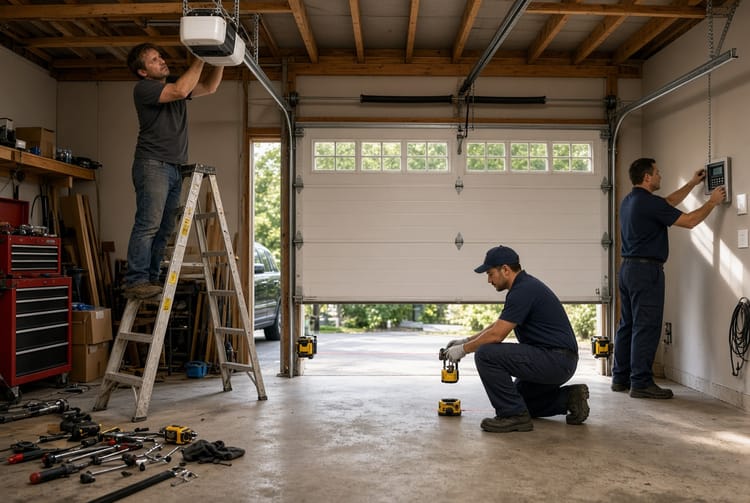
Garage door roller replacement looks simple but involves safety-critical components. Springs remain under high tension even when the door is closed. Tracks must stay perfectly aligned. For these reasons, most manufacturers and safety organizations recommend trained service rather than a weekend DIY project.
A typical professional visit includes:
- Full visual and operational inspection of rollers, tracks, cables, springs, and opener
- Safe disconnection of the opener and secure support of the door
- Removal of old rollers one section at a time while maintaining balance
- Installation of new rollers with correct orientation and lubrication
- Track alignment check and minor adjustments
- Reconnection, force and travel limit testing, and photo-eye safety verification
- Demonstration of the improved, quieter operation
The entire process for a standard residential door usually takes one to two hours. Homeowners immediately notice the difference: less noise, smoother travel, and reduced vibration.
Why Professional Service Protects Your Investment
Incorrect installation can void opener warranties, damage tracks, or create new binding points. A trained technician also spots related issues — worn hinges, stretched cables, or an opener that is oversized or undersized for the door — before they become failures.
Professional work comes with the added reassurance of proper parts selection. Technicians stock quality nylon rollers with sealed bearings rather than the thinnest plastic alternatives sometimes sold online. That single difference often determines whether the door stays quiet for a decade or starts rumbling again in two years.
Simple Maintenance After Replacement
Once new rollers are installed, a short maintenance routine keeps them performing:
- Listen once a month for any new sounds
- Wipe tracks clean of dirt and old grease twice a year
- Apply a silicone- or lithium-based garage-door lubricant to the roller stems and bearings annually (avoid heavy grease that attracts grit)
- Have the full system inspected every 12–18 months
These steps are inexpensive and extend the life of nylon or steel rollers significantly. Plastic rollers still tend to wear out regardless of care.
Final Recommendation and Next Step
For the large majority of homeowners, nylon rollers deliver the best combination of quiet operation, durability, and value. Steel remains appropriate for unusually heavy or commercial doors. Plastic should be avoided except as a short-term measure.
Choosing the right rollers now prevents noise complaints, reduces wear on the opener and springs, and keeps the door operating safely for years. If your garage door has become louder, less smooth, or simply due for service, professional replacement is a straightforward, high-impact upgrade.
Choose the right rollers for quiet operation. A trained technician can inspect your current rollers, recommend the correct nylon or steel set for your door, and complete the work the same day in most cases. Peaceful, reliable garage-door operation is only one phone call away.
Upgrade to Quiet, Long-Lasting Rollers – Call Now!