The Garage Door Spring Torsion: Adding Turns for Proper Tension
A garage door that feels heavier than usual or fails to open completely is often sending a clear warning about its most critical and dangerous component: the torsion spring. This tightly wound steel coil, mounted on a shaft above the door opening, stores enormous energy to counterbalance the full weight of the door. When that stored energy is no longer correctly matched to the door, the entire system becomes unreliable and unsafe. Adding turns to restore proper tension is a precise, high-risk procedure that belongs exclusively in the hands of trained professionals.
Stop Risky Spring Adjustments — Call Pros Now
Understanding how these springs function, recognizing the signs of incorrect tension, and knowing why adjustment must never be attempted as a do-it-yourself project can prevent serious injury and costly damage. This article explains the mechanics, the warning signs, and the reasons professional service is the only responsible choice.
How Torsion Springs Balance Garage Door Weight
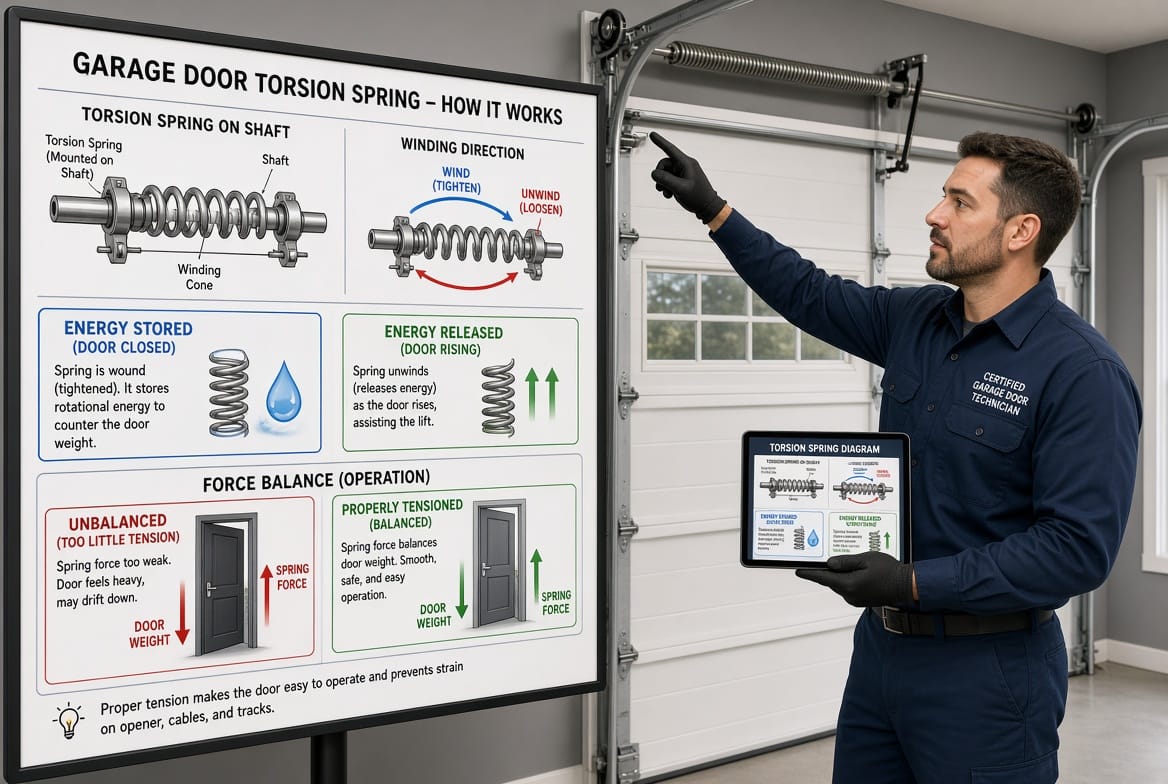
Torsion springs are engineered specifically to offset the substantial weight of a typical residential garage door, which can easily exceed 150 to 400 pounds depending on material and size. The spring (or pair of springs) sits on a horizontal torsion bar or shaft positioned directly above the door. Cables attached to the bottom corners of the door wrap around drums at each end of the shaft.
When the door is closed, the springs are wound to their maximum working tension. That winding stores potential energy. As the door is raised, the springs gradually unwind and release that energy through the shaft, drums, and cables, making the door feel nearly weightless and allowing it to travel smoothly along its tracks. The system is designed so the spring force almost exactly matches the door’s weight at every point in its travel.
Over thousands of opening and closing cycles, metal fatigue, temperature changes, and normal wear cause the springs to lose some of their original tension. The result is an imbalance: the door becomes harder to lift, may not stay open, or fails to travel its full height. In some cases one spring in a dual-spring system weakens faster than the other, producing uneven movement.
Restoring balance requires adding a calculated number of turns to the spring. Each additional turn increases stored energy. The exact number depends on door weight, spring wire diameter, inside diameter, and length—variables that professionals measure and calculate on site. There is no universal “standard” number of turns that applies to every door.
Why Proper Tension Matters for Safety and Performance
Correct spring tension keeps the garage door operating as a balanced, controlled system rather than a heavy, unpredictable object. When tension is too low, the opener motor (if present) must work harder, tracks and rollers experience extra strain, and the door can slam shut if the opener is disconnected. When tension is uneven, the door may bind, jump off its tracks, or close with dangerous force.
A well-balanced door also extends the life of every other component. Cables last longer, rollers stay aligned, and the opener is not forced to compensate for missing spring assistance. Homeowners often notice improved quietness and smoother travel immediately after a professional tension correction.
Clear Signs That Torsion Spring Tension Is Incorrect
Homeowners do not need specialized tools to notice when spring tension has become inadequate. Several observable symptoms appear well before a complete spring failure:
- The door will not open fully and stops several inches or more short of the header.
- The door feels unusually heavy when lifted manually, even after the opener is disengaged.
- Operation is uneven—one side rises faster or higher than the other.
- The door slams shut or drops suddenly when the opener is released.
- Visible gaps appear between spring coils when the door is closed, or the springs look stretched and deformed.
- The opener struggles, makes louder noises, or reverses unexpectedly.
Any one of these signs indicates the counterbalance is no longer correct. Continuing to use the door in this condition accelerates wear on cables, drums, rollers, and the opener itself. More importantly, an imbalanced door can become a falling hazard.
Why Adding Turns Is Never a Do-It-Yourself Task
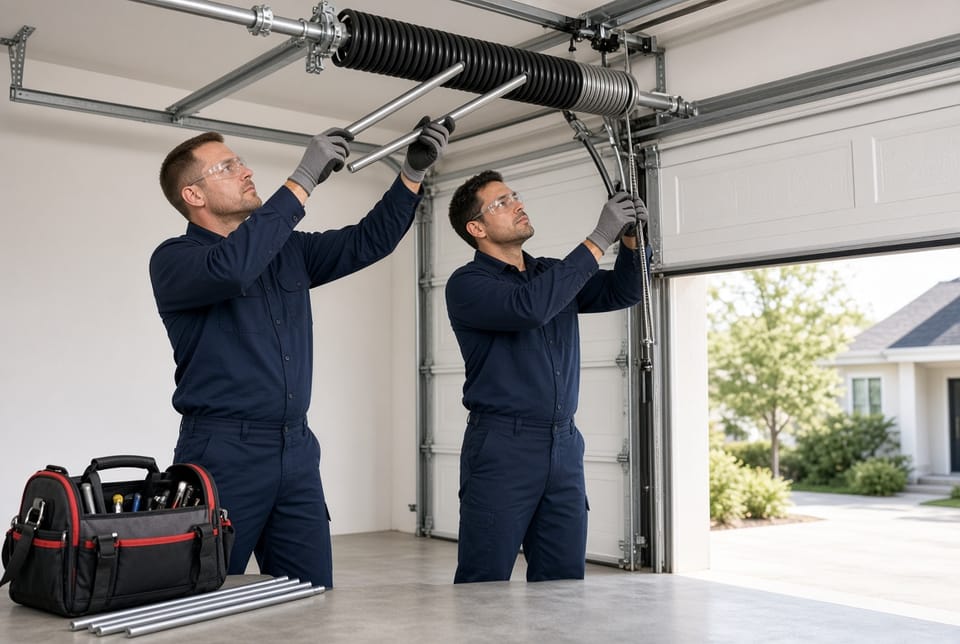
Torsion springs operate under extreme stored energy. A single spring can contain enough force to cause severe lacerations, broken bones, or fatal injury if it releases unexpectedly. Winding bars—the long steel rods used to turn the spring—must be inserted into specific holes in the winding cone and held with precise control. A slip, an incorrectly sized bar, or an error in the number of turns can send the bar flying or cause the spring to unwind violently.
Additional risks include:
- Incorrect calculation of required turns, leading to over-tensioning that can snap the spring or damage the door.
- Failure to secure the door and shaft properly before beginning work.
- Working on a dual-spring system without equalizing both springs.
- Lack of proper safety equipment and backup support.
Even experienced handymen who have adjusted other household items routinely underestimate the forces involved. Insurance policies and manufacturer warranties typically exclude damage or injury resulting from unauthorized spring work. The only safe approach is to treat the torsion spring as a component that requires specialized training, calibrated tools, and documented procedures.
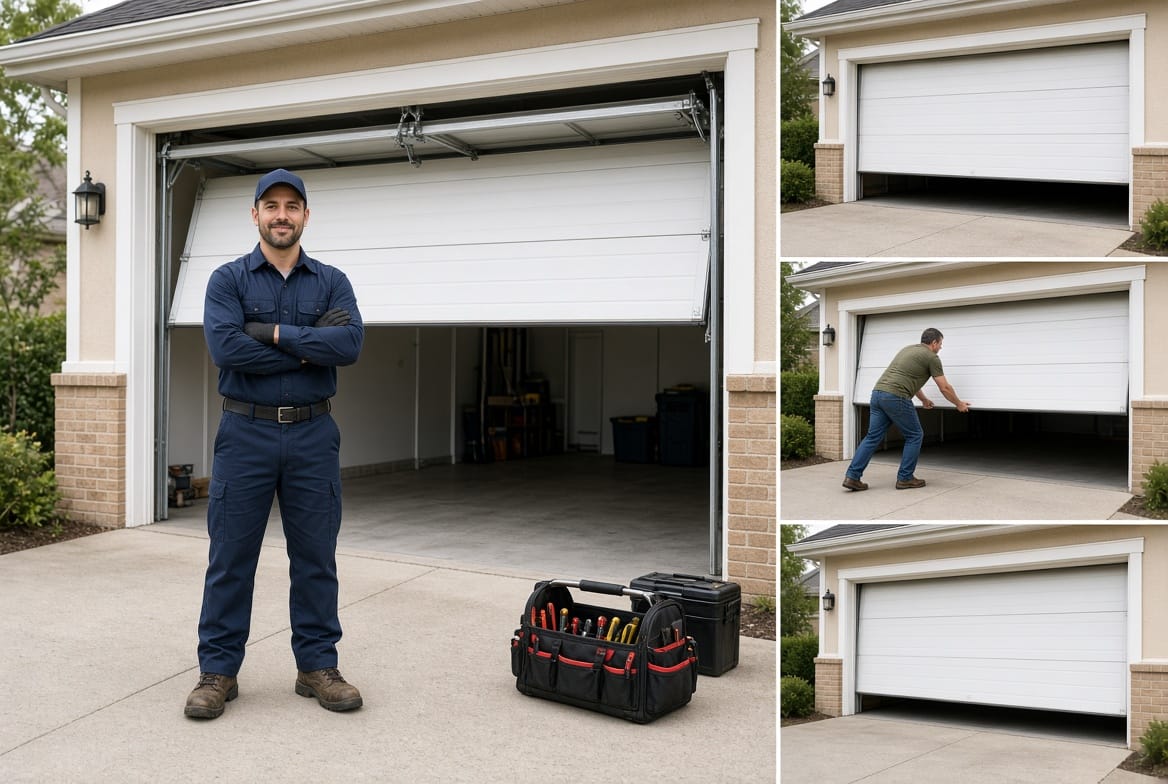
Professionals arrive with the correct winding bars, locking pliers, and measurement tools. They first confirm door weight and spring specifications, then make incremental adjustments while testing balance at multiple points of travel. After the correct tension is achieved, they inspect cables, drums, bearings, and safety cables (where present) before restoring the door to service.
What to Expect from Professional Torsion Spring Service
A qualified technician begins with a complete visual and operational inspection. The door is disconnected from the opener and lifted by hand to evaluate current balance. Spring condition, cone integrity, and shaft alignment are checked. Only after these assessments does the technician proceed with tension correction if it is appropriate and safe.
In many cases the springs have reached the end of their service life and replacement is the more reliable long-term solution. High-cycle springs are often recommended for households that open the door many times per day. The technician will explain options clearly and complete the work with the door fully secured.
After service, the door should feel nearly weightless when lifted manually and should stay in place when stopped at any height. The opener, if used, will operate with less strain and quieter motion.
Ongoing Care That Protects Your Investment
While homeowners should never attempt spring winding, simple habits help maintain system health. Keep the tracks clean and lightly lubricated. Listen for new noises. Test balance periodically by disconnecting the opener and lifting the door halfway; it should stay put with little effort. Schedule a professional inspection every one to two years, or immediately if any of the warning signs appear.
Temperature extremes and high-use periods (summer, holidays) place extra demand on springs. Addressing small changes in performance early prevents the sudden failure that leaves a family unable to enter or exit the garage.
The Only Safe Next Step
Torsion springs are among the most powerful and least forgiving components in a home. Adding turns to restore proper tension is a calculated, high-stakes procedure that demands training, the right tools, and respect for stored energy. Attempting the work yourself exposes you, your family, and your property to unnecessary risk.
Never adjust torsion springs yourself. The moment you notice a door that will not open fully, feels heavy to lift, or operates unevenly, stop using it if possible and contact trained technicians. Professional service restores safe, reliable operation quickly and correctly.
Experienced technicians are ready to inspect, adjust, or replace torsion springs so your door works the way it was designed—smoothly, safely, and without hidden danger.
Protect Your Family from Spring Failure — Call Now