The Garage Door Sensor Bracket: Alignment Adjustment for Safety
Garage door sensors are among the most critical safety components in your home. When the sensor brackets become misaligned, the entire system can fail, creating serious hazards for your family and property. Proper sensor bracket alignment adjustment ensures your garage door reverses instantly upon detecting an obstruction, preventing accidents and maintaining reliable daily operation.
Get Safe Sensor Alignment Now – Call Now!
At our service, we prioritize preventive maintenance to keep these vital components functioning perfectly. This comprehensive guide walks you through understanding, diagnosing, and correcting alignment issues with confidence — while highlighting when professional help delivers the safest results.
Sensor misalignment ranks as a leading cause of garage door malfunctions. Ignoring it risks injury, vehicle damage, or even fire hazards from repeated failed operations. Fortunately, with the right approach, most adjustments are straightforward and empowering for homeowners.
Why Garage Door Sensor Alignment Matters for Your Family’s Safety
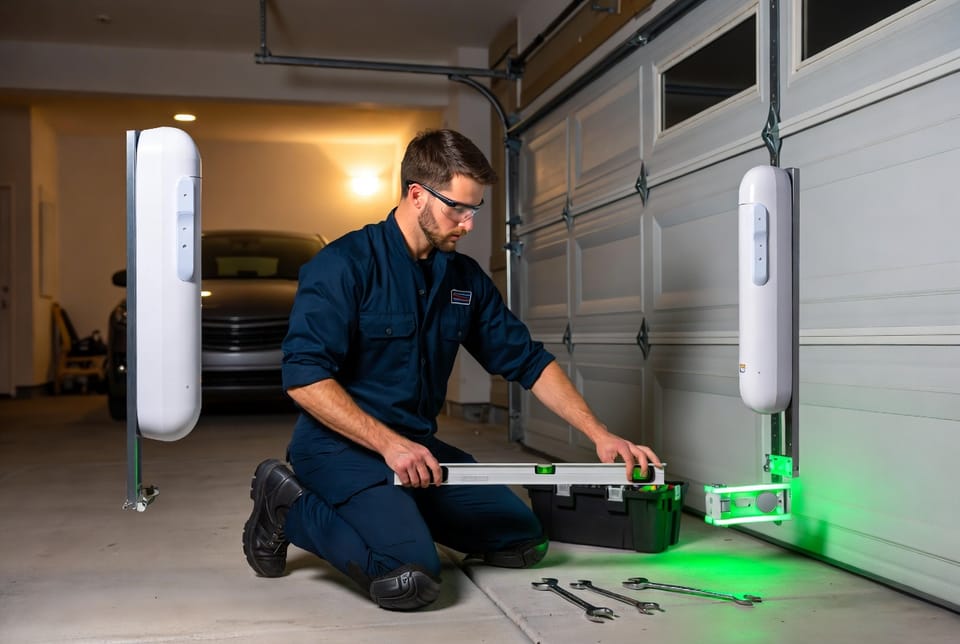
Modern garage doors rely on photoelectric sensors mounted on opposing brackets approximately six inches above the floor. These sensors emit an invisible infrared beam. When the beam remains unbroken, the door operates normally. Any interruption triggers an immediate reversal.
Misaligned brackets break this safety chain. Common triggers include:
- Vibrations from repeated door cycles loosening mounting screws
- Concrete settling shifting the garage floor over time
- Accidental impacts from lawn equipment, toys, or vehicles bending brackets
- Temperature fluctuations causing minor expansions and contractions in metal components
When sensors lose alignment, you might notice the door refusing to close, blinking safety lights, or erratic behavior. More dangerously, a compromised system may fail to detect a child, pet, or obstacle, leading to severe consequences.
Regular sensor bracket maintenance protects what matters most — your loved ones — while extending the lifespan of your entire garage door system.
Understanding How Garage Door Sensors and Brackets Work
Each sensor bracket holds a small unit: one transmits the beam while the other receives it. The brackets must position the sensors facing each other directly, typically within a narrow tolerance for the beam to connect reliably.
Key indicators of proper alignment include solid LED lights on both sensors (usually green). Flashing or off lights signal trouble. Brackets themselves are sturdy metal arms attached to the door tracks or walls, but they remain vulnerable to gradual shifts.
Investing time in alignment adjustment prevents costly repairs and enhances overall home security. Many homeowners in Dallas and surrounding Texas areas face unique challenges due to expansive clay soils that contribute to floor movement, making periodic checks especially valuable.
Common Garage Door Sensor Bracket Issues and How to Spot Them
Before attempting adjustments, identify the root cause. Here are frequent problems:
- Bent or deformed brackets: Often from physical impact, causing permanent offset.
- Loose mounting screws: Vibration gradually loosens hardware, allowing drift.
- Floor or wall shifts: Concrete settling or foundation movement mispositions one or both sensors.
- Dirt and debris buildup: Obstructing the lens or affecting bracket stability.
- Wiring strain: Pulled connections that subtly affect sensor positioning.
Pro tip: Perform a monthly visual inspection. Stand inside the garage with the door open and check for straight brackets and consistent sensor lights.
Step-by-Step Guide to Adjusting Garage Door Sensor Brackets
Safety first: Disconnect power to the garage door opener before any work. Wear protective eyewear and gloves.
- Locate the sensors: Identify the brackets on both sides of the garage door, about six inches from the floor.
- Loosen the screws: Use a screwdriver or wrench to carefully loosen the mounting screws on each bracket without removing them completely. This allows controlled movement.
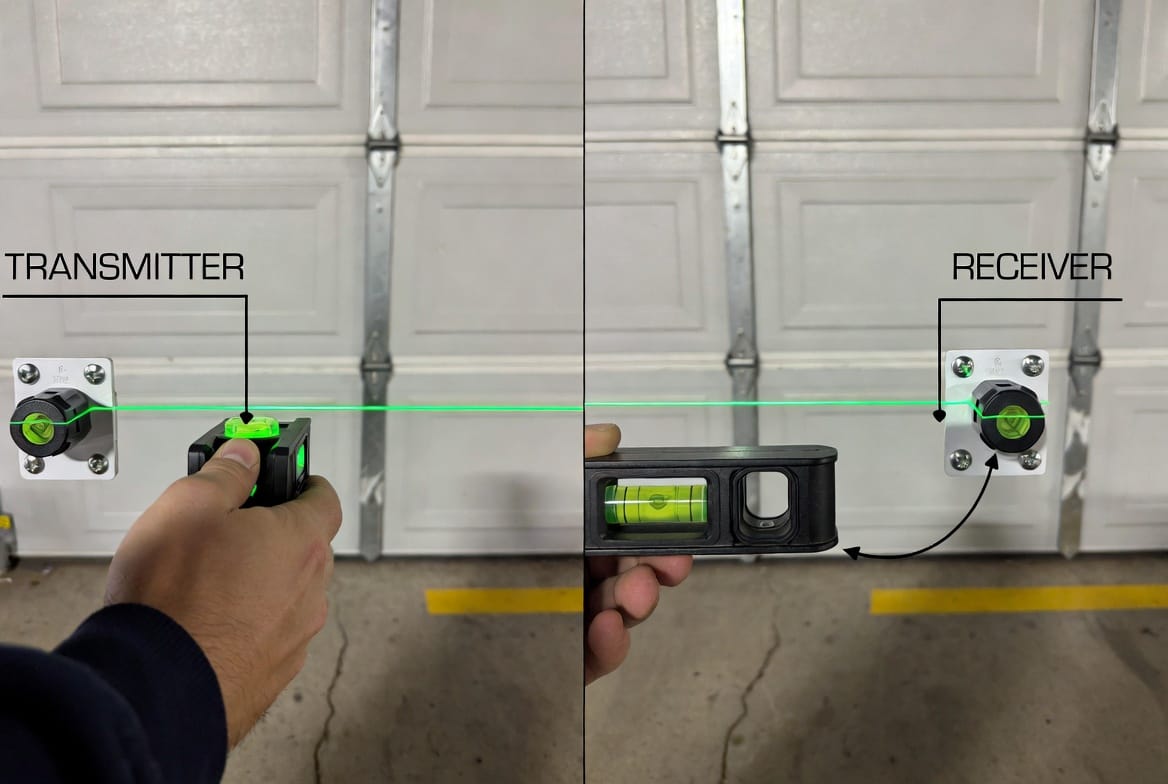
- Align the sensors: Adjust the brackets so the sensors face each other directly. Use a level or laser alignment tool for precision. The goal is a straight line of sight between the transmitter and receiver.
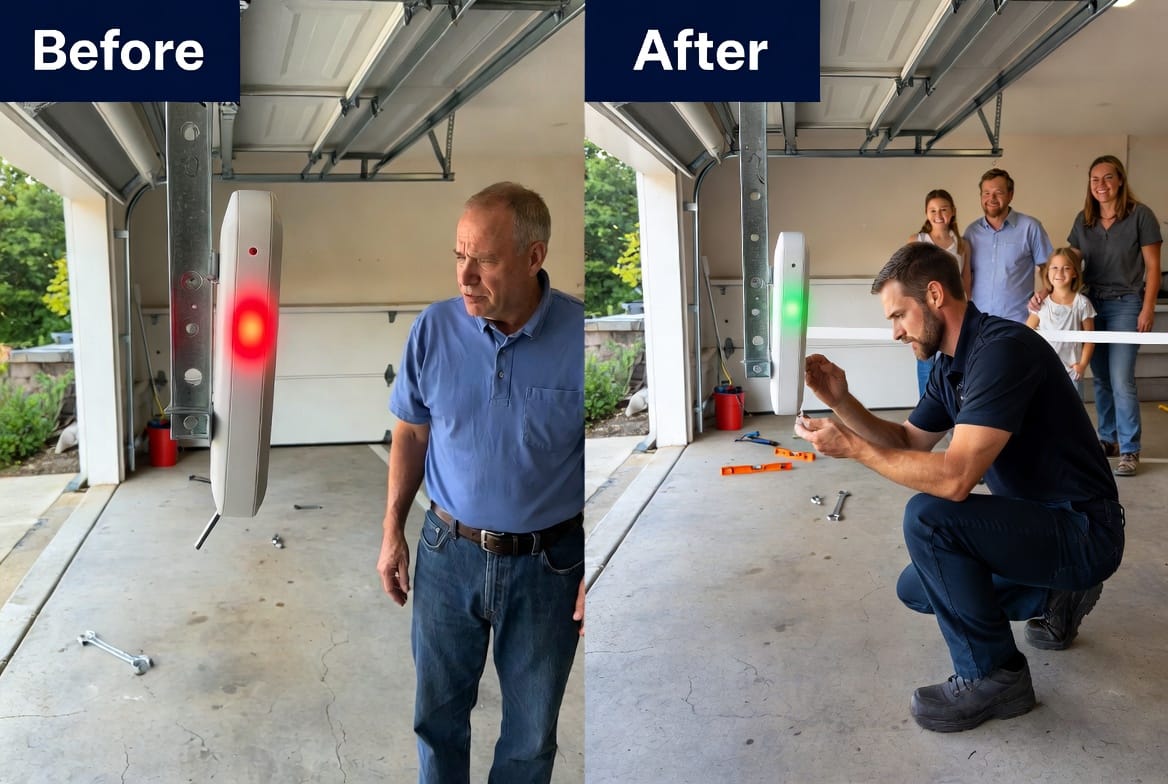
- Verify the lights: Restore temporary power and confirm both sensor LEDs show solid green (or your model’s equivalent). A steady beam indicates successful alignment.
- Tighten securely: Once aligned, firmly tighten all screws to prevent future loosening.
- Test thoroughly: Use the remote or wall button to operate the door. Place an obstruction (like a broom handle or cardboard box) in the path to ensure the door reverses immediately.
This process typically takes 15-30 minutes and restores full functionality in most cases.
Advanced Troubleshooting for Persistent Alignment Problems
Sometimes simple adjustments aren’t enough. Consider these scenarios:
- Bent brackets: Gently straighten with pliers or replace the bracket entirely. Replacement parts are inexpensive and widely available.
- Uneven garage floors: Use shims behind brackets to compensate for slopes caused by settling.
- Corroded hardware: In humid climates like parts of Texas, rust can weaken brackets. Clean and apply protective coating or replace affected parts.
- Intermittent issues: Check for spider webs, dust, or sunlight interference. Clean lenses with a soft cloth and mild solution.
If the door still malfunctions after adjustment, underlying track or spring problems may be at play. Professional diagnosis prevents guessing and ensures comprehensive repairs.
Preventive Maintenance Tips to Avoid Future Sensor Issues
Maintaining alignment requires minimal ongoing effort:
- Monthly visual checks: Confirm brackets remain straight and lights are solid.
- Seasonal deep cleaning: Remove debris and inspect wiring.
- Annual professional inspection: Recommended for comprehensive system evaluation, including springs, tracks, and sensors.
- Child and pet safety protocols: Teach family members never to interfere with sensors or door mechanics.
- Upgrade considerations: Modern sensors with enhanced weather resistance or wireless options reduce future maintenance needs.
Consistent care minimizes risks and keeps your garage door operating smoothly for years.
The Risks of DIY vs. Professional Garage Door Sensor Service
While many alignments are DIY-friendly, certain situations demand expert intervention:
- Complex wiring problems
- Damaged or aged components requiring replacement
- Uncertainty about spring tension or balance issues
- Repeated failures after adjustment
Attempting advanced repairs without proper training can lead to injury or void warranties. Our trained technicians bring specialized tools, experience, and safety protocols to every job.
Enhancing Overall Garage Door Safety Beyond Sensors
Sensor alignment forms part of a broader safety strategy. Also consider:
- Regular lubrication of moving parts
- Inspection of cables and springs for wear
- Ensuring proper door balance
- Installing smart monitoring systems for remote alerts
Combining these practices creates multiple layers of protection.
Frequently Asked Questions About Garage Door Sensor Brackets
How often should I check sensor alignment?
Monthly visual inspections and testing after any major weather event or impact.
Can I replace sensor brackets myself?
Yes, for straightforward cases. Ensure compatibility with your door model.
What do flashing sensor lights mean?
Typically misalignment, obstruction, or wiring issues — start with realignment.
Are garage door sensors required by code?
Yes, in most regions for safety compliance.
How much does professional adjustment cost?
Affordable service calls often resolve issues quickly, providing peace of mind.
Conclusion: Prioritize Safety with Proper Sensor Maintenance
Your garage door works hard every day. Protecting its sensor bracket alignment safeguards your family and investment. By following these steps and maintaining vigilance, you reduce risks and enjoy reliable performance.
Keep your sensors aligned for safety. We’re here to help Dallas-area homeowners maintain safe, dependable garage doors with professional care you can trust.
Don’t Risk It – Get Expert Garage Door Help Now