The Garage Door Opener Travel Speed: Adjusting for Safe, Smooth Operation
In the world of home maintenance, few components work as hard behind the scenes as your garage door opener. Yet one often-overlooked setting can make the difference between reliable daily use and frustrating, even hazardous, performance: the travel speed.
djust Your Garage Door Speed Today – Call Now!
This adjustable feature on most modern garage door openers lets you fine-tune how quickly the door moves along its tracks. When set correctly, it delivers effortless, quiet operation that feels effortless every single time you press the remote. When ignored, however, it can lead to jerky movement, unnecessary wear and tear, and potential safety concerns for your family and property.
At our garage door service center, we’ve helped thousands of homeowners restore smooth, safe performance simply by addressing this single setting. In this comprehensive guide, we’ll walk you through exactly why garage door opener travel speed matters, the clear signs that yours needs attention, and the straightforward steps to adjust it properly. Rest assured — with the right knowledge and a few careful tweaks, you can enjoy consistent, worry-free operation for years to come.
Understanding the Adjustable Travel Speed Feature
Every quality garage door opener comes equipped with an adjustable travel speed setting. This feature controls the rate at which the motor drives the door up or down the rails. Manufacturers design it to be customizable because no two garage doors are identical. Factors such as door weight, spring tension, track alignment, and even regional weather conditions can influence the ideal setting.
Travel speed is typically expressed as a percentage or a numbered scale on the opener’s control panel, logic board, or mobile app. Some models offer a physical dial, while newer smart openers allow precise adjustments through a companion app. The goal is balance: fast enough for convenience, yet controlled enough to prevent strain or instability.
When properly calibrated, the door glides smoothly from fully closed to fully open in seconds, stopping gently at both ends. This not of only feels premium but also protects the entire system from premature aging.
The Critical Role of Proper Speed in Safety and Durability
Travel speed directly influences two key areas: safety and long-term wear.
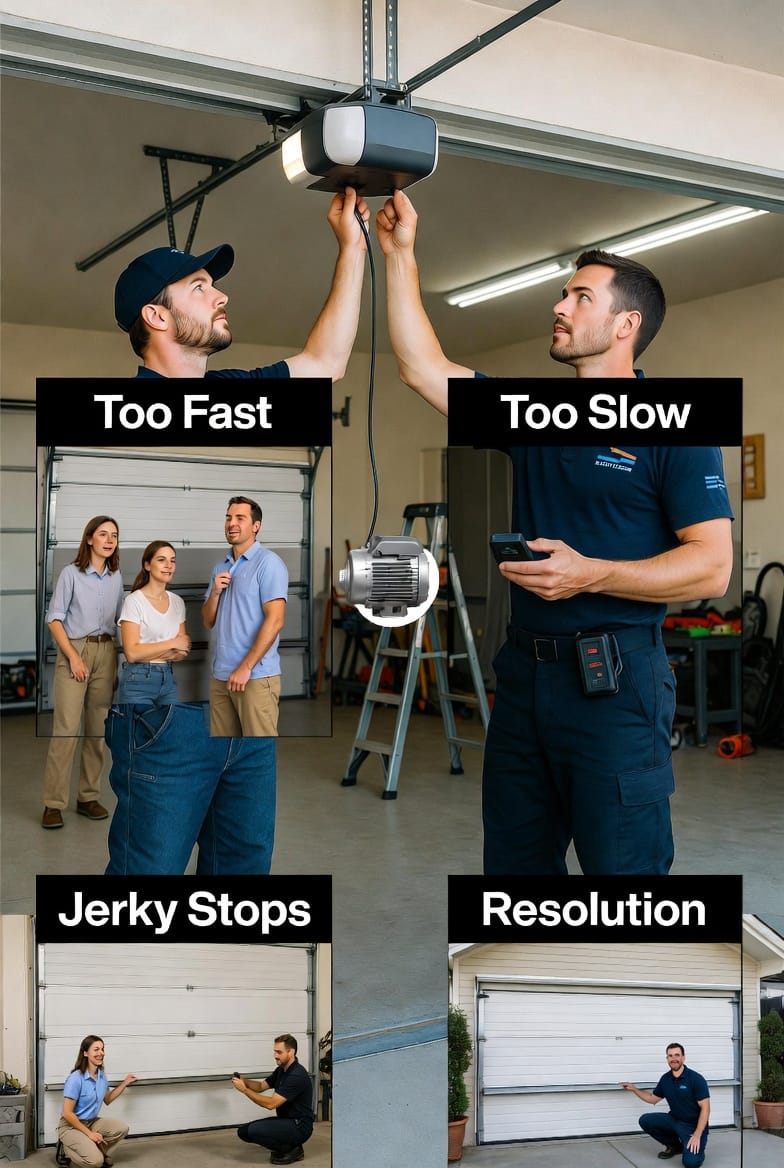
Too fast, and the door gains excessive momentum. This can cause sudden jerks at the top or bottom of travel, increasing the risk of the door coming off the tracks or pinching fingers and toes. Children and pets are especially vulnerable in these situations.
Too slow, and the motor works harder than necessary. This leads to motor strain, overheating, and higher electricity consumption. Over months and years, the extra workload accelerates excessive wear and tear on the chain, belt, springs, rollers, and hinges.
Properly adjusted travel speed minimizes vibration, reduces noise, and ensures the door reverses instantly if it encounters an obstruction — a critical safety feature required by federal standards. Homeowners who maintain the correct setting report fewer service calls, lower energy bills, and greater peace of mind knowing their garage door operates exactly as engineered.
Signs That Your Travel Speed Needs Adjustment
Recognizing the warning signs early can prevent small issues from becoming costly repairs. Watch for these common indicators:
- Door shakes excessively during operation — a clear sign the speed is set too high, causing instability and potential track damage.
- The door moves too slowly, accompanied by a loud humming or grinding noise from the motor — evidence of unnecessary strain.
- Jerky starts or stops that feel abrupt rather than smooth and controlled.
- Increased vibration felt throughout the garage walls or ceiling when the opener runs.
- Longer than normal travel time combined with the door hesitating midway.
- Higher than usual electricity usage on your monthly bill.
If you’ve noticed any of these symptoms, your garage door opener travel speed is likely out of balance. The good news? A simple adjustment can resolve them quickly and safely.
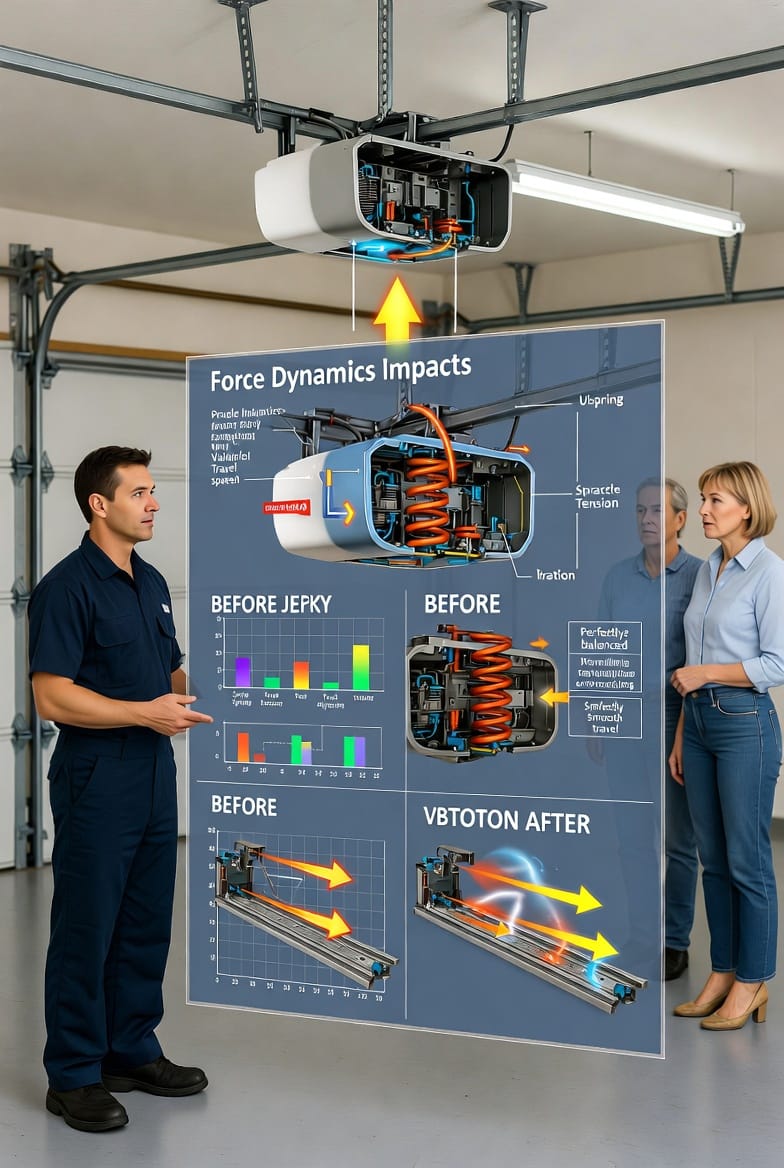
How Improper Travel Speed Impacts Your Entire System
Beyond the visible symptoms, incorrect travel speed creates a ripple effect throughout the garage door system.
Excessive speed forces the rollers and hinges to absorb sudden forces, wearing out bearings faster and loosening hardware over time. Springs, designed to counterbalance the door’s weight at a specific pace, become overstressed, leading to early failure or snapping.
On the slower end, the motor runs hotter for longer periods. This shortens its lifespan dramatically and can damage the capacitor or circuit board. Tracks may develop flat spots from uneven pressure, and the entire assembly begins to bind, creating even more resistance.
In extreme cases, unbalanced speed has been known to cause the door to reverse unexpectedly or fail to seal properly at the floor, allowing pests, dust, and weather to enter the garage. Adjusting the travel speed restores harmony to every moving part, extending the life of your entire system by years.
Step-by-Step: How to Adjust Your Garage Door Opener Travel Speed
Adjusting garage door opener travel speed is a straightforward DIY project when done methodically. Always prioritize safety and follow these steps:
- Prepare the area — Clear the garage floor, park vehicles outside, and keep children and pets away.
- Disconnect power — Unplug the opener or switch off the circuit breaker to avoid accidental activation.
- Locate the adjustment controls — Check the back of the opener unit for a speed dial, programming buttons, or access the settings menu on your smart opener app.
- Test current operation — Restore power temporarily and run one full cycle while observing speed and smoothness. Note any jerkiness or hesitation.
- Make incremental changes — Increase or decrease speed by small increments (typically 5-10% at a time). Many models require you to press and hold a “learn” or “program” button while adjusting.
- Test repeatedly — Run the door through at least five full open-close cycles after each change. Listen for smooth, quiet operation and watch for level travel.
- Fine-tune limits if needed — Speed adjustments sometimes affect travel limits, so verify the door stops exactly at the floor and ceiling.
- Secure and label — Once satisfied, tighten any screws and note the final setting for future reference.
This process typically takes less than 30 minutes and requires only basic tools such as a stepladder and screwdriver.
Tools You’ll Need and Professional Tips for Success
Gather these items before starting:
- Sturdy stepladder
- Flathead and Phillips screwdrivers
- Flashlight for viewing labels
- Your opener’s user manual (digital or printed)
- Smartphone for app-based models
Pro tip: Work during daylight hours when you can clearly see the door’s movement. If your opener is more than 10 years old, consider having a professional inspect the springs and cables first — they work in tandem with speed settings.
Always err on the side of caution. If the door feels unstable at any point, stop immediately and call for expert assistance.
Common Mistakes Homeowners Make and How to Avoid Them
Even well-intentioned DIYers sometimes create new problems. Avoid these pitfalls:
- Adjusting speed without first checking track alignment or lubrication.
- Making large changes instead of small, incremental ones.
- Ignoring the manufacturer’s specific programming sequence.
- Forgetting to test the safety reversal feature after changes.
- Neglecting to reconnect and test the wall button and remote controls.
By following the methodical steps above, you’ll sidestep these issues and achieve professional-level results.
The Benefits of Getting Your Travel Speed Right
Once adjusted correctly, the rewards are immediate and lasting. Your garage door will operate with whisper-quiet precision, enhancing curb appeal and daily convenience. You’ll experience fewer repairs, lower energy costs, and the confidence that comes from knowing your family is protected by a properly calibrated system.
Many homeowners report that the door feels “brand new” again — smooth, responsive, and reliable through every season.
Maintaining Optimal Travel Speed Long-Term
A one-time adjustment isn’t the end of the story. Schedule a quick visual inspection every six months. Lubricate rollers and tracks with garage-door-specific spray. Listen during operation for any returning signs of imbalance.
Smart openers even send maintenance reminders to your phone. Consistent attention keeps travel speed optimized and prevents small issues from escalating.
When to Seek Professional Garage Door Speed Adjustment
While many adjustments are straightforward, certain situations call for expert intervention. If your opener is part of an integrated smart home system, has unusual programming requirements, or if you’re uncomfortable working with electrical components, our trained technicians are ready to help.
We arrive equipped with manufacturer-specific tools and years of hands-on experience to ensure your garage door opener travel speed is set perfectly on the first visit.
Smooth and Safe Door Travel Starts Today
Your garage door should enhance your daily routine, not complicate it. By understanding and adjusting the travel speed, you take control of safety, performance, and longevity in one simple process.
We’re here to ensure your garage door operates flawlessly — every single time.
Restore Quiet & Reliable Door Travel – Call Today