The Garage Door Opener Force Adjustment: Preventing Injury
Garage door openers are designed for convenience, yet one critical safety feature often goes overlooked until something goes wrong. The force adjustment setting determines exactly how much power the opener applies when closing the door. When calibrated correctly, it allows the door to move smoothly and reverse if it meets resistance. When set too high, that same mechanism can generate enough pressure to cause serious injury or damage. Understanding and maintaining this adjustment is one of the simplest yet most effective ways homeowners can protect their families, pets, and property.
Call Now for Expert Garage Door Safety Check
This guide explains what the force adjustment does, why excessive force creates real risks, and the precise steps for adjusting and testing it safely. Everything here focuses on practical knowledge so you can take confident action or know when to bring in a trained technician.
Understanding Force Adjustment on Your Garage Door Opener
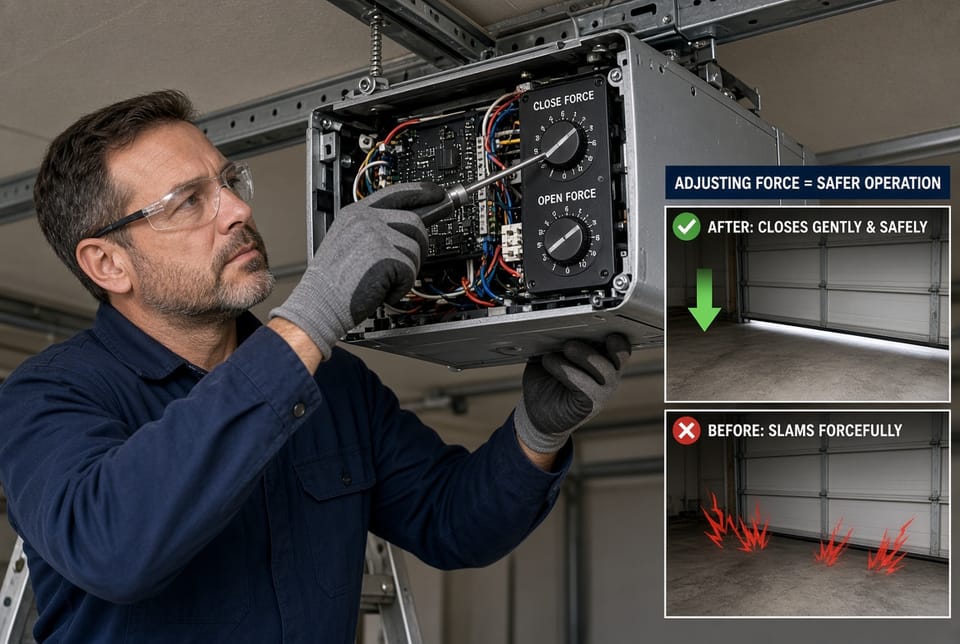
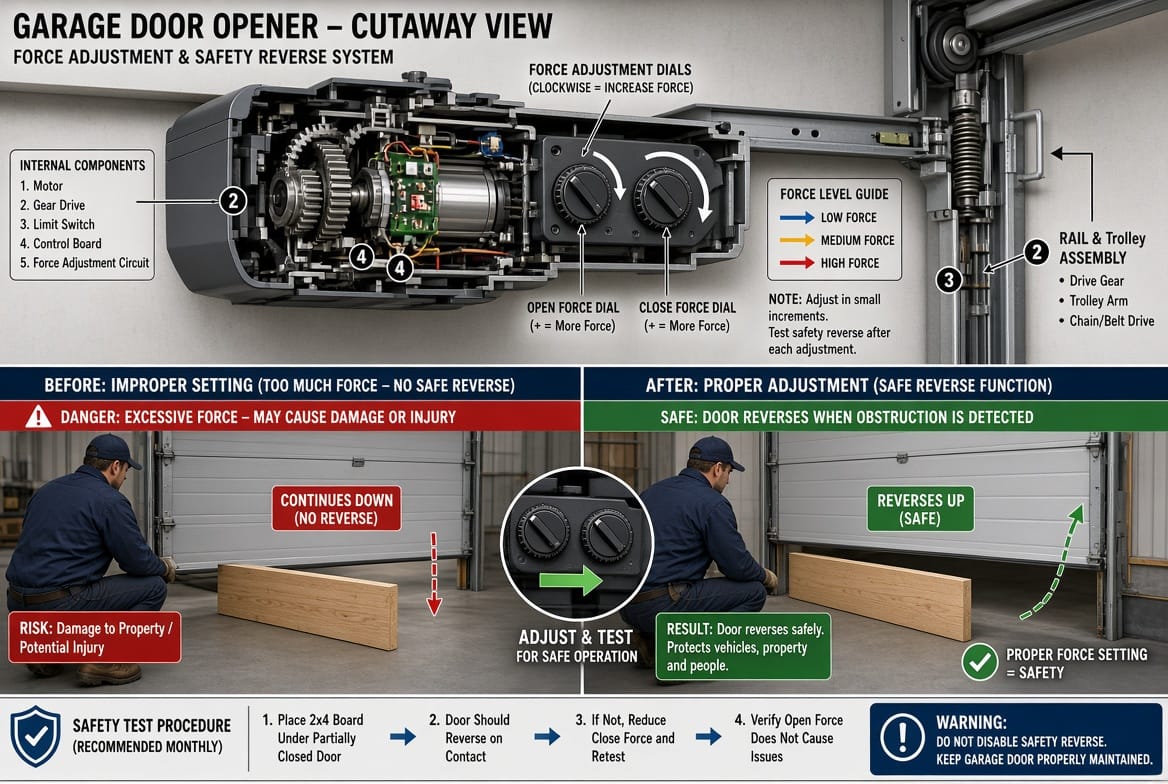
Every modern garage door opener includes force adjustment controls—usually small dials or screws labeled “force,” “close force,” or similar markings on the motor unit. These controls set the maximum amount of power the opener will use to push the door downward during the closing cycle.
Think of it as a sensitivity limiter. The opener needs enough force to overcome the door’s weight, track friction, and any minor resistance from weather seals. At the same time, it must remain sensitive enough to stop and reverse if it encounters an unexpected object—such as a child’s toy, a pet, or even a person. The adjustment finds that precise balance.
Most openers have separate settings for open force and close force. The close force is the one most directly tied to injury prevention because gravity already assists the downward movement. Setting it higher than necessary removes the safety buffer that protects against entrapment.
Proper calibration ensures the door closes firmly enough to latch and seal yet remains responsive to the built-in safety reverse mechanism. This dual function is why manufacturers include the adjustment and why annual checks are recommended as part of routine garage door maintenance.
Why Too Much Force Creates Serious Danger
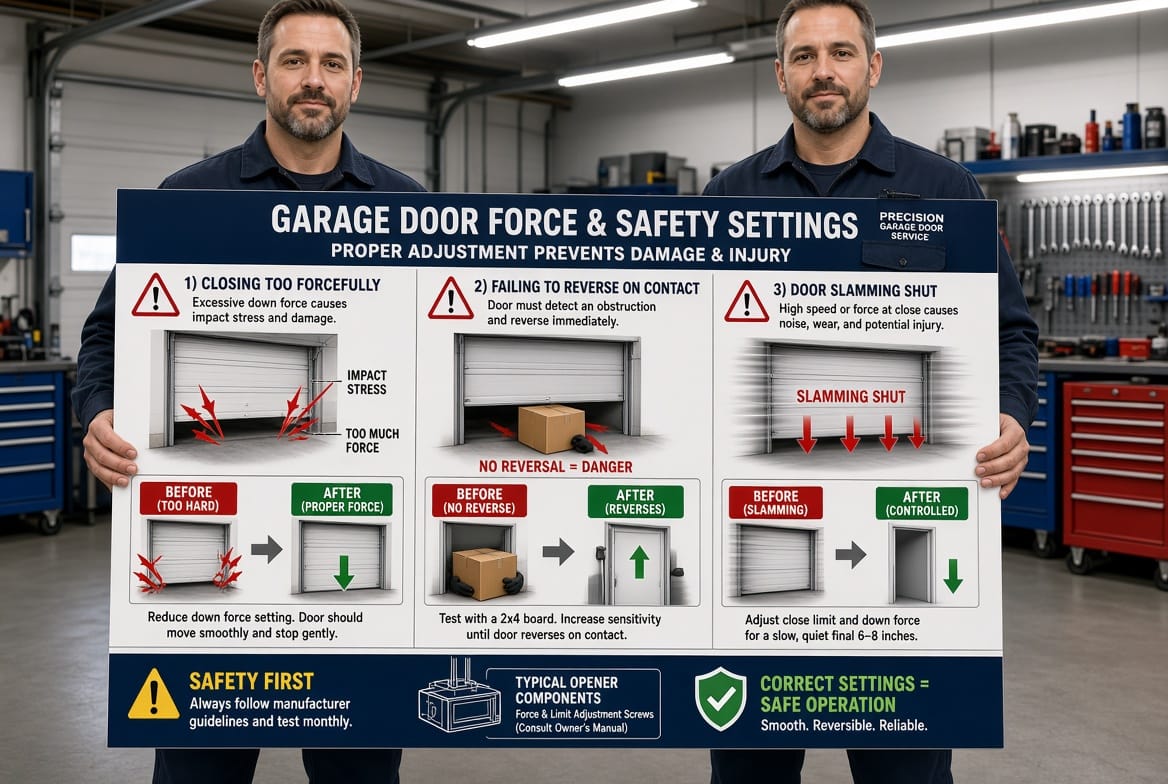
When the force adjustment is set too high, the opener treats almost any obstruction as something it can simply push through. The motor continues driving the door downward with full power instead of reversing. This creates several clear risks:
- Injury risk increases dramatically. A door that fails to reverse can strike a person, especially a child or elderly family member, with enough pressure to cause bruises, fractures, or worse.
- Property damage becomes more likely. Bicycles, lawn equipment, vehicles, or storage items left in the path can be crushed or bent.
- Mechanical stress rises on the door itself. Excessive force strains springs, cables, rollers, and the opener motor, leading to premature wear and costly repairs.
- Safety reverse systems are effectively bypassed. Even if photo-eye sensors are working, the high-force setting can override the intended protective response in certain situations.
These dangers are not theoretical. The force setting exists precisely because garage doors are heavy moving objects operating in shared family spaces. A correctly adjusted opener acts as a silent guardian. An over-adjusted one turns a helpful appliance into a potential hazard.
Recognizing the problem early prevents both immediate accidents and long-term equipment failure. Homeowners who treat force adjustment as a routine safety check rather than an afterthought keep their systems reliable year after year.
Common Signs Your Force Adjustment Needs Attention
Certain behaviors signal that the force adjustment may be incorrect. Watch for these indicators during normal daily use:
- The door closes with noticeable slamming or heavy impact at the bottom.
- The opener strains or makes louder-than-usual motor sounds while closing.
- The door refuses to reverse when it meets light resistance, such as a soft object placed in its path during a test.
- Closing seems overly powerful even on a clear track with no visible obstacles.
- The door stops partway and then continues downward with extra force instead of reversing cleanly.
Any of these patterns deserves prompt attention. Ignoring them allows the risk to remain present every time the door operates.
How to Adjust the Force Settings Safely
Adjusting the force requires care, patience, and a methodical approach. Always prioritize safety: keep children and pets away from the garage during the process, and never place any body part under a moving door.
Begin by locating the adjustment dials on the motor unit. They are typically found on the side or back of the opener housing. Some models use screw-style controls; others feature rotary dials. Consult your specific model’s markings so you turn the correct control for closing force.
Follow these steps in order:
- Disconnect any automatic timers or smart features temporarily so the door responds only to manual commands.
- Raise the door fully using the wall button or remote.
- Locate the close-force dial and note its current position. Make only small incremental changes—usually a quarter-turn at a time.
- Lower the dial slightly to reduce force if the door has been slamming or failing to reverse.
- Test the new setting immediately using a controlled obstruction method described below.
- Repeat the process for the open-force setting if the door struggles to lift or reverses unexpectedly while rising.
- Once both directions feel balanced, run several full open-and-close cycles without obstruction to confirm smooth, quiet operation.
Small adjustments produce noticeable differences. Over-correcting in the opposite direction can leave the door too weak to close fully against wind or minor track resistance. The goal is the lowest force that still allows reliable, complete closure.
Performing the Critical Safety Test
After any force change, the obstruction test verifies that the safety reverse function works as intended. This test is essential and should never be skipped.
Place a sturdy object approximately 1.5 inches thick—such as a short wooden block or a rolled towel—centered on the floor in the door’s path. Activate the closer. The door should contact the object, stop, and reverse direction within two seconds. If it continues pushing downward or only pauses briefly without reversing, the force remains too high. Return to the dial and reduce the setting further, then retest.
Repeat the test at least twice to confirm consistency. Also check that the photo-eye sensors remain aligned and unobstructed, as they provide an independent layer of protection. The force adjustment and the sensors work together; both must function correctly for maximum safety.
Document the final dial positions if your opener allows it. This creates a useful reference for future seasonal checks when temperature changes can affect door balance and friction.
When Professional Service Becomes the Safer Choice
While many homeowners successfully complete basic force adjustments, certain situations call for experienced hands. Call a qualified technician if:
- The dials show no effect after multiple careful attempts.
- The door is more than ten years old and has never received a full safety inspection.
- You notice frayed cables, uneven spring tension, or binding in the tracks.
- The opener lacks clear force controls or uses proprietary electronic settings.
- Any previous injury or near-miss has occurred involving the door.
Professional service includes a complete evaluation of the entire system—springs, cables, rollers, sensors, and motor—ensuring the force adjustment sits within a balanced mechanical environment. Technicians also carry calibrated tools and follow manufacturer torque specifications that go beyond typical homeowner resources.
Regular professional safety checks, ideally once a year, catch developing issues before they become hazards. They also provide peace of mind that every protective feature, including force sensitivity, operates at peak effectiveness.
Long-Term Benefits of Correct Force Settings
Maintaining proper force adjustment delivers advantages that extend far beyond immediate injury prevention:
- Reduced wear on mechanical components extends the useful life of the entire garage door system.
- Quieter, smoother operation improves daily convenience and reduces household noise.
- Lower energy consumption occurs because the motor works within its designed range rather than fighting excessive resistance or overexerting.
- Insurance and home safety standards are more easily met when documented maintenance includes force verification.
- Family members of all ages can use the garage with greater confidence knowing the door responds intelligently to unexpected contact.
These benefits accumulate over time. A few minutes spent on adjustment today can prevent both physical harm and expensive repairs tomorrow.
Seasonal Considerations and Ongoing Maintenance
Temperature swings affect garage door performance. Cold weather increases friction in tracks and stiffens weather seals, sometimes requiring a slight temporary increase in force. Warm weather can reduce resistance, allowing a lower setting. Checking the adjustment at the start of winter and again in spring keeps the system responsive year-round.
Combine force checks with other routine tasks: lubricating rollers and hinges, inspecting cables for wear, verifying sensor alignment, and testing the emergency release. A simple checklist ensures nothing is overlooked.
Keep the area around the door clear of clutter. Even a perfectly adjusted opener cannot compensate for objects left in the closing path.
Final Thoughts on Protecting What Matters
The garage door opener force adjustment is a quiet but powerful safety feature. It sets the exact amount of force the opener uses to close the door, ensuring the system remains strong enough for reliable operation yet sensitive enough to reverse and protect against injury or damage. Too much force removes that protective margin and turns everyday convenience into unnecessary risk. By learning the adjustment process, performing regular obstruction tests, and watching for warning signs, homeowners take direct control of their family’s safety.
When dials need turning, test with care. When uncertainty remains, professional expertise provides the most reliable solution. Proper force adjustment prevents injury. For a complete safety check that includes force calibration, sensor verification, and full system inspection. A short conversation and a scheduled visit can restore confidence every time the garage door moves.
Stop Excess Force Risks – Call for Safety Inspection