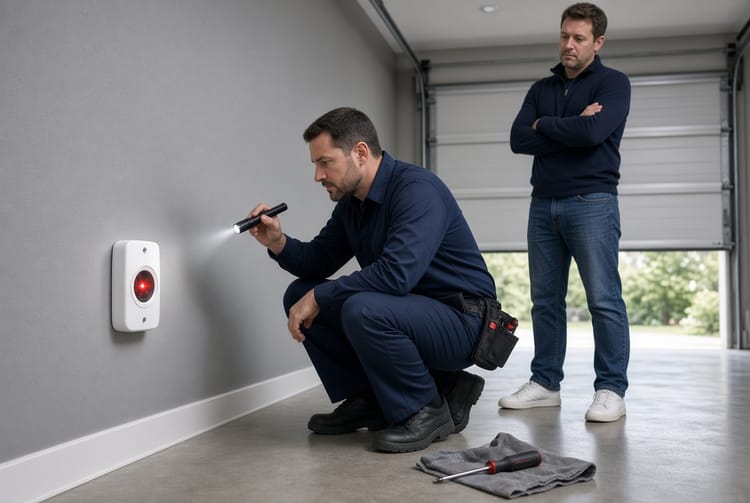
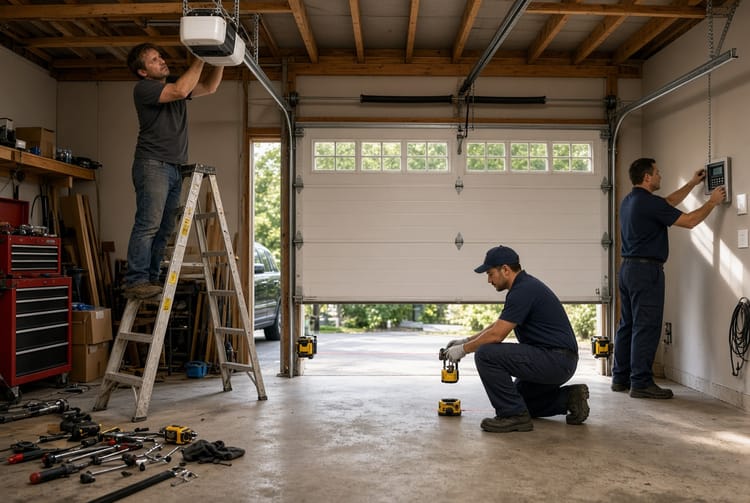
The Garage Door Lock: Manual Security When Power Is Out
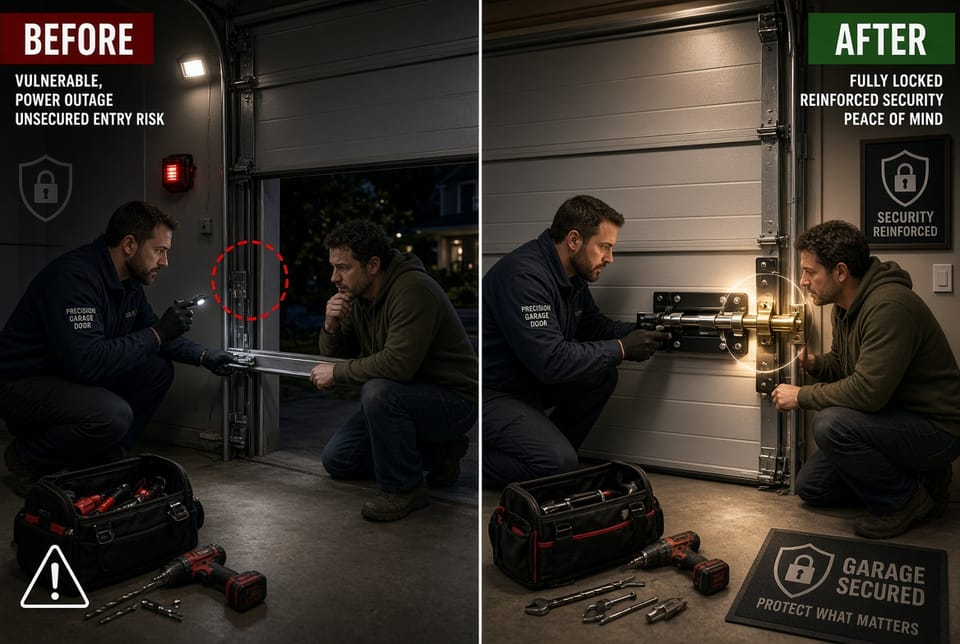
When a sudden power failure hits your neighborhood, most homeowners immediately worry about lights, refrigerators, and internet connectivity. Few pause to consider the quiet vulnerability of their garage door. An electric opener that normally provides convenient access can leave the entire entry point exposed once the electricity stops flowing. This is precisely where a manual garage door lock steps in as an essential backup feature. It delivers straightforward, reliable protection that does not depend on power, batteries, or complex electronics.
Secure Your Garage Door Lock Today – Call Now!
In the following comprehensive guide, we explore exactly what a manual lock accomplishes, the primary types available—slide bolt and padlock styles—and the practical steps required for correct installation. You will also discover why this simple addition ranks among the smartest investments for long-term garage door security. By the end, you will understand how to restore control and peace of mind whenever the power grid fails.
Why Power Outages Expose Garage Door Vulnerabilities
Modern garage door openers are engineered for convenience. A remote button or wall switch raises or lowers the door with minimal effort. Yet that same reliance on electricity becomes a liability the moment the grid goes down. Without power, the motor cannot engage, and many homeowners discover too late that the door can be forced upward or left partially open.
A manual garage door lock solves this problem by creating a physical barrier independent of the opener system. Whether the outage lasts minutes or days, the lock keeps the door firmly secured against unauthorized entry. Storms, grid maintenance, or unexpected blackouts no longer translate into open invitations for opportunistic individuals.
Consider the broader implications. Your garage often stores vehicles, tools, bicycles, and seasonal equipment of significant value. It also frequently connects directly to living spaces. Leaving the door unsecured during a power outage risks more than property loss—it can compromise the safety of everyone inside the home. Installing a manual lock transforms that risk into reliable protection.
What a Manual Lock Actually Does
At its core, a manual garage door lock performs one critical function: it secures the door when the electric opener fails or is deliberately disabled. The mechanism physically prevents the door from traveling along its tracks. Once engaged, the door cannot be lifted from the outside even if someone tries to force it.
This backup feature works alongside, rather than against, the existing opener. During normal powered operation the lock remains disengaged so the motor can move the door freely. When electricity disappears or when you choose to lock the door for extended absences, you simply activate the manual lock. The result is immediate mechanical security that requires no power source whatsoever.
The simplicity is intentional. There are no circuits to short, no batteries to replace, and no software to update. The lock relies on solid metal components that withstand weather, temperature swings, and repeated use. Homeowners gain an authoritative layer of defense that complements every other security measure already in place.
Primary Types of Manual Garage Door Locks
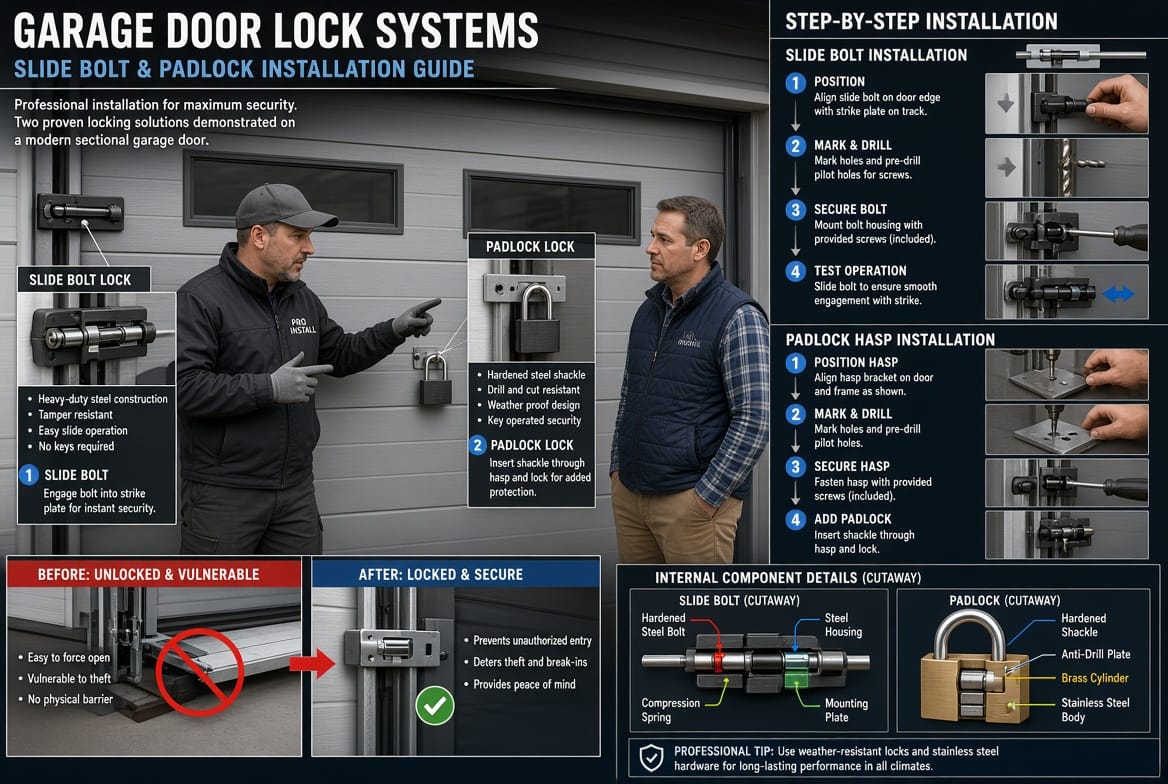
Two designs dominate the market for reliable manual security: the slide bolt and the padlock configuration. Each offers distinct advantages depending on door style, existing hardware, and personal preference.
- Slide Bolt Locks
A slide bolt consists of a sturdy metal bar that slides horizontally into a matching receiver mounted on the door frame or track. When extended, the bolt blocks vertical movement completely. Many models feature a spring-loaded design for quick engagement and a locking pin or hasp for added resistance. These locks excel on sectional and one-piece doors because they can be positioned at convenient heights and operate with one hand. - Padlock Systems
A padlock arrangement typically uses a hasp or eyelet attached to the door and frame. Once the door is closed, a high-security padlock threads through the openings and prevents separation. Some versions incorporate a sliding bar that the padlock then secures. This style appeals to homeowners who already own quality padlocks or prefer the visual deterrent of a visible lock.
Both types share key attributes: they are mechanical, weather-resistant, and fully independent of the opener motor. Selecting between them often comes down to installation ease and aesthetic preference. A slide bolt tends to look cleaner and operates faster, while a padlock system offers flexibility if you already maintain multiple keyed locks around the property.
Step-by-Step Installation Guidance
Proper installation ensures the lock performs exactly as intended. While many homeowners successfully complete the process themselves, the steps below outline a professional-grade approach that prioritizes safety and longevity.
- Prepare the Work Area
Begin by fully closing the garage door and disconnecting the electric opener for safety. Clear the floor of vehicles and obstacles. Gather the lock kit, a drill, appropriate bits, measuring tape, level, and protective eyewear. - Select the Optimal Mounting Location
For a slide bolt, choose a point roughly midway up the door edge where the bolt can align cleanly with the frame or track. Measure carefully so the bolt fully engages when extended. For a padlock hasp, position the components so the padlock sits at a comfortable height yet remains inaccessible from outside. - Mark and Drill Pilot Holes
Hold the lock body or hasp against the door and frame. Use a pencil to mark screw locations. Drill pilot holes slightly smaller than the provided fasteners to prevent wood splitting or metal warping. - Secure the Hardware
Attach the lock body to the door using the supplied heavy-duty screws. Mount the receiver or hasp on the frame or track. Check alignment repeatedly—any slight offset will prevent smooth operation. - Test Engagement and Release
Slide the bolt or insert the padlock several times. Confirm the door cannot be lifted even a fraction of an inch once locked. Reconnect the opener and verify that the manual lock does not interfere with normal powered travel when disengaged. - Apply Final Adjustments and Lubrication
Tighten all fasteners securely. Apply a light coat of graphite or silicone lubricant to moving parts so the mechanism remains smooth through seasons of heat and cold.
If at any point the process feels uncertain, professional installation guarantees correct alignment and eliminates the risk of damaging the door or tracks. A correctly fitted lock becomes an invisible yet powerful guardian.
Key Benefits That Deliver Lasting Value
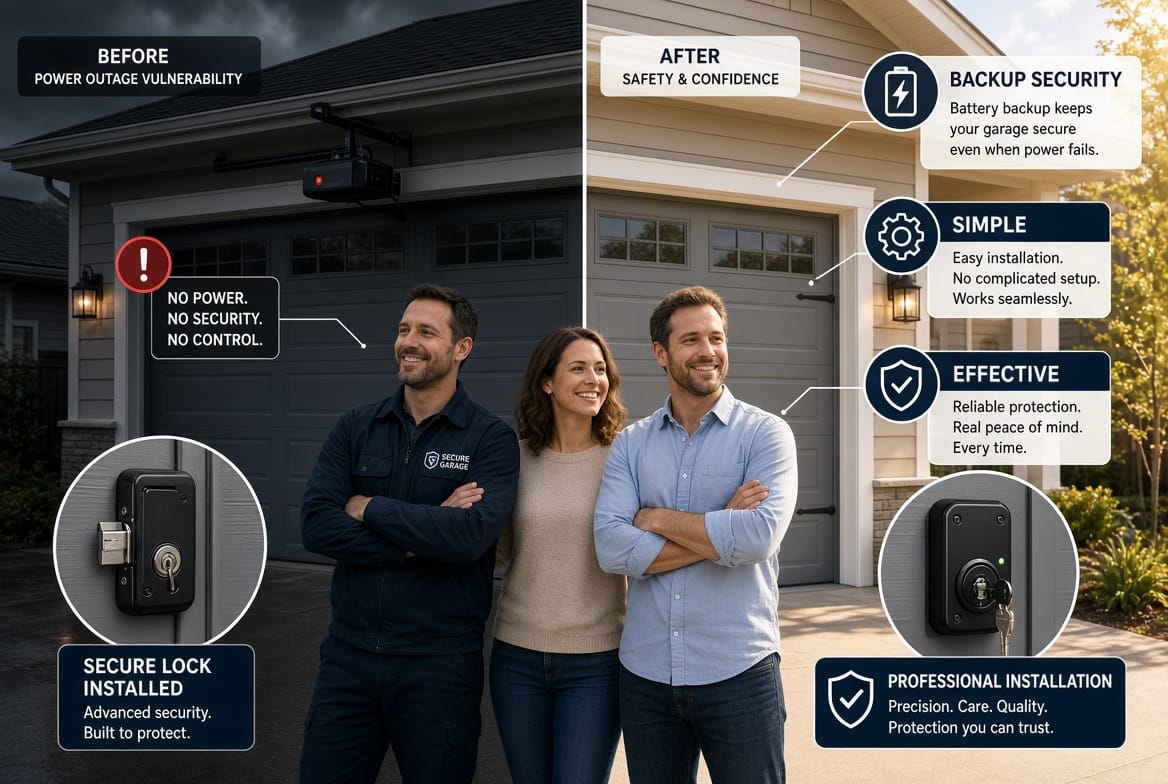
Homeowners who add a manual garage door lock quickly recognize three core advantages that justify the modest investment.
- Backup Security
The lock functions the instant power disappears. No waiting for batteries, no reliance on smartphone apps, and no vulnerability windows. Your garage remains closed and protected through every outage. - Simple Operation
Engagement takes seconds. There are no codes to remember or remotes to locate. Anyone in the household can secure the door with a quick motion, making the system practical for daily use as well as emergencies. - Effective Protection
Solid metal construction resists cutting, prying, and forced entry far better than electronic systems alone. Combined with existing openers and alarms, the lock creates layered defense that discourages casual and determined threats alike.
These benefits compound over time. Insurance providers often view reinforced doors favorably, and the psychological reassurance of knowing the garage stays secure—even when the lights go out—proves invaluable.
Practical Tips for Long-Term Reliability
Once installed, a few maintenance habits keep the lock performing at peak capability. Inspect the mechanism seasonally for loose fasteners or accumulated debris. Lubricate sliding surfaces twice a year. Test engagement after any extreme weather event. If the door develops track issues or the opener requires service, verify that the manual lock still aligns perfectly before returning the system to regular use.
Avoid common mistakes such as mounting the lock too high or too low, using undersized screws, or neglecting to disengage the lock before operating the electric opener. These oversights can lead to bent hardware or motor strain. Following the installation sequence outlined earlier virtually eliminates those risks.
Integrating Manual Security into a Complete Home Defense Strategy
A manual garage door lock does not exist in isolation. Pair it with motion-activated lighting, reinforced exterior doors, and monitored alarm systems for comprehensive coverage. During extended travel, engage the lock every time you leave. When severe weather is forecast, activate it proactively rather than waiting for the outage to occur.
The authority of physical security remains unmatched. Electronic systems can fail or be bypassed; a properly installed slide bolt or padlock simply cannot be defeated without specialized tools and considerable time—both of which deter most intruders.
Addressing Common Concerns with Clarity
Some homeowners worry that a manual lock might complicate emergency exits. In reality, the lock is designed for rapid interior release. From inside the garage the bolt slides free or the padlock opens with a key kept nearby. Others question whether the addition voids opener warranties. Reputable manufacturers design openers to accommodate auxiliary locks; when installed correctly the two systems operate in harmony.
Cost concerns are equally straightforward. Quality locks represent a fraction of the value they protect. Professional installation adds modest labor yet ensures flawless performance for years.
Conclusion: Secure Your Garage with Confidence Today
Power outages are inevitable. Leaving your garage door dependent solely on an electric opener is an unnecessary risk. A manual garage door lock—whether a robust slide bolt or a trusted padlock system—restores immediate, power-independent security. The installation process is clear, the benefits are proven, and the peace of mind is immediate.
Protect Your Home with a Manual Garage Lock – Call Today!