The Fungus Gnat Infestation: Managing Tiny Flies in Houseplants and Moist Areas
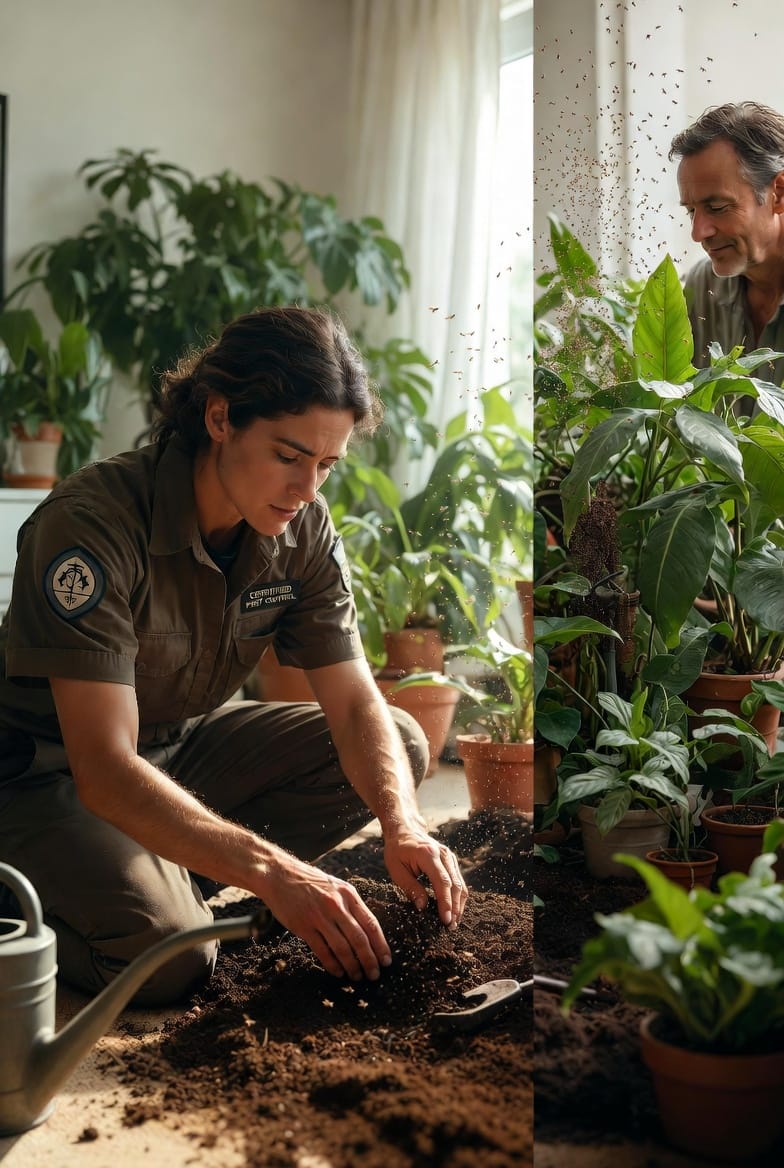
Fungus gnats are among the most common indoor pests that suddenly appear around houseplants and moist areas of the home. These tiny flies may seem harmless at first, but an unchecked infestation can quickly spread and stress your beloved plants. The good news? With targeted moisture management and proven biological controls, you can eliminate them safely and effectively without harsh chemicals. This comprehensive guide walks you through every step, empowering you to protect your indoor garden with confidence.
Get Rid of Houseplant Gnats Fast – Call Now!
Understanding Fungus Gnats: Small but Persistent Indoor Pests
Fungus gnats (scientifically known as Bradysia species) are delicate, mosquito-like flies that measure just 1/8 inch long. You’ll recognize them by their dark bodies, long legs, and slow, hovering flight near soil surfaces. Unlike fruit flies, they thrive in damp potting mix rather than overripe produce.
These pests are more than a nuisance. Their larvae feed on organic matter and tender roots, potentially weakening plants over time. Yet homeowners who act early find that fungus gnat control is straightforward and highly successful. By addressing the root causes—literally—you restore balance to your indoor environment and enjoy thriving greenery once again.
The Life Cycle of Fungus Gnats: Moisture Is the Critical Requirement
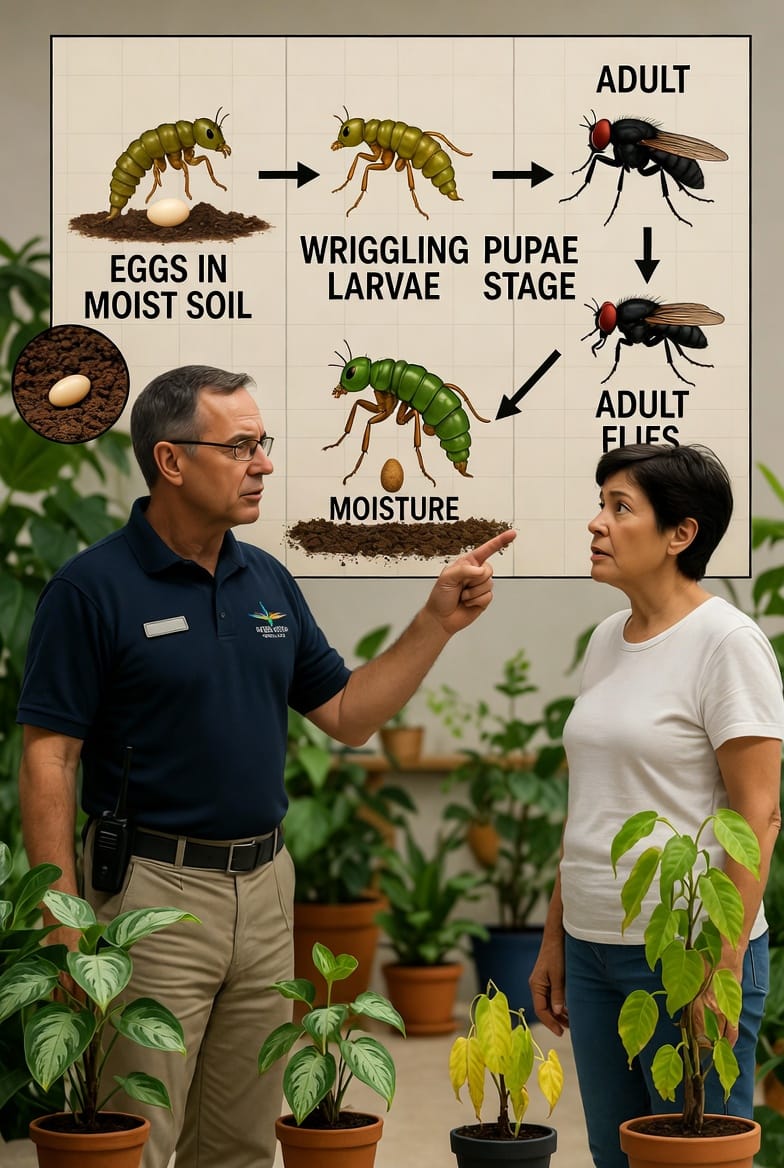
The fungus gnat life cycle revolves entirely around moist soil. Females lay up to 300 eggs directly in damp potting mix or organic debris. Within four days, eggs hatch into white, legless larvae with shiny black heads. These larvae spend 10 to 14 days feeding on fungi, decaying matter, and fine root hairs—conditions only possible when soil stays consistently wet.
After feeding, larvae pupate in the soil for about five days before emerging as winged adults. The entire cycle from egg to adult takes roughly 21 to 28 days under typical indoor temperatures. Adults live only 7 to 10 days, but they mate quickly and restart the cycle if moisture remains.
This dependence on moist soil explains why infestations explode after overwatering or in areas with poor drainage. Break the moisture link, and you disrupt the entire life cycle at its source.
Why Fungus Gnats Appear: Overwatering and Organic Matter Are the Culprits
Fungus gnats do not arrive randomly. They appear when conditions favor their survival:
- Overwatering keeps soil perpetually damp, creating the perfect fungal-rich habitat.
- Decaying organic matter in potting mixes provides endless food for larvae.
- Poor drainage or saucers that hold water prolong moisture availability.
- Newly purchased plants or reused soil often carry hidden eggs or larvae.
Even high-humidity bathrooms, kitchens, or basements with potted plants can become hotspots. Recognizing these triggers is the first step toward lasting fungus gnat control. Once you adjust watering habits, the population naturally declines.
Spotting the Signs Before the Problem Worsens
Early detection prevents escalation. Look for:
- Tiny dark flies hovering 1–2 inches above soil.
- Small white larvae wriggling in the top inch of moist potting mix.
- Yellowing leaves or stunted growth in otherwise healthy plants.
- Adult gnats trapped on yellow sticky cards placed near pots.
If you notice any of these, act immediately. The reassuring truth is that fungus gnats are highly manageable when caught early.
Effective Control Begins with Moisture Management
The most powerful, chemical-free strategy is moisture management. Allow the top 1–2 inches of soil to dry completely between waterings. Most houseplants tolerate this brief dry period far better than constant moisture.
Practical steps include:
- Check soil moisture with your finger or a wooden stick before watering.
- Use pots with excellent drainage holes and avoid saucers that trap water.
- Water from the bottom only when necessary, and remove excess after 30 minutes.
- Repot plants in fresh, well-aerated mix when soil becomes compacted or overly organic.
Within two weeks of consistent drying, larval survival drops dramatically, breaking the reproductive cycle. Homeowners report seeing fewer adults almost immediately, restoring peace to their plant collections.
Biological Controls: Safe, Targeted Solutions for Indoor Spaces
When moisture adjustments alone need support, biological controls provide precise, pet- and child-safe reinforcement.
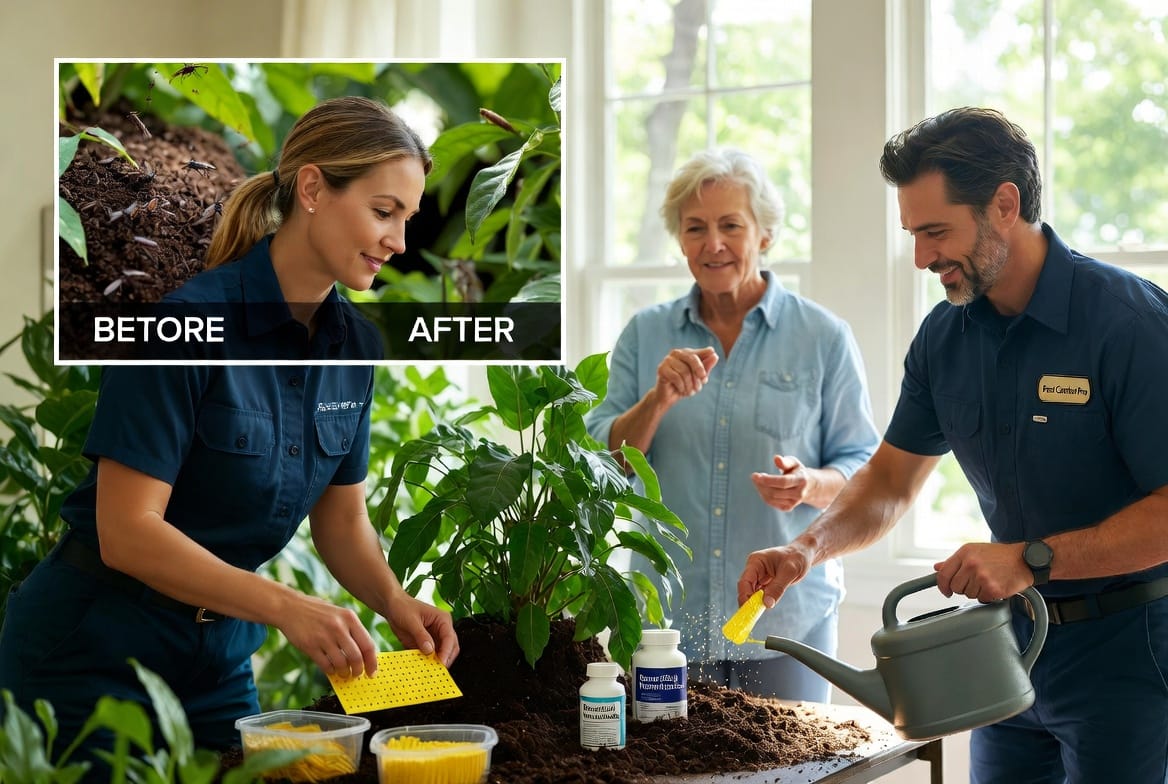
- Beneficial nematodes (Steinernema feltiae) are microscopic organisms that seek out and destroy gnat larvae in soil. Apply them as a soil drench; they reproduce naturally and continue working for weeks.
- Bacillus thuringiensis israelensis (Bti), commonly sold as mosquito dunks or granules, targets larvae specifically. Dissolve in water and apply to soil—completely harmless to people, pets, and beneficial insects.
- Yellow sticky traps placed at soil level capture adult gnats, reducing egg-laying potential while you monitor progress.
These methods work in harmony with moisture management, delivering fast, visible results without residue or odor. Many clients achieve complete resolution within 4–6 weeks using this integrated approach.
Integrated Pest Management: Combining Methods for Guaranteed Success
Layering techniques creates an unbeatable defense. Start with moisture correction, add biological agents, and use traps for monitoring. Avoid broad-spectrum sprays indoors—they disrupt natural balances and offer only temporary relief.
This integrated strategy not only eradicates current fungus gnats but prevents future outbreaks. Your plants become stronger, your air cleaner, and your home more enjoyable.
Prevention Tips to Keep Fungus Gnats Away for Good
Long-term success comes from smart habits:
- Quarantine new plants for two weeks and inspect soil thoroughly.
- Choose sterile potting mixes with perlite or sand for better drainage.
- Maintain consistent but moderate indoor humidity levels.
- Remove fallen leaves and debris promptly from soil surfaces.
- Schedule periodic soil top-dressing with fresh mix to reduce organic buildup.
These simple routines become second nature and keep your indoor garden vibrant and pest-free year-round.
When Professional Treatment Provides the Fastest Relief
While many infestations respond well to homeowner efforts, stubborn or widespread cases benefit from expert intervention. Professional fungus gnat control teams arrive with advanced monitoring tools, precisely calibrated biological applications, and customized plans tailored to your specific plants and home layout.
You regain control quickly, with guaranteed follow-up visits to ensure the problem stays solved.
Stop Gnats at the Source Today
Fungus gnats thrive only where moisture and organic matter meet. By understanding their life cycle, correcting watering practices, and deploying safe biological controls, you can confidently eliminate these tiny flies and protect your houseplants for years to come.
Stop gnats at the source. Our experienced team is ready to help you restore a healthy, peaceful indoor environment—quickly, safely, and permanently.
Eliminate Fungus Gnats Permanently – Call for Expert Help