The Indian Meal Moth: Eliminating Pantry Pests at the Source
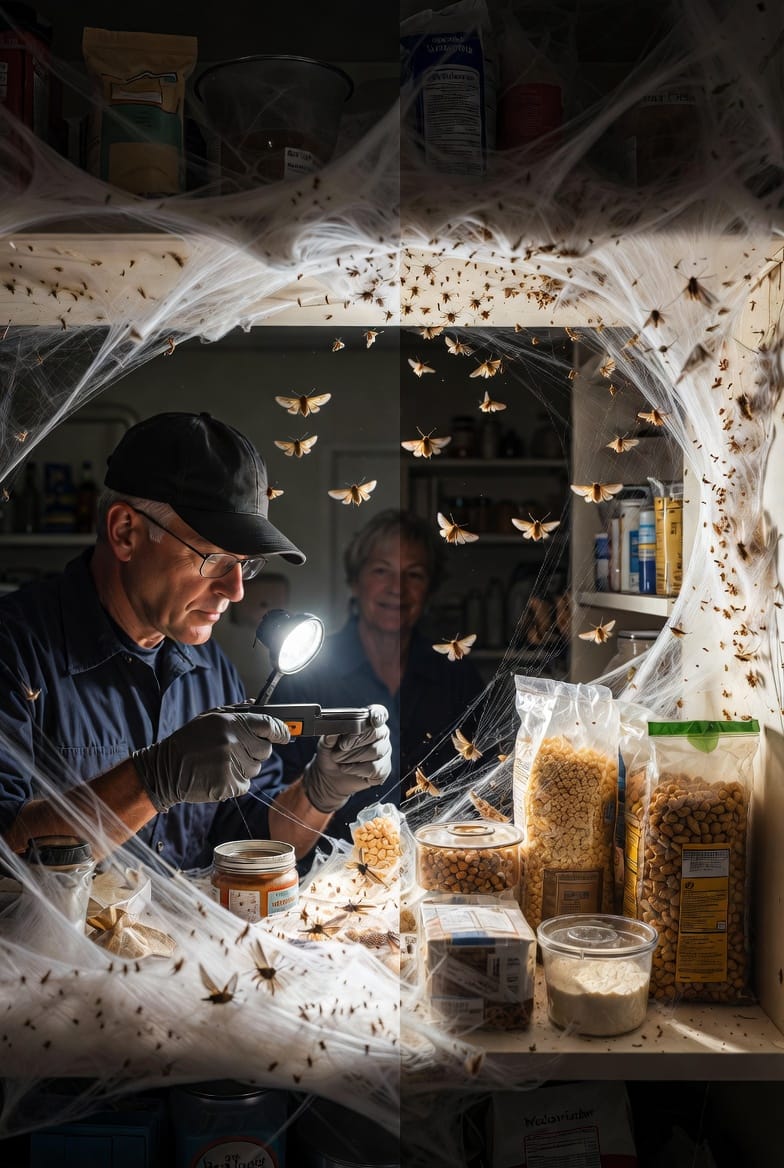
Indian meal moths are one of the most persistent pantry pests homeowners encounter. These small, beige-to-gray moths with distinctive coppery wing tips can turn a well-stocked kitchen into a source of frustration almost overnight. The good news? With a systematic, source-focused approach, you can achieve complete eradication without harsh chemicals or endless spraying. This authoritative guide walks you through every stage of the Indian meal moth lifecycle, how infestations begin, and the proven steps to eliminate them permanently.
Professional Pantry Pest Control – Call Today!
Understanding the Indian Meal Moth Lifecycle
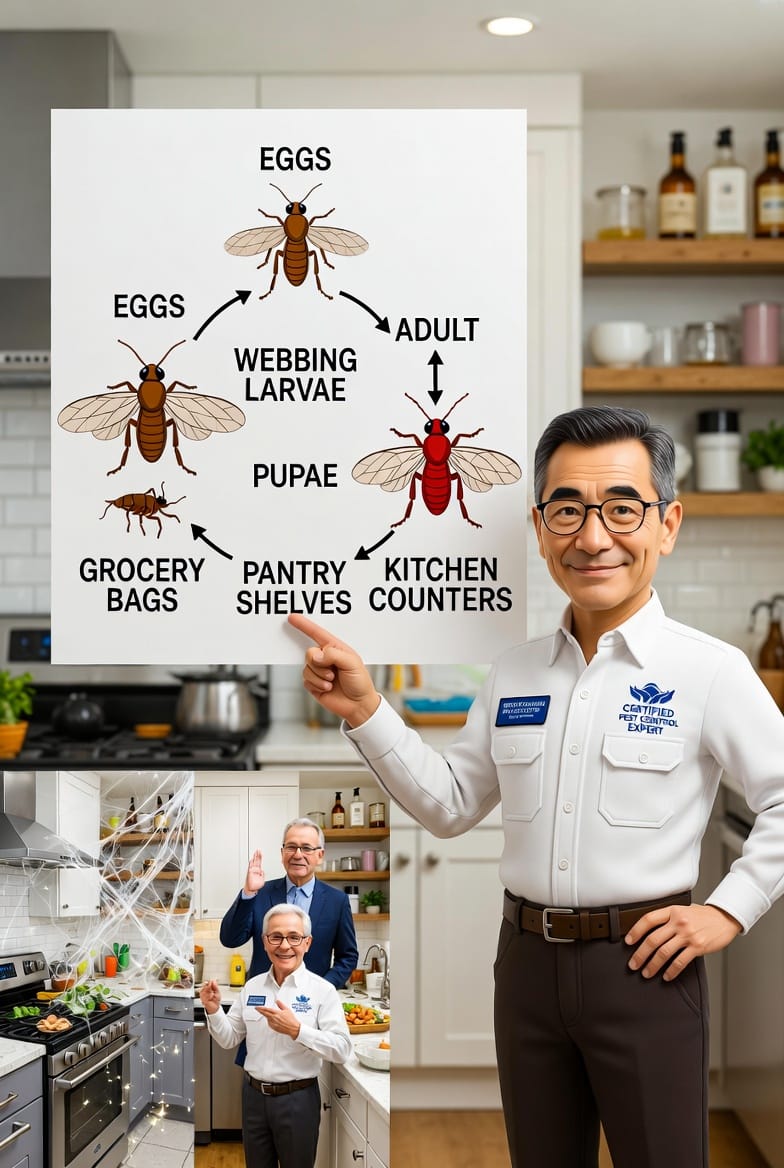
The Indian meal moth (Plodia interpunctella) follows a four-stage lifecycle that allows rapid reproduction in warm, dry pantry environments. Adult moths live only 5–10 days, but during that short window a single female can lay up to 400 eggs directly onto dry food surfaces.
Within 3–7 days the eggs hatch into creamy-white larvae – the destructive stage most people notice first. These tiny caterpillars spin silk webbing while feeding, creating the tell-tale clumps and tunnels inside flour, cereal, rice, nuts, dried fruit, and even pet food. Larvae grow for 2–4 weeks before entering the pupal stage, where they spin a cocoon and transform into adults. The entire cycle can complete in as little as 30 days under ideal kitchen temperatures, explaining why a small sighting can explode into a full infestation within weeks.
Key risk: Because larvae hide inside packaging and adults fly to new areas, treating only the visible moths leaves the next generation ready to restart the cycle. Understanding this biology is your strongest weapon for pantry pest elimination.
How Indian Meal Moths Enter Your Home
Unlike some pests that crawl through cracks, Indian meal moths almost always arrive as uninvited passengers inside commercial dry goods. Grocery stores, warehouses, and even home pantries can harbor microscopic eggs or larvae that survive packaging. A single infested bag of birdseed, cake mix, or bulk grains brought home is enough to launch an outbreak.
Warm kitchens accelerate development, and poor storage practices allow moths to spread quickly from one open container to the next. Once inside, they ignore sealed items but exploit any tiny opening, making early detection critical.
Recognizing the Signs of Infestation
Spotting an active Indian meal moth problem early prevents weeks of frustration. Look for:
- Small moths fluttering near ceilings or pantry lights, especially in the evening.
- Silky webbing and small white larvae inside packages.
- Clumped or discolored dry goods that feel sticky or smell slightly sweet.
- Cocoons attached to shelf edges or ceilings.
If you see even one adult moth, assume larvae are already present elsewhere in the pantry.
Why Complete Source Elimination Matters
Indian meal moths do not bite or transmit disease, but they contaminate food with webbing, frass, and shed skins, rendering entire shelves unusable. Discarding infested items protects your family’s health and prevents re-infestation. Half-measures such as simply killing visible adults allow hidden eggs and larvae to continue the cycle, leading to recurring problems that erode confidence in your kitchen.
Step-by-Step Guide to Eradication
Step 1: Full Inspection and Removal
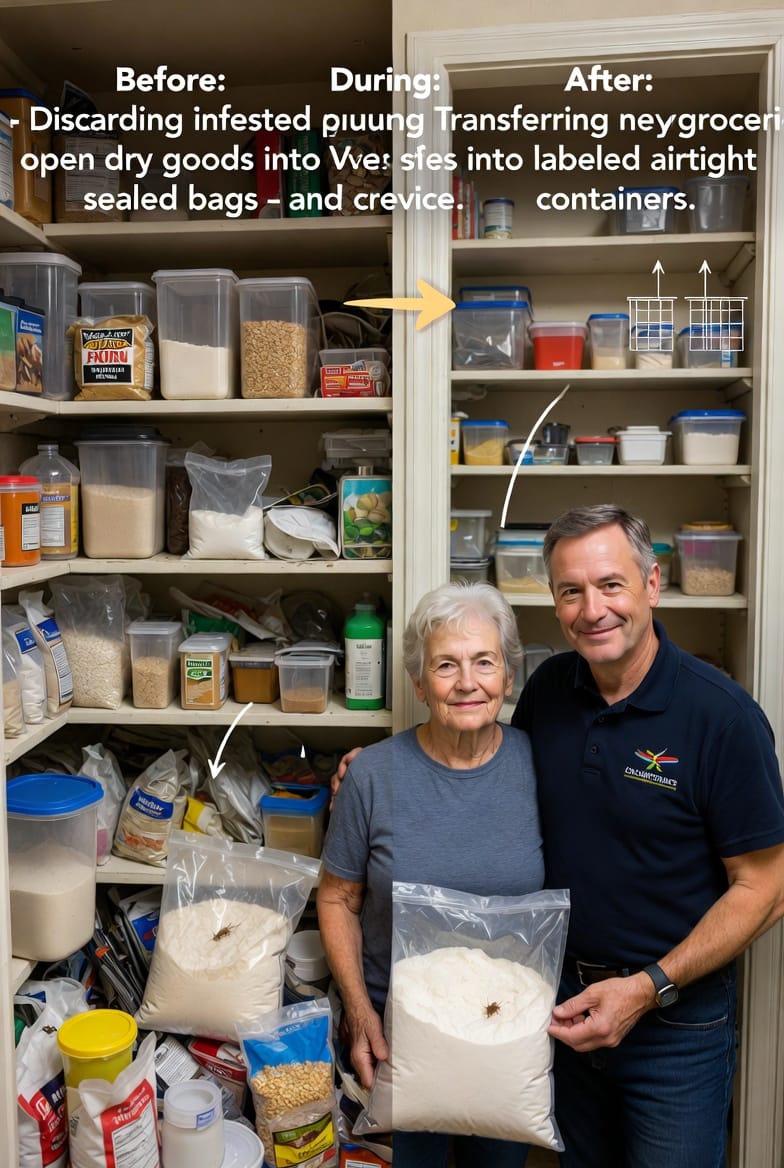
Empty every shelf completely. Remove all dry goods, even unopened packages if they were stored near infested items. Place suspect packages in sealed plastic bags and remove them from the home immediately – do not leave them in the kitchen trash where moths can escape.
Step 2: Thorough Cleaning
Vacuum every crack, crevice, and shelf edge using a crevice tool. Wipe all surfaces with a vinegar-water solution to remove pheromone trails and food residues. Pay special attention to corners, hinges, and the undersides of shelves where larvae love to hide.
Step 3: Targeted Monitoring with Pheromone Traps
Place pheromone traps on shelves to capture remaining adult males and monitor activity. These traps use species-specific scents to disrupt mating and give you visible proof of progress.
Step 4: Proper Storage of New Items
Transfer all new dry goods into airtight glass or hard plastic containers with tight-fitting lids. Label clearly and store elevated or in wire baskets to improve visibility and airflow.
Step 5: Ongoing Monitoring
Check traps weekly for 4–6 weeks. Continue discarding any newly discovered infested items until zero activity is recorded for a full month.
This methodical process eliminates every life stage at the source, delivering permanent results.
Prevention Strategies That Actually Work
Prevention is far easier than treatment. Adopt these habits:
- Buy in smaller quantities to reduce storage time.
- Freeze new dry goods for 48 hours upon purchase to kill any hidden eggs.
- Maintain a clean pantry with regular vacuuming and shelf liner replacement.
- Store pet food and birdseed in sealed outdoor containers when possible.
- Inspect incoming groceries at the car or garage before bringing them inside.
These simple routines break the Indian meal moth lifecycle before it begins.
When Professional Pantry Pest Control Is the Smart Choice
For severe or recurring infestations, or when time is limited, professional pantry pest control delivers faster, more thorough results. Trained technicians use advanced detection tools, targeted treatments, and follow-up monitoring to guarantee elimination at the source.
By following this comprehensive, source-focused strategy, you eliminate Indian meal moths completely and protect your pantry long-term. Consistent inspection, proper storage, and professional support when needed ensure your kitchen remains a clean, safe space for your family.
Get Rid of Pantry Pests Permanently – Call Now