The Boxelder Bug Aggregation: Managing Fall Invaders on South-Facing Walls
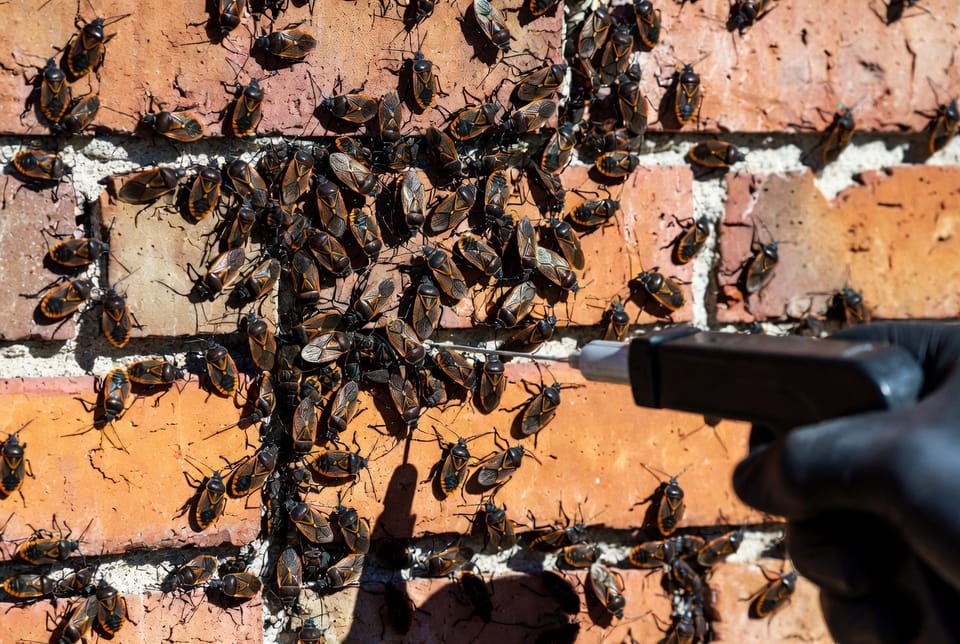
Every autumn, homeowners face an invasion they didn’t invite. The culprit? Boisea trivittata—better known as the boxelder bug. As temperatures cool, these black-and-orange insects swarm south-facing walls by the thousands, creating a living, creeping mosaic that unnerves even the most stoic resident.
Stop Fall Invaders Before They Enter – Call Now!
But here is the reassuring truth: you are not alone, and this nuisance is entirely manageable. Understanding why they cluster, how they enter, and exactly which control methods work is the difference between a peaceful fall and a frantic, bug-filled winter.
Let’s break down the science of the swarm and build a defense that holds.
Why Boxelders Choose Your South-Facing Wall (It’s Not Random)
This is not bad luck. Boxelder bugs are precision heat-seekers. When autumn sunlight hits a south or west-facing wall, the temperature of that surface can be 10–15°F warmer than the ambient air. To a cold-sensitive insect, that wall is a five-star winter resort.
The Aggregation Instinct
- Pheromone communication: Boxelders release aggregation pheromones that signal “safe harbor here.”
- Mass clustering: Hundreds become thousands as bugs follow scent trails.
- Warmth + shelter: Cracks as thin as a credit card become entry zones.
Key Risk: The longer they cluster, the more they stain. Their droppings leave permanent rust-colored marks on light-colored siding, brick, and stone.
Do They Harm You or Your Home? (The Honest Answer)
Here is the authoritative truth – boxelder bugs are not structural destroyers. They do not eat wood, chew wires, or transmit diseases. They do not reproduce indoors.
What they do cause:
- Staining of fabrics and walls (crushed bugs release red dye)
- Alarm odors when disturbed
- Psychological distress from sheer numbers
- Secondary infestations of carpet beetles (who feed on dead boxelders in wall voids)
What they do NOT cause:
- Structural damage
- Bites or venom risks
- Food contamination (they feed only on boxelder and maple seeds)
The problem is nuisance – but nuisance on a massive scale. And when hundreds enter your wall voids and then emerge inside your living room in February, that nuisance becomes an emergency.
How They Enter: The Three Invasion Pathways
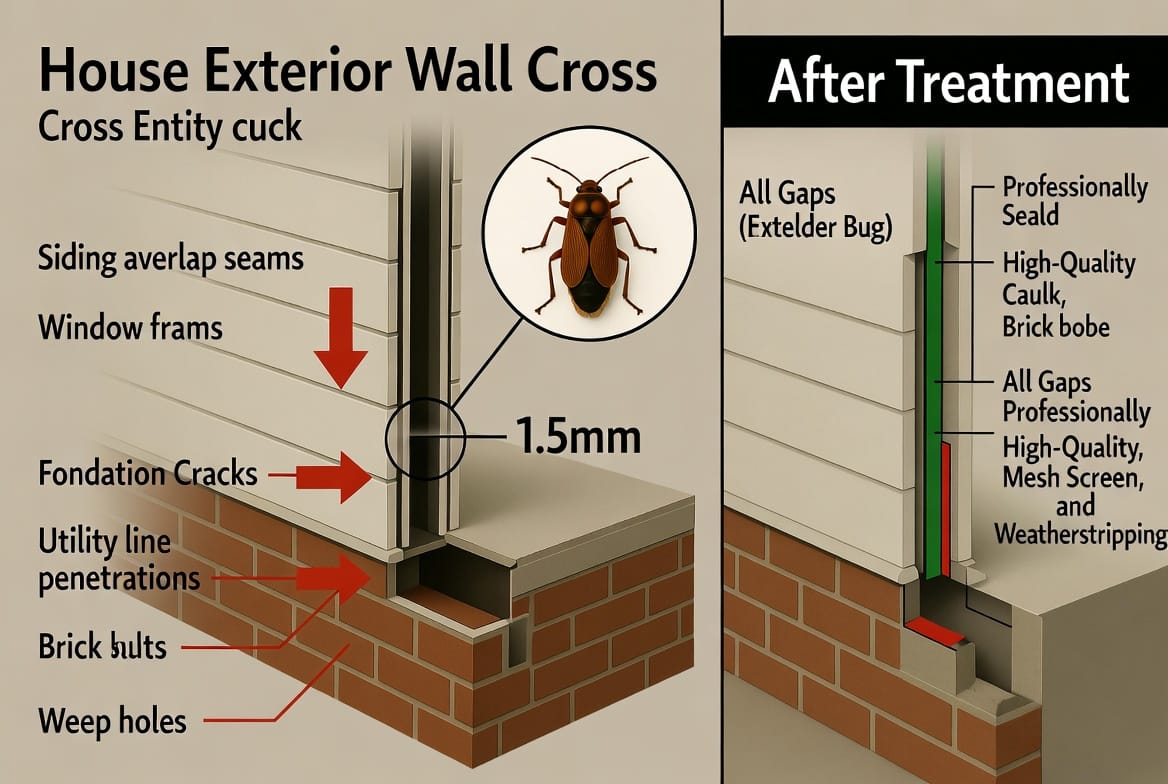
Boxelder bugs do not chew through solid material. They are opportunistic squatters. They exploit existing flaws.
1. Window and Door Frames
Poorly fitted screens, missing weatherstripping, and gaps in trim are highways. South-facing windows are the primary targets.
2. Siding Overlaps and Corners
Vinyl, wood, and fiber cement siding have natural seams. Boxelders crawl behind these overlaps and find direct routes into wall voids.
3. Foundation Cracks and Utility Penetrations
Where pipes, cables, or HVAC lines enter the home, gaps as small as 1/8 inch allow entry. From there, they travel inside via electrical outlets and baseboard gaps.
Exclusion: Your First and Most Powerful Defense
Stop them before they touch the wall. This is not optional – it is the cornerstone of professional pest control.
Step 1 – Seal All Exterior Cracks
- Use silicone-based caulk (flexible, long-lasting)
- Seal around all windows, doors, siding joints, and utility penetrations
- Install door sweeps on all exterior doors, especially south-facing
Step 2 – Repair or Replace Screens
- Fine mesh screens (18x16 or smaller) block young boxelders
- Check for tears, bulging frames, or loose fit
Step 3 – Vent and Weep Hole Protection
- Install stainless steel mesh over attic, soffit, and dryer vents
- Use weep hole covers (plastic or metal grilles) to block entry without trapping moisture
Reassuring Note: Proper exclusion does not trap bugs inside. It prevents entry entirely. This is humane and effective.
Targeted Treatments: What Works and What Wastes Money
Not all sprays are equal. Do not waste money on over-the-counter repellents that wash away in one rain.
Professional Perimeter Treatments (The Gold Standard)
A licensed applicator applies liquid residual insecticides to:
- The south and west-facing foundation walls (2–3 feet up from ground)
- A horizontal band of soil or mulch (1–2 feet out from the foundation)
- Window frames, door thresholds, and entry points as spot treatments
Why this works: Residual products remain active for 30–90 days, killing boxelders on contact as they attempt to cross the barrier.
| Treatment Type | Effectiveness | Duration |
|---|---|---|
| DIY repellent sprays | Low | Days |
| Consumer pyrethroid sprays | Moderate | 1–2 weeks |
| Professional perimeter treatment | High | 30–90 days |
Direct Crack & Crevice Injection
For existing aggregations already on the wall, direct injection into visible cracks using dust formulations (like diatomaceous earth or silica gel) kills hidden bugs and absorbs moisture from the microhabitat, making it less inviting.
The Boxelder Tree Connection: A Strategic Choice
Boxelder bugs are named for their host tree: Acer negundo. Female boxelder trees produce the seeds these bugs feed on. If your property has female boxelder trees within 50–100 feet of your south-facing wall, you are fighting a battle with a built-in breeding ground.
Option 1: Tree Removal
- Permanent reduction in bug populations
- Best performed in late winter before spring reproduction
- Cost varies but is a one-time investment
Option 2: Seed Pod Removal (If removal is not possible)
- Rake and dispose of all samaras (helicopter seeds) in fall
- Prevents nymphs from developing the following spring
- Less effective but helps
Expert note: Male boxelder trees produce no seeds. Only female trees attract feeding bugs. Confirm sex before removal.
When Should You Call a Professional? (Don’t Wait Until They’re Inside)

Immediate Call-to-Action Triggers:
- You see clusters larger than a dinner plate on your siding
- You have found 10+ boxelders inside your home in one week
- You have female boxelder trees within 50 feet of your home
- A previous DIY treatment failed within two weeks
What a Professional Does That DIY Cannot:
- Identifies hidden entry points (you miss 80% of them)
- Uses commercial-grade products not sold in retail stores
- Treats high surfaces (second-story walls, rooflines) safely
- Provides a guarantee – if bugs return, so does the technician
Late Fall and Winter: What to Do If They Already Entered
If you are reading this in November or December and boxelders are already crawling on your interior windowsills, do not panic.
Indoor Management (Without Stains)
- Vacuum only – do not crush them on walls or carpet (they stain)
- Use a vacuum with a HEPA filter (crushed bug particles can irritate asthma)
- Dispose of the vacuum bag immediately outdoors
- Seal interior cracks with caulk after vacuuming to block re-entry from wall voids
Do Not Use Indoor Sprays
Aerosol sprays inside wall voids are ineffective and expose your family to unnecessary chemicals. Let a professional treat the exterior and attic spaces instead.
The Seasonal Calendar for Boxelder Control
| Season | Action |
|---|---|
| Late August | Schedule professional perimeter treatment before aggregation begins |
| September – October | Monitor south-facing walls daily; treat new clusters with direct crack injection |
| November – February | Vacuum interior stragglers; plan tree removal if needed |
| March – April | Remove boxelder seed pods; inspect exterior seals for winter damage |
| May – July | No action needed (bugs are on host trees, not homes) |
Why “Aggregation” Is Worse Than a Normal Infestation
The word aggregation is precise. These are not random stray insects. Boxelder bugs communicate. When one finds a warm wall, it signals hundreds more. Within 48 hours, a few bugs become a living blanket.
This behavior is evolutionarily brilliant for survival – and evolutionarily terrifying for homeowners. But with professional exclusion + targeted chemistry + habitat modification, you break the cycle.
A Reassuring Final Word
You are not failing as a homeowner. Boxelder bugs are among the most persistent fall invaders in North America. Entire neighborhoods see simultaneous swarms. The difference between a stressful autumn and a peaceful one is professional timing.
We have solved this for hundreds of homes with south-facing exposures. The formula is tested, proven, and guaranteed.
Stop Fall Invaders Before They Enter
Do not wait until boxelder bugs are crawling across your living room floor in January. Act now – in the late summer or early fall – and enjoy a winter without unwanted guests.
Call for perimeter treatment today.
Get Your Perimeter Treatment Before Swarms Arrive – Call Now