The Fruit Fly Infestation: Eliminating Drain and Overripe Fruit Sources
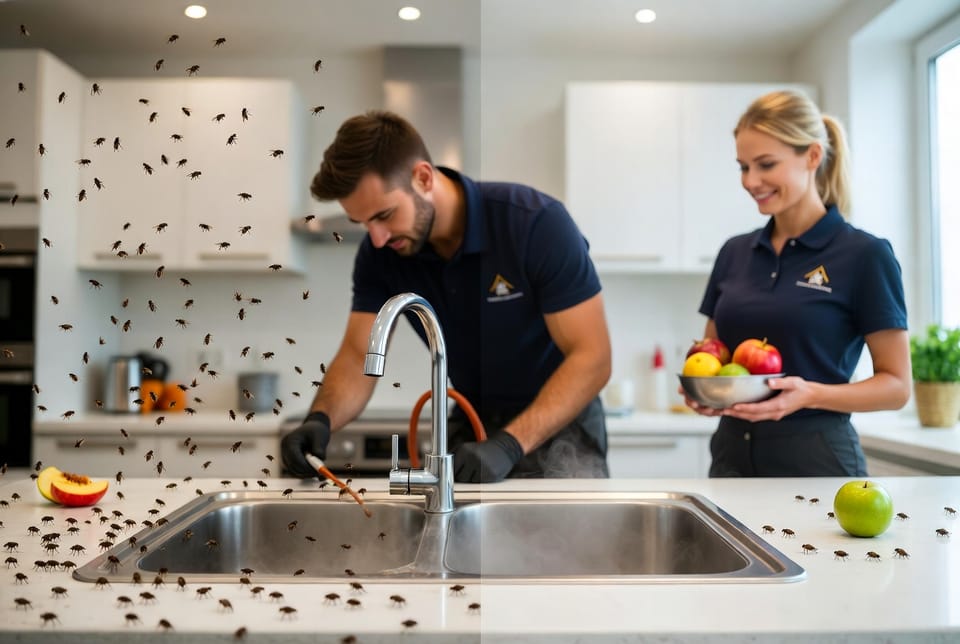
Summer heat brings fresh produce and backyard barbecues — but it also delivers one of the most persistent kitchen nuisances: the fruit fly infestation. These tiny, fast-breeding pests seem to appear out of nowhere, hovering around your sink and fruit bowl. The good news? You can achieve complete elimination by targeting their hidden breeding sites.
Eliminate Fruit Flies Permanently – Call for Expert Drain Treatment
At the core of every successful fruit fly control strategy is source removal — the proven, permanent way to break their lifecycle. No sprays, no endless traps, just smart, thorough action that restores peace to your home.
Fruit flies thrive in warm, moist environments rich in fermenting organic matter. Once they find a food source, they multiply at astonishing speed. Understanding exactly where they breed and how to eliminate those sites gives you the power to end the problem for good.
Understanding the Fruit Fly Lifecycle: Why Speed Matters
Fruit flies complete their entire lifecycle in as little as seven to ten days when temperatures rise above 70°F. This rapid reproduction is what turns a minor annoyance into a full-blown fruit fly infestation within weeks.
Females lay up to 500 eggs on the surface of overripe fruit, in moist drain residue, or inside garbage disposals. Tiny larvae (maggots) hatch within 24 hours and feed aggressively on fermenting material. After a few days they pupate, emerging as adults ready to repeat the cycle.
Because the lifecycle is so short, simply swatting adults does nothing. New generations keep emerging unless you remove every breeding site. This is why source removal remains the only reliable, long-term solution.
Common Breeding Sites: Where Fruit Flies Hide in Plain Sight
Most homeowners focus on the obvious — the bowl of bananas on the counter — yet the real culprits are often invisible.
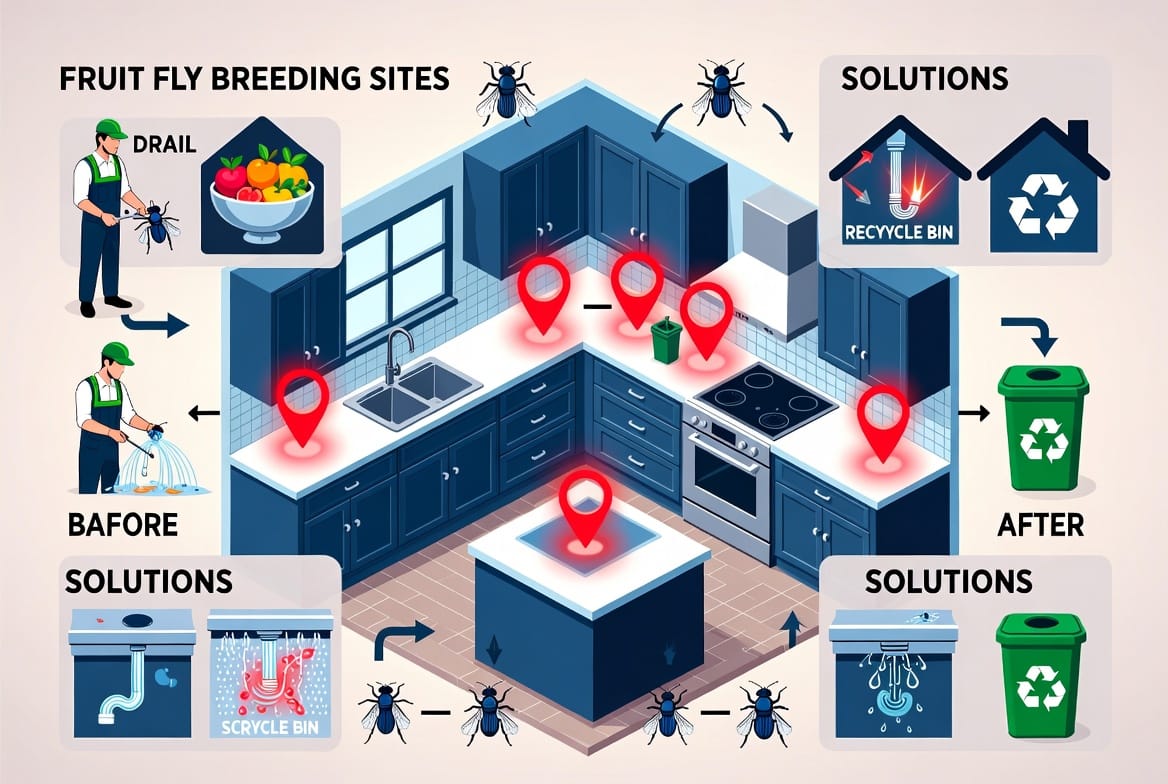
Kitchen drains and garbage disposals top the list. Even a thin film of organic sludge inside pipes provides perfect conditions for egg-laying. Warm water from dishwashing keeps the environment moist and oxygenated.
Overripe fruit bowls act as open invitations. A single forgotten peach can support hundreds of eggs.
Recycle bins and trash containers harbor residue from juice cartons and food packaging.
Garbage disposals collect bits of food that ferment in hard-to-reach crevices.
Other overlooked spots include compost containers, mops left in buckets, and even the tiny gaps around sink strainers.
Bold key risk: If you ignore these sites, fruit flies will continue emerging no matter how many traps you set.
The Hidden Dangers of Ignoring a Fruit Fly Infestation
Beyond the annoyance of flies landing on your food, fruit flies can spread bacteria and yeasts from drains onto surfaces and open produce. While not disease carriers on the scale of larger pests, they compromise kitchen hygiene and can trigger allergic reactions in sensitive individuals.
An unchecked infestation also signals deeper moisture or sanitation issues that may attract other pests. Early, decisive source removal protects your family’s health and prevents escalation.
Proven Step-by-Step Elimination: Source Removal That Works
Complete elimination follows a clear, logical sequence. Follow every step and you will see results within days — with zero recurrence when prevention stays in place.
Step 1: Remove All Potential Food Sources Immediately
- Take every piece of produce off counters and store it in the refrigerator.
- Empty fruit bowls and wash them in hot, soapy water.
- Clear recycle bins and trash cans, then sanitize them outdoors.
This single action starves existing adults and stops new egg-laying.
Step 2: Deep-Clean Drains and Garbage Disposals
Drains are the #1 hidden breeding site. Use an enzyme cleaner designed for drains — it breaks down organic sludge without harsh chemicals.
Pour the full recommended dose down each drain, including the garbage disposal. Let it work overnight. Follow with boiling water to flush debris. Repeat every three days for two weeks.
Pro tip: For stubborn cases, combine baking soda and vinegar first to loosen material, then follow with enzyme treatment.
Step 3: Set Smart Traps While Sources Are Removed
While cleaning works, place simple apple-cider-vinegar traps (ACV + a drop of dish soap) near problem areas. The soap breaks surface tension so flies drown. Replace daily. These traps monitor progress and catch stragglers.
Step 4: Sanitize Every Surface and Tool
Wipe counters, cabinets, and appliances with a vinegar solution. Launder dish towels and replace sponges. Run your dishwasher on high heat.
Step 5: Maintain Dry, Clean Conditions
Fix any leaky faucets. Empty standing water from plant saucers. Store all dry goods in airtight containers.
Result: Within 7–10 days the lifecycle breaks completely. Adults die off with no new larvae to replace them.
Why DIY Traps Alone Fail — And When Professional Drain Treatment Becomes Essential
Many homeowners try vinegar traps for weeks with limited success because they treat symptoms, not sources. Enzyme-based drain treatment reaches deep inside pipes where traps cannot.
If you’ve followed the steps above for two full weeks and flies persist, professional drain treatment is the fastest route to resolution. Trained technicians use commercial-grade enzyme solutions and specialized tools to clear hidden buildup that household methods miss.
Long-Term Prevention: Keeping Fruit Flies Out for Good
Prevention is simpler than cure. Adopt these habits:
- Store ripening fruit in the fridge or sealed containers.
- Clean drains with enzyme cleaner monthly as maintenance.
- Rinse recycle bins weekly.
- Run garbage disposals with cold water and citrus peels.
- Schedule seasonal professional inspections before summer peaks.
These small routines deliver big peace of mind.
Real Results: What Successful Elimination Looks Like
Homeowners who commit to source removal report dramatic improvement within days and permanent freedom within two weeks. Kitchens stay fly-free even during peak produce season. The combination of thorough cleaning and professional drain treatment when needed delivers the reassuring, authoritative solution families deserve.
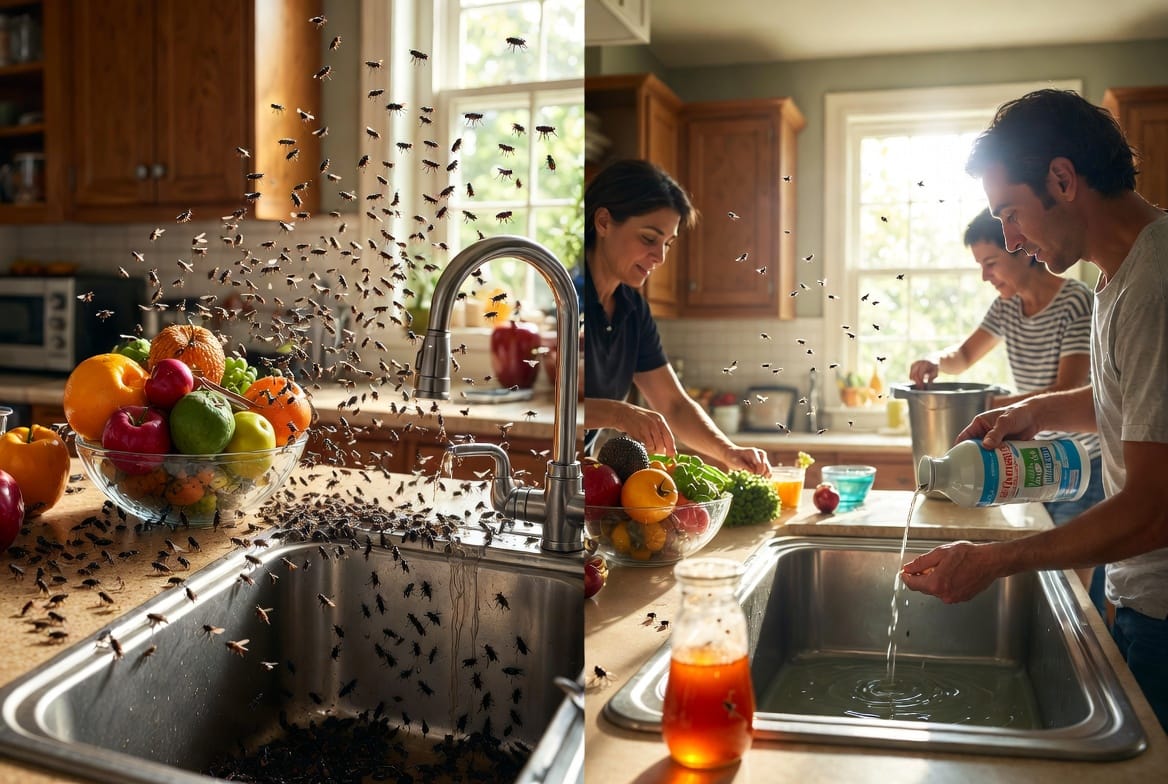
Stop Fruit Flies by Removing Their Home
You don’t have to share your kitchen with fruit flies any longer. By identifying breeding sites, breaking the lifecycle through source removal, and maintaining clean drains, you regain control — quickly, safely, and permanently.
For stubborn drain infestations that require expert enzyme treatment, professional help makes all the difference.
Fruit Fly Free Kitchen in Days – Call Now for Source Removal