The Fungus Gnat in Houseplants: Controlling Soil-Borne Flies
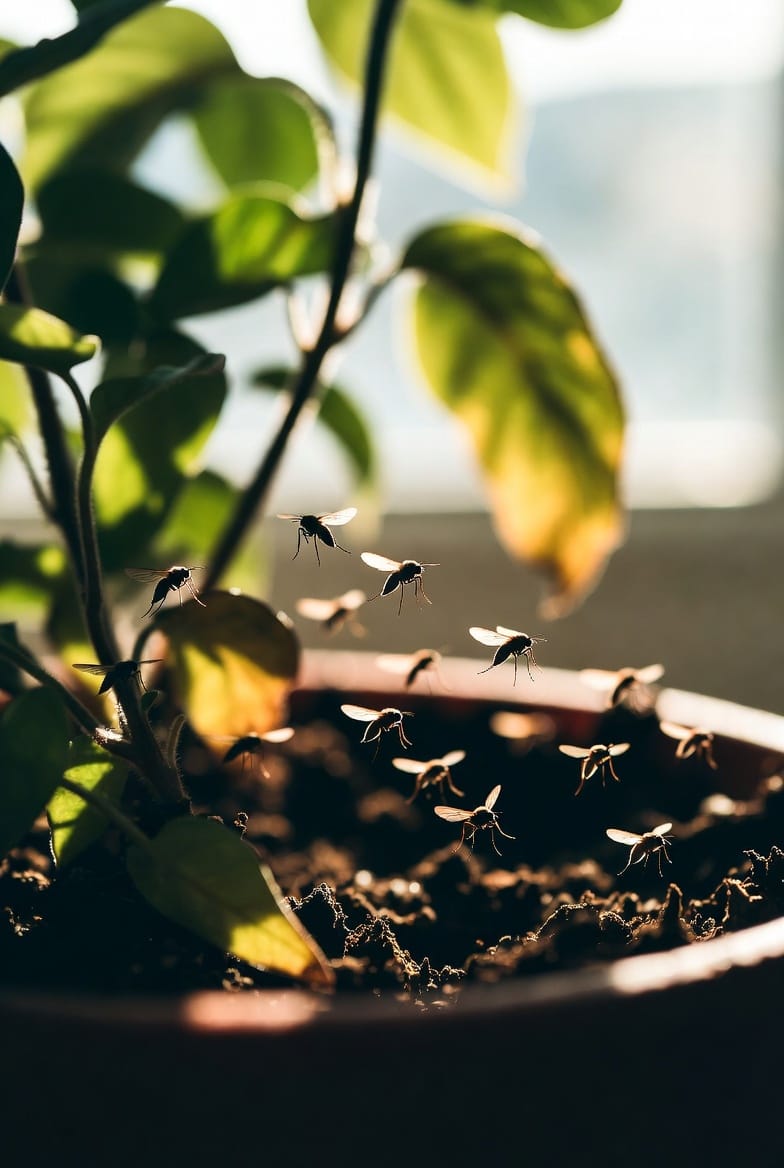
Fungus gnats can turn your thriving indoor jungle into a source of frustration. These tiny pests often go unnoticed until they start flying around your favorite plants. Fortunately, with the right knowledge and proven strategies, you can effectively control and eliminate them without harming your precious houseplants.
Protect Your Houseplants from Gnats – Call for Expert Help!
If you’ve noticed small dark flies hovering near your plant pots or seen your once-vibrant greenery beginning to struggle, you’re likely dealing with fungus gnats. These common indoor plant pests thrive in moist environments, making overwatered houseplants their ideal habitat. The good news? You don’t need harsh chemicals or expensive treatments to regain control. Simple, targeted methods like Bti (Bacillus thuringiensis israelensis), sticky traps, and proper soil management deliver reliable results.
In this comprehensive guide, we’ll explore everything you need to know about fungus gnats – from their life cycle to effective control techniques – so you can protect your indoor plants and enjoy a pest-free home.
Understanding Fungus Gnats: Tiny Flies, Big Problems
Fungus gnats (Bradysia species) are small, mosquito-like insects that measure just 1/8 to 1/10 inch long. Their dark bodies and delicate wings make them easy to overlook at first glance. While the adults are harmless fliers, their larvae cause the real damage beneath the soil surface.
These pests are particularly common in homes with multiple houseplants, especially during winter months when indoor humidity rises and watering routines may become inconsistent. They are attracted to the moist, organic-rich soil typical of many potted plants.
Bold warning: Ignoring a fungus gnat infestation can lead to weakened plants, stunted growth, and even plant death if left unchecked.
The Fungus Gnat Life Cycle: From Eggs to Adults
Understanding the fungus gnat life cycle is key to breaking their reproduction chain.
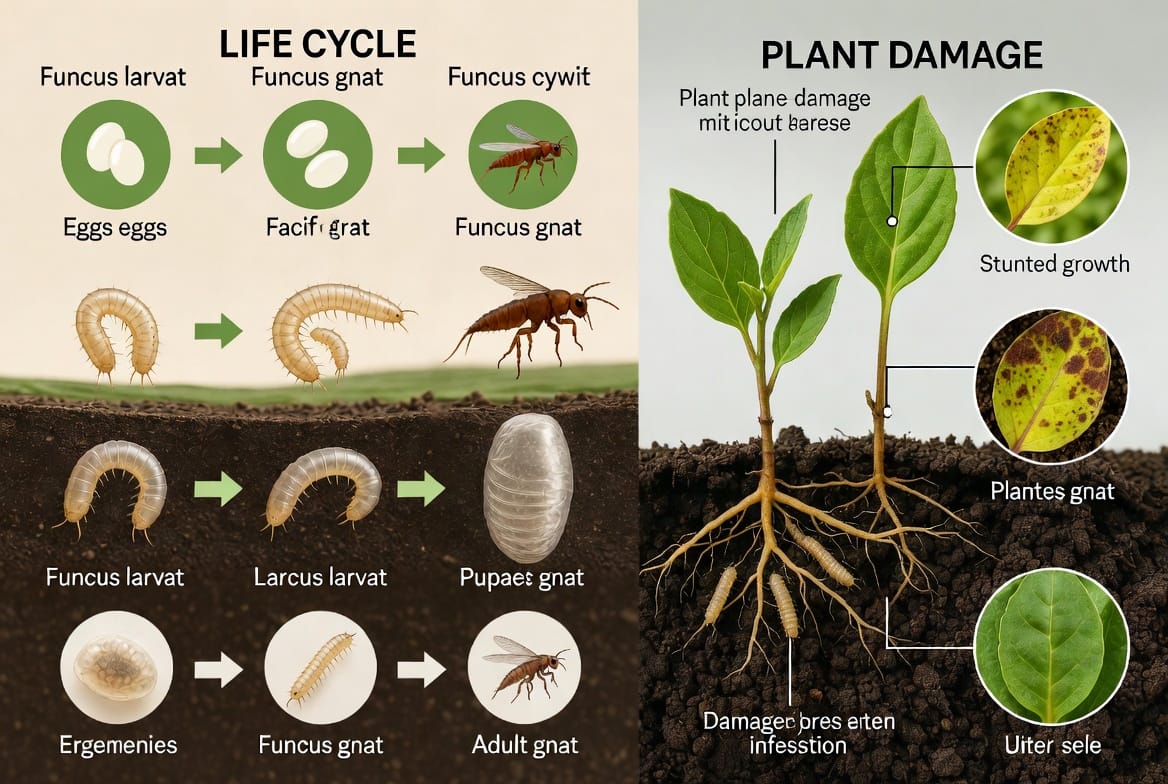
- Eggs: Female fungus gnats lay up to 300 eggs in the top layer of moist soil. These eggs hatch within 4-7 days under warm, damp conditions.
- Larvae: The translucent, worm-like larvae feed on organic matter, fungi, and – most damagingly – the tender root hairs of your plants. This stage lasts 10-14 days and is where the majority of harm occurs.
- Pupae: Larvae transform into pupae in the soil for another 3-7 days.
- Adults: Emerging adults live for about 7-10 days, focusing primarily on mating and laying more eggs.
The entire cycle can complete in as little as 3-4 weeks in ideal indoor conditions, allowing populations to explode rapidly.
Signs of Infestation and the Damage They Cause
Early detection is crucial. Look for these common indicators:
- Tiny dark flies hovering near the soil or flying up when you disturb the plant.
- Yellowing leaves or wilting despite proper watering.
- Stunted growth in new foliage or overall plant decline.
- Larvae visible in the top inch of soil (look like small, shiny white worms).
- Fungal growth on the soil surface, which provides food for the larvae.
The larvae feed on root hairs, reducing the plant’s ability to absorb water and nutrients. This leads to nutrient deficiencies, increased susceptibility to diseases, and poor overall vigor. Seedlings and young plants are especially vulnerable.
Why Prevention Matters More Than Treatment
The most effective way to manage fungus gnats is to prevent them from gaining a foothold.
- Allow soil to dry properly between waterings. Most houseplants prefer the top 1-2 inches of soil to dry out completely.
- Use well-draining potting mixes with perlite or sand to improve aeration.
- Avoid overwatering – a common mistake that creates the perfect moist environment for gnats.
- Remove any decaying organic matter from the soil surface promptly.
By adjusting your watering habits, you make the environment far less hospitable for these soil-borne flies.
Effective Control Methods That Work
When an infestation is already present, combine multiple approaches for the best results.
1. Biological Control with Bti (Mosquito Dunks)
Bti is a naturally occurring soil bacterium that specifically targets fungus gnat larvae.
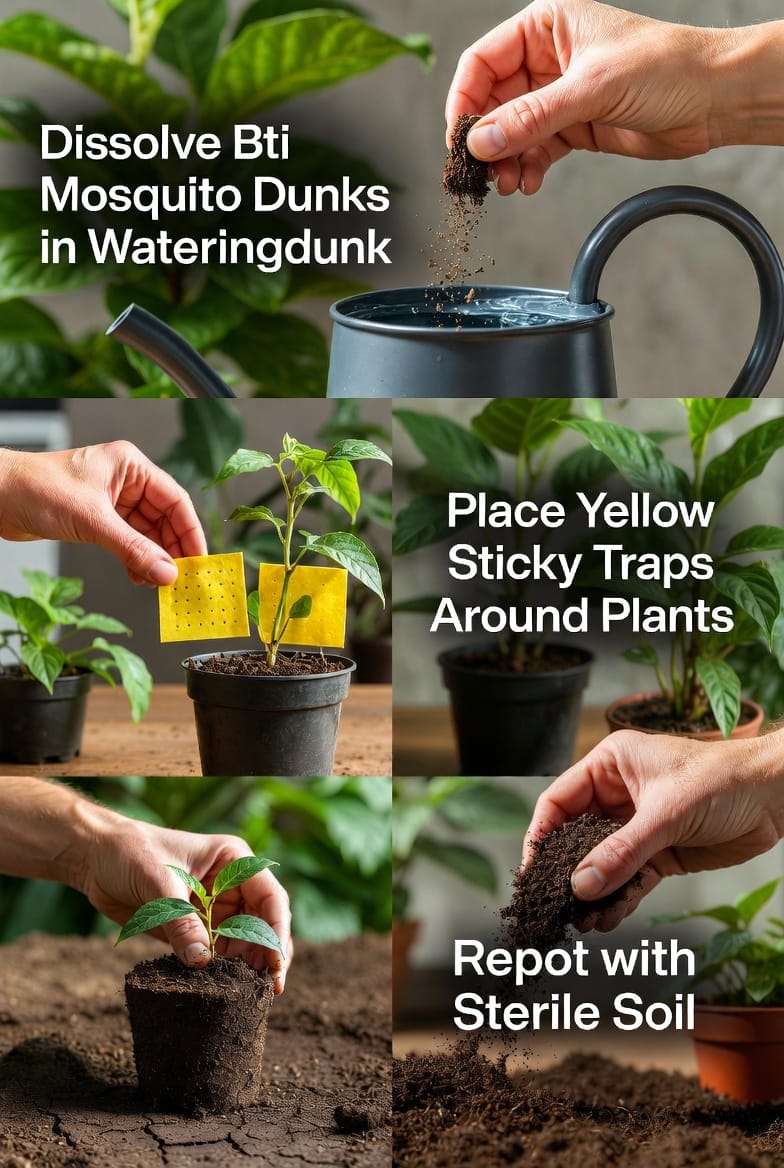
- Dissolve mosquito dunks or Bti products in water according to package instructions.
- Use the solution to water your affected plants.
- The larvae ingest the bacteria, which disrupts their digestive system, leading to death within days.
This method is safe for plants, pets, and beneficial insects. Repeat applications every 7-14 days until the infestation clears.
2. Yellow Sticky Traps for Adult Gnats
Place yellow sticky traps just above the soil surface. The bright color attracts adult fungus gnats, trapping them before they can lay more eggs.
- Use one or two traps per plant.
- Replace them regularly as they fill up.
- This method provides immediate visual confirmation that your control efforts are working.
3. Cultural Controls: Dry Soil and Repotting
- Let the soil dry out thoroughly for several days between waterings. Fungus gnat larvae cannot survive in dry conditions.
- For severe cases, carefully repot the plant in fresh, sterile potting mix. Remove as much old soil as possible without damaging roots.
- Top-dress the soil with a layer of sand or gravel to discourage egg-laying.
Additional Natural Solutions and Home Remedies
Several other safe options complement the primary methods:
- Neem oil sprays can help deter adults and disrupt larvae when applied to the soil.
- Hydrogen peroxide solution (1 part 3% peroxide to 4 parts water) can be used as a soil drench to kill larvae on contact while aerating the soil.
- Beneficial nematodes (specifically Steinernema feltiae) are microscopic organisms that parasitize fungus gnat larvae.
Always test any new treatment on a small area first to ensure plant compatibility.
Common Mistakes to Avoid
- Watering on a strict schedule instead of checking soil moisture.
- Using garden soil instead of sterile potting mix, which often introduces pests.
- Ignoring early signs and hoping the problem resolves itself.
- Over-relying on chemical insecticides, which can harm beneficial microbes and your plants.
Consistent, proactive care yields the best long-term results.
When to Call Professional Indoor Pest Control
For persistent or widespread infestations, especially in homes with extensive plant collections or accompanying structural moisture issues, professional help ensures complete elimination. Experts can identify underlying causes like hidden leaks and apply advanced treatments safely.
Stop gnats from killing your houseplants. Our team provides tailored solutions that protect both your plants and your peace of mind.
Long-Term Houseplant Care for Gnat-Free Living
Maintaining a healthy indoor garden involves more than just pest control.
- Choose appropriate plants for your lighting and humidity conditions.
- Establish a proper watering routine based on each species’ needs.
- Regularly inspect new plants before introducing them to your collection.
- Ensure good air circulation around your plants.
With these practices, fungus gnats become a rare occurrence rather than a recurring headache.
Conclusion: Reclaim Your Indoor Garden
Fungus gnats don’t have to threaten your beloved houseplants. By understanding their life cycle, recognizing early warning signs, and implementing a combination of Bti treatments, sticky traps, soil drying, and proper repotting, you can quickly regain control and prevent future problems.
Your indoor plants deserve the best care possible. With patience and the right techniques, you’ll enjoy lush, vibrant greenery free from these pesky soil-borne flies.
Remember: healthy soil leads to healthy plants. Take action today and give your houseplants the protection they need to thrive for years to come.
Get Rid of Fungus Gnats Permanently – Call Now!