The Merchant Grain Beetle: Common Pest of Stored Grains
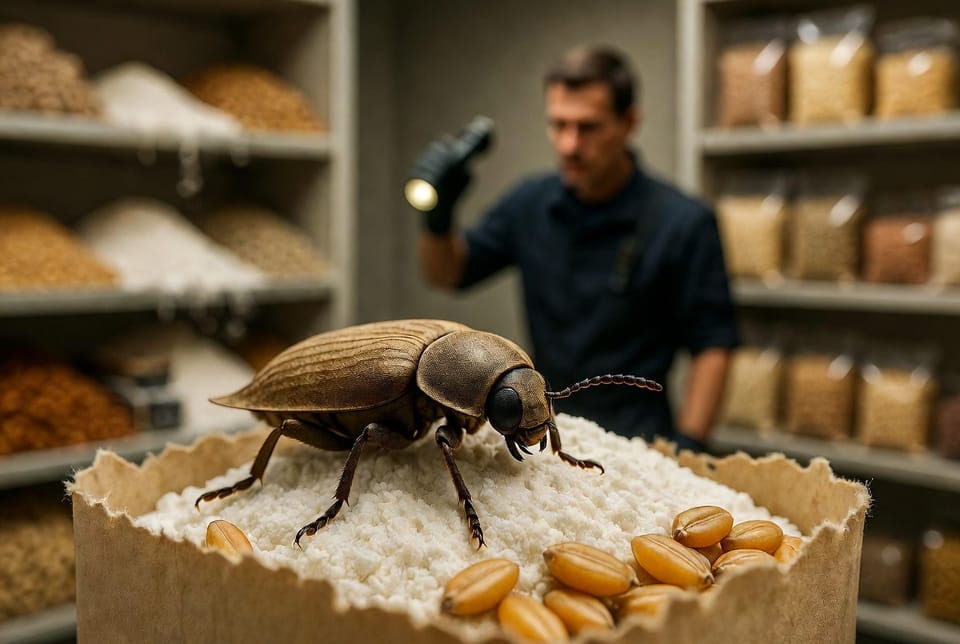
The merchant grain beetle is one of the most frequent pantry invaders homeowners encounter when stored food products begin to show unexplained damage. This small insect thrives in the dry, protected environment of kitchen cabinets, basements, and food storage areas. Understanding its habits, appearance, and the precise steps needed to eliminate it gives every household a clear path back to a clean pantry.
Protect Your Pantry from Merchant Grain Beetles – Call Now!
This guide explains everything you need to know about the merchant grain beetle in straightforward, practical language. You will learn how the insect behaves, how to identify it correctly, which products it targets, and the most effective ways to remove an infestation without unnecessary worry. Professional support remains available whenever the problem feels larger than a simple cleanup.
Understanding Merchant Grain Beetle Behavior
The merchant grain beetle belongs to a group of stored-product pests that specialize in dry food goods. Unlike outdoor beetles that feed on living plants, this species has adapted completely to human food storage. Adults and larvae both feed on a wide range of grain-based and oil-rich products.
Adult beetles move quickly across packaging surfaces. They can enter through tiny gaps in cardboard, plastic film, or paper bags. Once inside, they begin feeding and reproducing. Females lay eggs directly on or near suitable food. Larvae hatch and continue consuming the product, creating fine powder and webbing as they develop.
A key behavioral trait sets the merchant grain beetle apart from its close relative, the sawtoothed grain beetle. While both species look similar at first glance, the merchant grain beetle shows a stronger preference for products that contain higher oil content. Nuts, seeds, dried fruit, coconut, and certain pet foods rank among its favorites. Grain products such as flour, cereal, and pasta are still attacked, yet the beetle often moves toward oilier items when both are available.
These insects do not require moisture in the same way cockroaches or silverfish do. They survive comfortably in the low-humidity conditions found inside sealed cabinets. Populations can grow steadily for months before anyone notices the first signs. Because the beetles remain hidden inside packages, an infestation can spread from one shelf to another through normal kitchen traffic.
The presence of a few adults on a countertop or near a food package should never be ignored. Each adult is capable of starting a new colony if suitable food remains available. Early action prevents the problem from becoming widespread.
Precise Identification of the Merchant Grain Beetle
Correct identification is the foundation of successful control. The merchant grain beetle measures approximately 2.4 to 3 millimeters in length. Its body is distinctly flat, allowing it to slip into narrow crevices and packaging seams. Color ranges from dark brown to nearly black.
Six saw-like teeth run along each side of the prothorax, the segment just behind the head. These teeth give the beetle its characteristic outline when viewed under magnification or strong light. The antennae are clubbed at the tip, and the overall body shape is elongated yet compressed.
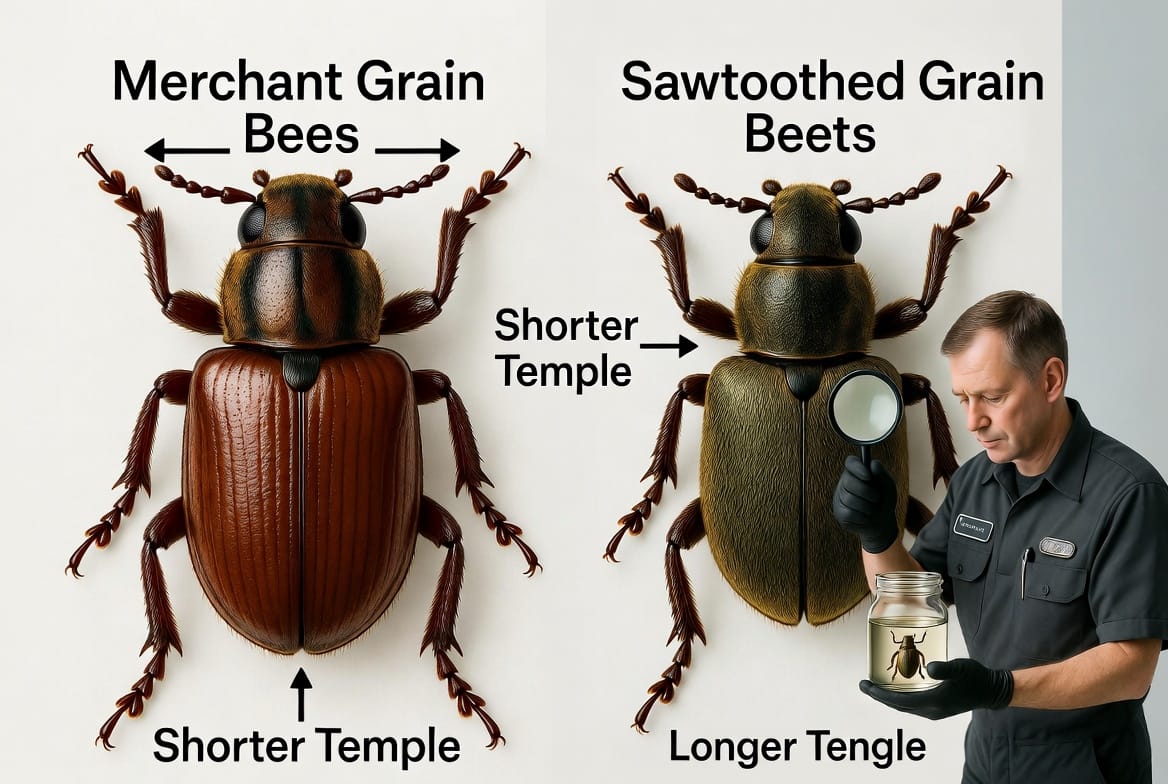
Two features help distinguish the merchant grain beetle from the sawtoothed grain beetle. First, the eyes of the merchant grain beetle are noticeably larger. Second, the space between the eye and the back of the head (the temple region) is shorter. These differences become clear when both insects are examined side by side under good lighting.
Larvae appear as small, elongated, cream-colored grubs with darker heads. They remain inside the food product most of the time and are rarely seen unless packages are opened and contents examined carefully.
Recognizing the Signs of an Infestation
Homeowners usually discover a merchant grain beetle problem in one of three ways. The first is the sudden appearance of small, fast-moving brown insects on pantry shelves or near food packages. The second is the discovery of fine powder or dust inside flour, cereal, or pasta bags. The third is the presence of small holes or tears in packaging that cannot be explained by normal handling.
When packages are opened, the contents may show clumping, webbing, or a slightly off odor. Adult beetles often crawl out of the product when disturbed. In more advanced cases, beetles can be found in the corners of shelves, along baseboards, or even in nearby drawers where crumbs have accumulated.
Because the insects are small and prefer darkness, many people overlook the early stages. Regular inspection of dry goods, especially those stored for several months, remains the most reliable detection method.
Products Most at Risk from Merchant Grain Beetles
Certain food items attract the merchant grain beetle more strongly than others. Understanding this preference allows targeted inspection and smarter storage choices.
- Flour of all types, including whole wheat, white, and specialty blends
- Breakfast cereals and granola
- Dried pasta and noodles
- Pet food and bird seed
- Nuts, seeds, and dried fruit
- Spices and baking mixes that contain oil-rich ingredients
Any package that has been open for an extended period or that shows damage to the seal becomes a higher-risk item. Even sealed cardboard boxes can admit beetles through microscopic openings.

Effective Control Through Discarding Infested Items
The single most important step in managing a merchant grain beetle infestation is the complete removal of every contaminated product. No chemical treatment can succeed if food sources remain available.
Begin by emptying the entire pantry or storage area. Examine every package, including those that appear untouched. Look for holes, powder, webbing, or live insects. Any item showing even minor evidence of infestation should be sealed in a plastic bag and discarded immediately. Do not attempt to salvage partially damaged products by sifting or freezing alone when active beetles are present.
After removal, vacuum the shelves, corners, and floor thoroughly. Pay special attention to cracks, joints, and the undersides of shelves where beetles or eggs may hide. Wipe all surfaces with a clean cloth dampened with warm soapy water. Allow everything to dry completely before returning any food.
For products that show no signs of infestation, transfer them into airtight glass or heavy plastic containers with tight-fitting lids. This simple change prevents future beetles from reaching the food even if a few adults remain in the surrounding area.
Freezing can serve as a supplementary measure for valuable items that appear clean. Place sealed packages in a freezer at 0°F (-18°C) for at least four days. This temperature kills any hidden eggs or larvae that might have escaped notice. After freezing, keep the items in sealed containers.
Chemical insecticides have limited value inside a pantry. Residual sprays may contaminate food surfaces and are generally discouraged for this type of pest. Focus remains on sanitation and exclusion.
Long-Term Prevention Strategies
Once the immediate infestation has been eliminated, prevention becomes the ongoing priority. Several practical habits reduce the chance of a repeat problem.
Store all dry goods in sealed containers rather than original packaging. Glass jars, thick plastic bins, and metal canisters work well. Avoid leaving open bags of flour, cereal, or pet food on shelves.
Rotate stock so that older products are used first. Write purchase or opening dates on containers to support this practice. Inspect new purchases before placing them in the pantry, especially bulk or warehouse-club items that may have sat in storage for longer periods.
Keep the pantry clean. Sweep or vacuum shelves regularly and wipe up spills promptly. Crumbs and dust provide both food and harborage for beetles.
Maintain moderate temperatures and humidity when possible. Although the merchant grain beetle tolerates dry conditions, extreme heat or moisture can encourage faster development of other pantry pests.
If the home has a history of stored-product insects, consider periodic professional inspections. Trained technicians recognize early signs that homeowners may miss and can recommend targeted exclusion measures.
When Professional Pantry Pest Control Becomes Necessary
Most merchant grain beetle problems respond well to thorough cleaning and discarding of infested goods. However, certain situations benefit from professional assistance. Large infestations that have spread across multiple rooms, repeated problems despite careful sanitation, or uncertainty about the exact species involved are all valid reasons to seek expert help.
Professional technicians bring specialized knowledge of beetle biology, proper inspection techniques, and safe treatment options that protect food areas. They can also identify structural conditions—such as gaps around pipes or poorly sealed cabinets—that allow insects to re-enter after cleanup.
A trained eye often detects secondary issues, including other pantry pests that may be present at the same time. Addressing the full picture prevents partial solutions that leave the problem only partially resolved.
Peace of Mind Through Prompt Action
Discovering beetles in the pantry can feel unsettling, yet the situation remains fully manageable. The merchant grain beetle does not bite, sting, or transmit disease to people. Its impact is limited to food contamination and the inconvenience of cleanup. With systematic removal of infested items, thorough cleaning, and improved storage practices, the infestation ends and the pantry returns to normal.
Regular attention to dry-goods storage keeps future problems rare. When uncertainty arises or the scale of the issue exceeds routine household effort, professional support provides clear, reliable resolution.
Professional Merchant Grain Beetle Removal – Call Now