The Front-Load Washer Mold: Causes, Prevention, and Cleaning Protocols

Front-load washers deliver superior cleaning power and impressive energy savings, yet many homeowners encounter an unwelcome surprise: persistent mold growth and musty odors. If your laundry room smells damp or your freshly washed clothes carry a sour scent, front-load washer mold is likely the culprit. This common complaint affects millions of households, turning an efficient appliance into a source of frustration.
Get Professional Front-Load Washer Cleaning – Call Now
The good news? With straightforward knowledge and consistent habits, you can eliminate the problem entirely. Our team of certified appliance repair specialists has helped thousands restore their washers to like-new condition. In this comprehensive guide, you will discover exactly why mold appears, how to prevent it, proven cleaning protocols, and when professional intervention delivers the deepest results. Follow these steps and enjoy fresh, odor-free laundry for years to come.
Why Front-Load Washers Are Prone to Mold Growth
Front-load machines operate differently than traditional top-load models. They use far less water and spin at higher speeds, which saves money and protects fabrics. However, these design advantages create ideal conditions for mold.
The primary cause is standing water trapped inside the drum after each cycle. Unlike top-load washers that drain completely by gravity, front-loaders rely on a complex drainage system that can leave small amounts of moisture behind. This residual water combines with detergent residue, body oils, and fabric fibers to form a nutrient-rich environment for mold and mildew.
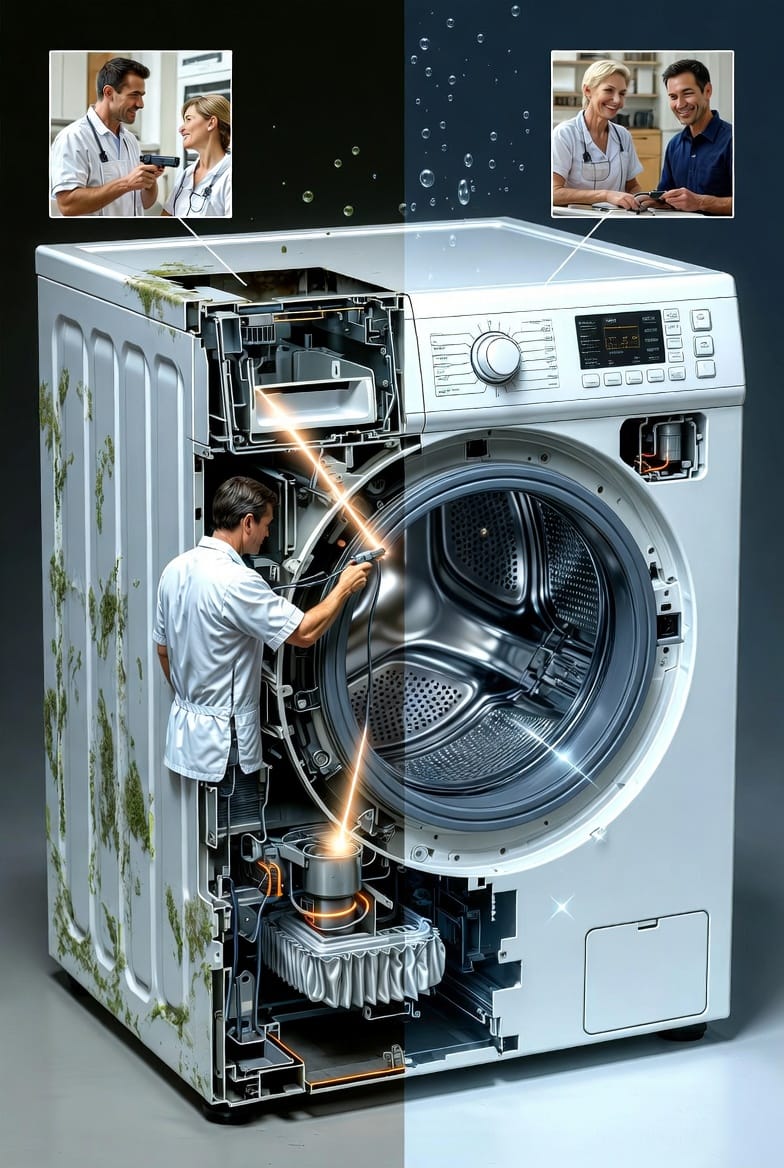
The rubber gasket around the door seal presents the biggest risk. Its deep folds and crevices trap water, soap scum, and debris. Over time, these hidden pockets become breeding grounds for black mold colonies. The gasket’s flexible material also stays cooler than the rest of the machine, encouraging condensation and prolonged dampness.
Additional moisture collects in the detergent dispenser drawer, the drain pump filter, and the rubber bellows at the bottom of the drum. High-efficiency (HE) detergents produce fewer suds and rinse away less aggressively, leaving behind a thin film that mold loves. When you close the door immediately after a cycle, warm air inside the drum condenses against the cool metal and rubber surfaces, perpetuating the cycle of dampness.
Many homeowners first notice the problem through visible black spots along the gasket or a persistent earthy smell even when the machine is empty. Left unchecked, front-load washer mold can spread to hoses, pumps, and internal components, potentially shortening the appliance’s lifespan.
The Hidden Risks of Ignoring Washer Mold
Beyond unpleasant odors, unchecked mold creates several serious concerns. Mold spores become airborne during spin cycles and can settle on clean clothes, towels, and bedding. Sensitive individuals may experience allergic reactions, respiratory irritation, or skin issues after contact with affected laundry.
Mold also accelerates wear on the rubber gasket and seals. Repeated exposure causes the rubber to degrade, leading to leaks and expensive repairs. In extreme cases, mold can clog the drain pump or damage electronic sensors, resulting in costly service calls or premature replacement of a high-end washer.
The financial impact adds up quickly. A single professional repair for mold-related damage often exceeds $300, while a new front-load washer can cost $800 or more. Preventing the issue through simple daily habits costs nothing yet saves hundreds in the long run.
Rest assured, these risks are entirely avoidable. Thousands of homeowners have restored their machines to peak performance using the protocols outlined below. You can too.
Prevention Strategies That Actually Work
Prevention begins the moment you finish a load. The simplest and most effective habit is to leave the door open after every cycle. This allows fresh air to circulate, evaporating residual moisture before mold can take hold. A few inches is sufficient; many modern washers include a door-stop feature that holds the door ajar safely.
Next, wipe the rubber gasket thoroughly after each use. Use a dry microfiber cloth to remove visible water, soap residue, and lint from every fold. Pay special attention to the lower sections where water pools. This 30-second routine dramatically reduces mold risk.
Run cleaning cycles monthly using either a commercial washer cleaner tablet or a simple mixture of two cups of white vinegar or bleach (never mix the two). Place the cleaner in the drum or dispenser, select the hottest cycle, and let the machine run empty. The high heat and agitation loosen built-up residue that ordinary cycles miss.
Additional weekly tips include:
- Remove and rinse the detergent dispenser drawer under warm water to clear trapped gunk.
- Check and clean the drain pump filter located behind a small panel at the bottom front of the machine.
- Use the correct amount of HE detergent – excess suds leave more residue.
- Avoid overloading the drum, which prevents proper drainage and increases moisture retention.
- Wipe down the interior drum and door glass after heavy loads.
These habits require minimal effort yet deliver noticeable results within weeks. Your laundry will smell fresher, clothes will rinse cleaner, and the machine will operate more efficiently.
Step-by-Step Cleaning Protocols for Existing Mold
When mold has already appeared, a structured cleaning approach restores your washer quickly and safely.
Begin by removing visible mold from the gasket. Mix one part bleach to four parts water in a spray bottle. Generously spray the affected areas, let it sit for 10 minutes, then wipe thoroughly with a clean cloth. For stubborn spots, use an old toothbrush to reach deep into the folds. Rinse the cloth frequently to avoid spreading spores.
Next, run a deep cleaning cycle. Place a specialized washer cleaning tablet or two cups of white vinegar directly into the drum. Select the longest, hottest cycle available and pause the machine midway through to allow the solution to soak for 30 minutes. Resume and let the cycle complete.
After the cycle finishes, wipe every surface again – gasket, drum interior, door glass, and dispenser drawer. Run a second rinse cycle with plain hot water to flush away loosened debris.
For heavily contaminated machines, repeat the cleaning cycle twice over a weekend. Test effectiveness by sniffing the interior after 24 hours with the door closed. A fresh, neutral scent confirms success.
Important safety notes: Always work in a well-ventilated area, wear gloves, and never mix bleach with vinegar or ammonia. If you have young children or pets, keep them away during cleaning.
When Professional Deep Cleaning Becomes Necessary
DIY methods work beautifully for light to moderate mold. However, certain situations call for expert intervention.
Call a professional when:
- Mold returns quickly despite consistent maintenance.
- Visible growth appears inside the drum or behind the rubber bellows.
- Unusual noises or drainage problems accompany the odor.
- The machine is more than five years old and has never received deep service.
Certified technicians use specialized tools to disassemble the outer tub, clean hidden hoses, flush the drain pump, and apply antimicrobial treatments that reach areas homeowners cannot access. The process typically takes 60 to 90 minutes and restores full performance.
Professional cleaning also includes a thorough inspection of belts, bearings, and seals, often catching small issues before they become expensive repairs. Many homeowners report their washer runs quieter, spins faster, and uses less energy after expert service.
Maintaining Long-Term Freshness and Efficiency
Once your washer is clean, protect your investment with a simple monthly checklist. Schedule a reminder on your phone to run a cleaning cycle on the first Saturday of each month. Keep a dedicated microfiber cloth and bottle of washer cleaner by the machine for convenience.
Consider upgrading to a washer with a built-in cleaning cycle or steam function if you plan to replace the unit in the coming years. These features simplify maintenance dramatically.
Remember that proper care extends beyond mold prevention. Regular maintenance also improves energy efficiency, reduces water usage, and keeps clothes looking their best.

Keep Your Washer Fresh and Odor-Free
Front-load washer mold is a manageable issue, not an inevitable one. By understanding the causes, adopting simple daily habits, and performing regular cleaning cycles, you can enjoy the benefits of your efficient machine without the drawbacks.
A fresh-smelling laundry room and clean clothes are worth the small effort. Most homeowners see dramatic improvement within two weeks of following these protocols. For deeper issues or complete peace of mind, our expert team stands ready to help.
Deep Clean Your Front-Load Washer Today – Call Now!