The Floor Warping After Flood: When to Replace vs. Save
Floodwater does more than leave a temporary mess. When it reaches your floors, the real trouble often begins days later as boards swell, lift, and lose their original shape. Homeowners facing floor warping after flood events frequently ask the same urgent question: Can this flooring be saved, or must it be replaced? The answer depends on the type of damage, the speed of response, and the presence of contaminants. Understanding these factors allows you to make confident, cost-effective decisions that protect both your home’s structure and your family’s health.
Stop Floor Warping Damage – Call for Fast Restoration Today
This guide walks through the practical signs that separate salvageable floors from those that demand replacement. You will learn how minor issues can often be corrected with professional drying and refinishing, while severe structural failures leave no safe alternative. Every recommendation rests on established restoration principles so you can act with clarity rather than guesswork.
Understanding How Floodwater Affects Flooring Materials
Different flooring materials react to water in distinct ways. Hardwood expands across the grain, engineered wood can separate into layers, laminate often swells irreversibly, and vinyl may lift at the seams. The longer water remains, the greater the chance that cupping, crowning, or complete structural failure will occur.
Moisture content is the critical measurement. Healthy hardwood typically sits between 6 and 9 percent moisture. Once levels climb above 15 percent for an extended period, the wood fibers begin to distort permanently. Rapid extraction and controlled drying can reverse early changes; delayed action usually locks the damage in place.
Temperature and humidity inside the home further influence outcomes. Warm, moist air accelerates fungal growth and softens adhesives. Cooler, drier conditions slow deterioration and give restoration teams a wider window to intervene successfully.
When Flooring Can Be Saved: Recognizing Minor, Reversible Damage
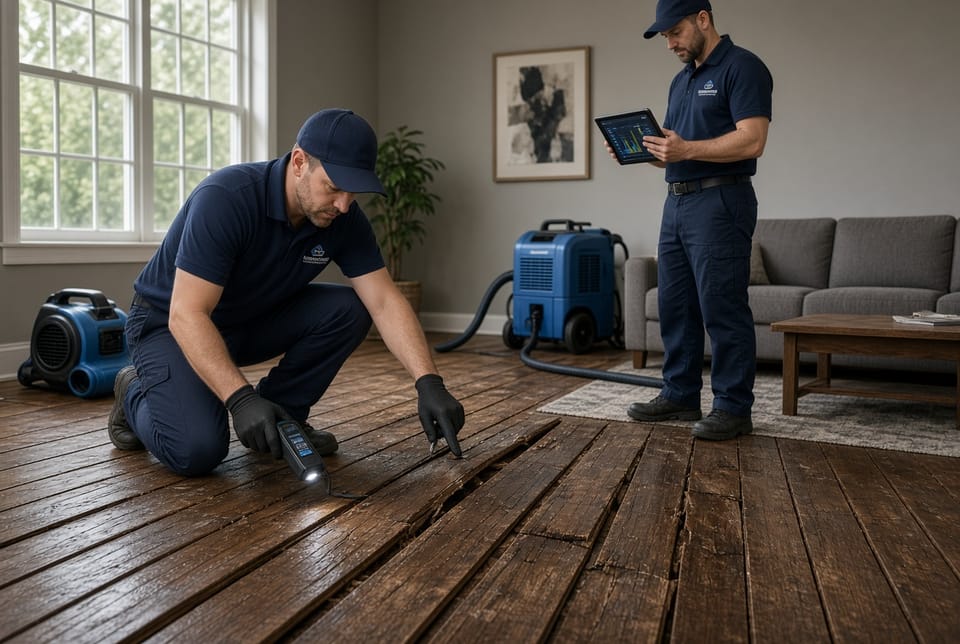
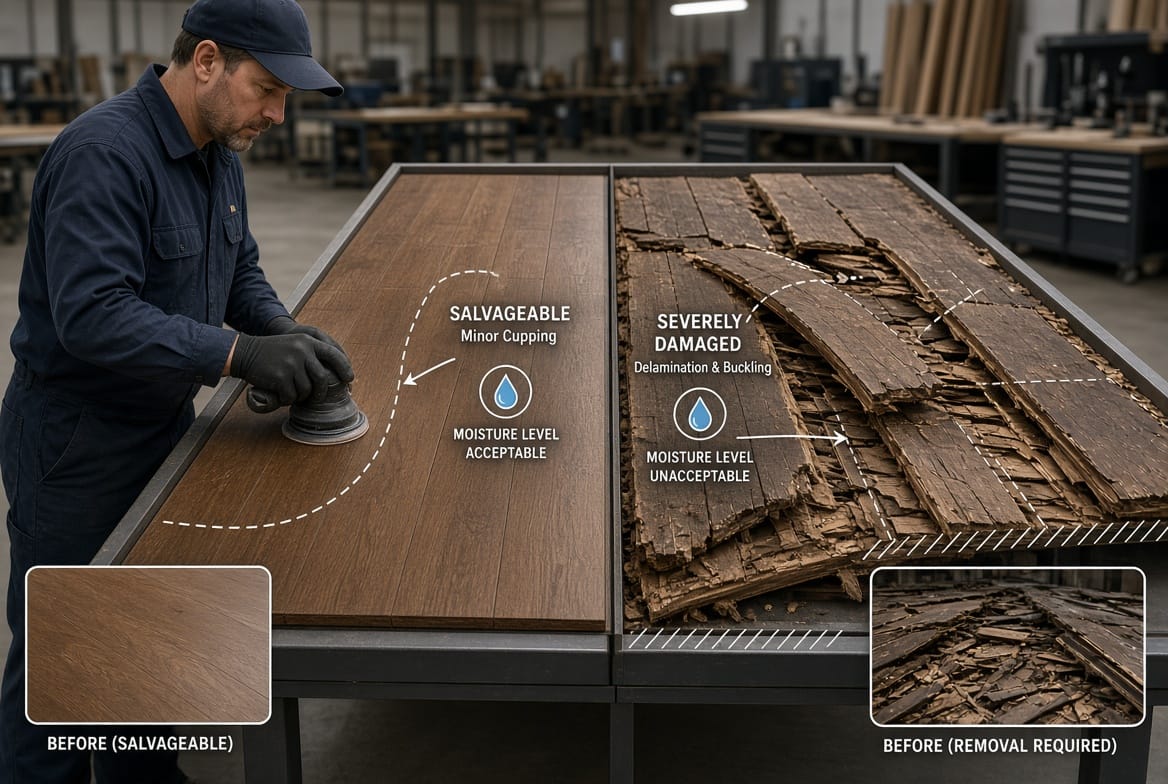
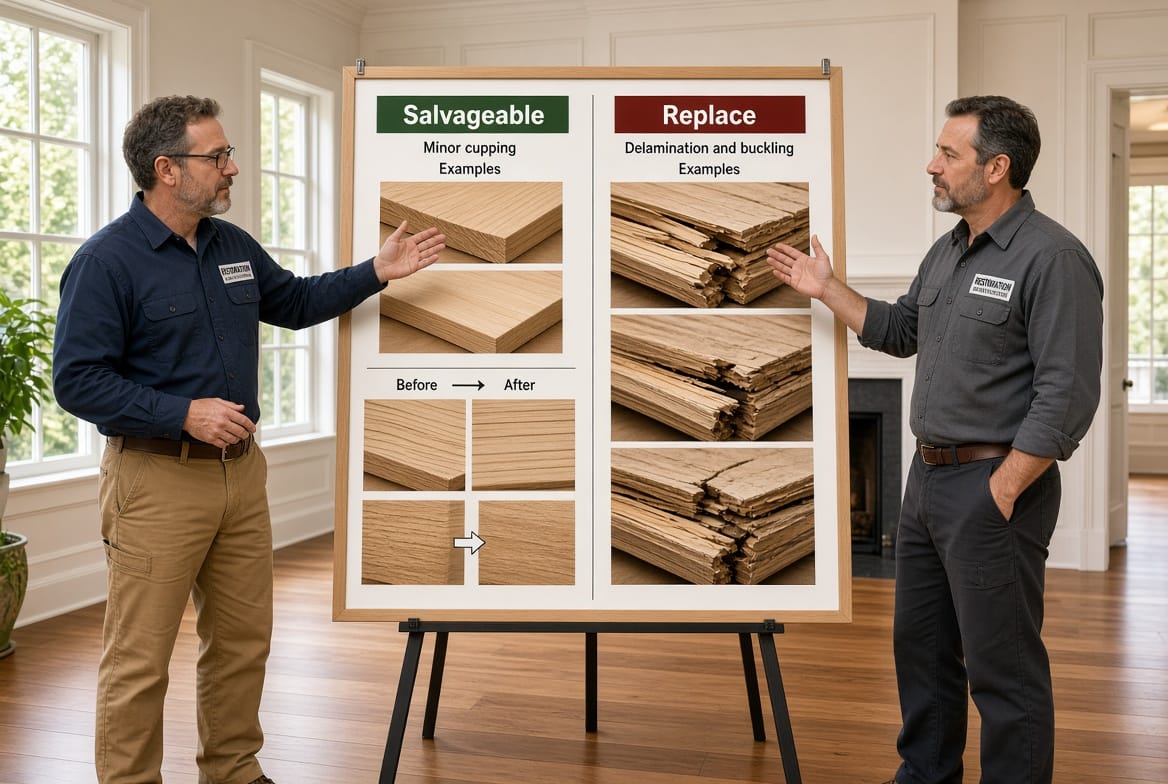
Not every water-exposed floor is doomed. Early intervention frequently restores both appearance and function. The most common salvageable condition is minor cupping. In this stage the edges of boards rise slightly while the center remains lower, creating a gentle concave shape across each plank. If the moisture is removed before the wood dries into a permanent set, the boards often return to nearly original flatness.
Quick drying is essential. Industrial air movers, dehumidifiers, and moisture monitoring equipment can bring elevated readings back into the safe range within 24 to 72 hours. Once the wood stabilizes, light sanding and refinishing usually erase residual surface irregularities.
Other indicators that salvage remains realistic include:
- Uniform moisture readings across the affected area with no localized hot spots
- Intact adhesive bonds between layers of engineered flooring
- Absence of musty odors that signal microbial activity
- Surface finish that has not cracked or peeled extensively
- No visible mold colonies on the underside or between boards
When these conditions exist, a skilled restoration crew can often save the majority of the floor. The process typically involves targeted extraction, continuous airflow, daily moisture mapping, and a final inspection before any refinishing begins. Homeowners who act within the first 24 to 48 hours after water intrusion dramatically increase the odds of successful recovery.
Clear Signs That Replacement Becomes Necessary
Certain forms of damage cross a threshold where repair is no longer safe or economical. Delamination occurs when the layers of engineered wood or laminate separate. Once the core materials lose adhesion, no amount of drying can restore structural integrity. The floor will continue to feel soft, squeak, or separate further under normal foot traffic.
Buckling represents an even more advanced failure. Boards push upward into tent-like ridges or waves because the expansion pressure has nowhere else to go. Buckled flooring has already undergone plastic deformation; the wood cells have permanently stretched. Attempting to force these boards flat risks cracking them or creating uneven high spots that become trip hazards.
The most serious reason for mandatory replacement is sewage contamination. Category 3 water contains pathogens, chemicals, and organic waste. Porous flooring materials absorb these contaminants deep into their structure. Surface cleaning cannot eliminate the risk. Health codes and restoration standards require complete removal of any material that has contacted black water.
Additional non-negotiable replacement indicators include:
- Persistent moisture readings above 20 percent after professional drying attempts
- Visible mold growth penetrating the wood grain or subfloor
- Soft or spongy areas that indicate the subfloor has also been compromised
- Multiple boards that have separated from the tongue-and-groove system
- Strong, lingering odors that remain after thorough cleaning and drying
When any of these conditions appear, continuing to use the floor endangers both structural stability and indoor air quality. Replacement eliminates the hazard and allows installation of new materials under controlled, dry conditions.
The Critical Role of Professional Moisture Assessment
Homeowners sometimes attempt to judge damage by appearance alone. Surface dryness can be deceptive. Water often migrates beneath the finish or into the subfloor, creating hidden reservoirs that continue to feed warping long after the visible surface seems dry.
Certified technicians use pin and pinless moisture meters, infrared cameras, and hygrometers to map the full extent of intrusion. These tools reveal whether the problem is limited to the finish layer or has reached the structural core. Accurate data prevents two costly mistakes: discarding floors that could have been saved, or attempting to refinish floors that will fail again within months.
A thorough assessment also examines the subfloor, joists, and wall cavities. Floodwater rarely stops at the flooring. Ignoring secondary moisture sources can lead to recurring warping even after new boards are installed.
Step-by-Step Decision Process for Homeowners
Follow this practical sequence to reach a reliable conclusion:
- Stop the water source and extract standing water immediately.
- Contact a professional restoration company within the first 24 hours.
- Allow the team to perform a complete moisture survey.
- Review the documented findings together—photos, meter readings, and contamination category.
- Weigh the cost of intensive drying and refinishing against the cost of full replacement.
- Consider long-term factors such as residual odor risk, warranty implications, and future resale value.
- Authorize the appropriate scope of work and schedule follow-up inspections.
This methodical approach replaces emotional reaction with evidence-based choices. Most homeowners discover that a hybrid solution works best: save the undamaged or lightly affected sections and replace only the compromised zones. Matching new material to existing flooring is usually straightforward when both are the same species and grade.
Health and Safety Considerations That Influence the Decision
Warped floors are more than an aesthetic problem. Raised edges create trip hazards, especially for children and older adults. Soft spots can give way under heavy furniture or foot traffic. Most importantly, prolonged moisture invites mold. Once mold colonies establish themselves inside flooring materials, they release spores into the living space and can trigger respiratory issues, allergic reactions, and other health concerns.
Sewage-related contamination elevates the risk dramatically. Bacteria, viruses, and parasites remain viable inside porous wood for extended periods. Professional standards mandate removal of any flooring that has contacted this category of water, regardless of how the surface appears after drying.
Choosing replacement in these scenarios is not an overreaction; it is a necessary safeguard for the occupants of the home.
Cost Factors and Long-Term Value
Saving a floor is almost always less expensive in the short term than full replacement. Drying, sanding, and refinishing typically cost a fraction of new material plus labor. However, incomplete repairs can generate higher expenses later when the same area fails again or when mold remediation becomes necessary.
Replacement carries a higher upfront price yet delivers a clean slate. New flooring installed over a properly dried and sealed subfloor often comes with manufacturer warranties that damaged material has forfeited. In high-value homes or properties preparing for sale, the investment in replacement frequently returns through improved market appeal and buyer confidence.
An experienced restoration company can present both options with transparent pricing so the financial picture remains clear.
Preventing Future Floor Warping After Water Events
Once the immediate crisis is resolved, focus shifts to reducing the chance of recurrence. Simple maintenance habits make a measurable difference:
- Maintain gutters and downspouts so water drains away from the foundation
- Inspect appliance hoses and supply lines annually
- Install water-leak sensors near water heaters, washing machines, and under sinks
- Ensure proper grading around the exterior of the home
- Keep indoor relative humidity between 30 and 50 percent year-round
In flood-prone regions, elevating critical systems and choosing water-resistant flooring materials for lower levels provides additional protection. Engineered products with moisture-resistant cores or luxury vinyl plank options perform better than solid hardwood when occasional water exposure is likely.
Working With Restoration Professionals for Optimal Results
Selecting the right partner is as important as recognizing the damage itself. Look for companies that maintain proper licensing, carry specialized water-damage certifications, and use industry-standard drying equipment. Transparent communication, daily progress reports, and documented moisture logs demonstrate professionalism and accountability.
A quality team will never pressure you toward unnecessary replacement. Their goal is the most effective, least disruptive solution that restores safety and appearance. When both salvage and replacement remain viable, they present the advantages and limitations of each path so the final decision rests with you.
Making the Smart Choice for Your Home
Floor warping after a flood presents a clear decision point. Minor cupping caught early and dried thoroughly can usually be corrected, preserving the original flooring and minimizing cost. Delamination, buckling, and any contact with sewage contamination leave no responsible alternative except complete removal and replacement. Accurate moisture assessment by trained technicians supplies the data needed to choose correctly.
Delaying action rarely improves the outcome. Water continues to migrate, mold risk increases, and structural stresses intensify. Prompt professional evaluation converts uncertainty into a concrete plan.
Make smart decisions about water-damaged floors. Experienced technicians stand ready to assess your specific situation, explain the findings in plain language, and implement the solution that best protects your home and your peace of mind.
Don’t Guess on Cupping or Buckling – Call for Restoration