The Flooded Hardwood Floor Restoration: Salvage or Replace
When water invades your home, few surfaces suffer as visibly and structurally as hardwood floors. The decision between salvaging the existing flooring or replacing it entirely is one of the most common—and stressful—choices homeowners face after a flood, burst pipe, or appliance failure. This guide walks you through that exact decision with clear, authoritative guidance so you can act confidently and protect both your investment and your peace of mind.
Restore Your Flooded Hardwood Floors Today – Call Now!
Hardwood is prized for its beauty, durability, and value, yet it is also hygroscopic—meaning it readily absorbs moisture. Once water reaches the wood fibers, the clock starts ticking. The difference between a successful restoration and a full tear-out often comes down to speed, the type of water involved, and the specific damage patterns that appear. Understanding these factors allows you to make an informed choice rather than guessing under pressure.
Understanding How Water Affects Hardwood Floors
Water damage to hardwood does not look the same in every case. Solid hardwood and engineered hardwood react differently, and the severity depends on how long the moisture remained, the source of the water, and the ambient conditions afterward.
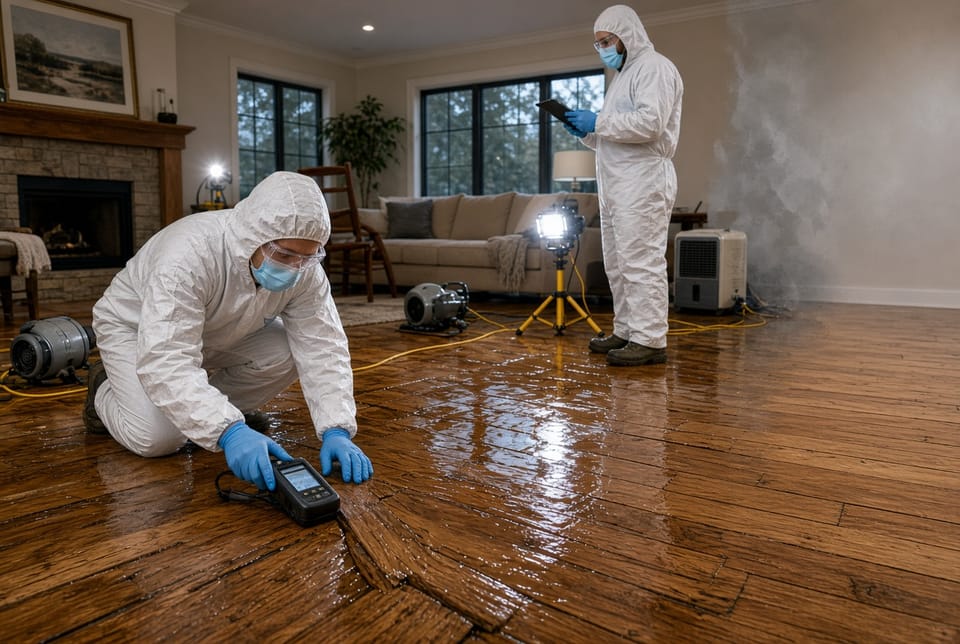
When boards absorb moisture, they expand. Because the bottom of the board is often more restricted by the subfloor, the top surface lifts, creating the classic cupping effect—edges higher than the center. If the moisture continues or the boards dry unevenly, the wood can twist, crown, buckle, or even delaminate. In extreme cases, the finish fails, mold begins to grow, or the structural integrity of the planks is permanently compromised.
The good news is that not every water-damaged hardwood floor is a lost cause. Modern restoration techniques, combined with rapid response, frequently allow skilled professionals to salvage floors that once would have been discarded. The key is recognizing the precise signs that tip the balance between salvage and replacement.
When Hardwood Floors Can Be Successfully Salvaged
Several clear indicators suggest that your hardwood floors have a strong chance of being restored rather than replaced. These conditions typically involve limited exposure time and reversible physical changes.
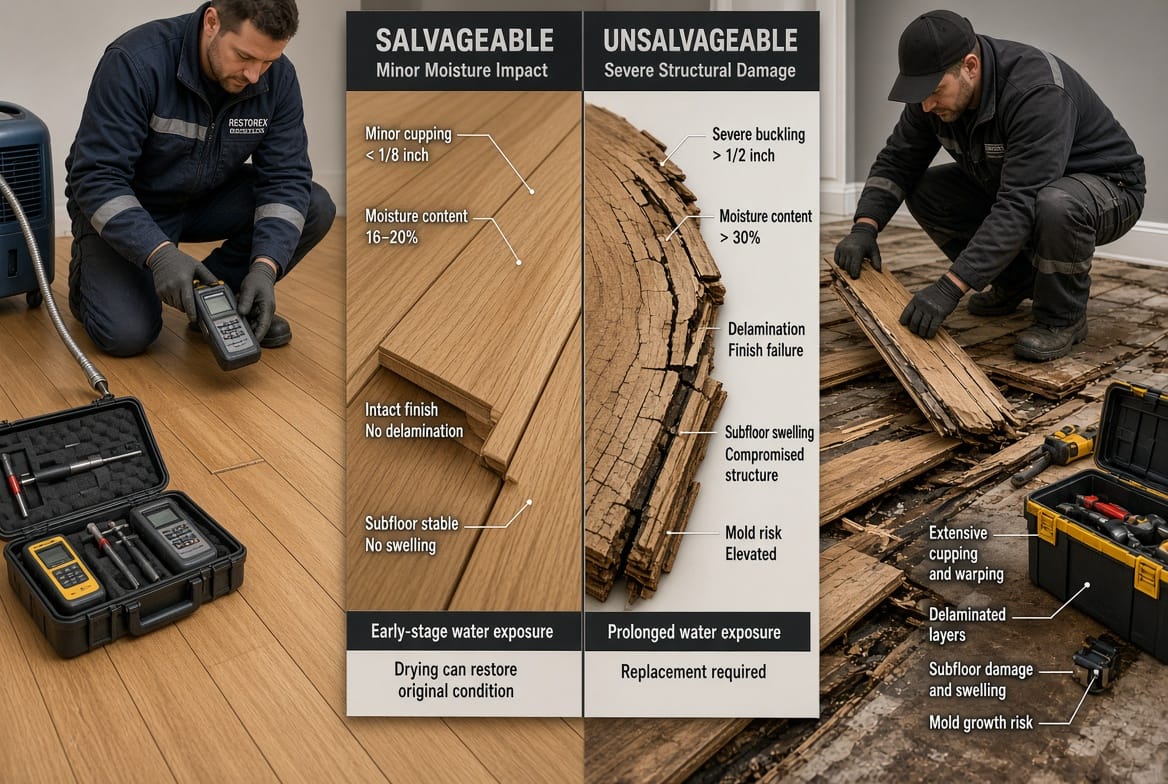
- Minor cupping is the most common salvageable symptom. When the edges of the boards rise only slightly and the moisture content has not exceeded critical thresholds, controlled drying can return the wood to its original flat profile.
- Recent flooding dramatically improves salvage odds. If water is extracted within the first 24–48 hours and drying begins immediately, the wood fibers have less time to swell permanently or invite microbial growth.
- Kiln drying capability is another decisive factor. Professional restoration teams can remove boards, carefully dry them in controlled environments that mimic industrial kiln conditions, then reinstall them with minimal waste. This process is especially effective for solid hardwood of higher grades.
Additional favorable signs include the absence of black or gray discoloration (which often signals mold), intact finish layers that have not peeled, and a subfloor that remains structurally sound. When these elements align, restoration becomes not only possible but often the more cost-effective and environmentally responsible choice. Homeowners who act quickly frequently retain the original character and value of their floors while avoiding the disruption of a complete replacement.
When Hardwood Floors Must Be Replaced
Certain damage patterns cross a line that no amount of drying or refinishing can reverse. Recognizing these red flags early prevents wasted effort and protects indoor air quality.
- Delamination occurs when the layers of engineered hardwood separate or when the finish and wood veneer lift away from the core. Once the bonding fails, the board cannot be returned to a stable condition.
- Buckling is more severe than cupping. Entire sections of flooring push upward into tent-like ridges or waves. This movement usually indicates prolonged saturation and irreversible expansion against fixed points such as walls or cabinets.
- Sewage or contaminated water introduces biological hazards that cannot be fully eliminated from porous wood. Even after drying, residual pathogens and odors remain, making replacement the only safe option for health reasons.
Other irreversible indicators include extensive mold colonization deep within the grain, widespread cracking or splitting that compromises structural strength, and situations where the subfloor itself has swollen or rotted. In these cases, attempting to salvage the floor risks ongoing problems, reduced property value, and potential health concerns for occupants.
Step-by-Step Restoration Process for Salvageable Hardwood
When the assessment confirms that salvage is viable, a systematic restoration sequence delivers the best results. Professional teams follow a proven protocol that prioritizes safety, thorough drying, and long-term stability.
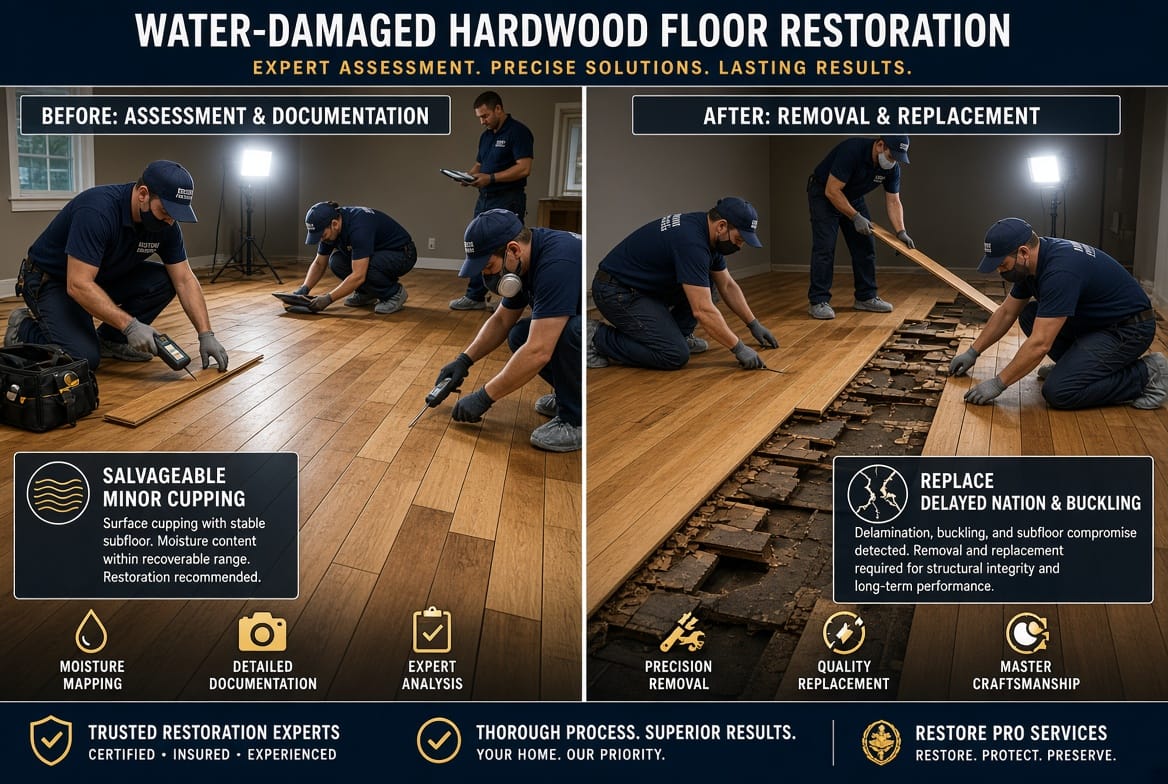
First, water extraction removes standing water using powerful truck-mounted or portable extractors. Speed at this stage is critical to limit further absorption.
Next comes moisture mapping. Technicians use pin and pinless meters, thermal imaging, and hygrometers to document exact moisture levels across the floor, baseboards, and subfloor. This data guides the drying strategy and provides a baseline for progress tracking.
Controlled drying follows. High-velocity air movers, industrial dehumidifiers, and sometimes specialized floor-drying mats create an environment that pulls moisture from the wood without causing secondary damage such as checking or overdrying. In many cases, individual boards are carefully lifted, kiln-dried off-site, and returned.
Once moisture content stabilizes within manufacturer tolerances (typically 6–9 percent for most hardwood species), the floor is inspected again. Minor surface irregularities may be addressed through light sanding and refinishing. Cupped boards that have returned to flat often require only a new coat of finish to restore their appearance.
Finally, the entire area is cleaned, sanitized if needed, and monitored for several days to confirm no residual moisture remains. This comprehensive approach frequently returns the floor to near-original condition while preserving the unique character that made hardwood the preferred choice in the first place.
Key Signs at a Glance: Salvage or Replace
To simplify the decision, keep these primary indicators in mind during the initial evaluation:
Salvageable conditions
- Minor cupping with edges only slightly raised
- Recent water exposure (under 48 hours)
- No visible mold or discoloration
- Solid hardwood or high-quality engineered boards that respond to kiln drying
- Subfloor remains dry and intact
Replacement required
- Clear delamination of layers or finish
- Pronounced buckling or tenting of boards
- Exposure to sewage or category 3 contaminated water
- Deep mold growth or permanent warping
- Structural failure of the wood itself
These distinctions are not always obvious to the untrained eye. Professional assessment removes uncertainty and prevents costly mistakes.
Making the Right Decision for Your Home
The choice between salvage and replacement ultimately rests on a combination of technical data and practical considerations. Cost is important, yet it should never be the sole factor. A properly restored hardwood floor retains the original material’s beauty and often costs less than a full replacement while generating less construction waste. Conversely, forcing a salvage attempt on irreversible damage can lead to recurring problems, higher long-term expenses, and diminished home value.
Homeowners benefit most from an unbiased professional evaluation conducted as soon as water is discovered. Certified restoration specialists bring calibrated instruments, industry protocols, and experience across hundreds of similar projects. Their recommendations are grounded in measurable moisture readings and visible damage patterns rather than guesswork.
In addition to the immediate decision, consider secondary effects. Even if the visible hardwood appears recoverable, hidden moisture in the subfloor, walls, or insulation can create future issues. A thorough inspection addresses the entire affected area, not just the surface boards.
Why Professional Intervention Matters
Attempting do-it-yourself drying with household fans or heaters frequently worsens the situation. Uneven drying can lock cupping in place or create new stress cracks. Improper cleaning of contaminated water risks spreading bacteria. Professional teams follow industry standards set by organizations that govern water damage restoration, ensuring both safety and effectiveness.
They also carry the specialized equipment—commercial dehumidifiers, air movers, moisture meters, and, when needed, off-site kiln facilities—that residential owners simply do not possess. The result is a higher likelihood of successful salvage when conditions allow, and a cleaner, safer replacement process when they do not.
Protecting Your Investment Moving Forward
After restoration or replacement, simple habits reduce the chance of future water damage. Maintain consistent indoor humidity between 30 and 50 percent, promptly address any plumbing leaks, and consider moisture barriers or elevated thresholds in vulnerable areas. Regular inspections of appliances and supply lines further minimize risk.
Hardwood floors remain one of the most elegant and enduring surfaces available. When water intervenes, the difference between lasting beauty and permanent loss lies in rapid, informed action guided by clear criteria for salvage versus replacement.
Save Your Hardwood Floors from Water Damage – Call Experts Now