The Flooded Carpet Extraction: How Professionals Remove Water
When water invades a home, the carpet often becomes the first and most visible victim. What looks like a soaked surface is usually a reservoir holding gallons of water in the fibers, backing, and padding below. Left in place, that moisture feeds mold growth, weakens adhesives, stains, warps subfloors, and creates lingering odors. Professional water extraction changes the outcome. Trained technicians using industrial systems pull far more water, far faster, than household vacuums or shop-vacs ever can. This article explains exactly how that process works, why truck-mounted extraction, portable extractors, and flood wands outperform consumer tools, and what you should expect when restoration professionals arrive.
Call Today for Truck-Mounted Water Removal
Speed matters. The first 24 to 48 hours after a flood, burst pipe, or appliance failure decide whether a carpet can be saved or must be replaced. Professional extraction is the critical first step that makes later drying possible.
Why Standing Water in Carpet Is More Dangerous Than It Looks
Carpet is designed to hide water. The face yarns, primary backing, secondary backing, and foam or felt pad act like a sponge. Even after the surface appears only damp, the pad can hold several gallons per square yard. That trapped moisture stays in contact with wood, concrete, or tack strips and creates ideal conditions for microbial growth.
Risks increase quickly:
- Mold and mildew can begin colonizing within 24–48 hours in warm, humid conditions.
- Adhesives break down, causing delamination and permanent wrinkles.
- Subfloors swell, cup, or support bacterial odors that ordinary cleaning cannot remove.
- Hidden moisture in walls and baseboards often goes unnoticed until secondary damage appears.
Homeowners sometimes attempt extraction with a wet/dry vacuum. Those machines lack the water lift and airflow needed to pull water from the pad. The result is a carpet that feels better on top while remaining wet underneath. Professional equipment is built for volume, suction depth, and continuous operation.
How Professionals Approach Flooded Carpet Extraction
A professional visit begins with assessment, not random vacuuming. Technicians evaluate the water category (clean, gray, or black), the affected square footage, the carpet construction, and whether the pad can be salvaged. Safety comes first: electricity is isolated, slip hazards are marked, and contaminated water is handled according to restoration standards.
The extraction sequence typically follows these stages:
- Containment and furniture protection so water does not migrate into unaffected rooms.
- Removal of standing water from hard surfaces and the carpet face.
- Deep extraction through the carpet and, when possible, the pad.
- Immediate setup of air movers and dehumidifiers once bulk water is gone.
- Moisture mapping with meters to confirm remaining water is being tracked, not guessed.
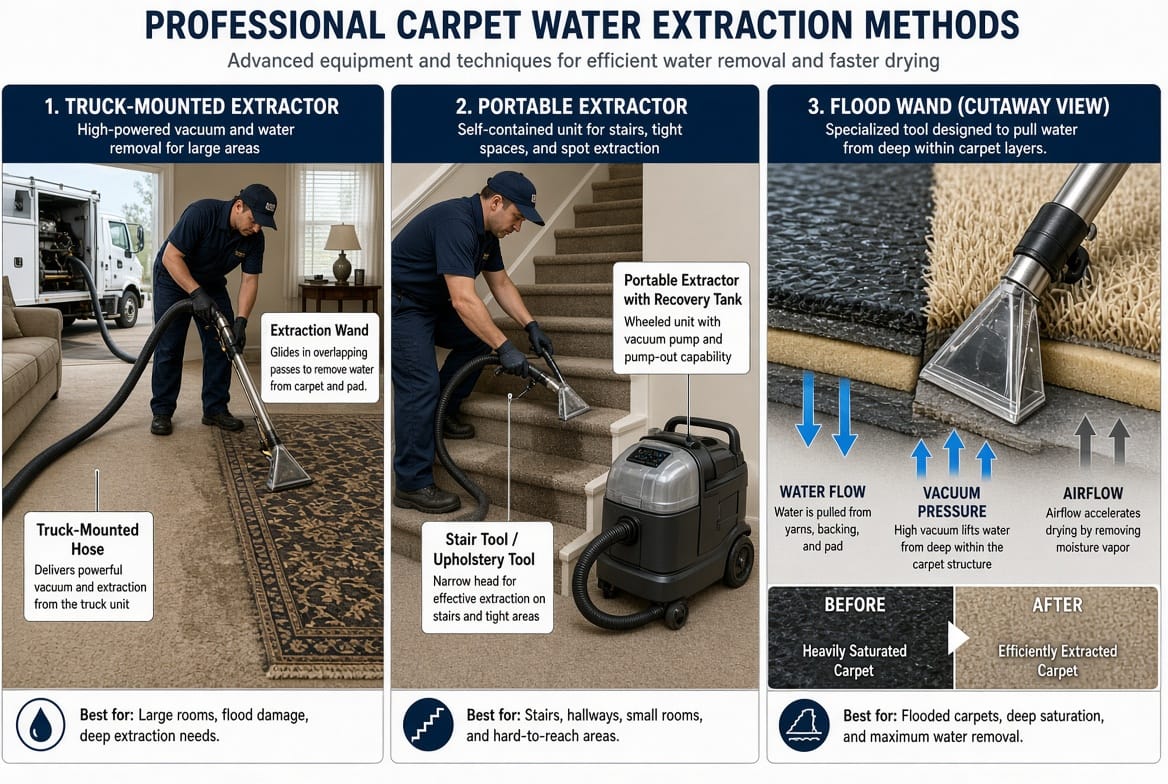
The tools that make this possible fall into three main categories: truck-mounted extraction systems, portable extractors, and specialized flood wands.
Truck-Mounted Extraction: Maximum Power for Most Homes
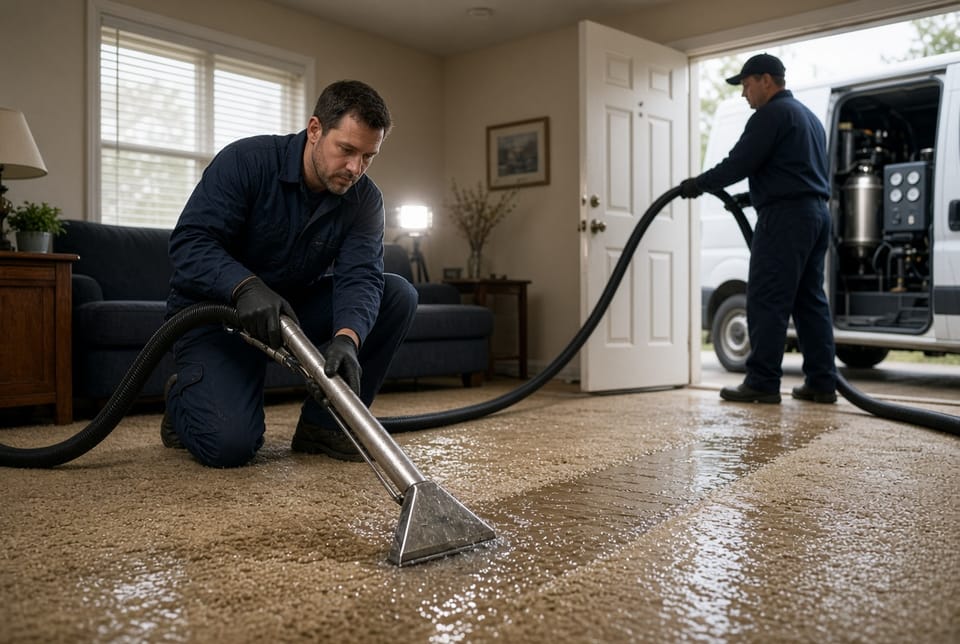
A truck-mounted extractor is the workhorse of residential flood work. A high-performance vacuum pump and waste tank sit in a van or truck parked outside. Long, large-diameter hoses run from the vehicle into the house and attach to a weighted floor wand.
The advantages are physical, not marketing:
- Extremely high water lift (vacuum strength) pulls water from deep in the pad.
- High cubic-feet-per-minute airflow moves large volumes of water quickly.
- Continuous operation without emptying small tanks every few minutes.
- Heat can sometimes be added to the rinse or extraction stream to loosen soils and improve drying.
Technicians work the wand in overlapping passes, applying downward pressure so the vacuum head seals against the carpet. Water is drawn into the hose and deposited in the truck tank for proper disposal. On a typical living-room flood, a skilled operator can remove the majority of extractable water in a fraction of the time a portable unit would require.
Truck-mounted systems are ideal for single-family homes with driveway or street access. They are less practical in high-rise buildings or tight urban lots where hoses cannot reach.
Portable Extractors When Access Is Limited
Not every job allows a truck to sit outside with 100 feet of hose. Apartments, upper floors, basements with narrow stairs, and commercial spaces often require portable extractors. These self-contained machines combine a vacuum motor, recovery tank, and sometimes a solution tank on wheels that roll into the room.
Modern professional portables are far stronger than rental-store units. Dual-motor designs, larger tanks, and better wand seals still deliver meaningful extraction. Technicians may make more frequent tank dumps, but they can work in locations where a truck-mounted hose simply will not go.
Portable units also serve as a second-stage tool. After the bulk of water is removed with a flood wand or truck system, a portable extractor can detail edges, stairs, and closets.
Flood Wands and High-Volume Water Removal
A standard carpet-cleaning wand is not designed for flood volumes. A flood wand (sometimes called a flood extractor or water claw style tool) has a wider head, stronger seal, and often a squeegee or channel design that skims large quantities of water in fewer passes.
These tools excel when:
- Water is still standing on the surface.
- The pad is fully saturated.
- Speed is essential to limit wicking into walls.
Operators move the flood wand in systematic patterns, overlapping each stroke. Some systems combine extraction with a light rinse to flush contaminants, then immediately re-extract. The goal is not cosmetic cleaning; it is bulk water removal so drying equipment can finish the job.
Why Professional Equipment Removes More Water Faster
Consumer wet vacuums and even many rental extractors fail for measurable reasons. They produce lower vacuum pressure, smaller airflow, and they overheat or lose suction as tanks fill. Carpet padding is compressed underfoot; only strong, consistent suction overcomes that resistance and draws water out of the foam cells.
Professional systems also allow technicians to:
- Monitor vacuum performance in real time.
- Adjust wand pressure and pass speed to the carpet type.
- Combine extraction with targeted antimicrobial application when the water category requires it.
- Transition immediately from extraction to structural drying without leaving the site.
The difference is not subtle. A homeowner may spend hours and still leave several gallons in the pad. A trained crew with the right combination of truck-mounted power, portable detail work, and flood wands can drop moisture levels enough that drying equipment can reach the target in days rather than weeks.
Faster bulk-water removal also reduces the chance that water will wick up drywall, saturate baseboards, or migrate under cabinets. That containment is as important as the extraction itself.
What Happens After the Water Is Extracted
Extraction is only the first phase. Once standing and absorbed water is removed, technicians place high-velocity air movers to evaporate remaining moisture and commercial dehumidifiers to pull that vapor from the air. Moisture meters and thermal imaging confirm progress rather than relying on how the carpet feels to the hand.
In many cases the pad cannot be saved. Contaminated or delaminated padding is removed, the subfloor is cleaned and treated, and new pad is installed after the structure reaches acceptable dryness. The carpet itself may be restretched or, if the backing has failed, replaced. Professionals document readings so insurance and homeowners can see the science behind the decisions.
Common Mistakes That Make Flooded Carpets Worse
Waiting “to see if it dries on its own” is the most frequent error. Using household fans without dehumidification simply moves humid air around. Scrubbing or steam-cleaning a flooded carpet before extraction can drive water deeper. Turning up the heat without controlling humidity encourages mold. Each of these delays increases the likelihood of replacement instead of restoration.
Calling professionals promptly gives the carpet its best chance. Even if the final decision is replacement, proper extraction still protects the subfloor, walls, and indoor air quality.
When to Call for Professional Extraction
Any of the following situations warrant an immediate call:
- Water has been present more than a few hours.
- The source is a drain, sewer, or outdoor flood (category 2 or 3 water).
- The affected area is larger than a small bathroom.
- You can still see or feel moisture after using a home vacuum.
- There is a musty odor or visible discoloration.
Night and weekend emergencies are common. Restoration companies that specialize in water damage keep technicians and equipment ready precisely because delay multiplies cost.
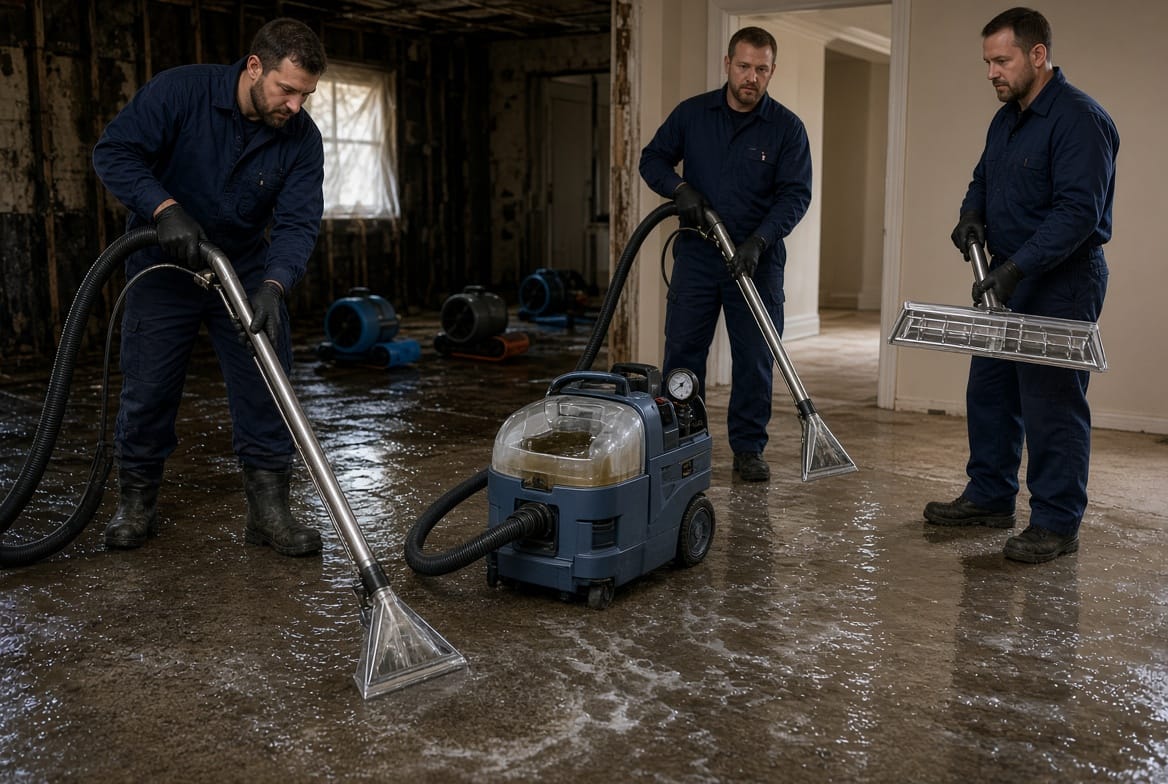
Professional extraction removes more water faster. The combination of industrial vacuum power, specialized wands, and trained technique protects your flooring, your structure, and your indoor environment in ways do-it-yourself methods cannot match. If your carpet is flooded, do not wait for the surface to look dry.
Call Now for Emergency Flooded Carpet Extraction