The Flooded Basement Safety: Electrical and Structural Hazards
A flooded basement creates an immediate and serious set of dangers that demand careful, informed action. Water intrusion turns an ordinary lower level into a high-risk environment where electrical hazards and structural hazards can quickly escalate. Understanding these risks and following clear safety protocols protects lives and prevents further damage. This guide explains the primary threats, outlines essential safety steps before anyone enters the space, and emphasizes why professional intervention remains the safest path forward.
Get Safe Flooded Basement Restoration – Call Now!
Flooding can result from heavy rainfall, burst pipes, sewer backups, or rising groundwater. Regardless of the source, once water accumulates, the basement becomes an unpredictable zone. Standing water conducts electricity, weakens building materials, and hides additional dangers beneath the surface. Homeowners and occupants must treat every flooded basement as potentially life-threatening until trained specialists confirm otherwise.
Understanding Electrical Hazards in Standing Water
Electricity and water form a deadly combination. When water enters a basement, it can contact outlets, switches, junction boxes, appliances, or the main electrical panel. Even a small amount of standing water creates a conductive path that can energize the entire floor.
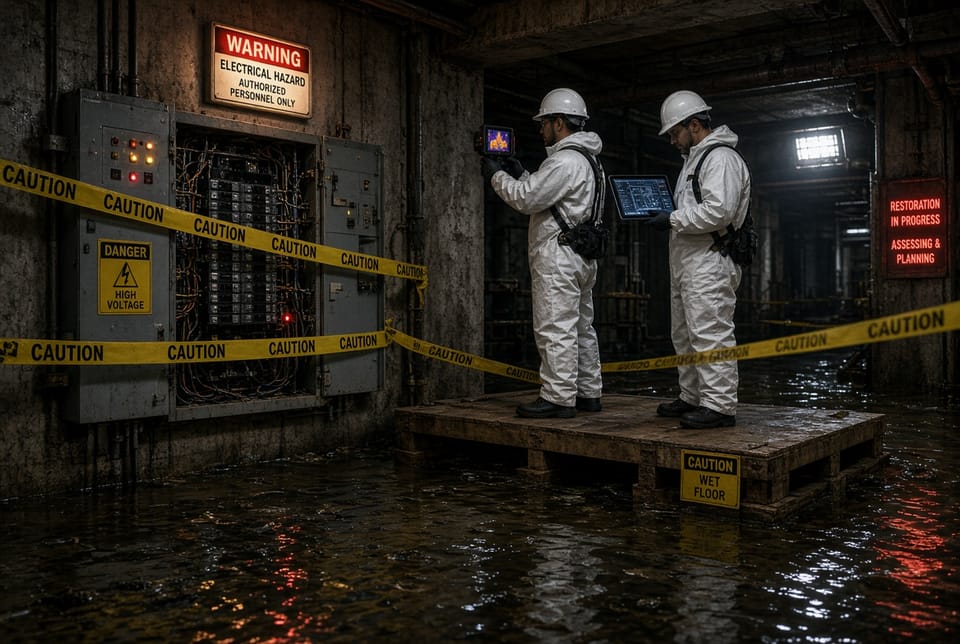
Never enter a flooded basement if there is any possibility of live electrical current. The first and most critical rule is absolute: do not enter standing water. Water levels as shallow as a few inches can carry enough voltage to cause severe shock or electrocution. Wet concrete floors and metal objects further increase conductivity, multiplying the danger.
The safest initial action involves cutting power from a remote location. Locate the main breaker or fuse box outside the flooded area or on an upper floor. Switch off the entire electrical service to the house if possible. If the main panel sits inside the basement or water already surrounds it, do not attempt to turn off power yourself. Instead, contact the utility company immediately to disconnect service at the meter or street level.
After power is confirmed off, still treat the space with caution. Residual charge can remain in capacitors, generators, or secondary systems. Call a licensed electrician experienced in water-damaged systems before any inspection or cleanup begins. The electrician will verify that circuits are truly de-energized, check for damaged wiring, and identify any shorted components that could reignite hazards once power is restored.
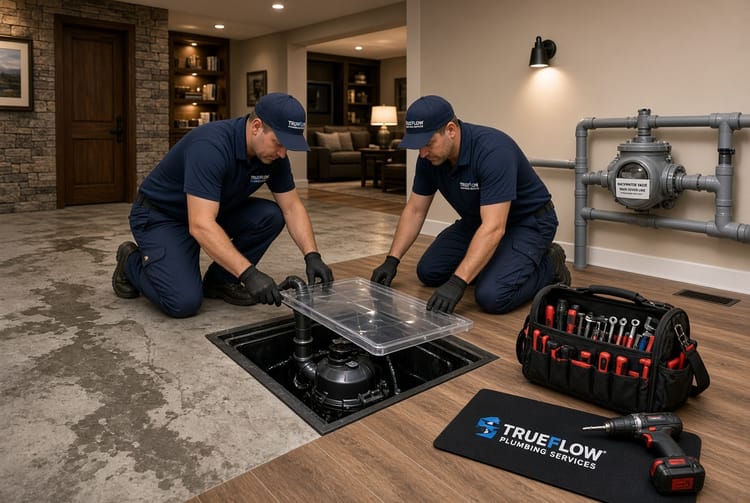
Additional electrical risks include submerged extension cords, sump pumps still plugged in, or battery backup systems that continue to supply current. Appliances such as furnaces, water heaters, and freezers may also retain stored energy. Only qualified professionals should handle disconnection and testing of these items.
Ignoring these protocols can lead to catastrophic outcomes. Electrical shock in a flooded environment often leaves little opportunity for rescue because the surrounding water keeps the current flowing. By prioritizing power isolation and professional evaluation, occupants dramatically reduce the chance of injury.
Structural Hazards That Threaten Stability
Beyond electricity, water attacks the physical integrity of the building. Prolonged saturation weakens foundations, walls, floors, and support beams. Masonry can lose strength, wooden joists may swell and soften, and soil pressure outside the foundation can increase dramatically when surrounding ground becomes saturated.
One of the most serious structural risks is the possibility that walls may collapse. Hydrostatic pressure from waterlogged soil pushes inward against basement walls. If the walls already contain cracks or were not designed for high lateral loads, they can bow, crack further, or fail suddenly. Ceiling joists and floor systems above the basement can also become compromised when supporting walls shift or when water saturates the framing.
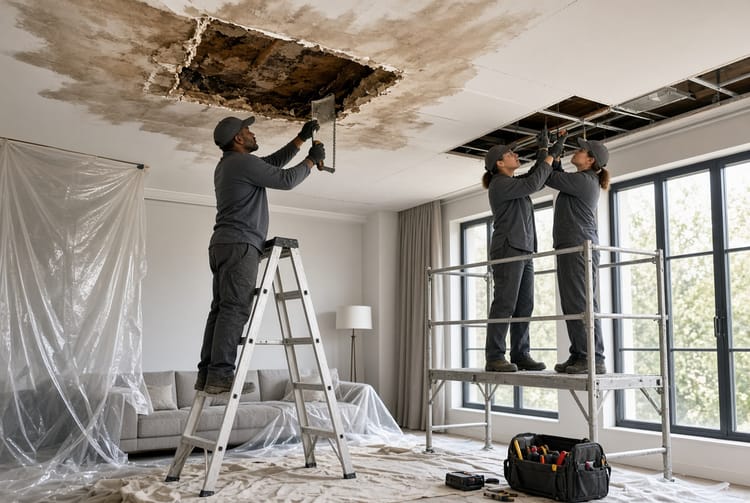
Floors present another hidden danger. Wooden subfloors or concrete slabs may develop soft spots or voids underneath. Stepping into an area that looks solid can result in sudden collapse into deeper water or debris. Ceiling materials such as drywall or plaster can detach under the weight of absorbed moisture and fall without warning.
Gas lines, if present, add another layer of risk. Flooding can dislodge connections or damage valves, allowing natural gas or propane to accumulate in low areas. Combined with any remaining electrical source, this creates an explosion hazard.
Structural assessment requires specialized knowledge and equipment. Visual inspection alone rarely reveals the full extent of damage. Moisture meters, thermal cameras, and structural engineering tools help professionals determine whether the space is safe to enter and what temporary supports may be needed.
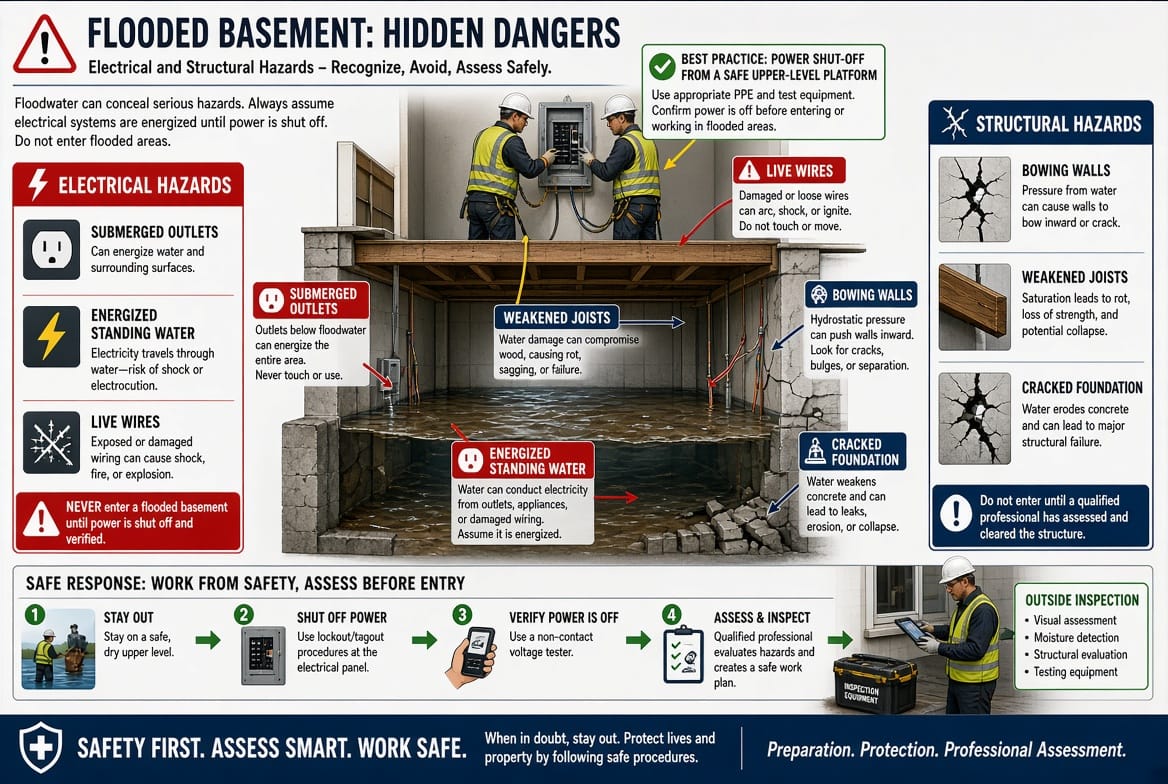
Essential Safety Steps Before Entering Any Flooded Basement
Safety protocols must be followed in a strict sequence. Rushing into the space to salvage belongings or begin cleanup can turn a recoverable situation into a tragedy. The following steps form a reliable framework that prioritizes life safety above all else.
- Confirm that all electrical power to the basement and preferably the entire structure has been shut off from a safe location outside the flooded zone.
- Contact the utility company if the main panel cannot be safely reached or if there is any uncertainty about residual power.
- Call a licensed electrician to verify that the system is completely de-energized and to inspect for hidden damage.
- Notify professional water damage restoration specialists who can evaluate both electrical and structural conditions.
- Avoid entering if water levels remain high, if walls show visible bowing or cracking, or if any electrical equipment appears compromised.
- Wait for formal clearance from both the electrician and structural assessors before setting foot inside.
- Wear appropriate protective equipment only after professionals confirm the space is safe, including waterproof boots rated for electrical hazards, gloves, and eye protection.
- Never work alone; maintain constant communication with someone outside the basement.
- Document the scene with photographs taken from safe vantage points to assist insurance and restoration planning.
- If strong odors of gas or sewage are present, evacuate the entire building immediately and contact emergency services.
These steps create layers of protection. Each action reduces a specific category of risk and builds confidence that entry will occur only under controlled conditions.
Even after power is off and initial clearance is given, continue to monitor conditions. Water levels can rise further, structural movement can continue, and secondary hazards such as mold growth or contaminated water can develop rapidly. Continuous professional oversight ensures that the environment remains stable throughout the recovery process.
Why Professional Restoration Protects Both People and Property
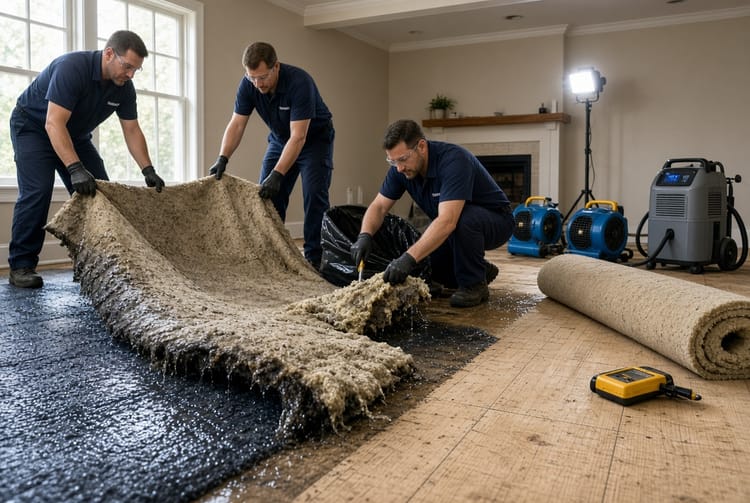
Attempting DIY cleanup in a flooded basement often compounds the original damage. Untrained individuals may overlook saturated insulation, hidden electrical faults, or compromised structural members. Professional teams arrive with specialized equipment including industrial pumps, moisture detection tools, air movers, and dehumidifiers designed specifically for rapid water extraction and drying.
Licensed restoration companies coordinate directly with electricians and, when necessary, structural engineers. This integrated approach addresses every hazard systematically. Technicians follow industry standards that prioritize safety while maximizing the chance of successful recovery of the building and its contents.
Early professional involvement also supports insurance claims. Detailed documentation of conditions, moisture readings, and remediation steps provides clear evidence of the extent of damage and the necessity of the work performed. Many policies require prompt mitigation to limit further loss; delay can jeopardize coverage.
The emotional stress of discovering a flooded basement is significant. Knowing that trained experts handle the technical and hazardous aspects allows homeowners to focus on temporary living arrangements and communication with insurers. This division of responsibility reduces the likelihood of injury and accelerates the return to normal conditions.
Long-Term Considerations After Initial Safety Measures
Once the immediate electrical and structural threats are controlled, attention turns to thorough drying and restoration. Residual moisture left in walls, floors, or cavities can lead to mold growth within days. Professional drying equipment maintains precise humidity levels and monitors progress until materials reach safe moisture content.
Structural repairs may involve reinforcing walls, replacing damaged framing, or installing additional drainage systems to prevent future incidents. Electrical systems often require partial or complete replacement of affected circuits, outlets, and panels. Only after these repairs receive final inspection should power be restored and the basement returned to regular use.
Homeowners can support long-term resilience by improving grading around the foundation, extending downspouts, installing or upgrading sump pumps with battery backups, and ensuring proper sealing of foundation walls. Regular inspection of these systems reduces the probability of repeated flooding.
Education remains a powerful tool. Understanding the specific risks present in one’s own home—such as the location of the electrical panel relative to potential flood levels or the condition of foundation walls—allows faster, more confident decision-making when water does appear.
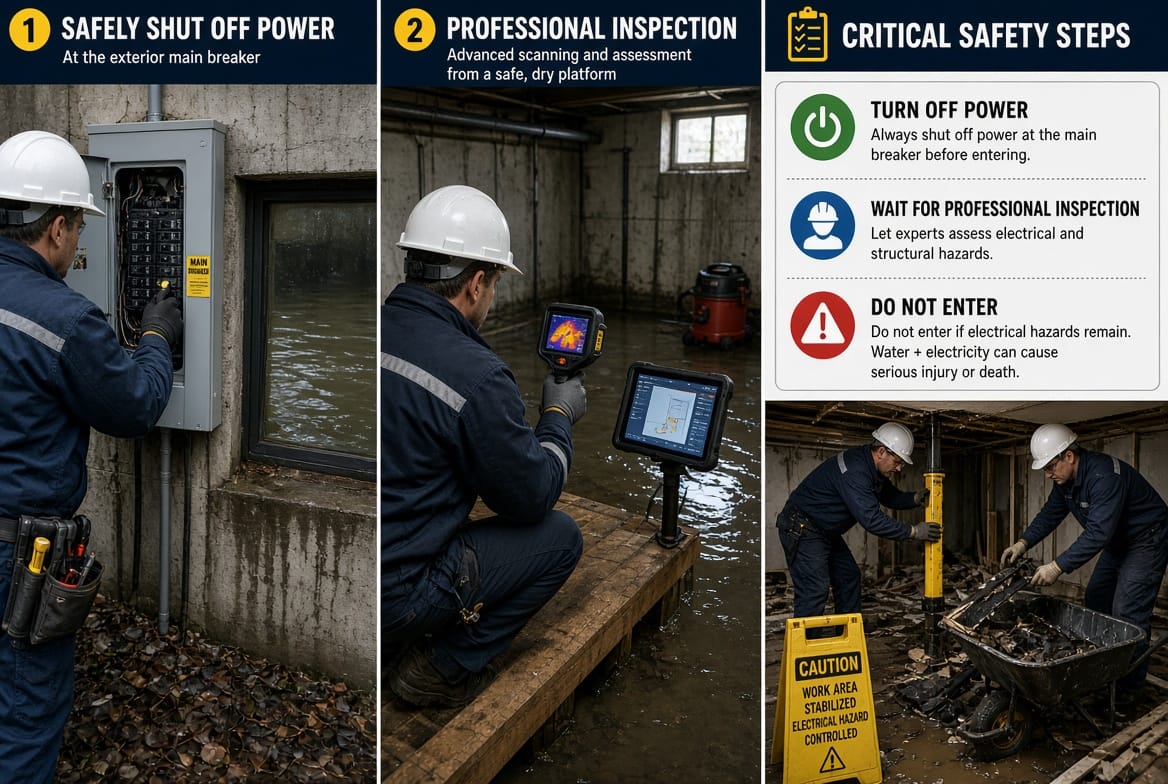
Maintaining Vigilance and Preparedness
Flood events can recur. Seasonal storms, aging infrastructure, and changing weather patterns increase the likelihood of water intrusion. Establishing a household emergency plan that includes the location of main shut-offs, emergency contact numbers for electricians and restoration services, and a designated meeting place outside the home improves response time and coordination.
Keep important documents, medications, and valuables stored on upper floors whenever possible. Consider elevating critical mechanical systems such as furnaces and water heaters above anticipated flood levels. These proactive measures limit both the severity of damage and the complexity of recovery.
When flooding does occur, the guiding principle remains constant: safety first in flooded basements. No possession or cleanup task justifies risking electrocution or structural collapse. By following established protocols—never entering standing water, ensuring power is fully disconnected, obtaining professional electrical and structural clearance, and relying on trained restoration teams—occupants protect themselves and create the best conditions for successful recovery.
Professional restoration specialists stand ready to respond around the clock. Their experience with the full range of electrical and structural hazards allows them to stabilize the environment efficiently and restore the space to a safe, functional condition.
In every flooded basement situation, measured action saves lives and preserves property. Adhere to the safety steps outlined above, respect the invisible dangers of water and electricity, and engage qualified professionals without delay. The combination of informed caution and expert support transforms a hazardous event into a manageable recovery process.
Emergency CTA: Safety first in flooded basements.
Protect Your Home from Flood Hazards – Call Today!