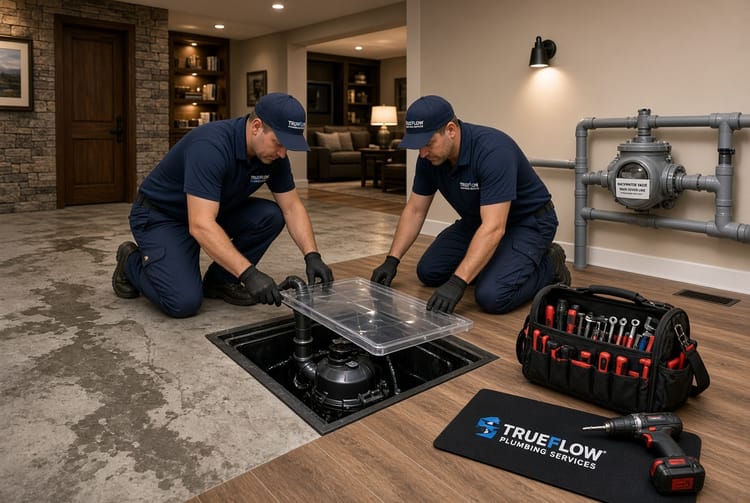
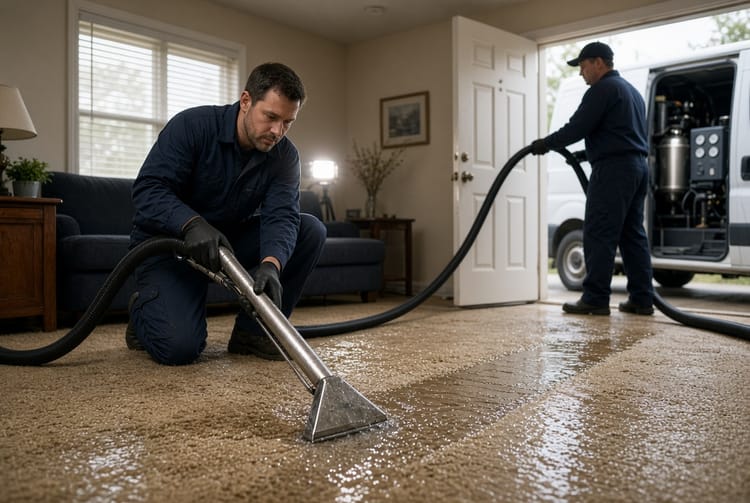
The Flooded Basement Pump: Submersible vs. Pedestal Sump Pumps
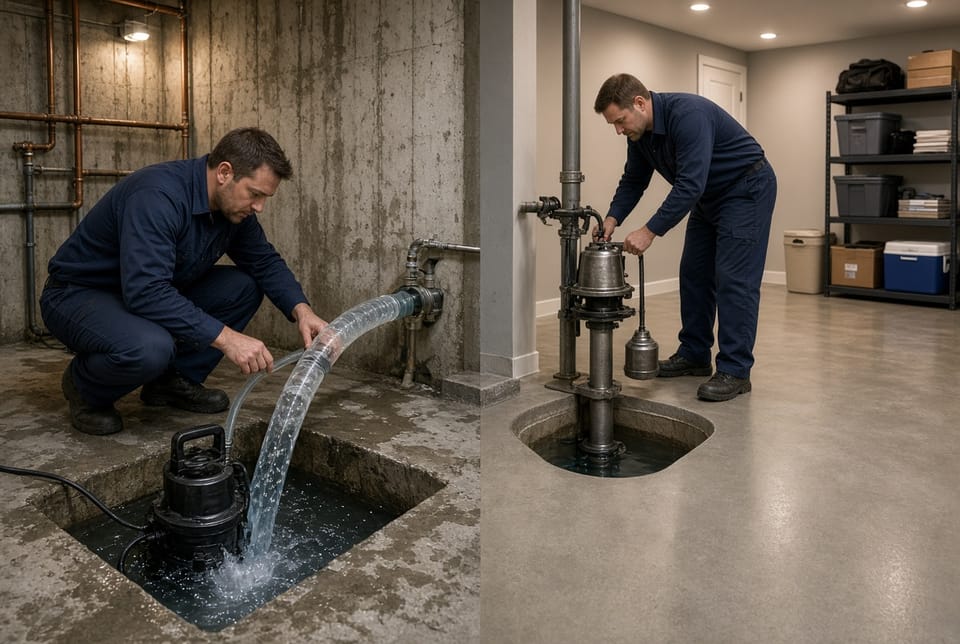
A flooded basement ranks among the most stressful events a homeowner can face. Rising water can ruin furniture, damage electrical systems, weaken structural materials, and create long-term mold and mildew risks. The single most important defense is a properly selected and installed sump pump. Two main designs dominate residential use: submersible sump pumps and pedestal sump pumps. Each has distinct strengths. Choosing correctly prevents repeat flooding and protects your investment.
Get the Right Sump Pump Installed – Call Now
This guide explains how both pumps work, where each performs best, and how to decide which type belongs in your home. The goal is straightforward: keep water out so your basement stays dry and usable.
Why Sump Pumps Matter in Flood-Prone Homes
Heavy rain, melting snow, or a high water table can overwhelm foundation drainage. Water collects in the lowest point of the basement and must be removed quickly. A sump pump sits in a dedicated pit (the sump basin) and automatically activates when water reaches a set level. It then discharges the water through a pipe to a safe location outside the home.
Without a reliable pump, even a moderate storm can produce several inches of standing water. The financial and health consequences add up fast. Water damage repairs often exceed several thousand dollars, not counting lost personal items. A quality pump, correctly matched to the home, greatly reduces that exposure.
Two pump styles have served homeowners for decades. Understanding their construction and behavior is the first step toward an informed choice.
How a Submersible Sump Pump Works
A submersible sump pump is designed to sit entirely inside the sump pit. The motor and pump housing remain underwater during operation. Water surrounding the unit actually helps cool the motor, which contributes to durability under frequent use.
Because the entire assembly is below floor level, the pump operates with quieter performance. The water itself dampens sound, making these units preferable in finished basements or living spaces where noise would be noticeable. Many homeowners report they barely hear the pump cycling during a storm.
Submersible models generally last longer when properly maintained. The sealed motor and water-cooled design reduce heat-related wear. They also handle higher volumes of water in a compact footprint, which suits deeper pits or homes with limited floor space around the basin.
Typical applications include:
- Finished or partially finished basements where noise control is important
- Homes that experience frequent or prolonged pumping cycles
- Properties with limited headroom or tight pit access
- Situations requiring higher pumping capacity in a smaller package
The main trade-off is service access. Because the motor sits in the pit, inspection or replacement usually requires lifting the unit out of the water. Professional help is often recommended for this work.
How a Pedestal Sump Pump Works
A pedestal sump pump places the motor on a vertical column (the pedestal) above the pit. Only the impeller and intake sit in the water. The motor remains high and dry at all times.
This design makes easier servicing a clear advantage. A technician can reach the motor without removing the entire pump from the pit. Routine checks, float adjustments, or motor replacement become simpler and often less expensive.
Pedestal pumps typically cost less to purchase than comparable submersible units. They have been used for many years and remain a practical choice for budget-conscious homeowners or older homes already equipped with a pedestal-style basin.
Because the motor sits above water, these pumps tend to be louder. The sound of the motor is not muffled, so they are better suited to unfinished basements, utility rooms, or spaces where noise is less of a concern.
Common applications include:
- Unfinished basements or mechanical rooms
- Homes seeking a lower initial equipment cost
- Properties where future maintenance access is a priority
- Situations with a shallow pit or existing pedestal-style installation
The elevated motor also stays clear of debris that can collect in the pit, which some owners find reassuring.
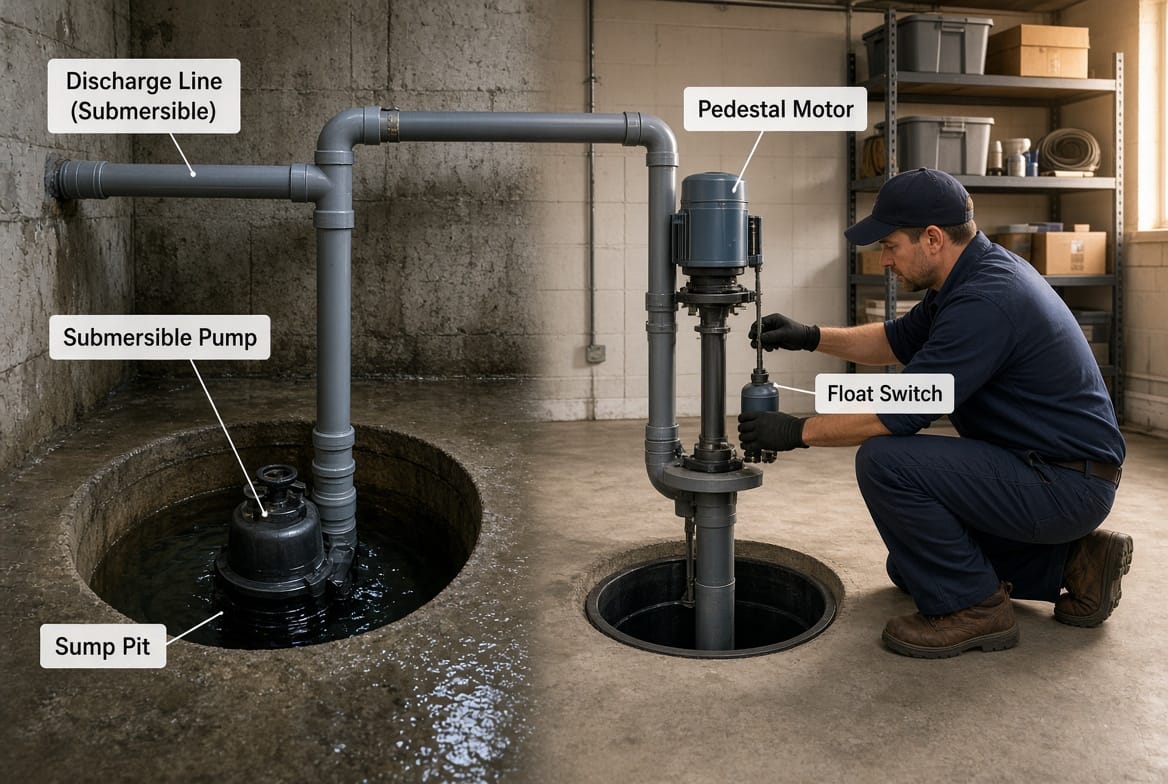
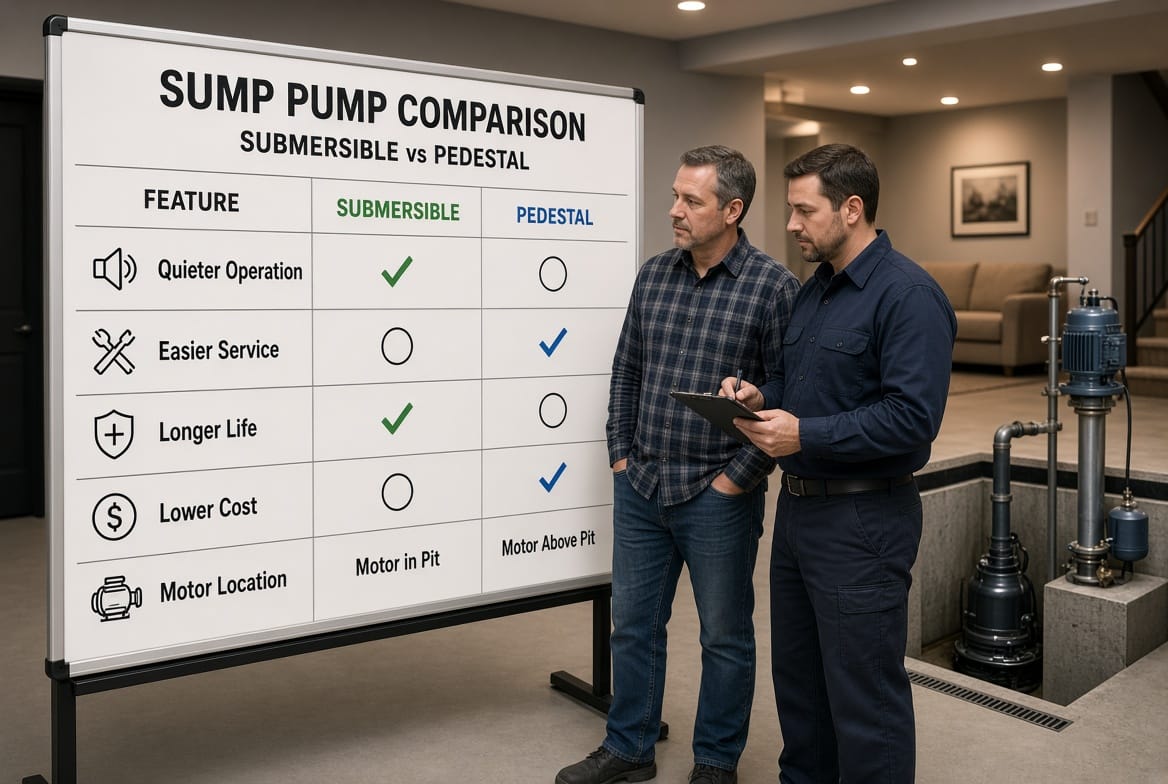
Direct Comparison of Features and Performance
The two designs differ in several practical ways that affect daily use and long-term ownership.
- Noise level: Submersible pumps run quieter because water surrounds the motor. Pedestal pumps produce more audible motor sound.
- Service access: Pedestal pumps allow easier service of the motor without pulling the unit from the pit. Submersible pumps require removal for most motor work.
- Purchase price: Pedestal models are generally less expensive at the time of purchase.
- Expected lifespan: Submersible units often deliver longer life when the motor stays properly cooled by water and the seal remains intact.
- Footprint and aesthetics: Submersible pumps sit out of sight in the pit. Pedestal pumps have a visible motor column.
- Cooling method: Water cools the submersible motor. Air cools the pedestal motor.
Neither style is universally superior. The right choice depends on basement finish level, expected usage frequency, budget, and how easily you want future service performed.
Matching Pump Type to Your Specific Situation
Finished living space or home office in the basement points toward a submersible sump pump. The quieter operation preserves comfort, and the compact in-pit design keeps the mechanical equipment out of view.
An unfinished storage or laundry area often works well with a pedestal sump pump. The lower cost and simpler motor access make sense when appearance and sound are secondary concerns.
Homes with a history of frequent cycling (many activations per storm) usually benefit from the durability of a submersible design. Homes that see only occasional use may find a pedestal pump sufficient and more economical.
Existing pit configuration also matters. Some older basins were built specifically for pedestal pumps. Converting to a submersible unit may require a new liner or different piping layout. A professional evaluation prevents mismatched installations that reduce performance.
Climate and local water table influence the decision as well. Regions with intense seasonal rainfall or spring snowmelt place heavier demand on the pump. In those cases the cooling and longevity advantages of a submersible unit become more valuable.
Installation Factors That Affect Reliability
Correct installation determines whether either pump performs as expected. The pit must be sized so the pump sits level and the float switch has unobstructed travel. Discharge piping should include a check valve to stop water from flowing back into the pit after the pump shuts off.
The outlet must terminate a safe distance from the foundation so discharged water cannot re-enter. In some municipalities a permit or specific discharge location is required.
Electrical supply needs a dedicated circuit and proper grounding. Many homeowners add a battery backup system so the pump continues running during a power outage—the very moment flooding risk is often highest.
Professional installation reduces the chance of common errors such as an undersized discharge line, an improperly set float, or a pit that allows debris to jam the impeller. These details separate a pump that works for years from one that fails during the next heavy rain.
Maintenance Practices That Extend Pump Life
Both pump types last longer with simple, regular attention. Test the pump every few months by pouring water into the pit until the float rises and the unit activates. Listen for unusual sounds and confirm water is leaving the discharge pipe.
Keep the pit free of silt, gravel, and household debris. A clogged intake forces the pump to work harder and shortens its life. Submersible units especially benefit from a clean pit because the motor relies on surrounding water for cooling.
Inspect the discharge line for kinks, freezing risk in winter, or blockages at the exterior outlet. Replace a worn check valve if water drains back into the pit after each cycle.
Pedestal motors should be kept dry and free of dust. Submersible seals should be checked during any service visit for signs of wear.
A brief annual professional inspection catches small issues before they become failures. This step is inexpensive compared with the cost of a flooded basement.
Risks of Selecting the Wrong Pump
Choosing based only on price can create problems. An under-capacity pedestal pump in a high-water-table home may run constantly and overheat. A noisy submersible pump placed in an unfinished space wastes money on features the owner does not need.
Ignoring service access can turn a simple motor replacement into a larger project. Overlooking noise in a finished basement leads to ongoing irritation every time the pump cycles.
The greatest risk remains inaction. A failing or absent pump leaves the basement exposed to water damage that spreads quickly. Mold growth can begin within 24 to 48 hours in damp conditions. Structural wood and drywall deteriorate when repeatedly saturated.
Selecting the appropriate type and maintaining it properly removes most of these risks.
Making the Final Decision
Start with your basement’s current use and your tolerance for noise and future service. Measure the pit and note existing piping. Consider how often the area floods or how high the local water table sits.
Many homeowners benefit from discussing options with an experienced installer who can evaluate flow requirements, pit condition, and electrical setup on site. That conversation often clarifies whether the quieter, longer-life characteristics of a submersible pump or the easier-service, lower-cost profile of a pedestal pump better matches the home.
A correctly chosen pump operates reliably for years, activates only when needed, and gives peace of mind during every storm.
A flooded basement does not have to become a recurring problem. The right sump pump—whether submersible or pedestal—keeps water moving out instead of pooling inside. Professional assessment and installation ensure the unit matches your specific conditions and performs when it matters most.
Choose the right pump for your basement.
Protect Your Basement from Water Damage – Call Today