The Flooded Basement Dehumidification: Preventing Mold After Water Removal
A flooded basement creates immediate chaos, yet the real danger often begins once the standing water has been pumped out. Residual moisture trapped in concrete, wood framing, insulation, and household items provides the perfect environment for mold growth. Dehumidification stands as the critical next step that transforms a wet space into a dry, safe one. Without it, hidden dampness can trigger rapid mold colonization within 24 to 48 hours, leading to structural damage, poor indoor air quality, and costly remediation later.
Stop Residual Moisture & Mold – Call Today for LGR Dehumidification!
This guide explains why thorough basement dehumidification after water removal is non-negotiable, details the specialized equipment required, and shows exactly how to monitor progress so mold prevention succeeds every time. Homeowners and property managers who follow these principles protect both their investment and their family’s health.
Why Residual Moisture Poses a Serious Risk
Even after professional water extraction removes visible flooding, significant amounts of moisture remain. Concrete floors and walls absorb water like a sponge. Wooden joists, drywall, and carpet padding hold humidity long after the surface looks dry. Relative humidity levels above 60 percent create ideal conditions for mold spores to germinate and spread.
Mold growth releases mycotoxins and allergens that circulate through the home’s air-handling system. Occupants may experience respiratory irritation, allergic reactions, or worsening asthma. Over time, unchecked moisture weakens structural materials, causing warping, rot, and expensive repairs. The financial impact of delayed drying often exceeds the original water-damage costs.
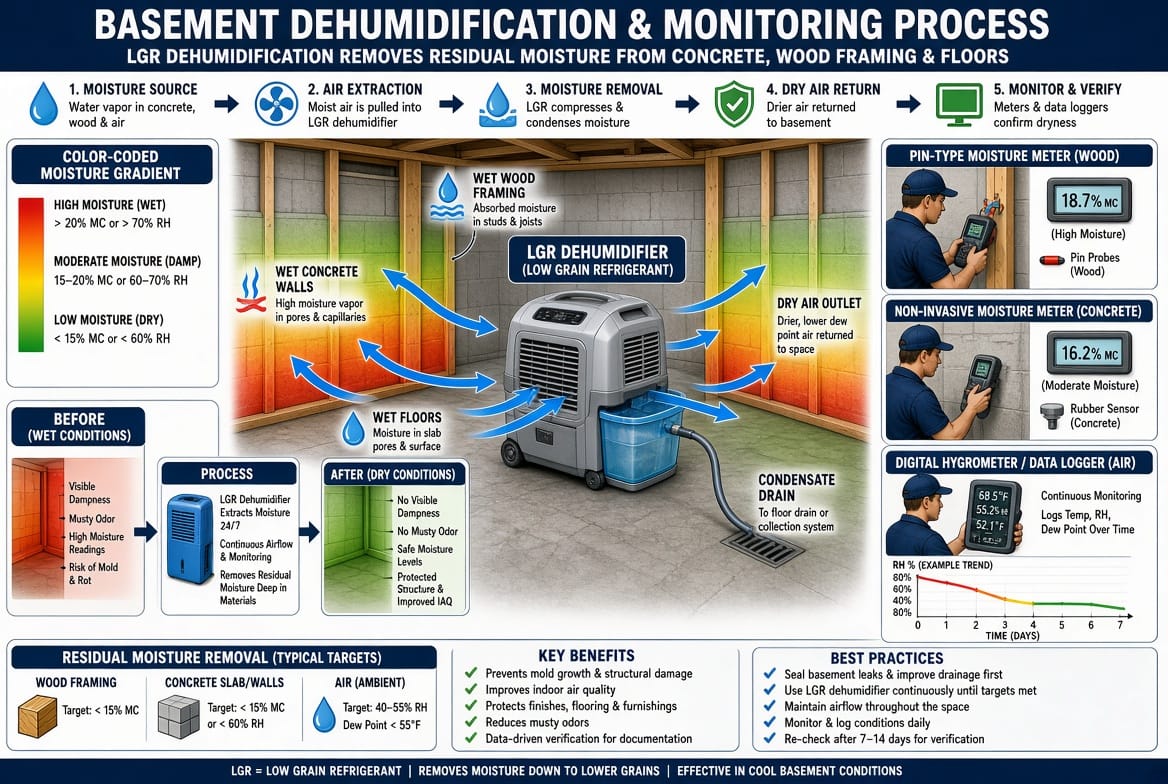
Dehumidification directly attacks this residual moisture. By continuously extracting water vapor from the air, specialized equipment lowers humidity and forces moisture out of porous materials. The process restores the basement environment to safe levels and interrupts the mold life cycle before colonies form.
The Critical Role of Dehumidification After Water Removal
Water removal and dehumidification form two halves of a complete drying strategy. Extraction handles free-standing liquid; dehumidification addresses the invisible vapor and bound moisture. Skipping or rushing the second phase leaves a damp basement that looks clean on the surface yet remains biologically active underneath.
Proper flooded basement drying follows a scientific approach. Technicians calculate the volume of water still present, the square footage of affected materials, and the ambient conditions. They then deploy equipment capable of removing that moisture load efficiently. The goal is to bring relative humidity below 50 percent and material moisture content to industry-accepted dry standards within a controlled time frame.
When performed correctly, dehumidification delivers multiple benefits:
- Prevents secondary water damage
- Stops mold colonization
- Protects building materials from long-term deterioration
- Restores healthy indoor air quality
- Reduces overall restoration expenses
Homeowners who attempt to rely solely on fans or open windows often discover that outdoor humidity or limited airflow cannot achieve the required dryness. Professional-grade systems provide the power and precision needed for reliable results.
Understanding LGR Dehumidifiers: The Preferred Equipment
Not all dehumidifiers perform equally in a post-flood environment. Standard household units remove modest amounts of moisture under mild conditions. Flooded basements demand far greater capacity and efficiency. Low Grain Refrigerant (LGR) dehumidifiers have become the industry standard for this reason.
LGR dehumidifiers use advanced refrigeration technology combined with a specialized heat-exchange process. They cool incoming moist air below the dew point so water vapor condenses into liquid that is collected and drained. The key advantage of LGR design is the ability to continue extracting moisture even when the air is already relatively dry or when temperatures drop. Conventional refrigerant units lose effectiveness under those conditions; LGR models maintain high performance.
Key features that make LGR dehumidifiers ideal include:
- High water-removal rates measured in pints per day
- Ability to operate effectively at lower humidity levels
- Energy-efficient operation during multi-day drying projects
- Built-in pumps for continuous drainage
- Robust construction suited to dusty, debris-filled job sites
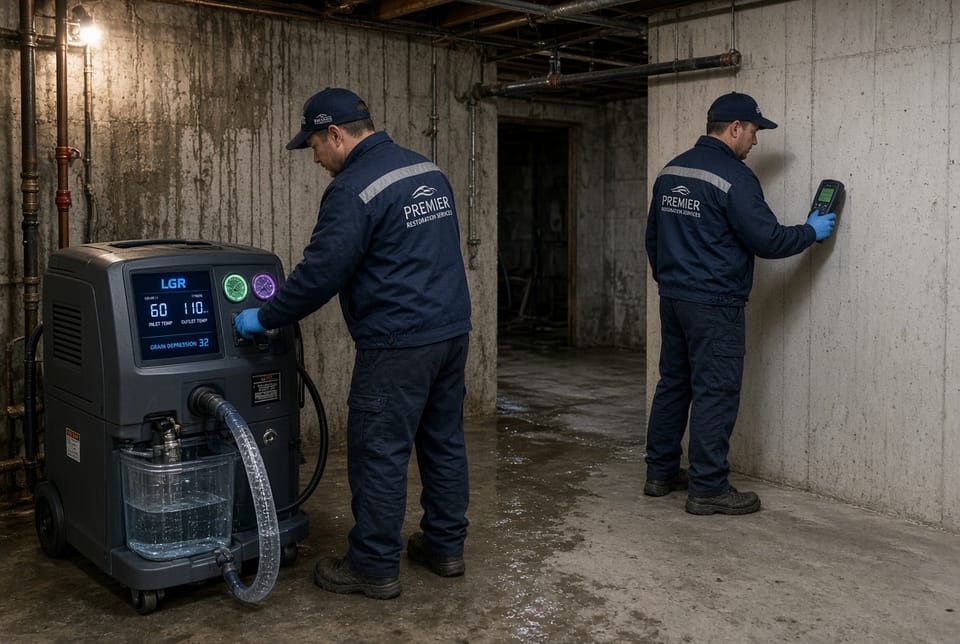
Technicians strategically place multiple LGR units throughout the basement, often pairing them with air movers that create controlled airflow across wet surfaces. The combination accelerates evaporation from materials while the dehumidifier captures the released vapor. This closed-system approach keeps humidity from migrating into unaffected areas of the home.
Proper equipment selection also considers the size of the space and the severity of saturation. Oversized or undersized units waste energy or prolong drying time. Experienced restoration teams match capacity to the calculated moisture load, ensuring the process stays on schedule and within safe parameters.
How to Monitor Progress with Moisture Meters and Hygrometers
Successful basement dehumidification depends on accurate, ongoing measurement rather than guesswork. Two primary tools guide the process: moisture meters and hygrometers.
Moisture meters measure the actual water content inside building materials. Pin-type meters insert probes into wood or drywall to obtain precise readings. Non-invasive meters use electromagnetic sensors to scan concrete and other surfaces without causing damage. Technicians take baseline readings immediately after water removal, then track reductions daily. Industry guidelines define “dry standard” levels for each material type; reaching those targets confirms the drying goal has been met.
Hygrometers (or thermo-hygrometers) monitor the air itself. They display relative humidity and temperature, allowing calculation of specific humidity and dew point. Continuous monitoring reveals whether the LGR dehumidifiers are keeping pace with the moisture load. If humidity plateaus or rises, equipment placement or airflow may need adjustment.
Best monitoring practices include:
- Establishing a moisture map of the basement with marked reading locations
- Recording data at consistent times each day
- Comparing material moisture against ambient air conditions
- Adjusting equipment based on real-time feedback
- Documenting the entire process for insurance and quality-assurance purposes
When readings stabilize at safe levels for 24 to 48 consecutive hours, the active drying phase can conclude. Premature removal of equipment risks a rebound in humidity and renewed mold risk.
Step-by-Step Process for Complete Mold Prevention
A systematic sequence maximizes success and minimizes setbacks. The following stages form the backbone of effective flooded basement restoration:
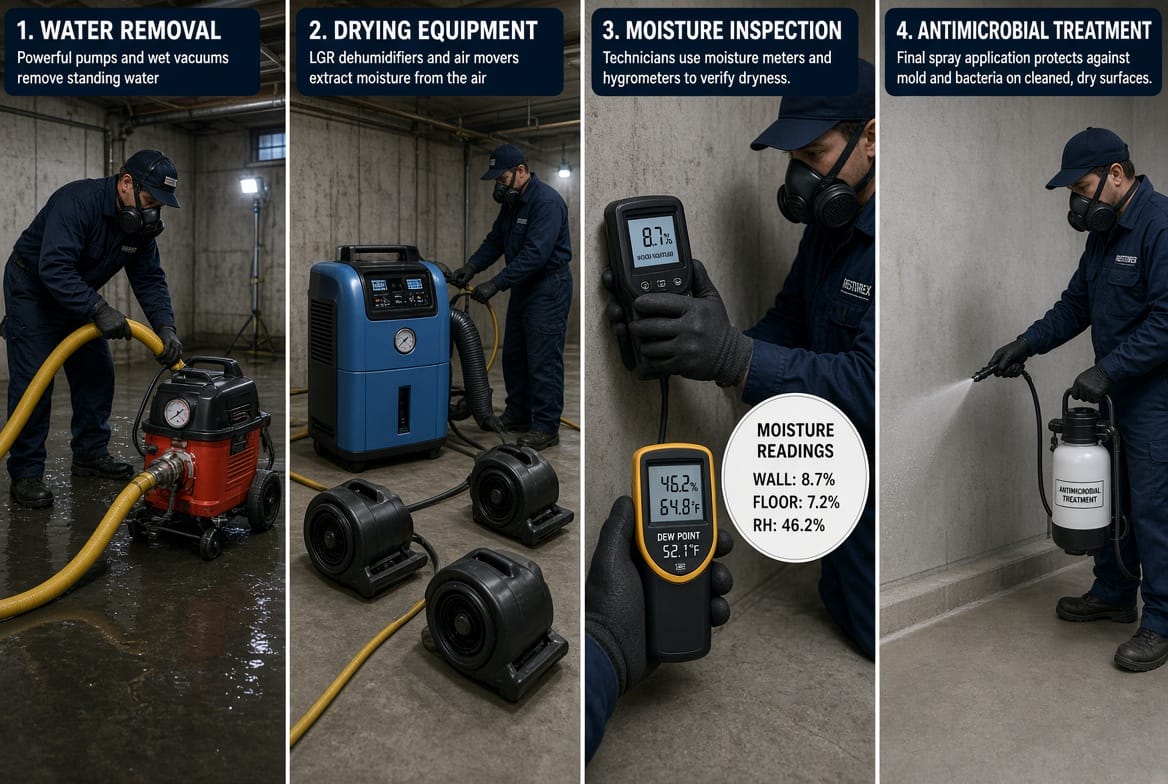
- Complete water removal: Extract all standing water with pumps and wet vacuums. Remove saturated porous materials that cannot be salvaged.
- Containment and preparation: Isolate the work area, protect unaffected zones, and create negative air pressure if needed to control airborne particles.
- Equipment deployment: Position LGR dehumidifiers and high-velocity air movers according to the moisture assessment. Ensure proper drainage and electrical safety.
- Active dehumidification: Run equipment continuously while monitoring temperature and humidity. Adjust airflow patterns to target the wettest zones.
- Daily moisture monitoring: Use moisture meters and hygrometers to track progress and confirm that materials are approaching dry standards.
- Cleaning and antimicrobial treatment: Once materials reach target moisture levels, clean surfaces thoroughly and apply appropriate antimicrobial agents where indicated.
- Final verification and equipment removal: Confirm sustained dryness, remove equipment, and restore the space to normal use.
- Ongoing prevention measures: Address the original source of flooding, improve drainage, and consider permanent humidity control solutions.
Each step builds on the previous one. Skipping any stage undermines the entire effort and leaves the basement vulnerable.
Common Pitfalls That Compromise Results
Even well-intentioned efforts can fail when common mistakes occur. Relying only on household fans or open windows rarely lowers humidity enough in a sealed basement. Turning equipment off overnight to save electricity allows moisture to re-equilibrate and slows overall progress. Neglecting to monitor material moisture content leads to false confidence when the air feels dry but walls remain damp. Using underpowered dehumidifiers extends the project timeline and increases the window for mold growth.
Professional teams avoid these errors through experience, proper equipment, and disciplined documentation. They also understand how temperature interacts with humidity; cooler basements require careful management so that condensation does not form on colder surfaces.
Long-Term Benefits of Professional Dehumidification
Investing in thorough basement dehumidification yields lasting returns. Structural integrity remains intact, indoor air stays healthier, and the likelihood of recurring mold issues drops dramatically. Insurance claims process more smoothly when documented drying meets industry standards. Homeowners gain peace of mind knowing the space is truly dry rather than merely appearing dry.
In many cases, the same professionals who handle emergency water removal also manage the full drying and monitoring process. This continuity ensures no gaps between extraction and dehumidification, further reducing mold risk.
When to Call for Expert Help
Certain situations demand immediate professional intervention: extensive flooding, sewage contamination, multi-level water migration, or homes with vulnerable occupants. Certified restoration specialists bring calibrated LGR dehumidifiers, advanced monitoring instruments, and proven protocols that DIY approaches cannot match.
Time remains the most critical factor. The longer residual moisture lingers, the greater the chance of irreversible mold damage. Acting quickly after water removal preserves more of the original structure and contents.
Final Thoughts on Protecting Your Basement
Flooded basement dehumidification is not an optional extra; it is the essential bridge between water removal and lasting recovery. By removing residual moisture with high-performance LGR dehumidifiers and verifying results through moisture meters and hygrometers, property owners close the door on mold growth before it begins. The process requires knowledge, equipment, and consistent monitoring, yet the outcome— a dry, healthy, structurally sound basement—makes every careful step worthwhile.
Homeowners who prioritize complete drying protect both their property value and their family’s well-being for years to come.
Restore Your Flooded Basement Safely – Call Now for Moisture Control!