The Flooded Basement Cleanup: Removing Water and Drying Out
A flooded basement is one of the most stressful home emergencies a property owner can face. Water moves quickly, and every hour it remains increases the risk of electrical shock, mold growth, wood rot, drywall deterioration, and contaminated indoor air. The good news is that a methodical, professional-style cleanup can stop further damage and return the space to a dry, usable condition. This comprehensive guide walks you through the exact sequence used by restoration specialists: prioritize safety, remove bulk water, extract moisture from carpets and porous materials, deploy dehumidifiers, and continuously monitor moisture levels until the structure is fully dry.
Call Now for Fast Flooded Basement Water Removal & Drying
Acting with speed and the correct equipment dramatically improves outcomes. Homeowners who follow these steps—or call experienced help immediately—protect both their property and their family’s health.
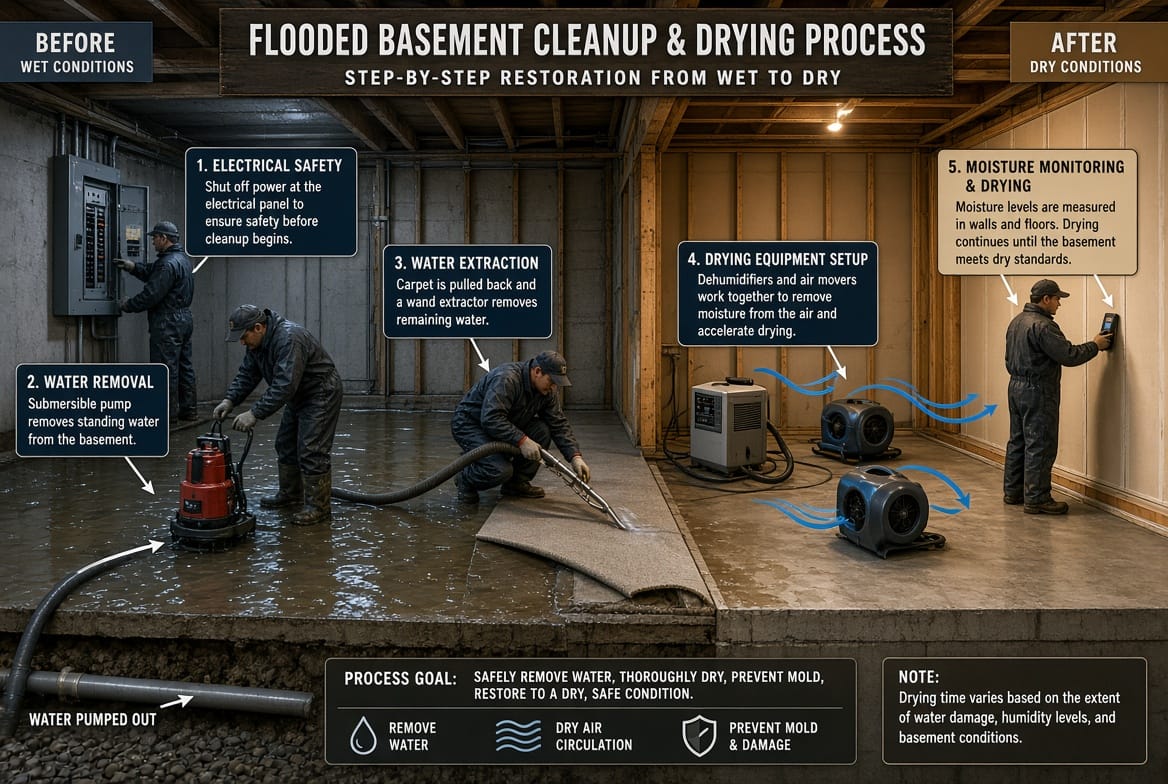
Safety First: Address Electrical Hazards Before Anything Else
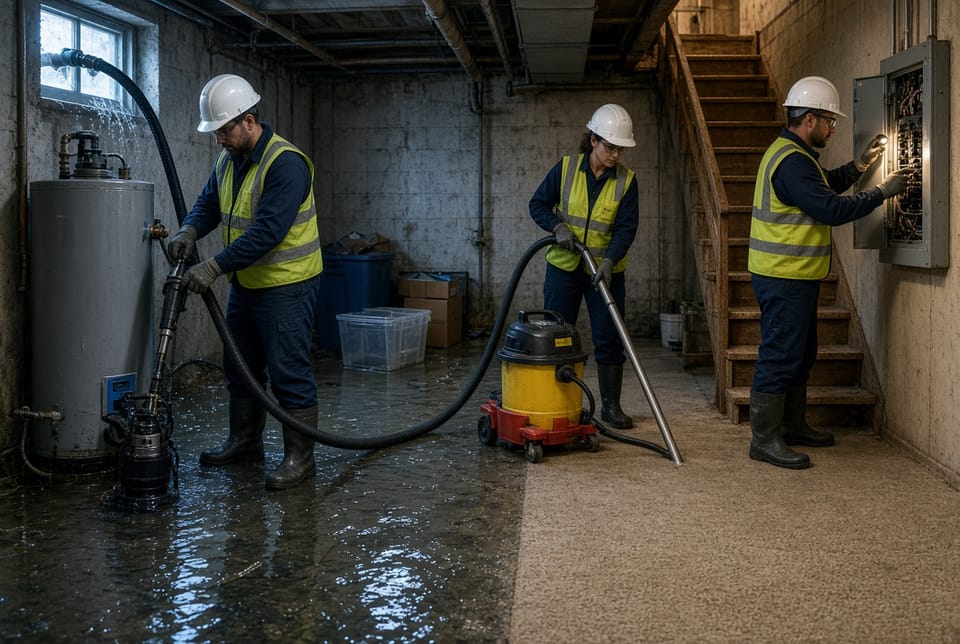
Never enter a flooded basement until you have confirmed it is electrically safe. Water and electricity create an immediate life-threatening risk. Standing water can conceal live wires, damaged outlets, or submerged appliances that remain energized.
- Locate the main electrical panel, usually on an upper floor or in a dry area of the basement.
- If you can reach the panel without stepping into water, shut off power to the entire basement circuit or the whole house if necessary.
- If the panel itself is wet or you must wade through water to reach it, do not attempt this yourself. Leave the building and contact a licensed electrician or restoration company immediately.
- Wear rubber-soled boots and avoid touching metal pipes or appliances until power is confirmed off.
- Use a battery-powered flashlight rather than plugging in any device.
Once power is isolated, check for other immediate dangers such as structural sagging, sewage backup, or chemical contaminants from stored household products. Only after these hazards are controlled should you begin water removal. This single precaution prevents the majority of injuries associated with basement flooding.
Remove Standing Water with Pumps and Wet Vacuums
The first physical step is to extract as much liquid water as possible. The faster bulk water leaves the space, the less it can soak into framing, insulation, and belongings.
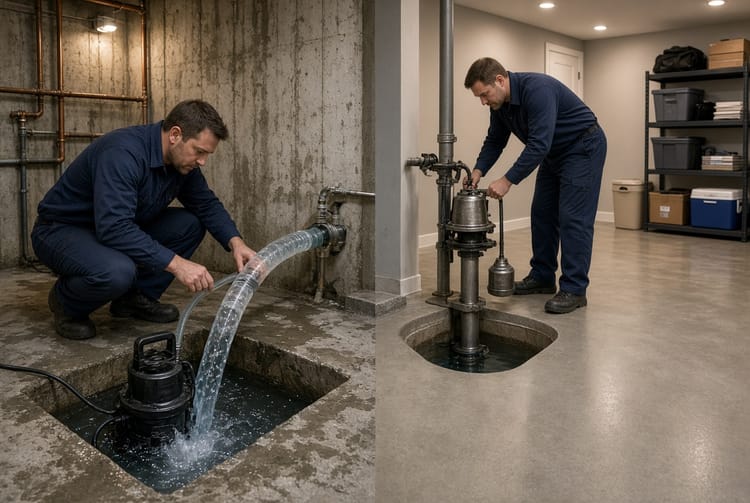
Begin with a submersible pump for deeper water (more than two inches). Place the pump at the lowest point of the floor and run a discharge hose to a safe outdoor location, preferably a storm drain or area that slopes away from the foundation. Monitor the pump to prevent it from running dry.
For remaining puddles and shallower water, switch to a commercial wet/dry vacuum. These machines are far more powerful than household models and can handle large volumes quickly. Work in sections, overlapping each pass. Empty the vacuum tank frequently into a slop sink or outside.
If the flood involved category 2 or 3 water (washing-machine overflow with contaminants or sewage), treat all extracted water as hazardous. Wear gloves, goggles, and a mask, and dispose of the water according to local regulations. Clean and disinfect the pump and vacuum afterward.
Speed matters. Every hour standing water remains allows it to wick upward into walls and furnishings. Completing this extraction phase within the first 24 hours significantly reduces the chance of hidden moisture pockets later.
Extract Moisture from Carpets, Padding, and Soft Materials
After the visible water is gone, the real drying work begins on porous surfaces. Carpet and padding act like sponges; if they stay wet, they become prime breeding grounds for mold and bacteria.
- Pull back carpet from the walls and inspect the padding. In many cases the padding is too saturated to save and must be discarded.
- Use a truck-mounted or portable extractor with a specialized carpet wand to pull remaining water from the fibers. Make slow, overlapping passes.
- Lift furniture onto blocks or remove it entirely so air can circulate underneath.
- For area rugs, take them outside if possible and hang them to drain, then extract both sides.
- Remove baseboards in heavily affected rooms so trapped water behind them can evaporate.
- Bag and discard any items that cannot be thoroughly cleaned—cardboard boxes, paper products, and certain upholstered pieces.
This extraction stage is labor-intensive but essential. Incomplete removal of water from carpets is one of the most common reasons homeowners later discover musty odors and visible mold weeks after they thought the job was finished.
Set Up Dehumidifiers and Air Movers for Structural Drying
Once bulk water and surface moisture are removed, the remaining challenge is drying the building materials themselves. Wood, drywall, and concrete hold water that cannot be seen. The professional solution is a combination of high-capacity dehumidifiers and air movers.
Position air movers to create a circular airflow pattern across wet surfaces. Aim them at walls, floors, and any remaining carpet. Use as many units as needed so that every wet area receives moving air.
Place commercial dehumidifiers in the center of the space or in the most humid zones. These machines pull moisture from the air so the air movers can continue evaporating water from materials. Empty the collection tanks regularly or connect them to a drain if the units have continuous-drain capability.
Close windows and exterior doors during this phase so the equipment can control the indoor environment. In cooler weather you may need supplemental heat to keep the temperature in the optimal drying range of 70–80 °F. Higher temperatures accelerate evaporation; lower temperatures slow it.
Run the equipment 24 hours a day. Drying a typical flooded basement usually takes three to five days, sometimes longer if walls or subfloors absorbed large amounts of water. Patience at this stage prevents the need for later demolition.
Monitor Moisture Levels Until Everything Is Truly Dry
Visual inspection is not enough. Materials can feel dry on the surface while remaining wet inside. Restoration professionals rely on moisture meters and thermo-hygrometers to confirm success.
- Use a pin-type or pinless moisture meter on wood framing, drywall, and concrete. Compare readings to dry, unaffected areas of the same house to establish a baseline.
- Check relative humidity with a thermo-hygrometer. Target indoor humidity below 50 percent, ideally 30–40 percent during active drying.
- Re-check the same locations every 12–24 hours and record the numbers. Moisture levels should steadily decline.
- Pay special attention to corners, behind appliances, and inside wall cavities if you have removed baseboards.
- Continue equipment operation until readings stabilize at acceptable levels for at least 24 hours.
Only when meters confirm that wood is below 16 percent moisture content and drywall is at or near its pre-flood reading should you consider the drying phase complete. Prematurely shutting off equipment is a frequent cause of hidden mold colonies that appear weeks later.
Additional Considerations for a Complete Restoration
While the core process above handles the water itself, several supporting actions improve results and reduce future risk.
Inspect and, if necessary, replace insulation in exterior walls that became wet. Wet insulation loses its R-value and can harbor mold.
Clean and disinfect all remaining surfaces with an appropriate antimicrobial product once they are dry. This step is especially important after dirty-water floods.
Photograph every stage of the work for insurance purposes. Document water lines on walls, damaged belongings, and equipment used.
Evaluate what can be salvaged. Many hard-surface items can be cleaned, while porous items often cannot. When in doubt, err on the side of removal.
Consider the source of the water. A burst pipe, overflowing appliance, or foundation leak each requires a different long-term repair so the problem does not repeat.
When Professional Help Is the Wisest Choice
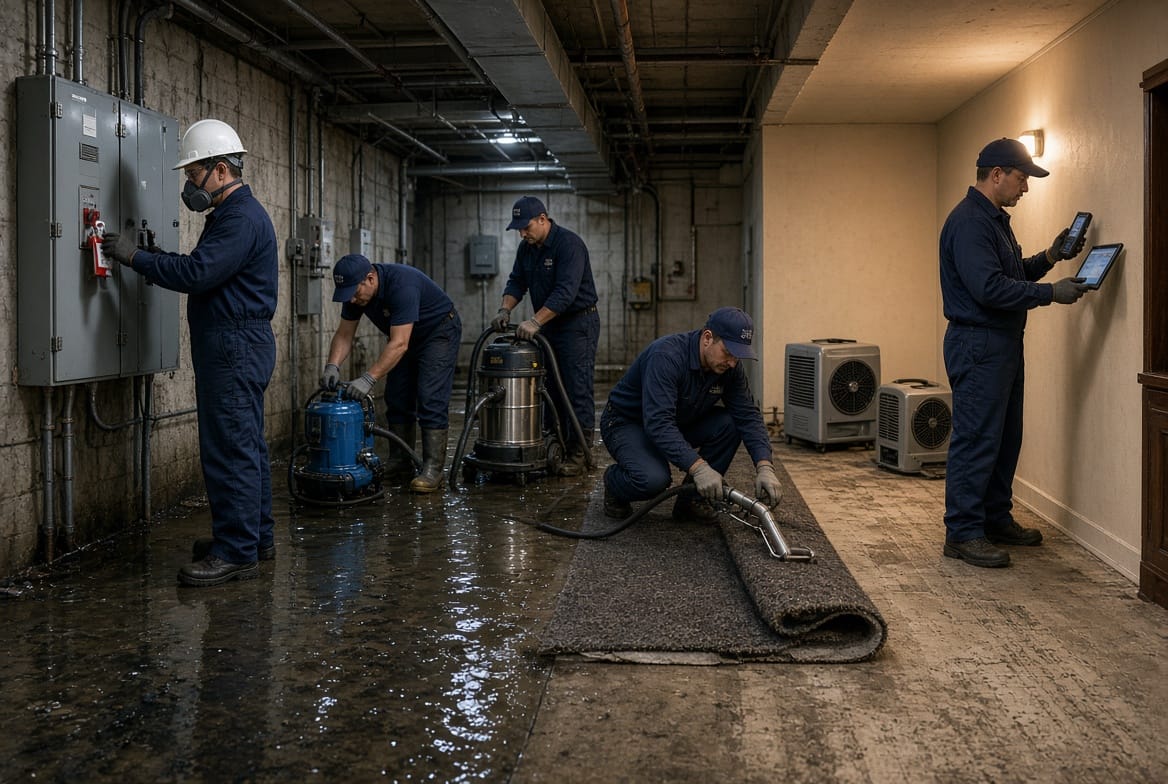
The steps outlined here are the same sequence followed by certified restoration companies. However, certain situations exceed typical homeowner resources:
- Water deeper than a few inches
- Contaminated water (sewage or chemical)
- Large square footage
- Uncertainty about electrical safety
- Limited access to commercial-grade pumps, extractors, and dehumidifiers
- Time constraints that prevent 24-hour equipment monitoring
In these cases, calling experienced technicians protects both the structure and your health. Professionals arrive with the exact equipment needed, follow industry drying standards, and provide documentation for insurance claims.
Follow these steps for a safe cleanup. If the situation feels overwhelming or you simply want the job done correctly the first time. Trained crews can be on site quickly, extract water efficiently, and dry the basement to verifiable standards so you can move forward with confidence.
A flooded basement does not have to become a long-term disaster. By treating electrical safety as the non-negotiable first priority, removing water thoroughly, extracting hidden moisture from carpets and materials, running dehumidifiers until the air and structure are dry, and confirming results with moisture meters, you give your home the best chance of a complete recovery. Stay systematic, stay safe, and do not hesitate to bring in help when the scale of the problem exceeds what you can comfortably handle. Your basement can be dry, clean, and ready for use again.
Emergency Water Extraction & Dehumidifying – Call Now