The Flooded Attic Cleanup: Insulation, Roof, and Safety
Discovering water cascading into your attic can feel overwhelming, yet prompt, methodical action transforms a potential crisis into a manageable restoration process. This guide walks through a realistic homeowner scenario, explains the primary causes of attic flooding, outlines precise cleanup steps focused on wet insulation removal, roof-leak location, and framing drying, and highlights critical safety concerns involving electrical systems and structural stability. Throughout, the emphasis remains on protecting your family, preserving property value, and restoring peace of mind with authoritative, practical guidance.
Get Your Flooded Attic Restored Today – Call Now!
A Specific Scenario: The Overnight Storm Surprise
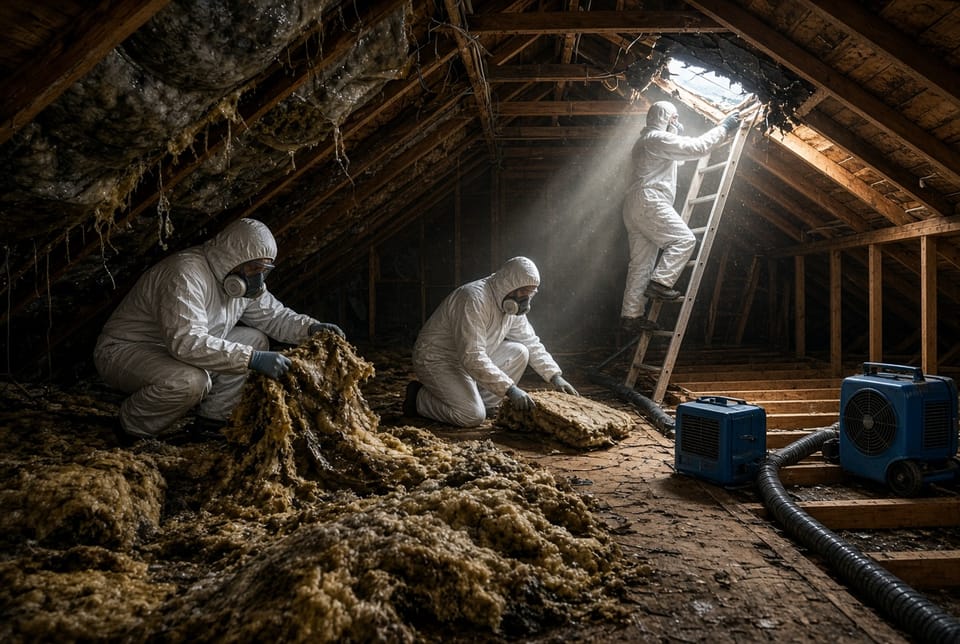
Imagine a quiet suburban home on a late summer evening. After a severe thunderstorm rolls through, the homeowners notice a faint musty odor drifting from the second-floor hallway the next morning. Upon climbing into the attic hatch, they find several inches of standing water pooled across the plywood decking, thick fiberglass insulation hanging in heavy, waterlogged clumps, and a steady drip originating near the ridge line. Electrical wires run through the wet zones, and the ceiling below already shows faint discoloration. This exact situation confronts thousands of households each year. The good news is that systematic cleanup, begun within the first 24–48 hours, dramatically reduces secondary damage and mold risk. The following sections detail exactly how to respond.
Understanding Attic Flood Causes: Roof Leaks and Plumbing Failures
Attic flooding rarely occurs without clear origins. Two dominant sources account for the majority of incidents: roof leaks and plumbing failures.
Roof leaks develop when protective layers fail. Missing or cracked shingles allow rainwater to penetrate the underlayment. Flashing around chimneys, vents, or skylights can loosen over time, creating direct entry points. Ice dams in colder climates force meltwater backward under shingles. High winds can lift entire sections of covering, exposing the decking. Once water enters, it travels along rafters and accumulates in low spots, saturating insulation and eventually seeping through ceilings.
Plumbing failures present a different but equally serious pathway. Supply lines running through the attic to upper-floor bathrooms or HVAC systems can rupture from freezing, corrosion, or sudden pressure spikes. Condensate lines from air-conditioning units may clog and overflow. In multi-story homes, a leak on an upper floor can migrate downward into the attic space if the ceiling drywall is compromised. Both causes share a common outcome: rapid saturation of porous materials that were never designed to hold moisture.
Recognizing these origins early allows homeowners and professionals to address the root problem rather than merely the symptoms. Ignoring the source invites repeated flooding and escalating repair costs.
Immediate Priorities After Discovering an Attic Flood
Safety comes first. Before any cleanup begins, the electrical panel serving the attic must be switched off if water has reached wiring or fixtures. Structural stability should be visually assessed from a safe vantage point; spongy or sagging ceiling sections below the attic indicate potential collapse risk. Once these precautions are confirmed, the cleanup sequence can commence with confidence.
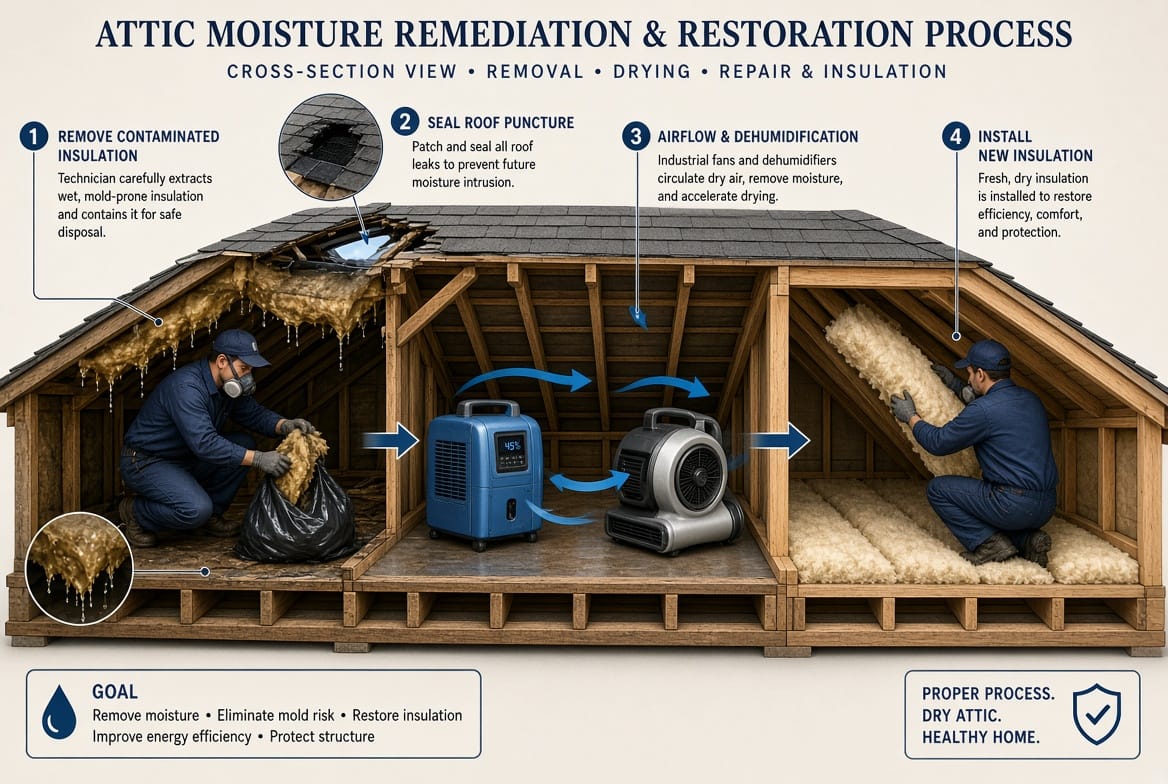
Cleanup Step One: Remove Wet Insulation Completely
Wet insulation loses nearly all of its thermal resistance and becomes a breeding ground for mold. The material must be extracted thoroughly and discarded. Professionals typically wear respirators, gloves, and protective suits because disturbed insulation can release fibers and biological contaminants into the air.
Work proceeds methodically:
- Section the attic into manageable zones.
- Bag saturated insulation in heavy-duty contractor bags to prevent leakage during removal.
- Vacuum residual debris with HEPA-filtered equipment once the bulk material is gone.
- Inspect the underside of the roof decking and the tops of ceiling joists for remaining moisture pockets.
Leaving even small amounts of wet insulation invites long-term odor and health issues. Complete removal restores a clean substrate ready for drying and eventual replacement with new, properly rated material.
Cleanup Step Two: Locate and Address the Roof Leak
After insulation clearance, the source of water entry becomes far easier to identify. Daylight streaming through gaps, water stains on rafters, or active dripping during a controlled hose test pinpoint the exact breach. Common locations include:
- Ridge vents and cap shingles
- Valley intersections
- Penetration flashings around pipes and vents
- Eaves and fascia junctions
Temporary sealing with tarps or roofing cement can halt further intrusion while permanent repairs are scheduled. Permanent solutions may involve replacing damaged shingles, installing new underlayment, or reinforcing flashing. Addressing the leak at this stage prevents the entire cleanup effort from being undone by the next rainfall.
Cleanup Step Three: Dry the Framing Thoroughly
Wooden rafters, joists, and decking absorb significant moisture. If left damp, they can warp, rot, or support mold colonies that penetrate deep into the grain. Professional drying employs a combination of techniques:
- High-capacity air movers directed along the framing members
- Commercial dehumidifiers that extract airborne moisture
- Moisture meters to monitor progress until readings fall below 15 percent
- In severe cases, specialized drying systems that inject warm, dry air into wall or ceiling cavities
Patience is essential. Rushing to close the attic before framing reaches equilibrium moisture content risks trapping residual dampness. Once readings confirm dryness, antimicrobial treatments may be applied as an extra safeguard, followed by the installation of new insulation and any necessary vapor barriers.
Critical Safety Concerns: Electrical Hazards
Water and electricity form a lethal combination. Attic wiring, junction boxes, recessed lighting, and exhaust fans can remain energized even after the main panel is switched off if secondary circuits or generators are involved. Standing water conducts current across wet surfaces, creating shock hazards for anyone entering the space. Professionals use non-contact voltage testers and insulated tools before touching any component. Homeowners should never attempt electrical work themselves in a flooded attic. Licensed electricians must inspect, dry, and, if necessary, replace compromised wiring before power is restored. Overlooking this step can lead to fires weeks or months later when residual moisture causes short circuits.
Critical Safety Concerns: Structural Integrity
Prolonged saturation weakens wood fibers and fasteners. Ceiling joists that support both the attic floor and the rooms below can lose load-bearing capacity. Roof decking may soften and allow further leakage. Visual clues include:
- Sagging or uneven ceiling planes
- Cracks radiating from light fixtures or vents
- Unusual creaking when walking on the attic floor (if accessible)
In extreme cases, temporary shoring may be required until permanent repairs stabilize the structure. Structural engineers or experienced restoration specialists evaluate load paths and recommend reinforcement or replacement of compromised members. Acting quickly after the flood minimizes the chance that temporary water weight becomes permanent structural damage.
Additional Protective Measures During and After Cleanup
Beyond the core steps, several supporting actions accelerate recovery and prevent recurrence:
- Install temporary containment barriers to protect living spaces below from falling debris or residual drips.
- Document every stage with photographs and moisture readings for insurance purposes.
- Replace any damaged vapor barriers or radiant barriers to maintain energy efficiency.
- Consider upgrading attic ventilation once the space is dry; improved airflow reduces future condensation risk.
- Schedule a professional roof inspection annually, especially after severe weather seasons.
These measures transform a reactive cleanup into a proactive resilience strategy.
Why Professional Restoration Matters
While determined homeowners can remove some wet materials, the combination of confined space, electrical risk, structural evaluation, and specialized drying equipment makes professional intervention the safest and most effective choice. Certified restoration teams arrive with industrial-grade tools, protective protocols, and the experience to complete the work efficiently. They also coordinate with insurance adjusters, ensuring documentation meets claim requirements. The result is a fully restored attic that protects the home’s thermal envelope, structural soundness, and indoor air quality.
Long-Term Prevention Strategies
Once the immediate crisis has passed, focus shifts to prevention. Regular roof inspections after storms, prompt repair of any missing shingles, and insulation of plumbing lines in unconditioned spaces form the foundation of attic flood defense. Smart water sensors placed near potential leak points can provide early alerts via smartphone. Maintaining clear gutters and downspouts keeps water moving away from the roof edge. These simple habits, practiced consistently, dramatically lower the probability of a repeat event.
Restoring Confidence After the Flood
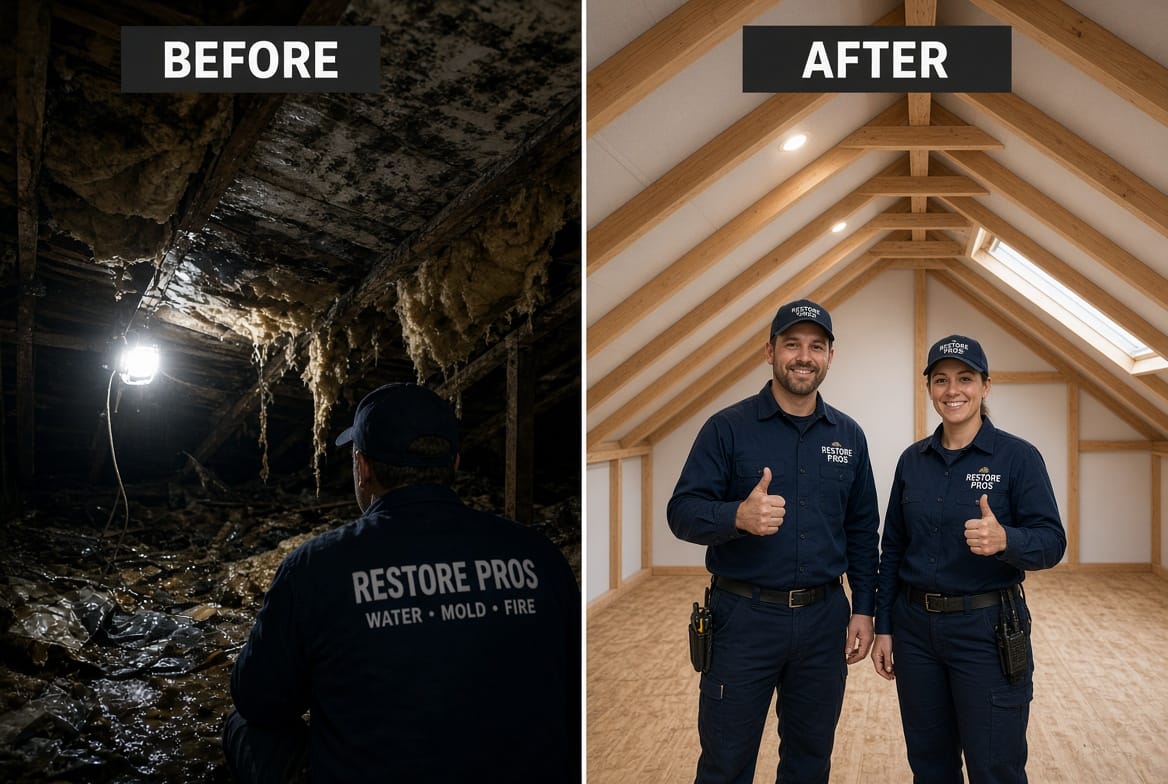
An attic flood tests both the physical structure of a home and the emotional resilience of its occupants. Yet every successful cleanup reinforces an important truth: water damage, when met with decisive action, does not have to become permanent destruction. By systematically removing wet insulation, locating and sealing the roof leak, thoroughly drying the framing, and rigorously addressing electrical and structural safety, homeowners reclaim control. The process restores not only the attic but also the sense of security that a well-maintained home provides. Attic floods need prompt attention.
Secure Your Attic Safety – Call for Expert Flood Cleanup