The Flood Insurance Waiting Period: Why You Can't Buy When It's Flooding
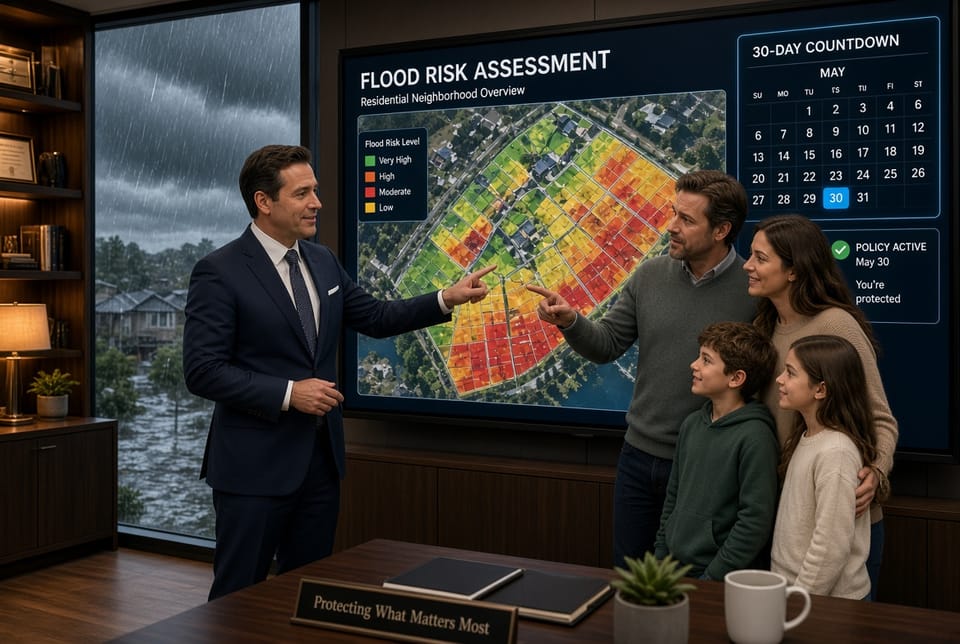
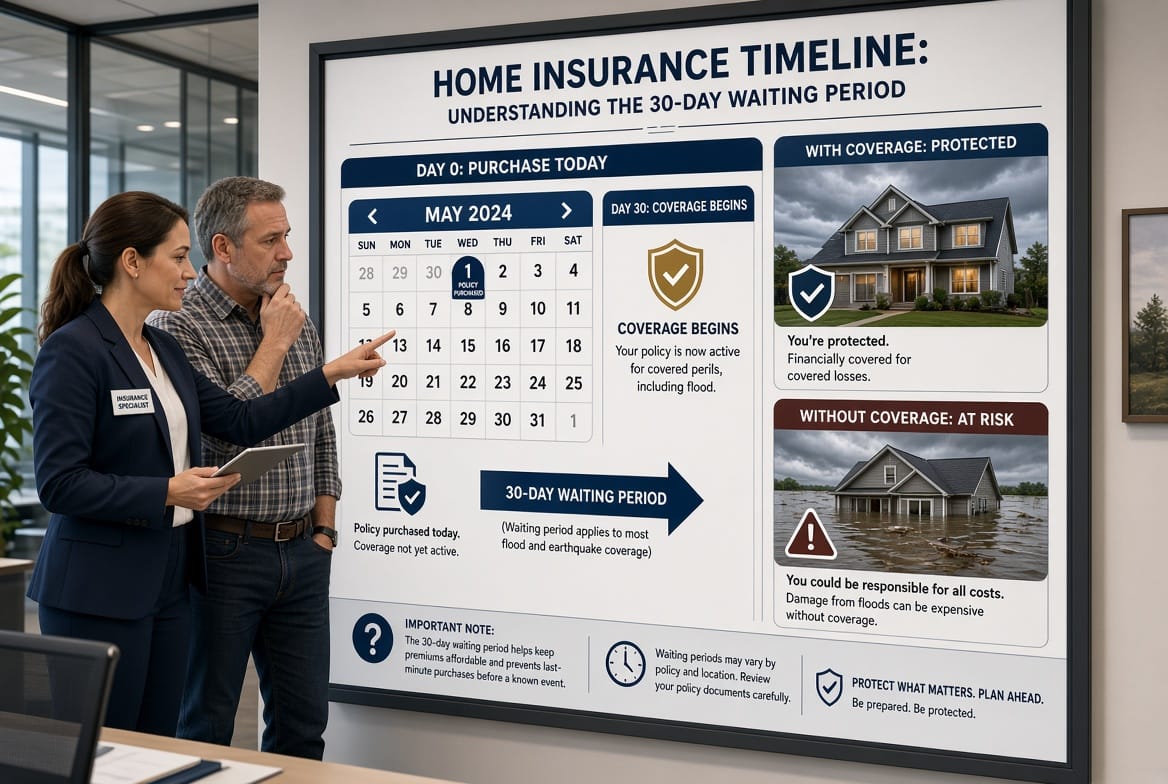
Floods rank among the most destructive and costly natural disasters that homeowners face. Yet one of the most critical—and frequently misunderstood—rules in the insurance world creates a firm barrier between the moment danger appears and the moment coverage can begin. That rule is the flood insurance waiting period. In nearly every standard policy, coverage does not start the day you purchase it. Instead, a mandatory waiting period of 30 days must pass before the policy becomes effective.
Don’t Wait Until It’s Flooding – Call Today!
This requirement is not a bureaucratic inconvenience. It is a deliberate safeguard designed to keep the entire flood insurance system solvent and fair. Understanding why the waiting period exists, how it works, and—most importantly—why you must act well before storm season begins can mean the difference between financial recovery and devastating loss. This article explains the rule in clear, practical terms so you can make informed decisions long before any forecast turns threatening.
What Exactly Is the Flood Insurance Waiting Period?
When you apply for and pay the premium on a flood insurance policy—whether through the National Flood Insurance Program or a private carrier—the policy does not activate immediately. A standard 30-day waiting period begins on the date the application is submitted and the premium is paid. Only after those 30 days have elapsed does coverage take effect.
There are limited exceptions. If the policy is required as a condition of a new mortgage or a refinancing loan secured by the property, coverage can begin at loan closing. In a few other narrowly defined situations involving map changes or certain community participation rules, the waiting period may be reduced or waived. For the vast majority of homeowners who simply decide to buy protection on their own, the full 30-day waiting period applies without exception.
This means that if heavy rain is already falling, a river is rising, or a tropical storm is forecast to make landfall in a week, it is already too late to purchase a policy that will respond to that event. The waiting period creates a firm cutoff: you cannot wait until the emergency arrives and then expect instantaneous coverage.
Why the Waiting Period Exists: Protecting the System for Everyone
The 30-day waiting period was established for one primary reason: to prevent adverse selection. Adverse selection occurs when people buy insurance only after they know a loss is imminent or already underway. Without a waiting period, large numbers of homeowners would wait until a flood threat appeared on the radar, purchase a policy overnight, file claims the next day, and then cancel coverage once the danger passed.
Such behavior would collapse the risk pool. Premiums paid by responsible, year-round policyholders would be overwhelmed by claims from last-minute buyers. The program would become financially unsustainable, rates would skyrocket for everyone, and many communities would lose access to affordable flood coverage altogether.
By requiring a waiting period, the system ensures that people purchase flood insurance as true risk management—not as emergency response. It encourages long-term participation, spreads risk across many policyholders over time, and keeps the overall program viable. In short, the waiting period protects both the individual homeowner who plans ahead and the broader community that relies on a stable insurance market.
The Real-World Consequences of Waiting Too Long
Every storm season brings heartbreaking stories of families who believed they could buy coverage “just in time.” A forecast shows a slow-moving system expected to dump several inches of rain. Homeowners rush to apply for flood insurance, only to learn that the policy will not activate for another month—long after the floodwaters have receded and the damage is done.
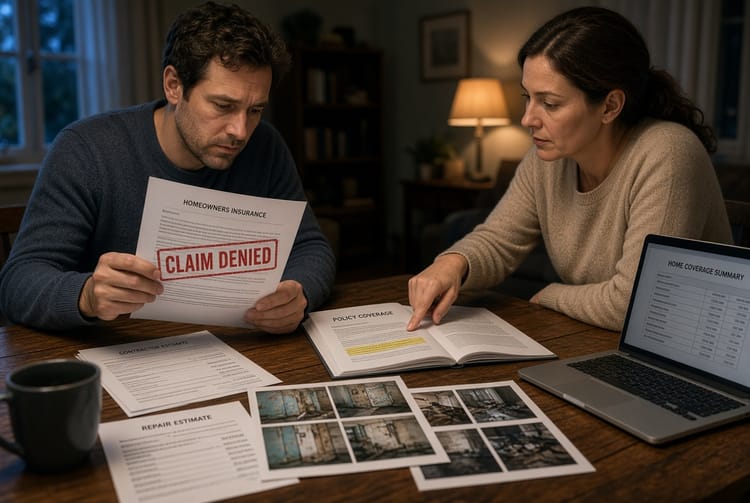
In those cases, the financial impact can be catastrophic. Flood damage is almost never covered by a standard homeowners policy. Without an active flood policy, the homeowner must pay for cleanup, repairs, mold remediation, and temporary housing out of pocket. Many families never fully recover. Some are forced to sell at a loss or walk away from properties that once represented their largest asset.
These outcomes are preventable. The waiting period is not a secret; it is a published, long-standing rule. The tragedy lies in the fact that so many people only learn about it when it is already too late to act.
Why You Must Purchase Before Storm Season Begins
Storm season—whether hurricane season along the coasts, spring flooding in river valleys, or heavy winter rains in other regions—follows predictable patterns. Meteorologists publish outlooks months in advance. Historical data shows when peak flood risk typically occurs in each geographic area. The smartest homeowners treat these calendars the same way they treat tax deadlines or school registration dates: they act early.
Buying flood insurance in the quieter months of the year removes the waiting-period problem entirely. Once the 30 days have passed and the policy is in force, it remains active through the entire high-risk season and beyond, provided premiums continue to be paid. You sleep better knowing that if a named storm develops or a river begins to crest, your coverage is already locked in.
Acting early also gives you time to shop carefully, compare private-market options with federal policies, understand elevation requirements, and make sure the coverage limits and deductibles match your actual risk. Last-minute purchases under stress rarely allow for that level of thoughtful decision-making.
Practical Steps to Stay Ahead of the Waiting Period
Protecting your home against flood risk does not require complicated strategies. It simply requires consistent, proactive habits. Consider the following proven actions:
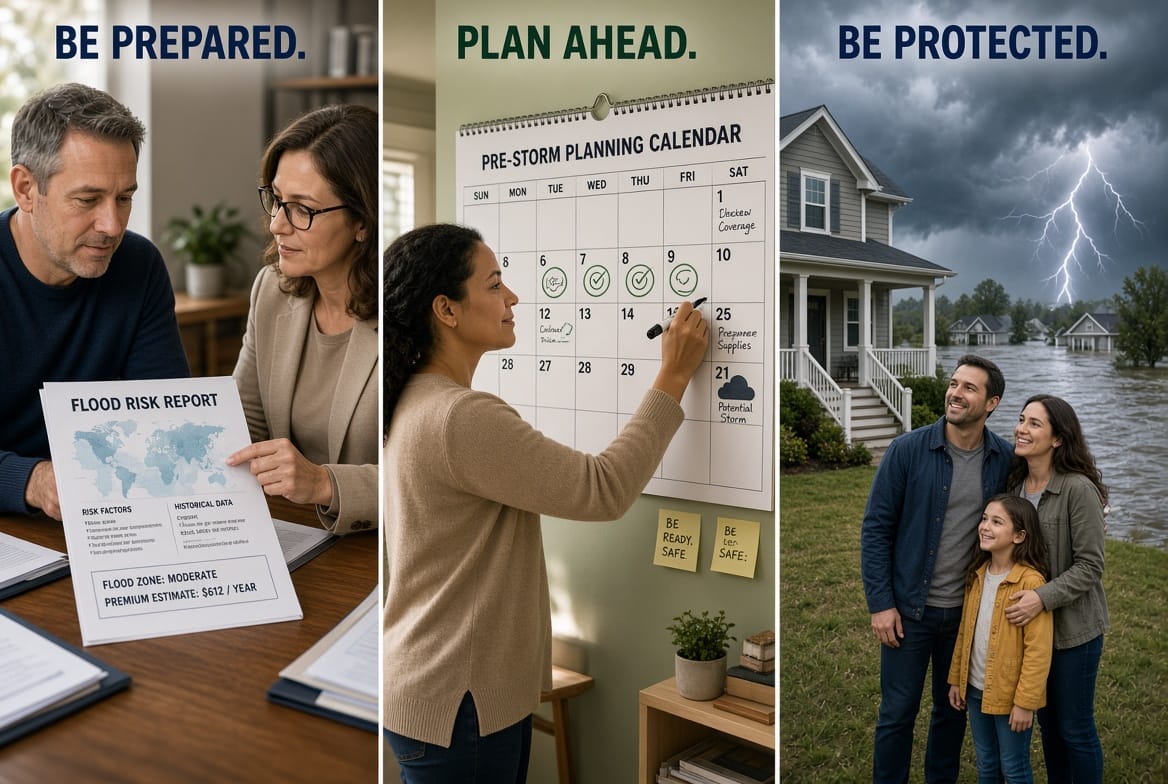
- Mark your calendar now. Identify the start of your region’s typical flood or storm season and set a personal deadline at least 45–60 days earlier to review or purchase coverage.
- Know your true risk. Obtain an official flood-zone determination for your property. Even homes outside high-risk zones experience flooding; roughly 20–25 percent of all flood claims come from moderate- or low-risk areas.
- Review your current policy annually. Confirm that coverage limits still match rebuilding costs, which rise with inflation and material prices.
- Coordinate with your mortgage lender if applicable. If you are buying or refinancing, ask specifically about flood-insurance timing so the waiting period does not create closing delays.
- Document everything. Keep records of the application date, premium payment, and confirmation that the waiting period has been satisfied.
These steps transform the waiting period from an obstacle into a non-issue.
Common Misconceptions That Lead to Costly Mistakes
Several persistent myths cause homeowners to delay action:
Myth 1: “I live outside a high-risk flood zone, so I don’t need coverage.”
Reality: Flooding can and does occur anywhere. Moderate- and low-risk zones still generate substantial claims every year.
Myth 2: “My homeowners policy will cover flood damage.”
Reality: Standard homeowners policies explicitly exclude flooding. Separate flood insurance is required.
Myth 3: “I can buy a policy the moment a storm is named.”
Reality: The 30-day waiting period almost always applies. By the time a storm is named, it is usually too late for that event.
Myth 4: “Flood insurance is too expensive.”
Reality: For many properties the annual premium is comparable to other routine home expenses, and the cost of an uninsured flood is measured in tens or hundreds of thousands of dollars.
Dispelling these myths early allows families to make decisions based on facts rather than assumptions.
The Broader Benefits of Early Coverage
Beyond simply satisfying the waiting period, maintaining continuous flood insurance delivers additional advantages. Continuous coverage can preserve eligibility for certain discounted rates and can simplify future claims. It also provides peace of mind that extends far beyond the storm itself. Knowing that your largest financial asset is protected against one of the most common natural perils reduces stress during every weather event.
Communities with higher rates of flood-insurance participation tend to recover faster after disasters. Federal and local resources stretch further when more households have private or federal coverage already in place. By purchasing early, you contribute to that collective resilience while protecting your own household.
Taking Action Today Protects Tomorrow
The flood insurance waiting period exists for sound reasons, but those reasons only work in your favor if you respect the timeline. Once water is rising or a storm is approaching, the opportunity to obtain coverage for that event has already closed. The solution is simple and entirely within your control: purchase or renew flood insurance well before the season of elevated risk begins.
Do not wait for the next forecast to serve as a reminder. Review your current protection status, confirm your flood zone, and complete any necessary application while the calendar still offers plenty of runway.
Don’t wait until it’s too late. A short conversation today can lock in the protection your home and family deserve long before any storm clouds appear on the horizon.
Get Flood Protection Before It’s Too Late – Call Now!