The Fire Restoration Air Scrubber: Removing Smoke Particles During Cleanup
When fire strikes a home or commercial building, the visible damage often tells only part of the story. Lingering smoke particles, soot, and strong odors can remain embedded in the air and surfaces long after the flames are extinguished. This is where specialized equipment like the fire restoration air scrubber becomes essential for thorough and safe cleanup.
Eliminate Smoke Odor & Soot – Call for Expert Help!
Air scrubbers represent one of the most important advancements in professional fire damage restoration. These powerful machines actively filter and purify the air, removing microscopic smoke particles, volatile organic compounds, and persistent odors that standard cleaning methods cannot address. At our restoration services, we rely on these units to ensure every job delivers not just structural repair, but truly healthy, breathable indoor environments.
Understanding the Role of Air Scrubbers in Fire Restoration
Fire produces a complex mixture of contaminants. Smoke particles range from large visible soot to microscopic aerosols that can penetrate deep into lungs. Without proper filtration, these particles continue circulating, causing ongoing respiratory irritation, unpleasant smells, and potential long-term health concerns.
A fire restoration air scrubber is a portable, high-efficiency air filtration system designed specifically for disaster recovery. Unlike ordinary air purifiers, restoration-grade scrubbers handle extreme contamination levels while maintaining powerful airflow for large spaces.
Key benefits include:
- Rapid removal of airborne soot and smoke residue
- Elimination of tough fire-related odors
- Prevention of cross-contamination to unaffected areas
- Improved overall indoor air quality during restoration
These units allow restoration professionals to work more efficiently while protecting both workers and building occupants from harmful exposure.
How Air Scrubbers Remove Smoke Particles and Odors
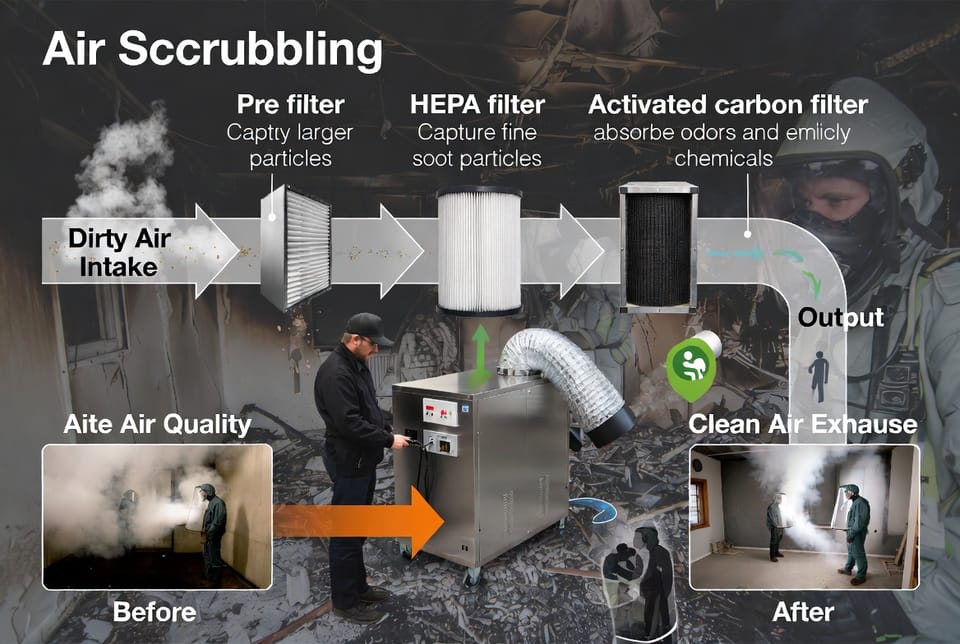
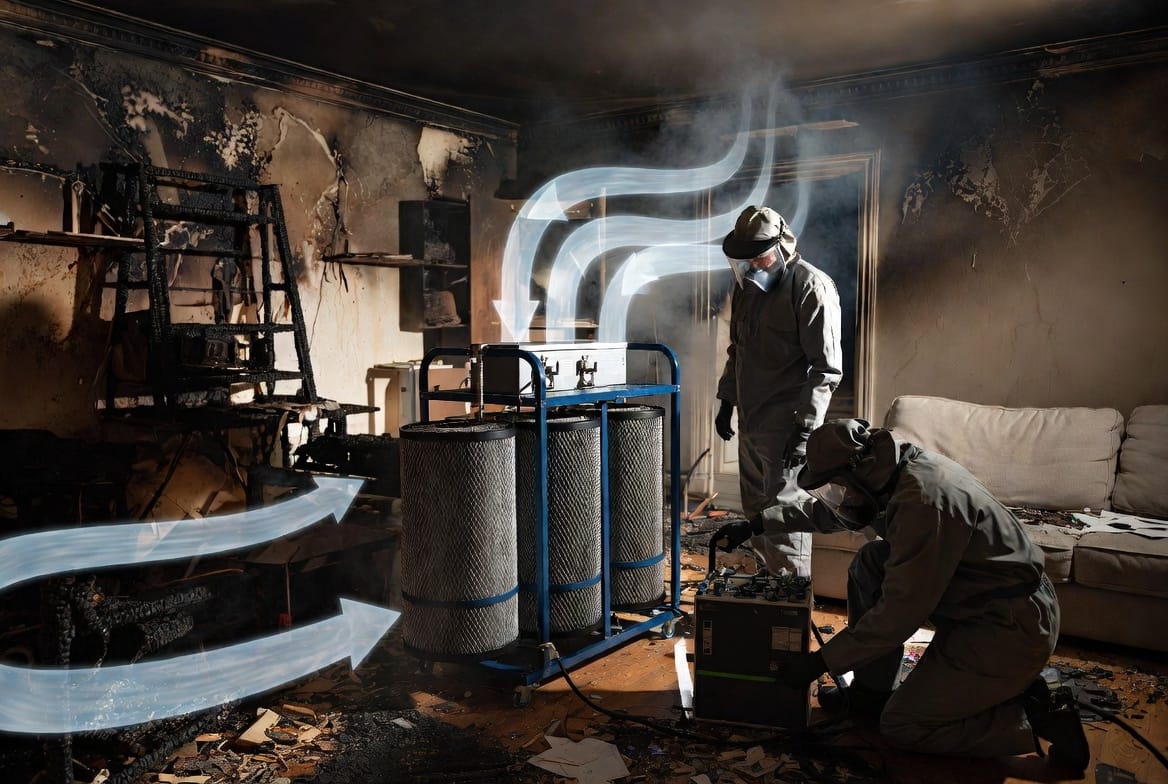
The technology behind modern fire restoration air scrubbers involves multiple stages of filtration working in sequence.
The process works as follows:
- Contaminated air intake — Powerful fans draw smoke-laden air into the unit
- Pre-filtration — Larger particles and debris are captured
- HEPA filtration — High-efficiency filters trap fine soot and microscopic particles
- Activated carbon filtration — Specialized carbon media absorbs odors and chemical vapors
- Clean air exhaust — Purified air is released back into the environment
This multi-stage approach ensures comprehensive cleaning of the air, addressing both physical particles and gaseous compounds produced during fires.
The Critical Importance of HEPA and Carbon Filters
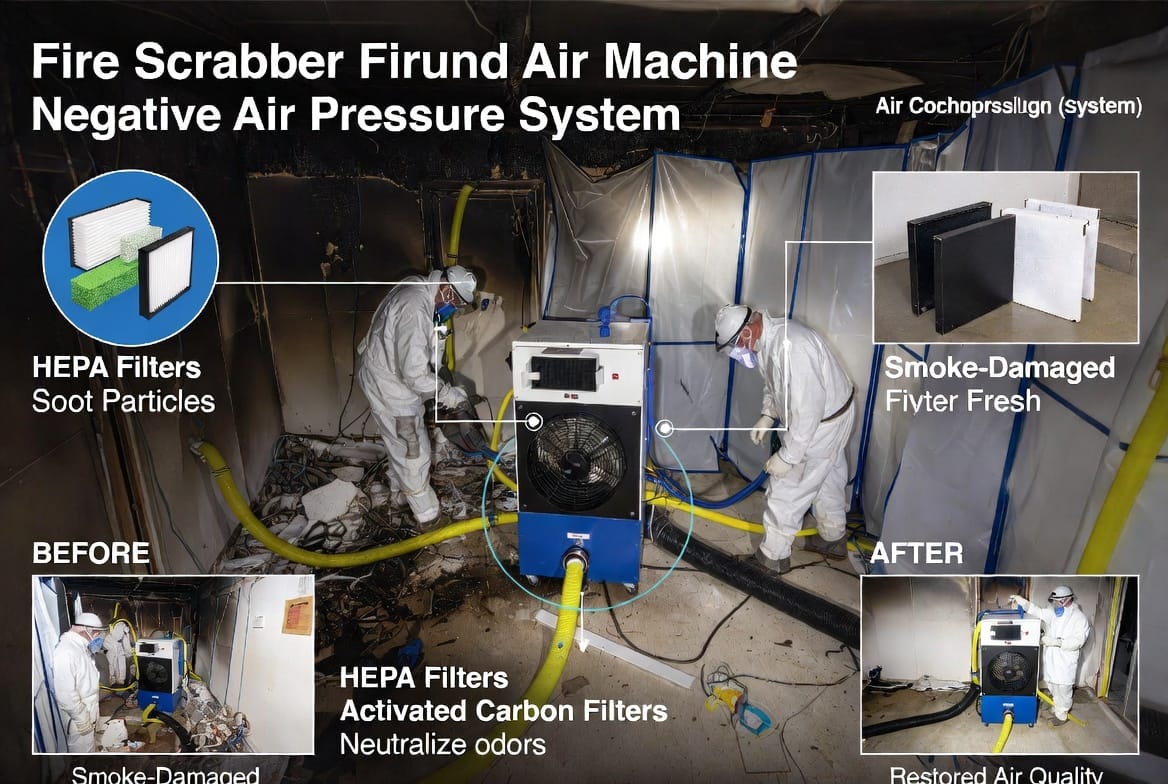
HEPA filters (High-Efficiency Particulate Air) serve as the backbone for physical particle removal. These medical-grade filters capture 99.97% of particles as small as 0.3 microns — including the finest smoke and soot particles that can cause significant health issues.
Activated carbon filters complement HEPA technology by targeting odors and chemical compounds. Carbon has an incredible surface area that attracts and traps volatile organic compounds (VOCs) responsible for that lingering "smoky" smell. In fire restoration, this combination proves especially effective because fire damage often involves both particulate matter and chemical residues from burned materials.
Without this dual filtration approach, simply ventilating a space or using basic fans would only spread contamination rather than eliminate it. Professional air scrubbers contain the problem while actively solving it.
Setting Up Containment for Maximum Effectiveness
Proper containment setup maximizes the performance of air scrubbers during fire restoration. Restoration experts create sealed zones using heavy-duty plastic sheeting and negative air pressure.
Negative air pressure means the scrubber pulls more air out of the affected area than it pushes back in, preventing smoke particles from migrating to clean sections of the building. This controlled environment ensures contaminants stay isolated while being systematically removed.
Typical containment procedures include:
- Installing physical barriers with zippered entry points
- Placing air scrubbers strategically for optimal airflow
- Monitoring pressure differentials with manometers
- Using ducting to direct clean air exhaust outside when necessary
- Continuous operation until air quality tests meet safety standards
This methodical approach protects the entire property and accelerates the overall restoration timeline.
Health Benefits of Professional Air Scrubbing
Exposure to post-fire smoke can lead to serious respiratory problems, eye irritation, headaches, and aggravated chronic conditions. Children, elderly individuals, and people with asthma face higher risks.
By deploying fire restoration air scrubbers early in the cleanup process, professionals significantly reduce these health hazards. Clean air supports faster recovery for occupants and creates safer working conditions for contractors performing repairs.
Many clients report immediate improvement in air freshness and comfort once scrubbing begins. This rapid improvement provides reassurance during what can otherwise be a stressful recovery period.
Why DIY Solutions Fall Short
Many homeowners attempt to handle smoke odor with household air purifiers, ozone generators, or simple ventilation. While these methods may provide temporary relief, they rarely address the root problem comprehensively.
Professional fire restoration air scrubbers deliver superior results because they are:
- Built for high-volume, high-contaminant environments
- Equipped with commercial-grade filtration media
- Operated by trained technicians who understand airflow dynamics
- Part of a complete restoration protocol that includes surface cleaning and deodorization
The investment in professional equipment and expertise ultimately saves time, money, and potential health complications.
The Full Fire Restoration Process with Air Scrubbing
Effective fire restoration follows a systematic approach where air scrubbing plays a central role:
- Initial assessment and safety evaluation
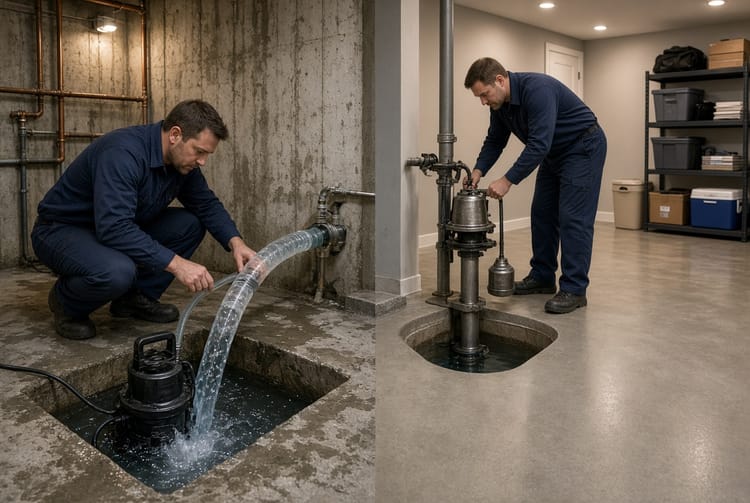
- Water removal if fire suppression systems were used
- Containment setup and air scrubber deployment
- Soot and smoke removal from surfaces
- Structural drying and repairs
- Final air quality testing and scrubber removal
- Post-restoration verification
Throughout this process, air scrubbers run continuously, often 24 hours a day, until readings confirm safe particulate and VOC levels.
Choosing the Right Restoration Partner
When selecting a fire restoration company, inquire specifically about their air scrubbing capabilities. Leading providers maintain fleets of commercial-grade units with fresh HEPA and carbon filters ready for immediate deployment.
Experienced teams understand how to calculate the correct number of air scrubbers based on cubic footage and contamination severity. They also know when to combine scrubbing with thermal fogging or other advanced deodorization techniques for optimal results.
Long-Term Protection After Smoke Damage
Once air quality returns to normal, additional steps help prevent future issues. These may include improved ventilation systems, regular HVAC filter changes, and surface treatments that resist future contamination.
Professional restoration includes detailed documentation and recommendations tailored to each property's unique needs.
Frequently Asked Questions About Fire Restoration Air Scrubbers
How long does air scrubbing take?
Duration varies based on damage extent and property size. Some jobs require several days of continuous operation, while others may need a week or more for heavily affected spaces.
Can air scrubbers remove all smoke smell?
When properly deployed with carbon filtration and combined with surface cleaning, professional scrubbers dramatically reduce or eliminate persistent odors.
Are air scrubbers safe for pets and family?
Yes. The technology filters air rather than adding chemicals. Technicians coordinate equipment placement to minimize disruption while maintaining safety.
Does insurance cover air scrubbing?
Most homeowner and commercial property insurance policies cover professional air filtration as part of fire damage restoration. Our team works directly with adjusters to ensure proper documentation.
Conclusion: Breathe Easier with Professional Fire Restoration
Smoke damage extends far beyond visible charring. The invisible particles and odors left behind require specialized intervention. The fire restoration air scrubber stands as a critical tool that delivers clean, healthy air while protecting your property and loved ones.
Our experienced team understands both the technical aspects of air filtration and the emotional challenges families face after fire damage. We combine advanced equipment with compassionate service to restore not just buildings, but peace of mind.
Smoke odor needs specialized filtration.
Our certified technicians arrive quickly, assess the situation thoroughly, and deploy the right combination of air scrubbers, containment, and cleaning techniques to return your property to a safe, fresh condition you can trust.
Don’t let hidden smoke particles compromise your health or slow your recovery. Trust the professionals who know how to eliminate them completely.
Get Professional Air Scrubber Restoration – Call Now