The Feral Hog Damage: Managing Destructive Wild Pigs on Rural Properties
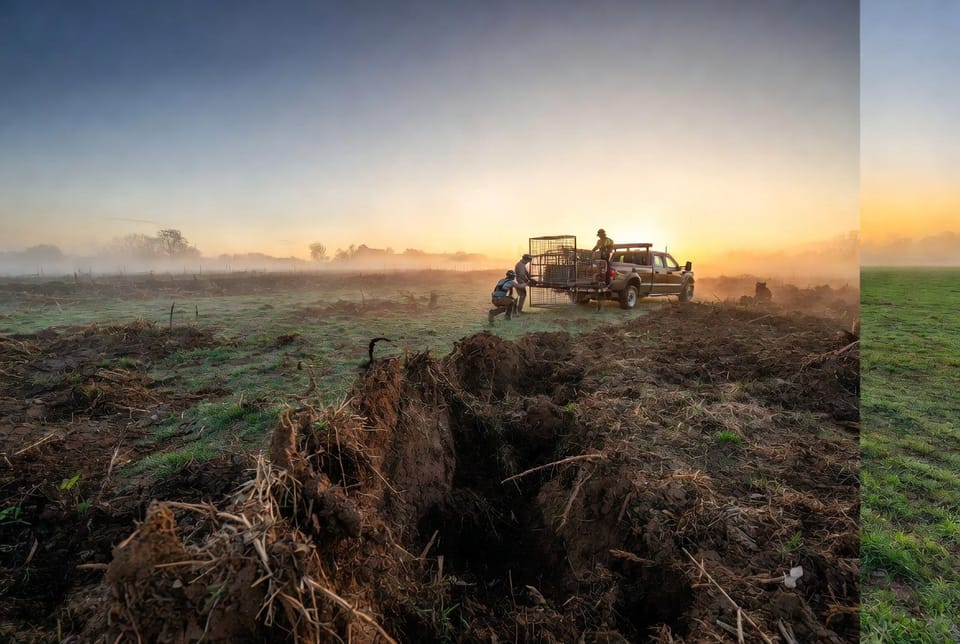
Feral hogs have become one of the most serious agricultural pests across rural landscapes. These invasive wild pigs multiply rapidly and cause widespread destruction that threatens pastures, crops, and carefully maintained properties. Landowners who once enjoyed productive fields now face eroded soil, ruined fences, and mounting financial losses.
Protect Your Pasture from Wild Pigs – Call Now!
Professional wildlife removal offers the reliable, effective solution. With targeted trapping and exclusion techniques, experienced specialists can safely reduce hog populations and protect your investment. This guide explains feral hog behavior, the specific damage they inflict, and the proven professional methods that deliver lasting results.
When you partner with trained large-animal experts, relief arrives quickly and your land returns to productivity. No more sleepless nights worrying about the next night of rooting or trampling—effective control is possible and proven.
Understanding Feral Hog Behavior
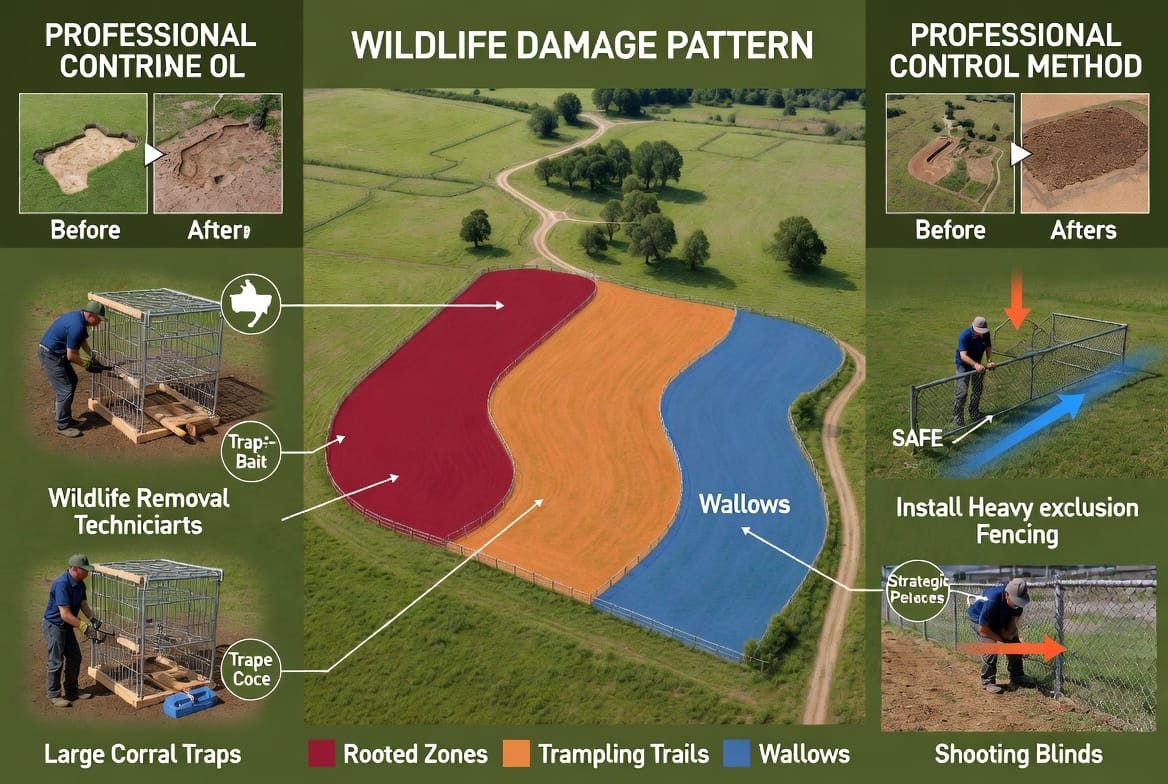
Feral hogs exhibit highly destructive habits driven by their constant search for food and water. Rooting is their primary feeding behavior: using powerful snouts, they dig deep into soil to uncover roots, tubers, and invertebrates. A single sounder can turn acres of pasture into a moonscape overnight.
Trampling follows as heavy-bodied adults and fast-moving piglets move across fields. Their sharp hooves compact soil, crush young plants, and create trails that accelerate erosion during rain.
Wallowing creates another layer of harm. Hogs roll in mud to regulate body temperature and protect against parasites, forming large, persistent wallows that ruin drainage, contaminate water sources, and spread disease.
These behaviors are not occasional—they occur nightly. Because feral hogs lack natural predators in most regions and reproduce year-round, small groups quickly become large sounders. Their intelligence and adaptability make them difficult to deter without expert intervention.
The Devastating Impact on Pastures, Crops, and Landscaping
The economic toll of feral hogs is staggering. Pastures suffer immediate loss of forage; rooted areas become bare and prone to invasive weeds. Over time, soil structure collapses, reducing carrying capacity for livestock and requiring expensive reseeding.
Crops fare even worse. Corn, soybeans, peanuts, and vegetables are devoured or trampled before harvest. A single night’s raid can destroy thousands of dollars in potential yield.
Landscaping around rural homes and outbuildings is not spared. Ornamental gardens, lawn edges, and pond banks are uprooted. Fences buckle under repeated pressure, allowing livestock to escape or predators to enter.
Key risks include:
- Soil erosion and long-term degradation that lowers property value
- Water contamination from wallows and waste
- Disease transmission to domestic animals and humans
- Safety hazards from aggressive hogs protecting young
Left unchecked, these impacts compound. Early professional action prevents small problems from becoming property-wide disasters.
Recognizing the Signs of Feral Hog Presence
Early detection is critical. Trained eyes spot the evidence before damage escalates.
Look for:
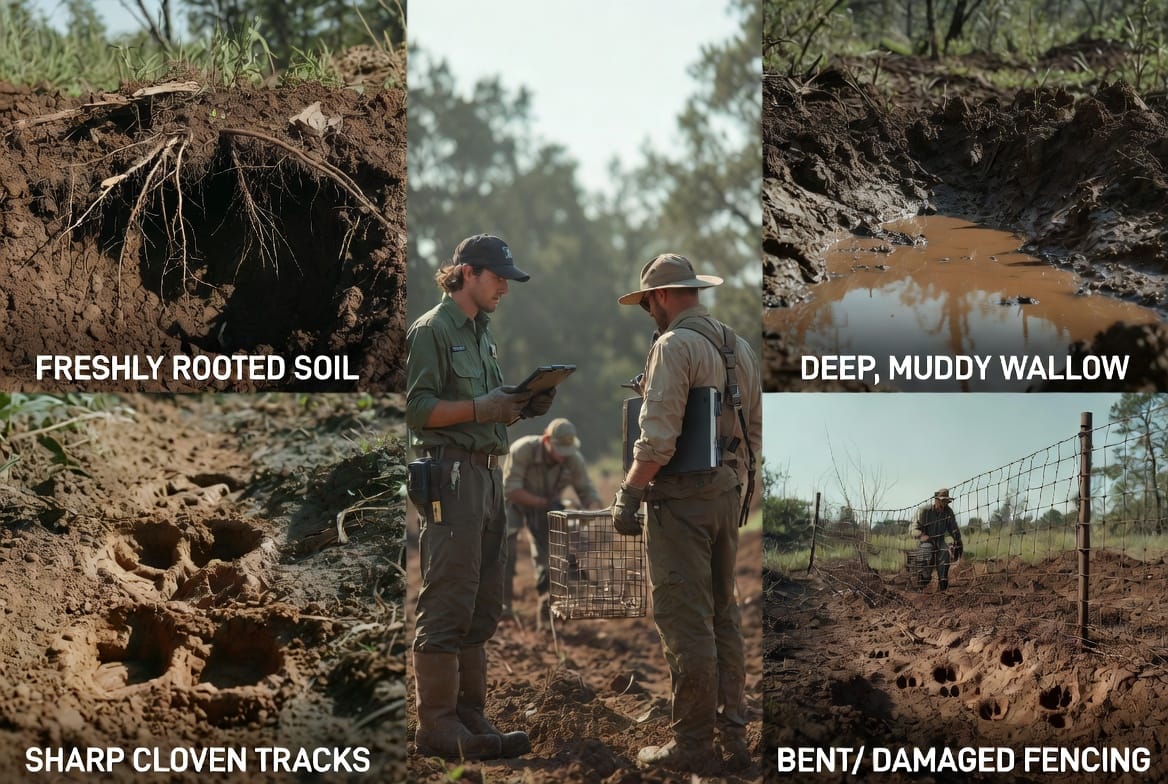
- Fresh rooted soil – loose, overturned earth in irregular patches
- Wallows – muddy depressions near water sources, often with tracks leading in and out
- Distinctive tracks – cloven hooves with rounded toes, larger than deer prints
- Damaged fencing – bent wire, pushed posts, or holes at ground level
Additional clues include scat, rubbed trees, and nighttime sounds. Property owners who notice these signs should contact professionals immediately rather than attempting risky DIY measures.
Why DIY Methods Often Fall Short
Many landowners first try makeshift solutions—spot shooting, simple fencing, or home repellents. While understandable, these approaches rarely succeed long-term. Feral hogs quickly learn to avoid ineffective barriers and become more nocturnal. Improper trapping can educate the sounder, making future efforts harder.
Safety concerns also arise. Hogs are strong, unpredictable, and can carry diseases. Without proper equipment and training, attempts can lead to injury or incomplete removal.
Professional wildlife removal teams bring specialized tools, local regulatory knowledge, and proven success rates. Their methods are humane, efficient, and compliant with all applicable laws.
Professional Wildlife Removal Strategies for Feral Hogs
Experts rely on a combination of trapping, exclusion fencing, and strategic population management.
Corral traps and box traps are highly effective for entire sounders. Baited with appealing feed and strategically placed along travel routes, these devices allow multiple animals to be removed at once. Technicians monitor remotely to minimize stress and ensure quick dispatch.
Exclusion fencing protects high-value areas. Heavy-duty, buried wire mesh prevents rooting under fences while strong overhead bracing stops jumping or pushing.
When appropriate and legal, precision shooting from elevated blinds reduces numbers in remote sections of large properties. All methods are chosen based on site assessment, hog behavior, and landowner goals.
Our large-animal specialists customize every plan. Whether your property spans 50 or 5,000 acres, the approach balances immediate relief with long-term prevention. Results are measurable: reduced rooting, restored pastures, and peace of mind.
Long-Term Prevention and Property Restoration
Removal is only the first step. Sustainable management includes habitat modification—removing dense cover near fields, securing feed storage, and maintaining exclusion fencing. Regular monitoring with trail cameras helps catch new arrivals early.
After control measures, restoration crews can repair damaged pastures, reseed, and improve drainage. Many properties see full recovery within a single growing season when professionals guide the process.
Protecting Your Rural Investment Today
Feral hogs do not wait. Every night of delay means more rooting, more trampling, and greater expense. Professional intervention stops the cycle, restores productivity, and safeguards your land for years to come.
Our team of large-animal specialists has successfully managed feral hog problems on hundreds of rural properties. We combine science-based methods with respectful, efficient service tailored to agricultural needs.
End Feral Hog Damage Fast – Speak to Our Specialists