The Estate Sale Cleanup: Dumpsters for Unwanted Items
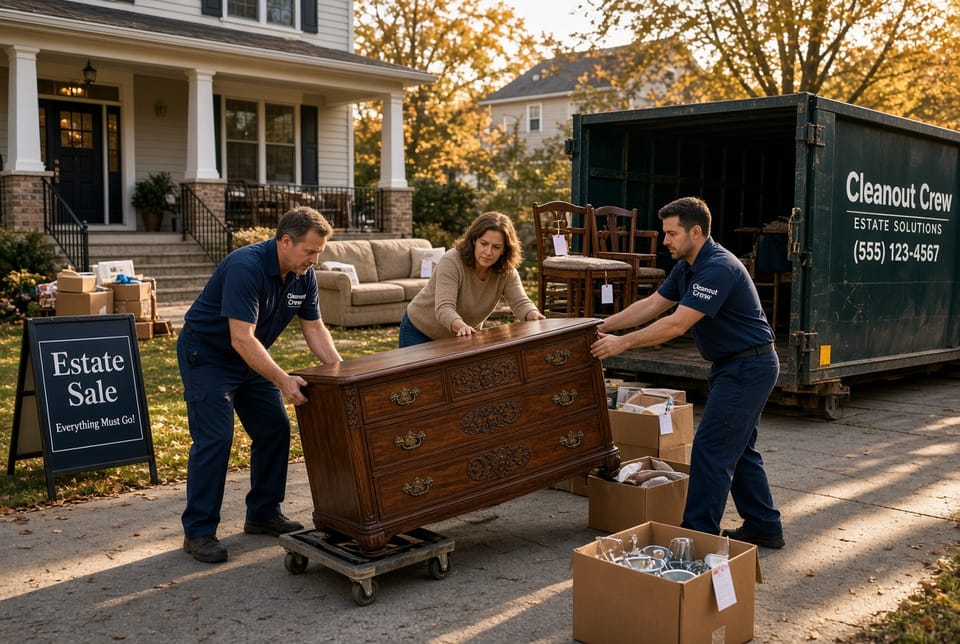
Losing a loved one brings profound emotional weight, and the practical task of handling their belongings through an estate sale often follows. Families gather to sell furniture, household goods, collectibles, and everyday items. Yet even well-organized sales leave behind unsold pieces. These leftovers—bulky sofas, outdated dressers, boxes of dishes, and miscellaneous household goods—quickly overwhelm a home. A strategically placed dumpster rental transforms this final stage from overwhelming burden into manageable closure. Dumpsters give families a reliable way to remove what did not sell while protecting the property and honoring the memory of the person who lived there.
Clear Out Estate Sale Leftovers Today – Call Now!
Estate sales typically last one to three days. Shoppers take the most desirable items, but large furniture and common household goods frequently remain. Without a plan, these pieces sit in rooms, hallways, and garages, creating both physical clutter and emotional strain. Renting a dumpster sized for the expected volume allows everything leftover to leave the property in one coordinated effort. The process feels respectful rather than rushed, and the home can be prepared for sale, rental, or family use far sooner.
Understanding the Unique Demands of Estate Sale Leftovers
Estate sales differ from ordinary garage sales because the volume and variety of items are greater. Entire households are represented: living-room furniture, bedroom sets, kitchenware, linens, décor, and boxed personal effects. Many pieces carry sentimental value yet hold little market appeal after the sale ends. Families must decide quickly what stays, what goes to charity, and what must be discarded. A dumpster becomes the practical container for the last category.
Unsold furniture poses the biggest challenge. A single sofa or dining table can occupy an entire room. Household goods add weight and quantity—piles of plates, lamps, small appliances, and storage boxes. Attempting to haul these items in personal vehicles leads to multiple trips, extra fuel costs, and physical strain at a time when energy is already low. A properly sized dumpster parked on-site eliminates those repeated journeys. Workers or family members can load items directly, keeping the cleanup contained and efficient.
Timing matters. Most families schedule the dumpster to arrive the day the estate sale closes or the morning after. This sequence keeps the property presentable during shopping hours and allows immediate action once the last buyer leaves. The dumpster sits unobtrusively in the driveway or a designated side area, ready for systematic loading.
How Estate Sales Rely on Dumpsters for Unsold Furniture and Household Goods
Dumpsters serve as the final destination for items that neither sold nor qualified for donation. Furniture that is worn, outdated, or damaged rarely finds a second-hand buyer. Household goods that are incomplete, stained, or simply too plentiful follow the same path. The dumpster accepts these pieces without requiring families to sort every object into separate municipal bins.
Typical unsold furniture includes sofas with worn upholstery, mattresses that no longer meet current standards, particle-board dressers, and mismatched dining chairs. Household goods often consist of chipped dishes, outdated electronics that still function but hold no resale value, stacks of old linens, and decorative items that did not attract interest. A 20- or 30-yard dumpster easily accommodates this mix because it offers both volume and weight capacity. Families avoid the common mistake of underestimating leftover volume; a too-small container forces a second rental and extra expense.
Professional dumpster services understand estate-sale patterns. They recommend placement that protects lawns and driveways, provide drop-off and pick-up on a flexible schedule, and advise on what materials the container can legally accept. This guidance prevents last-minute surprises and keeps the cleanup moving forward.
Strategic Sorting: Donations, Recyclables, and Trash
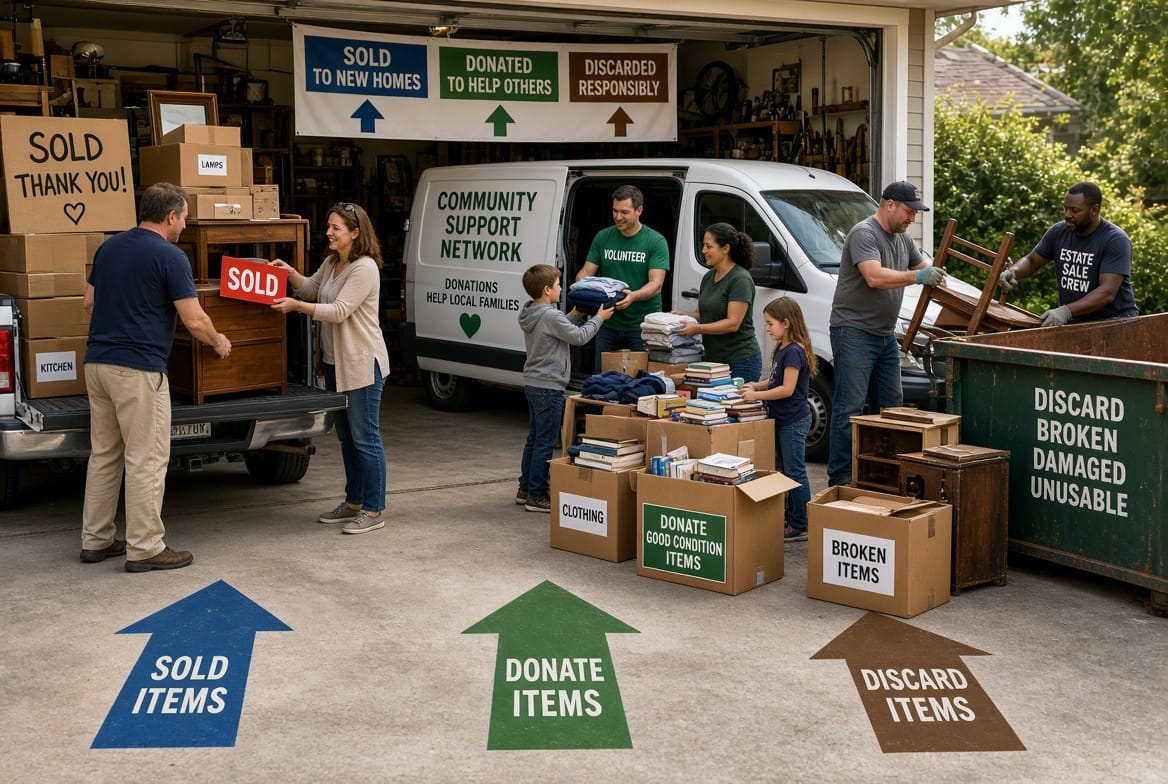
The most effective estate-sale cleanups begin with deliberate sorting before anything enters the dumpster. Three clear categories emerge: items suitable for donation, materials that can be recycled, and true trash destined for the dumpster. This approach reduces landfill waste, supports community organizations, and keeps disposal costs lower.
Identifying Items Worth Donating
Usable furniture in decent condition, complete sets of dishes, clean linens, books, and working small appliances often find new homes through local charities. Organizations such as community thrift stores or shelters accept these pieces when they meet basic standards of cleanliness and function. Families should inspect each item for stains, structural damage, or missing parts. A quick wipe-down and grouping of similar objects speeds the donation process. Scheduling a charity pickup the same day the dumpster arrives keeps momentum high and prevents donated goods from mixing with trash.
Handling Recyclables Correctly
Paper, cardboard, glass, metal, and certain plastics can leave the waste stream entirely. Flattened moving boxes, empty glass jars, aluminum cookware, and newspaper stacks belong in recycling bins rather than the dumpster. Many municipalities provide curbside recycling or drop-off centers. Separating these materials before loading the dumpster reduces the container’s weight and may lower rental fees tied to tonnage. Electronics that still work but failed to sell can often go to specialized e-waste recyclers instead of general trash.
Directing True Trash to the Dumpster
Items that are broken beyond repair, heavily soiled, or composed of mixed materials that cannot be recycled belong in the dumpster. This category includes damaged particle-board furniture, stained mattresses, cracked ceramics, and miscellaneous household debris. Keeping the three streams separate prevents contamination and demonstrates responsible stewardship of the estate.
Practical Tips for Efficient Sorting and Loading
Begin sorting while the estate sale is still underway. Place donation boxes in one room, recycling containers in another, and a clear path to the future dumpster location. Label everything so helpers know exactly where each piece belongs. Work in teams: one person evaluates condition, another packs, and a third moves items to the correct pile. This division of labor prevents fatigue and keeps decisions consistent.
Protect floors and walls during loading. Use moving blankets or cardboard under heavy furniture. Lift with the legs rather than the back, and use dollies for anything larger than a chair. Never overload the dumpster above the fill line; doing so creates a safety risk and may incur extra fees. Distribute weight evenly so the container remains stable when the truck arrives for pickup.
Keep hazardous materials out of the dumpster. Paints, solvents, batteries, and certain cleaning chemicals require special disposal. Local household-hazardous-waste programs accept these items on designated days. Including them in the dumpster can violate regulations and create environmental harm.
Choosing the Right Dumpster Size and Service
Estate cleanups most often need 20-yard or 30-yard roll-off dumpsters. A 20-yard container handles the contents of a typical two- or three-bedroom home after a sale. A 30-yard unit suits larger properties or homes filled with substantial furniture collections. Measure the driveway or side yard in advance to confirm the chosen size will fit without blocking traffic or damaging landscaping.
Reputable rental companies deliver the dumpster on the requested morning and remove it once loading is complete, usually within a few days. They supply the necessary permits if local rules require them and advise on weight limits. Clear communication about the types of items expected—furniture, household goods, and mixed debris—helps the provider recommend the most suitable container.
Safety, Legal, and Emotional Considerations
Physical safety remains paramount. Wear sturdy shoes, gloves, and long sleeves. Watch for nails, broken glass, or unstable stacks. Children and pets should stay clear of the loading area. If the estate includes an older home, be alert for possible asbestos-containing materials or lead paint; these require professional assessment rather than ordinary dumpster disposal.
Legal compliance protects the family. Confirm that the dumpster company holds proper licensing and insurance. Follow local ordinances regarding placement duration and prohibited items. Document the process with photographs if the property will soon change ownership; this record demonstrates that the estate was handled responsibly.
Emotionally, the cleanup can feel like a second goodbye. Having a structured plan and a visible dumpster provides a concrete endpoint. Families often report a sense of relief once the last item leaves the property. The dumpster does not erase memories; it simply removes the physical remnants that no longer serve a purpose.
The Lasting Value of a Well-Executed Cleanup
A thoughtfully managed dumpster rental shortens the time a vacant house sits filled with leftovers. Real-estate agents appreciate a clean, empty property that photographs well and shows without distraction. Neighbors notice the orderly process rather than weeks of scattered debris. Most importantly, the family gains closure. The home that once held a lifetime of belongings can now move into its next chapter.
Efficient estate sale cleanup depends on preparation, clear categories, and the right dumpster at the right moment. Furniture and household goods that did not sell find an appropriate destination, donations support the community, and recyclables stay out of the landfill. The result is a property restored to order and a family free to focus on healing rather than logistics.
Efficient estate sale cleanup.
Get Unwanted Furniture Removed – Call for Dumpster Rental