The Engineered Wood Floor Flood: When Professionals Can Save vs. Replace
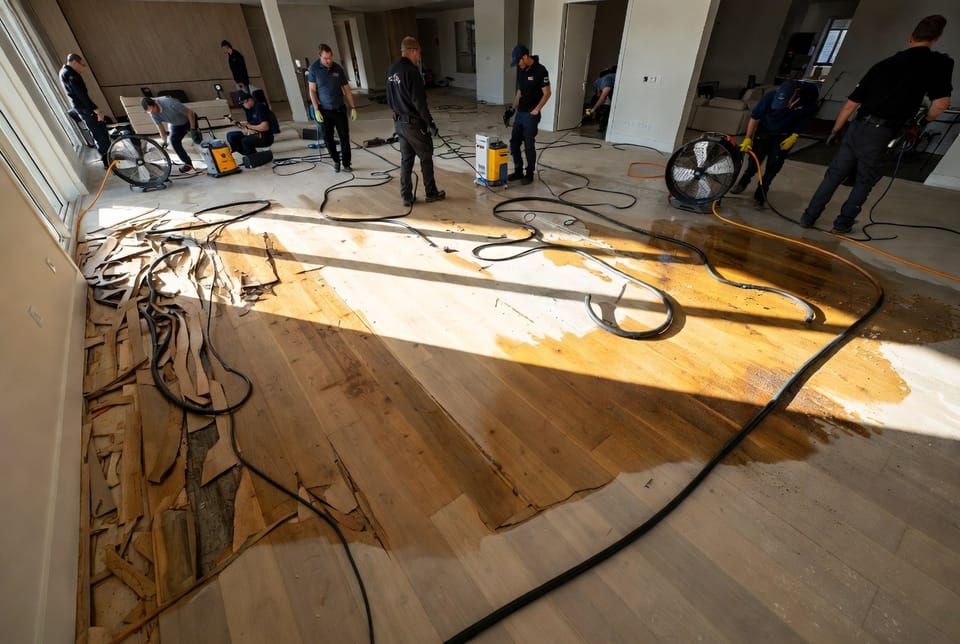
When water strikes your engineered wood flooring, panic can set in fast. One moment your home looks pristine; the next, cupping, buckling, and discoloration threaten years of beautiful investment. The good news? Not every flood means total replacement. With prompt, expert intervention, many engineered wood floors can be salvaged, restored, and returned to their original beauty.
Save Your Engineered Wood Floor – Call Now!
Engineered wood has become a homeowner favorite for its stability, affordability, and realistic wood-grain appearance. Yet its layered construction reacts differently to water damage than solid hardwood. Understanding exactly how your floor is built—and how quickly professionals can respond—determines whether your floor can be saved or must be replaced.
In this comprehensive guide, we walk you through the science of engineered wood water damage, the critical decision points between restoration and replacement, and the exact steps professionals take to protect your home and your wallet. Act fast, and you may keep the floor you love.
Understanding Engineered Wood Construction
Engineered wood flooring is not solid hardwood. It is a precisely manufactured product built for real-world performance. At its core lies a thick plywood or high-density fiberboard base, typically 6–12 mm thick, engineered for dimensional stability. Bonded to this core is a thin top veneer—usually 1–4 mm—of genuine hardwood such as oak, maple, or walnut. A protective wear layer and UV-cured finish complete the top, while a balancing layer on the bottom prevents warping.
This multi-layer design makes engineered wood far more resistant to temperature and humidity swings than traditional solid hardwood. Yet the very adhesives that hold the layers together become the Achilles’ heel when water intrusion occurs. Moisture can penetrate the seams, swell the plywood core, and break the glue bonds between layers.
Key risk factors include:
- Prolonged standing water (more than 24–48 hours)
- Hidden moisture trapped beneath the floor
- Edge swelling along seams where water wicks upward
- Delamination—the visible separation of the veneer from the core
Because the veneer is real wood, light sanding and refinishing remain possible in many cases—provided the core has not been compromised.
How Engineered Wood Responds to Water Exposure
Unlike solid hardwood that can be sanded multiple times, engineered wood has a finite veneer thickness. Once water reaches the plywood core, the material expands unevenly, causing cupping (edges rise while centers stay flat) or crowning (centers rise).
In the first few hours, the damage is often reversible. Fast extraction of visible water combined with industrial drying equipment can stabilize the floor before permanent deformation sets in. However, if moisture remains trapped, the plywood core begins to break down, adhesives soften, and delamination becomes visible as bubbles or loose planks.
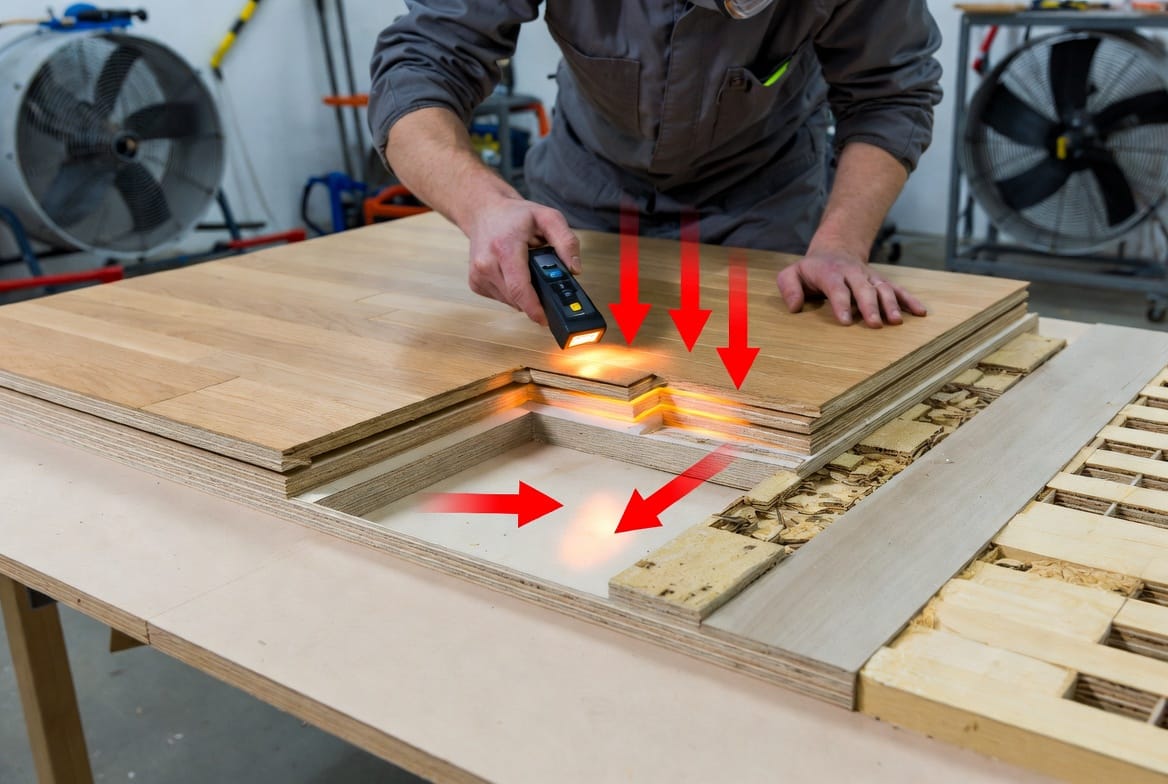
Homeowners frequently ask: “Can my floor be saved?” The answer depends on three critical factors—exposure time, moisture depth, and extent of delamination. Professionals use specialized tools to measure these variables with precision.
Signs You Need Immediate Professional Assessment
Do not wait to see how bad it gets. Look for these early warning signs of engineered wood water damage:
- Cupping or peaking along plank edges
- Dark discoloration or water stains on the surface
- Soft or spongy feel underfoot
- Musty odor indicating hidden mold growth
- Gaps widening between planks
- Bubbling or lifting of the veneer
If you notice even one of these, act within the first 24 hours. Every additional day dramatically reduces salvageability.
When Professionals Can Save Your Floor
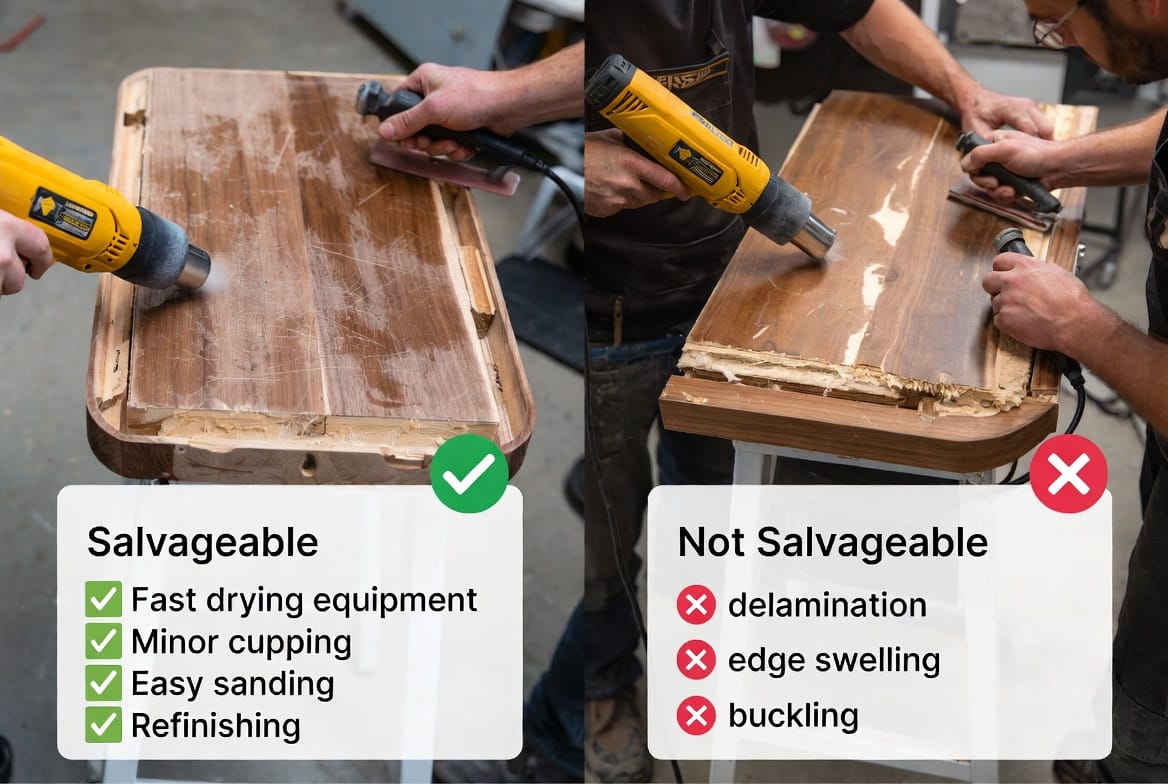
Many water-damaged engineered wood floors can be fully restored when professionals arrive quickly. Here is what makes a floor salvageable:
- Minor cupping with no visible delamination
- Surface water removed within 48 hours
- Moisture content returned to normal levels (under 12 %) using professional drying systems
- Veneer thickness still intact for light sanding and refinishing
Professional restoration steps include:
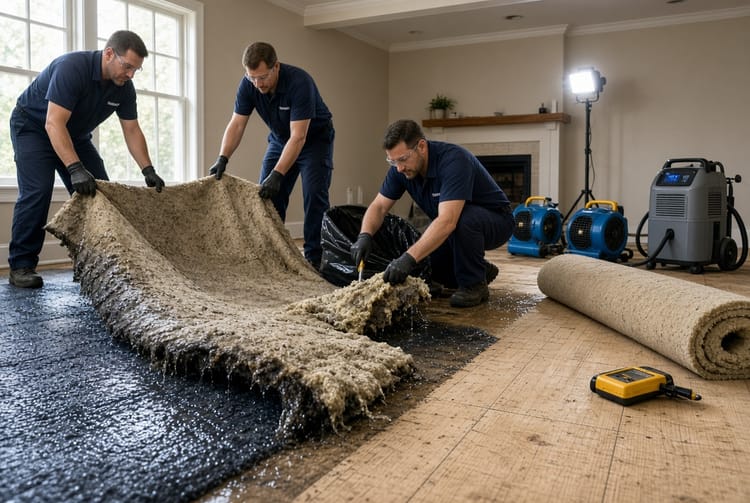
- Rapid water extraction with truck-mounted vacuums
- Placement of industrial air movers and dehumidifiers
- Precision moisture mapping with thermal imaging
- Controlled drying over 3–7 days
- Thorough cleaning and sanitization
- Final sanding (if veneer allows) and application of new protective finish
Rest assured—when the core remains structurally sound, sanding and refinishing can make your floor look brand new again. Homeowners who call within hours routinely save 60–80 % of replacement costs.
When Replacement Becomes the Only Option
Not every flood allows restoration. Irreparable damage occurs when:
- Delamination affects more than 30 % of the planks
- Edge swelling has warped the tongue-and-groove system beyond repair
- Buckling has lifted large sections off the subfloor
- Mold has penetrated the plywood core
- Prolonged exposure (beyond 72 hours) has caused permanent core expansion
In these scenarios, attempting to salvage the floor risks future failures, health concerns, and higher long-term costs. Professional installers will remove the damaged material, treat the subfloor, and install new engineered wood flooring that matches your original aesthetic perfectly.
The Professional Restoration Process Step by Step
- Emergency Response – Technicians arrive within hours, extract standing water, and set up drying equipment.
- Detailed Assessment – Moisture meters, thermal cameras, and core samples determine salvageability.
- Controlled Drying – Airflow and dehumidification return the floor and subfloor to normal moisture levels.
- Deep Cleaning & Sanitizing – Removal of contaminants prevents mold.
- Refinishing (when possible) – Precision sanding removes cupping and restores the original finish.
- Quality Assurance – Final moisture testing and visual inspection ensure long-term stability.
This systematic approach gives homeowners the highest possible chance of saving their engineered wood floor.
Prevention Tips to Protect Your Investment
While accidents happen, smart maintenance reduces risk:
- Address leaks immediately—even small drips can lead to major damage.
- Use area rugs in high-moisture zones like kitchens and bathrooms.
- Maintain proper humidity levels (35–55 %) year-round.
- Elevate furniture after flooding to allow full drying underneath.
- Schedule annual inspections of plumbing and appliances.
Why Immediate Action Matters
Every hour counts. Water damage progresses quickly, and engineered wood flooring has a narrow window for successful restoration. Professionals equipped with the right tools and experience can often turn a potential disaster into a minor inconvenience.
Our certified teams stand ready 24/7 to assess your engineered wood floor flood damage and provide clear, honest guidance—whether that means expert restoration or seamless replacement. Don’t risk further damage or hidden mold. One phone call today can protect your home’s beauty and value for decades to come.
Water Damaged Floor? Get Professional Assessment Now