The Buckled Hardwood Floor After Flood: Drying vs. Replacement
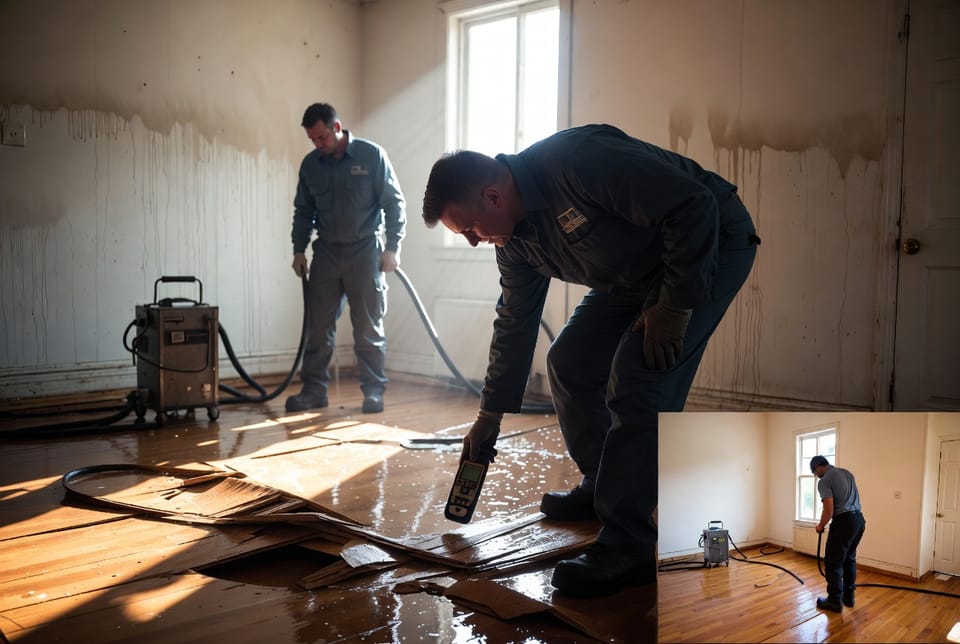
When floodwaters recede and you discover your once-beautiful hardwood floors have transformed into a wavy, uneven landscape, panic is natural. The sight of buckled hardwood floor damage raises an immediate question: Can this be dried and saved, or is full floor replacement the only option?
Save Your Buckled Hardwood Floors – Call Now!
At first glance, the damage looks catastrophic. Yet experienced restoration professionals know that many buckled hardwood floors after a flood are salvageable when addressed quickly and correctly. This comprehensive guide explains exactly why hardwood buckles, when professional drying offers a reliable path to recovery, and when replacement truly becomes necessary.
You don’t have to make this expensive decision alone. With the right assessment and timely intervention, you can often preserve your original flooring investment while restoring safety, beauty, and value to your home.
Why Hardwood Floors Buckle After Water Exposure
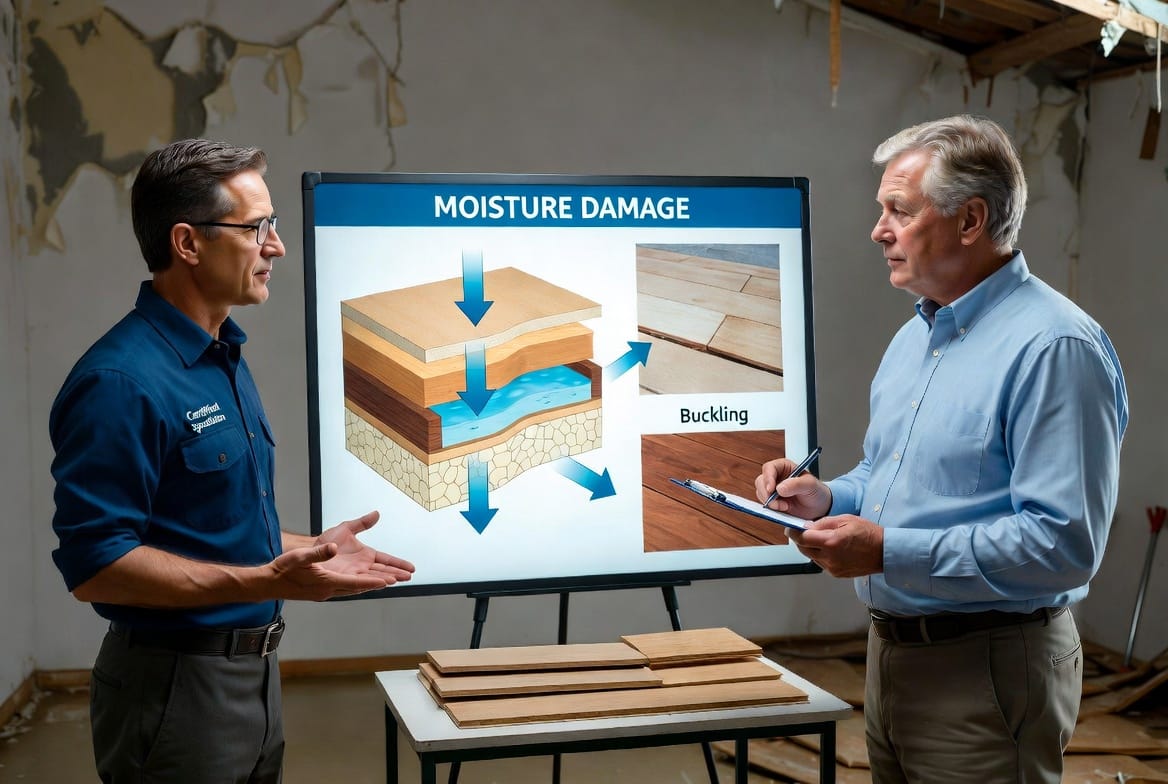
Hardwood is a natural material that responds dramatically to moisture. Each plank is hygroscopic – it absorbs water like a sponge. When floodwater or standing moisture penetrates the surface, the wood fibers swell.
This expansion happens fastest along the width of the planks rather than the length. As neighboring boards push against each other with tremendous force, they have nowhere to go but up. The result is the classic buckled hardwood floor you see after a flood: raised seams, tenting, and visible cupping where edges lift while centers stay lower.
Key factors that accelerate buckling include:
- Prolonged water contact – even 24–48 hours can cause significant expansion.
- Subfloor saturation – moisture trapped beneath the flooring continues to feed the problem.
- Poor installation gaps – insufficient expansion space during original installation leaves no room for movement.
- Species and finish type – oak, maple, and engineered hardwoods react differently than exotic species.
Understanding this process is reassuring because it shows that buckling is often a temporary state caused by excess moisture, not permanent destruction of the wood itself.
Recognizing When Your Floor Can Still Be Saved
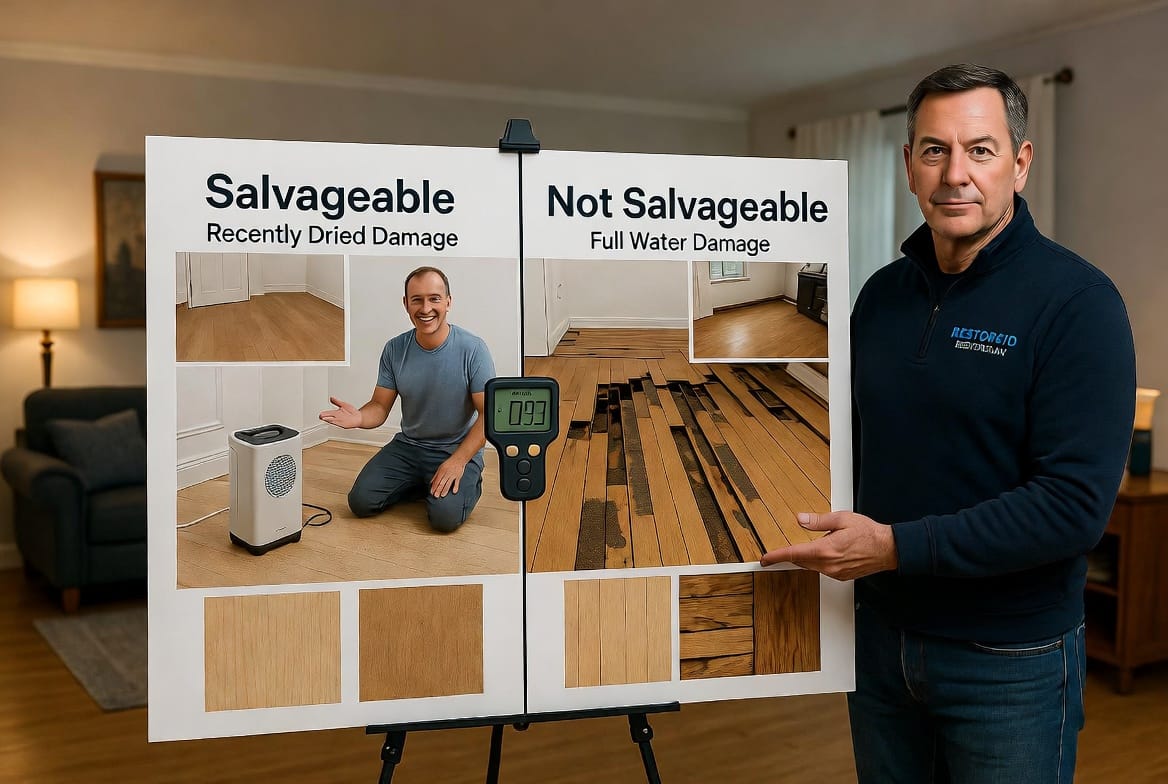
Not every buckled hardwood floor requires replacement. Recent flood incidents – especially those caught within the first 72 hours – respond remarkably well to professional drying.
Salvage is often possible when:
- The flooding was recent and the wood has not yet developed deep mold or rot.
- The finish remains intact without widespread delamination.
- Moisture meters confirm levels are dropping steadily under controlled drying.
- Cupping is moderate and begins to flatten once moisture is removed.
Professional teams use industrial drying systems that combine high-velocity air movers, commercial dehumidifiers, and sometimes controlled heat or specialized kiln-drying chambers brought directly to your home. These tools pull moisture out evenly from both the surface and the subfloor, allowing the wood to contract gradually back toward its original shape.
In many cases, floors that looked completely ruined return to near-original condition after 7–14 days of monitored drying followed by careful sanding and refinishing. Homeowners are often amazed at the transformation.
When Replacement Becomes the Necessary Choice
While drying saves many floors, certain conditions make floor replacement the smarter long-term decision.
Replacement is typically required when:
- Severe cupping exceeds ¼ inch and does not flatten after thorough drying – the wood fibers have been permanently deformed.
- Delamination of the finish has occurred across large areas, allowing water to penetrate between layers and causing irreversible bubbling or peeling.
- Deep structural damage or black mold has compromised the subfloor or the core of the planks.
- The hardwood was already old and worn before the flood, making restoration uneconomical.
Attempting to force a severely damaged floor to recover can lead to ongoing issues like squeaking, unevenness, and repeated failures. In these situations, prompt replacement with properly acclimated new hardwood ensures a stable, beautiful result that will last for decades.
The Professional Drying Process: Step by Step
When restoration experts arrive, they follow a proven, methodical approach that maximizes the chance of saving your buckled hardwood floor:
- Immediate assessment using pin and pinless moisture meters to map saturation levels.
- Water extraction and removal of any standing moisture or wet padding beneath.
- Strategic equipment placement – air movers create directed airflow while dehumidifiers pull moisture from the air.
- Subfloor drying through targeted access points to prevent hidden moisture pockets.
- Continuous monitoring with daily readings until moisture content returns to normal equilibrium levels (typically 6–9%).
- Final sanding and refinishing to restore the original beauty and protect the surface.
This controlled process prevents rapid drying that could cause checking or cracking while ensuring even contraction across every plank.
Cost and Time Comparison: Drying vs. Replacement
Many homeowners worry about expense. Professional drying and restoration typically costs 40–60% less than full replacement while preserving the original character and value of your home.
Drying route advantages:
- Faster return to normal living (often 1–3 weeks).
- Retains the patina and history of your existing floors.
- Lower material and labor costs.
- Environmentally responsible choice.
Replacement route realities:
- Requires complete removal and disposal of damaged material.
- Longer project timeline (4–8 weeks including acclimation).
- Higher upfront investment but guaranteed uniformity with new flooring.
The decision always comes down to the specific condition of your floors – which is why an on-site assessment by qualified technicians is essential.
Common Myths About Buckled Hardwood Floors
Myth 1: “If it’s buckled, it’s ruined forever.”
Reality: Many floors flatten beautifully once moisture is professionally removed.
Myth 2: “DIY fans and heaters will fix it.”
Reality: Uncontrolled drying often causes additional cracking and splitting.
Myth 3: “Insurance won’t cover drying.”
Reality: Most policies cover professional water damage restoration when documented properly.
Protecting Your Floors Long-Term After Restoration
Once your floors are restored, simple preventive steps help avoid future problems:
- Maintain indoor humidity between 35–55% year-round.
- Address leaks or spills immediately.
- Schedule annual professional inspections after any water event.
- Consider adding moisture barriers during any future renovations.
Don’t Rush to Replace Salvageable Floors
The difference between a costly mistake and a successful recovery often comes down to one phone call. If you’re facing buckled hardwood floor damage after a flood, pause before ordering replacement materials.
A qualified assessment can determine whether professional drying offers a faster, more affordable, and equally beautiful solution.
Our certified team arrives quickly, provides honest guidance, and uses proven methods to restore your hardwood whenever possible. Your floors – and your peace of mind – deserve expert care from the very first day.
Don’t Replace, Restore! Get Expert Drying Assessment