The Engineered Oak Flooring: Stability for Basements and Slabs
Homeowners and builders frequently face a frustrating reality: beautiful solid hardwood simply cannot be trusted in certain locations. Basements stay cooler and more humid. Slab-on-grade foundations sit directly on the earth and transmit moisture vapor. Radiant-heat systems cycle temperature rapidly. In all three environments, solid oak expands, contracts, cups, and gaps. Engineered oak flooring was developed specifically to overcome those limitations while still delivering the authentic look, feel, and value of real oak.
Get Stable Engineered Oak for Basements – Call Now!
This article explains the specialized construction of engineered oak, why that construction produces superior dimensional stability, the exact applications where it outperforms solid wood, and the proven installation methods that lock the floor in place for decades. The goal is straightforward: give you the technical confidence to specify the right product the first time.
What Makes Engineered Oak Different from Solid Oak
Solid oak is a single piece of lumber milled from a log. When humidity rises, the entire plank swells across its width. When humidity drops, it shrinks. Those movements are large enough to produce visible gaps, crowning, or even buckling.
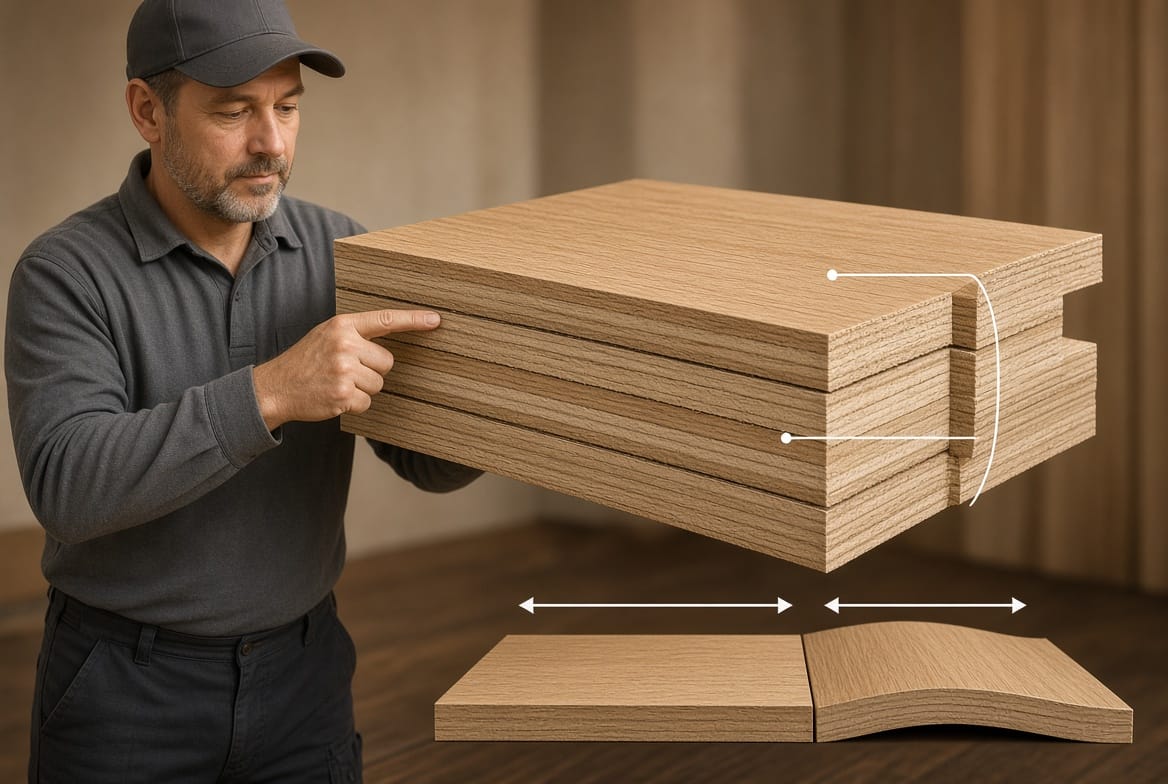
Engineered oak solves the movement problem at the cellular level. A thin, high-quality oak wear layer (typically 2–6 mm) is permanently bonded to a multi-ply plywood or high-density fiberboard core. The core layers are arranged with grain running in alternating directions. This cross-ply construction creates a balanced panel that resists expansion and contraction far more effectively than a solid board of the same thickness.
The result is a floor that looks and feels like solid oak on the surface yet behaves more like a stable composite underneath. Wear layers can be sanded and refinished multiple times, so the floor retains its long-term value. Because the core is already dried and laminated under heat and pressure, the finished plank arrives at the job site with far less residual moisture than green or even kiln-dried solid lumber.
Why Stability Matters on Concrete Slabs and in Basements
Concrete slabs and below-grade spaces present two simultaneous challenges: elevated moisture vapor emission and relatively constant cool temperatures. Solid hardwood absorbs that vapor, swells, and then shrinks when the HVAC system dries the air in winter. The cycle repeats every year.
Engineered oak interrupts the cycle. The plywood core acts as a buffer. Individual veneers cannot move independently; they restrain one another. Laboratory tests routinely show engineered oak changing dimension by less than half the amount of comparable solid oak under the same humidity swing. That reduced movement keeps joints tight, prevents cupping, and eliminates the need for oversized expansion gaps that look unsightly.
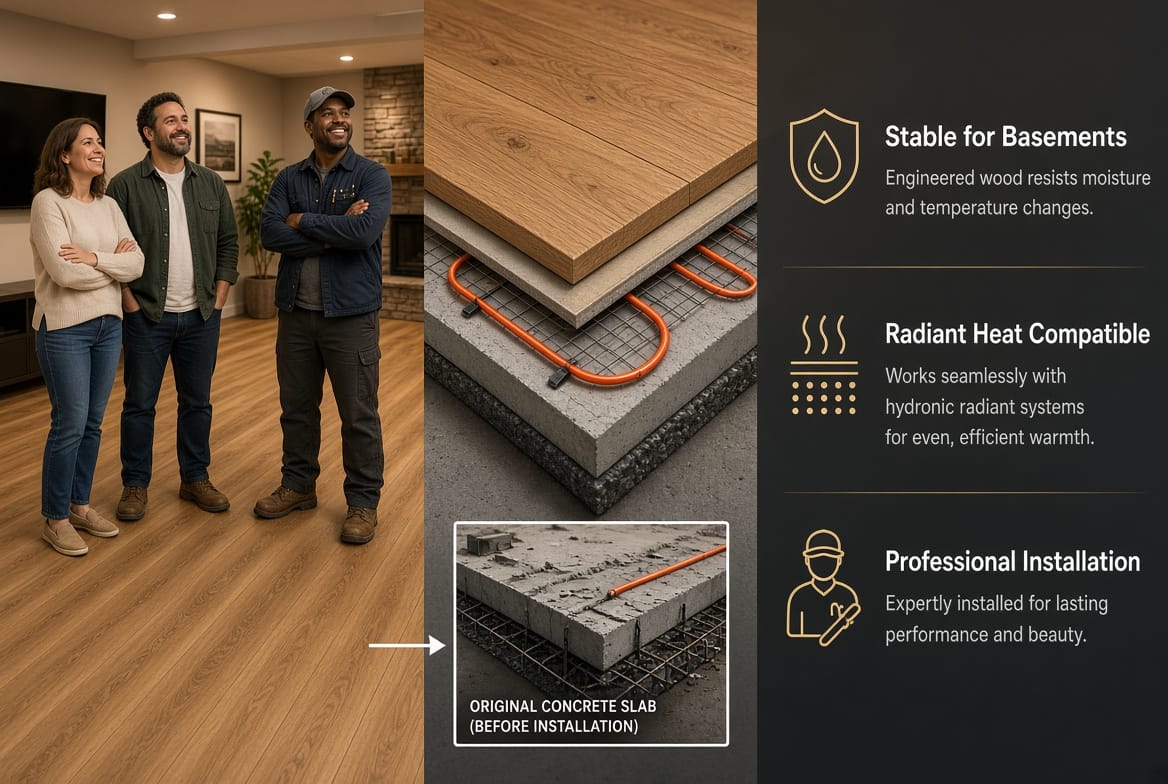
Radiant-heat systems add a third variable: rapid surface-temperature change. Solid oak can check or gap when the heat turns on and off. The thinner wear layer and balanced core of engineered oak conduct heat more evenly and experience less thermal shock. Manufacturers therefore rate most engineered oak products for use over hydronic or electric radiant systems when the proper underlayment and acclimation protocols are followed.
Ideal Applications: Basements, Slab-on-Grade, and Radiant Heat
Three environments consistently favor engineered oak.
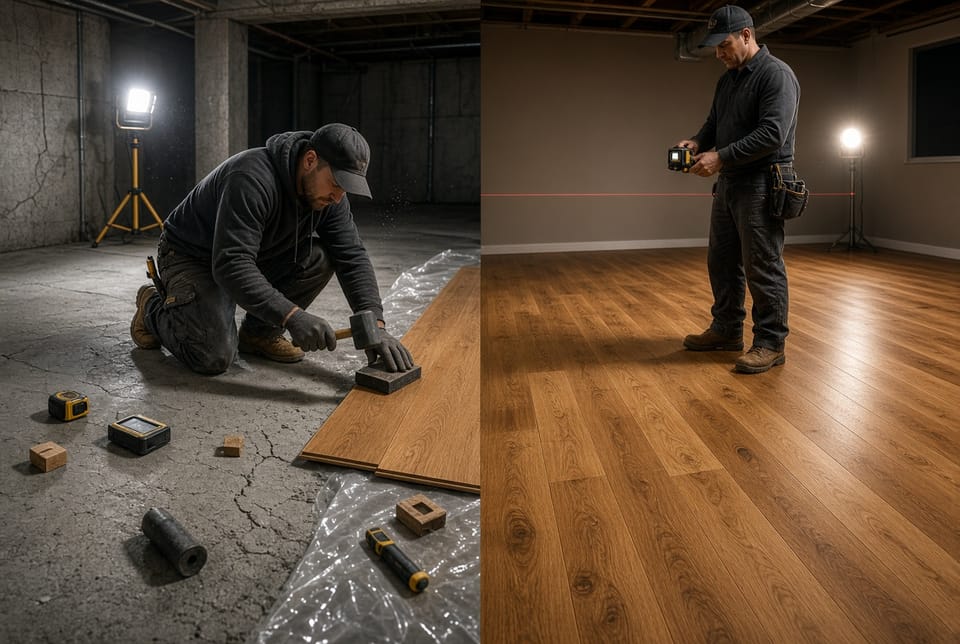
Basements. Even a well-waterproofed basement experiences higher relative humidity than the floors above. Engineered oak with a 3 mm or thicker wear layer, installed over a 6-mil polyethylene vapor barrier or a dedicated moisture-mitigation membrane, remains stable year-round. Floating or glue-down methods both work; the choice depends on the condition of the slab and the desired acoustic performance.
Slab-on-Grade Construction. Homes built on concrete slabs at grade level have no crawl space to buffer moisture. The slab itself can emit vapor for years after the pour. Engineered oak’s reduced movement makes it the default recommendation for these floors. A calcium-chloride or relative-humidity test of the slab should still be performed, but the flooring itself will tolerate residual moisture that would destroy solid hardwood.
Radiant-Heat Systems. Whether the tubing is embedded in the slab or attached to sleepers, the floor surface temperature can rise 15–20 °F within hours. Engineered oak rated for radiant heat (most products with a plywood core and wear layer of 3 mm or more) expands uniformly and returns to original dimension when the system cycles off. Always follow the manufacturer’s maximum surface-temperature guideline—usually 80–85 °F—and use an in-floor sensor.
In each case the same principle applies: the engineered construction absorbs the environmental stress so the visible oak surface stays flat and tight.
Proven Installation Methods
Three methods dominate engineered-oak installations over slabs and in basements.
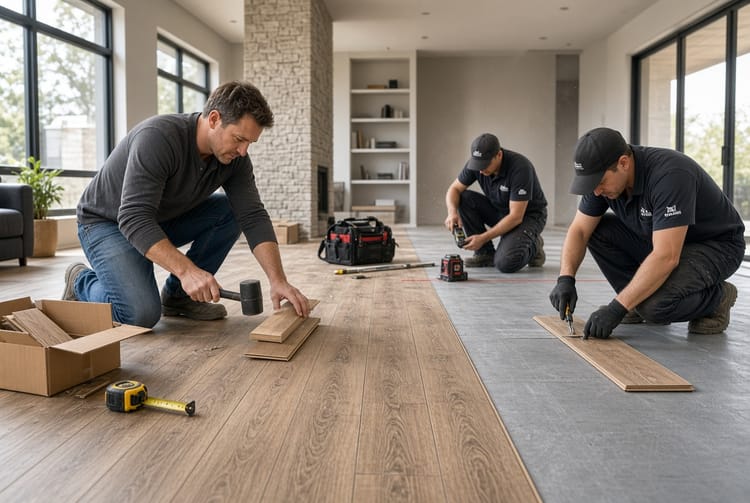
- Floating installation. Planks lock together with a click or tap-and-lock profile and rest on a foam or cork underlayment. The floor is not fastened to the slab, allowing the entire assembly to move as a unit. This method is fast, reversible, and excellent over slightly uneven slabs. A ¼-inch to ½-inch expansion gap at all vertical surfaces is mandatory.
- Glue-down installation. A moisture-cured urethane adhesive bonds the entire underside of each plank to the slab. The method produces a solid, quiet feel and is preferred when the slab is very flat and dry. Proper trowel size and open time are critical; excess adhesive squeeze-out must be cleaned immediately.
- Nail- or staple-down over plywood. When a ¾-inch plywood subfloor has already been installed over the slab (common in some radiant-heat assemblies), the engineered oak can be blind-nailed or stapled exactly like solid wood. The plywood adds another layer of stability and allows conventional fastening.
Regardless of method, acclimation remains essential. Boxes should be opened and the planks stacked in the installation area for 48–72 hours so they reach equilibrium with the job-site humidity. Skipping this step is the most common cause of later movement complaints.
Key Benefits That Matter on the Job Site
- Dimensional stability far superior to solid oak, reducing gaps and cupping in humid or temperature-variable spaces.
- Moisture tolerance when paired with the correct vapor barrier, making basements and slabs viable.
- Radiant-heat compatibility without the checking common to solid hardwood.
- Refinishability—most wear layers of 3 mm and thicker can be sanded two or three times.
- Installation flexibility—floating, glue-down, or nail-down options suit almost any slab condition.
- Authentic oak appearance with the same grain, color variation, and stain options as solid stock.
- Faster project timelines because the product arrives more dimensionally stable and requires less on-site acclimation than solid lumber.
These advantages translate directly into fewer callbacks, happier clients, and floors that still look tight ten years later.
Practical Considerations and Risk Mitigation
Even the most stable engineered oak is not immune to extreme conditions. A slab that tests above 5 pounds of moisture vapor emission or 80 percent relative humidity needs a topical moisture-mitigation system before any wood floor is installed. Failure to address the slab itself remains the leading cause of failure, not the flooring product.
Choose a wear-layer thickness appropriate to expected traffic. A 2 mm veneer is adequate for light residential use; 4–6 mm is preferable in high-traffic family rooms or when future refinishing is planned. Always verify the manufacturer’s warranty language for below-grade and radiant-heat applications; most reputable brands now cover these uses when their written guidelines are followed.
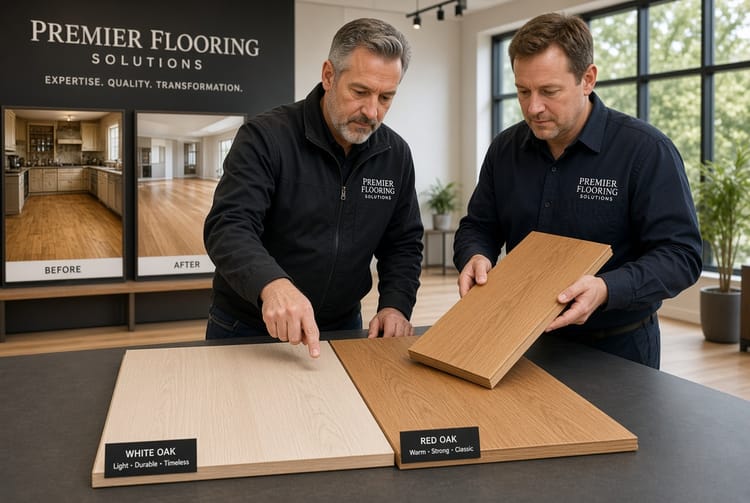
Color and grade selection follow the same rules as solid oak. Character-grade planks hide minor seasonal movement better than clear grades. Prefinished UV-cured coatings offer excellent durability and faster occupancy than site-finished floors.
Choosing the Right Product for Your Project
Specify engineered oak whenever the installation sits on or below grade, over a slab, or above a radiant system. Request the manufacturer’s technical data sheet and confirm the core construction (plywood is generally more stable than HDF in high-moisture environments). Ask for third-party test results on dimensional change and for a written radiant-heat rating.
A qualified flooring contractor will perform moisture tests, recommend the correct underlayment or adhesive, and follow the acclimation protocol. The combination of a well-engineered product and professional installation produces a floor that remains flat, quiet, and beautiful for decades.
Choose stable engineered oak for your project. The construction that once seemed like a compromise is now the technically superior solution for the most demanding residential environments. A short conversation can confirm whether engineered oak is the right long-term choice for your basement, slab, or radiant-heat floor.
Call Now for Professional Engineered Oak Flooring Options