The Electric Baseboard Heater Thermostat: Line-Voltage vs. Low-Voltage Options
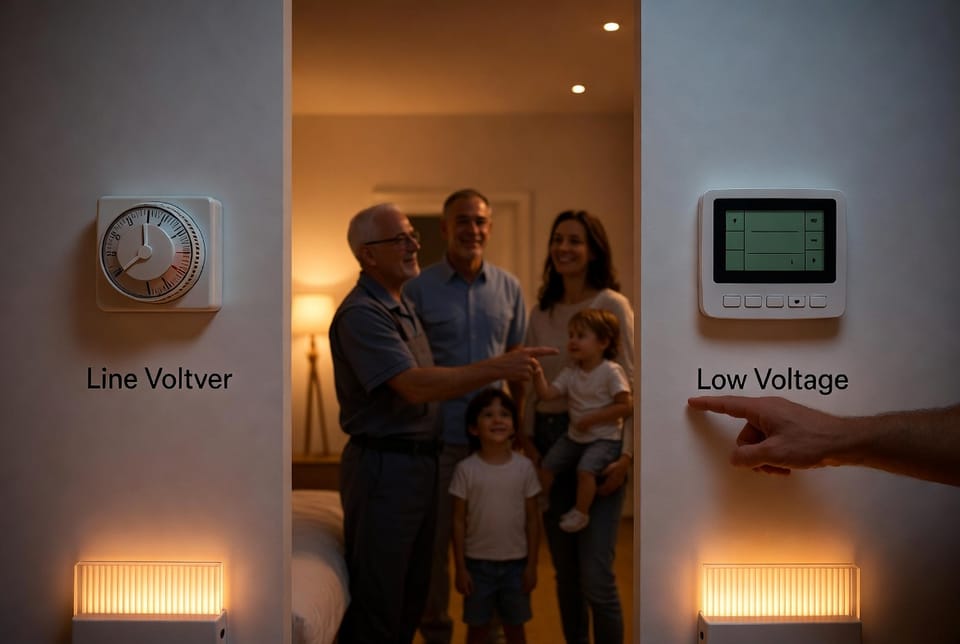
Electric baseboard heaters remain a popular choice for supplemental or primary heating in many homes, offering straightforward installation and zone control. At the heart of their performance lies the thermostat — the device that regulates when and how these heaters operate. Selecting the correct type can dramatically impact energy efficiency, comfort, safety, and long-term costs.
Get the Right Thermostat Installed – Call Now!
This comprehensive guide explores the key differences between line-voltage and low-voltage thermostats for electric baseboard heaters. Whether you're upgrading an existing system or planning a new installation, understanding these options empowers you to make informed decisions that deliver reliable warmth without unnecessary expenses.
Why Your Thermostat Choice Matters
Electric baseboard heaters convert electricity directly into heat, making them nearly 100% efficient at the point of use. However, the thermostat determines how that heat is delivered. Poor control leads to temperature swings, higher electricity bills, uneven heating, and potential safety risks.
Key benefits of choosing the right thermostat include:
- Consistent room comfort without hot or cold spots.
- Significant energy savings through precise temperature management.
- Enhanced safety by preventing overheating or electrical overload.
- Improved system longevity with reduced wear on heating elements.
- Smart home integration potential for modern programmable models.
Homeowners often overlook these nuances until discomfort or high bills prompt action. Let's break down the two primary options.
Understanding Line-Voltage Thermostats
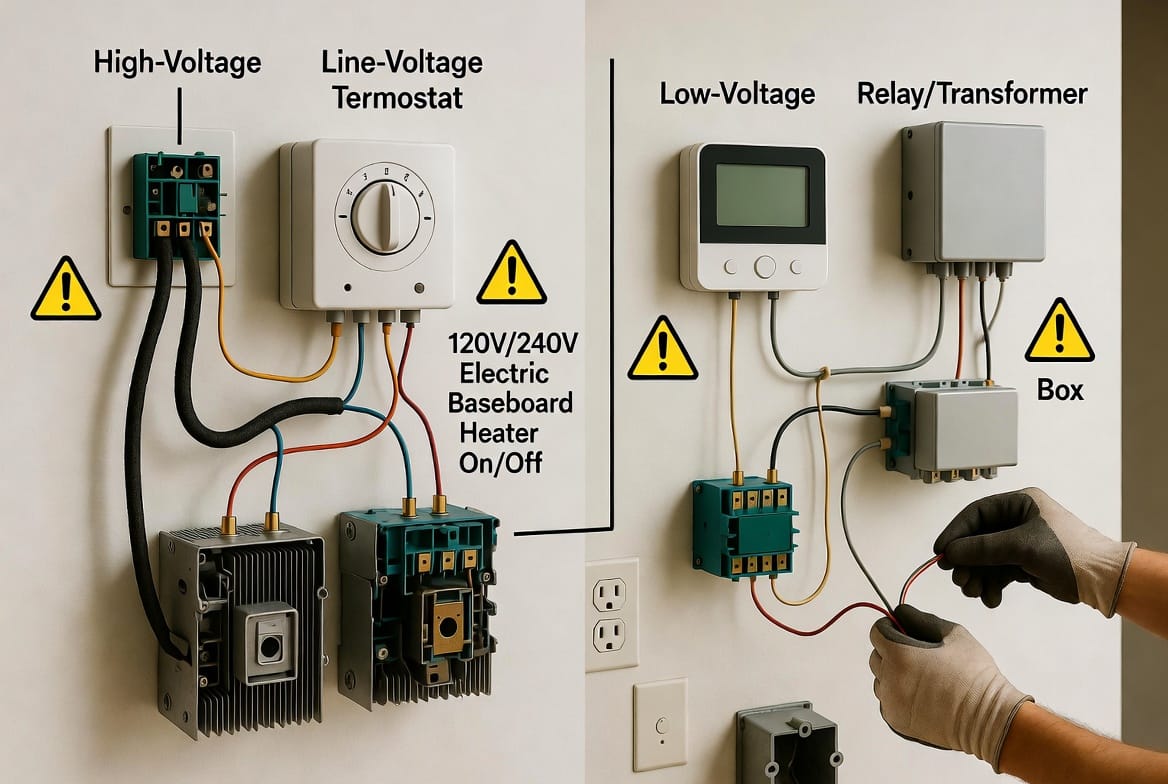
Line-voltage thermostats are designed to directly handle the full electrical load of your baseboard heaters, typically operating at 120V or 240V. They act as a simple switch, turning the power to the heaters on or off based on room temperature.
These thermostats connect directly to the high-voltage wiring, using thicker wires to carry the current safely. They are commonly mechanical or basic digital models.
Advantages of Line-Voltage Thermostats
- Simpler installation: No additional components like relays are needed in many setups.
- Lower upfront cost: Generally more affordable than low-voltage alternatives with supporting hardware.
- Direct control: Immediate response for single-room or zoned heating.
- Durability in basic applications: Reliable for straightforward electric resistance heating.
Limitations of Line-Voltage Thermostats
- Less precision: The high current passing through the unit can cause self-heating, leading the thermostat to sense a warmer temperature than the actual room, causing premature shutoff and cooler rooms overall.
- Limited programmability: Many models lack advanced scheduling, making it harder to optimize for occupancy patterns.
- Higher long-term energy use: Without fine-tuned control, heaters may cycle inefficiently.
- Safety considerations: Proper wiring and load ratings are critical to avoid fire hazards or tripped breakers.
Line-voltage options excel in smaller homes, individual room retrofits, or budget-conscious projects where basic on/off control suffices.
Exploring Low-Voltage Thermostats
Low-voltage thermostats (typically 24V) do not directly switch the high-voltage power to your heaters. Instead, they send a low-power signal to a relay or control module that handles the actual 120V/240V load.
This separation allows for more sophisticated electronics in the thermostat itself.
Advantages of Low-Voltage Thermostats
- Superior precision and efficiency: No self-heating issues, leading to more accurate temperature readings and better comfort.
- Advanced programmability: Easy scheduling, setbacks for night or away times, and smart features that can reduce energy consumption significantly.
- Greater flexibility: One thermostat can control multiple heaters via relays, ideal for larger zones.
- Modern compatibility: Better support for Wi-Fi, apps, and voice control through compatible relays.
- Longer lifespan for components: Reduced electrical stress on the thermostat.
Considerations for Low-Voltage Systems
- Additional components: Requires a transformer and relay(s), increasing complexity and initial cost.
- Professional installation recommended: Proper wiring between the thermostat, relay, and heaters is essential for safety.
- Higher upfront investment: Though savings over time often offset this through efficiency gains.
Low-voltage setups shine in homes seeking energy optimization, whole-house zoning, or integration with smart home ecosystems.
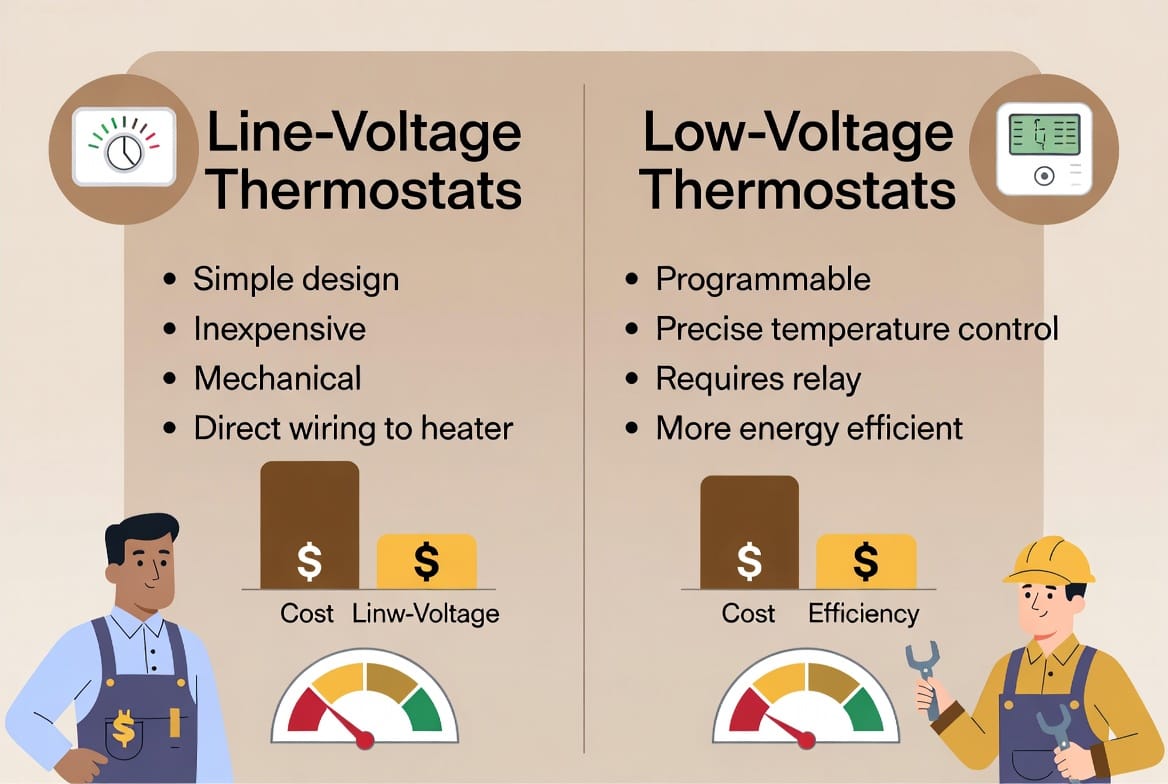
Direct Comparison: Line-Voltage vs. Low-Voltage
| Feature | Line-Voltage Thermostat | Low-Voltage Thermostat (with Relay) |
|---|---|---|
| Voltage Handling | Directly switches 120V/240V | Uses low-voltage signal to control relay |
| Precision | Moderate (potential self-heating) | High (accurate room sensing) |
| Cost | Lower initial | Higher initial (plus relay/transformer) |
| Programmability | Limited | Excellent (scheduling, smart features) |
| Installation | Simpler, fewer components | More involved, professional help advised |
| Best For | Single rooms, basic needs | Whole-home efficiency, zoned control |
| Energy Efficiency | Good with careful use | Superior with programming |
This table highlights why many homeowners transition to low-voltage systems for long-term benefits, despite the added setup.
Applications: Which Thermostat Should You Choose?
Your choice depends on several factors:
- Room size and layout: For individual baseboard heaters in small spaces, line-voltage often suffices.
- Energy goals: If minimizing bills is priority, opt for low-voltage with programmable capabilities.
- Existing wiring: Check your current setup — thick wires suggest line-voltage compatibility.
- Smart home ambitions: Low-voltage pairs better with modern automation.
- Budget: Line-voltage for immediate affordability; low-voltage for future savings.
Reassuring note: Both types are safe when properly installed by qualified professionals. Always prioritize code compliance and consult an electrician for upgrades.
Installation Best Practices and Safety Tips
Proper installation ensures optimal performance and peace of mind:
- Turn off power at the breaker before any work.
- Match voltage ratings exactly to your heaters (120V or 240V).
- Use appropriate wire gauges for the load.
- Position thermostats away from direct heat sources or drafts for accurate readings.
- Test thoroughly after installation.
- Schedule professional service for complex low-voltage relays or full-system overhauls.
Regular maintenance, such as dusting heaters and checking connections, extends system life.
Energy Savings Strategies with Your Chosen Thermostat
Maximize efficiency regardless of type:
- Set temperatures around 68°F when home and lower when away or sleeping.
- Use programmable features to automate setbacks.
- Combine with proper insulation and weather sealing.
- Zone heating only occupied areas.
Studies and practical experience show programmable thermostats can yield noticeable reductions in heating costs.
Common Myths and Troubleshooting
Myth: All thermostats are the same.
Reality: Voltage type directly affects performance.
Myth: Line-voltage can't be efficient.
Reality: With careful use and quality models, they perform well in many scenarios.
If your heaters short-cycle, run constantly, or produce uneven heat, the thermostat may need replacement or recalibration.
Upgrading Your Electric Baseboard Heating System
Many homeowners enhance comfort by adding smart line-voltage options or full low-voltage conversions. Modern relays make retrofits smoother than ever.
Investing in the right thermostat transforms your baseboard heaters from basic appliances into an efficient, responsive heating solution tailored to your lifestyle.
Conclusion: Empowering Your Heating Decisions
Selecting between line-voltage and low-voltage thermostats for your electric baseboard heaters is a pivotal step toward better comfort, lower costs, and reliable performance. Line-voltage offers simplicity and affordability for straightforward needs, while low-voltage delivers precision, programmability, and efficiency for those seeking advanced control.
Evaluate your home's requirements, consult professionals when needed, and choose confidently. The right thermostat ensures your family stays warm and your energy use stays smart.
Choose the right thermostat for your heaters today. For expert installation and personalized advice on electric baseboard heating solutions. We're here to help you achieve optimal comfort and efficiency.
Expert Baseboard Heater Thermostat Installation – Call Today