The Electric Baseboard Heater Thermostat: Line-Voltage vs. Low-Voltage Options
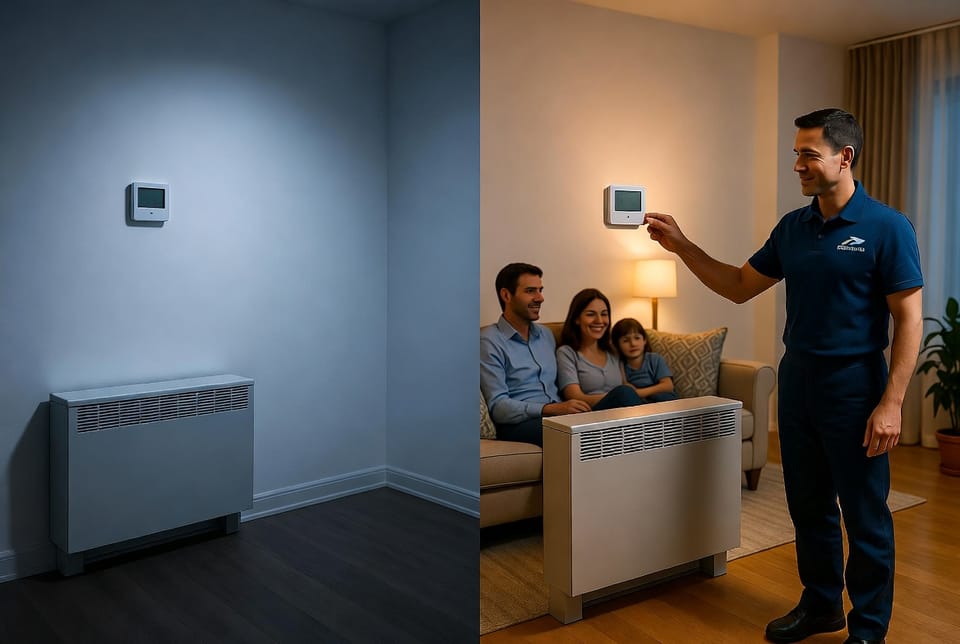
Choosing the right thermostat for your electric baseboard heaters can dramatically improve comfort, energy efficiency, and safety in your home. Whether you're upgrading an older system or installing new baseboard heating, understanding line-voltage vs. low-voltage thermostats is essential.
Get Expert Thermostat Installation – Call Now for Professional Help!
This comprehensive guide explains the key differences, benefits, and ideal applications for each type. With clear insights and practical advice, you'll feel confident making the best decision for your heating needs.
Why Proper Thermostat Control Matters for Electric Baseboard Heaters
Electric baseboard heaters provide reliable, zone-specific heating without ducts. However, their performance depends heavily on the thermostat controlling them. A mismatched or outdated thermostat can lead to uneven temperatures, higher energy bills, or even safety concerns.
Line-voltage and low-voltage options represent two distinct approaches to heating control. Selecting the correct one ensures precise temperature management, reduces wear on your heaters, and enhances overall system reliability. Professional installation further guarantees optimal results.
Understanding Line-Voltage Thermostats
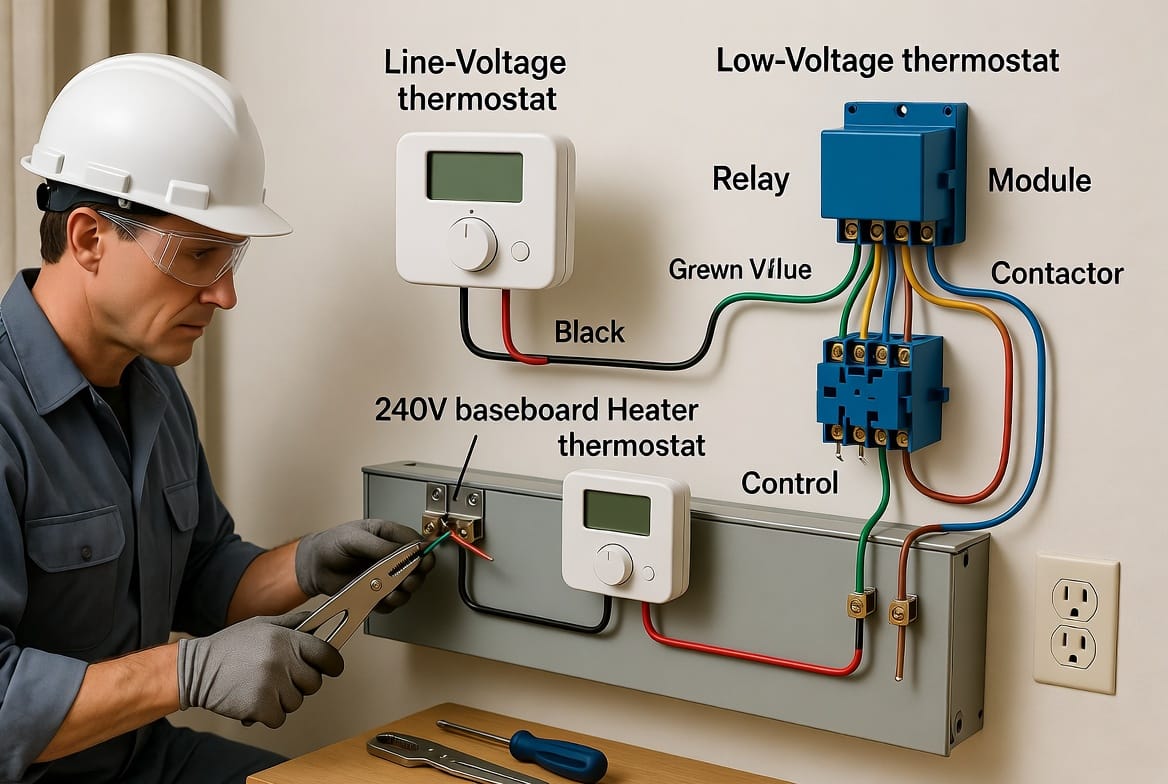
Line-voltage thermostats connect directly to the 120V or 240V power supply that feeds your electric baseboard heaters. They act as a simple on/off switch for the high-voltage current.
Key Characteristics of Line-Voltage Thermostats:
- Direct control: Handle full line voltage without additional components.
- Simplicity: Often mechanical with a basic dial or basic digital interface.
- Cost-effective: Generally less expensive upfront.
- Common applications: Ideal for smaller rooms, single heater zones, or budget-conscious upgrades.
These thermostats are popular for their straightforward installation. They mount directly on the wall near the heater they control and require no separate transformer or relay in most cases.
Advantages include reliability in basic setups and quick response to temperature changes in small spaces. However, they tend to be less precise, with typical accuracy around ±2-4°F, and offer limited programming options.
Exploring Low-Voltage Thermostats
Low-voltage thermostats (typically 24V) operate on a lower control voltage and require a relay or transformer to switch the high-voltage load of the baseboard heaters. This separation allows for advanced features and better performance.
Key Characteristics of Low-Voltage Thermostats:
- Indirect control: Use a relay to safely manage 120V/240V loads.
- Advanced features: Programmable schedules, smart connectivity, Wi-Fi integration, and precise temperature sensing.
- Efficiency focus: Better suited for whole-home or multi-zone systems.
- Precision: Often accurate to ±1°F or better.
These models excel in modern homes where energy savings and automation matter. You can program different temperatures for different times of day, reducing heating costs when rooms are unoccupied.
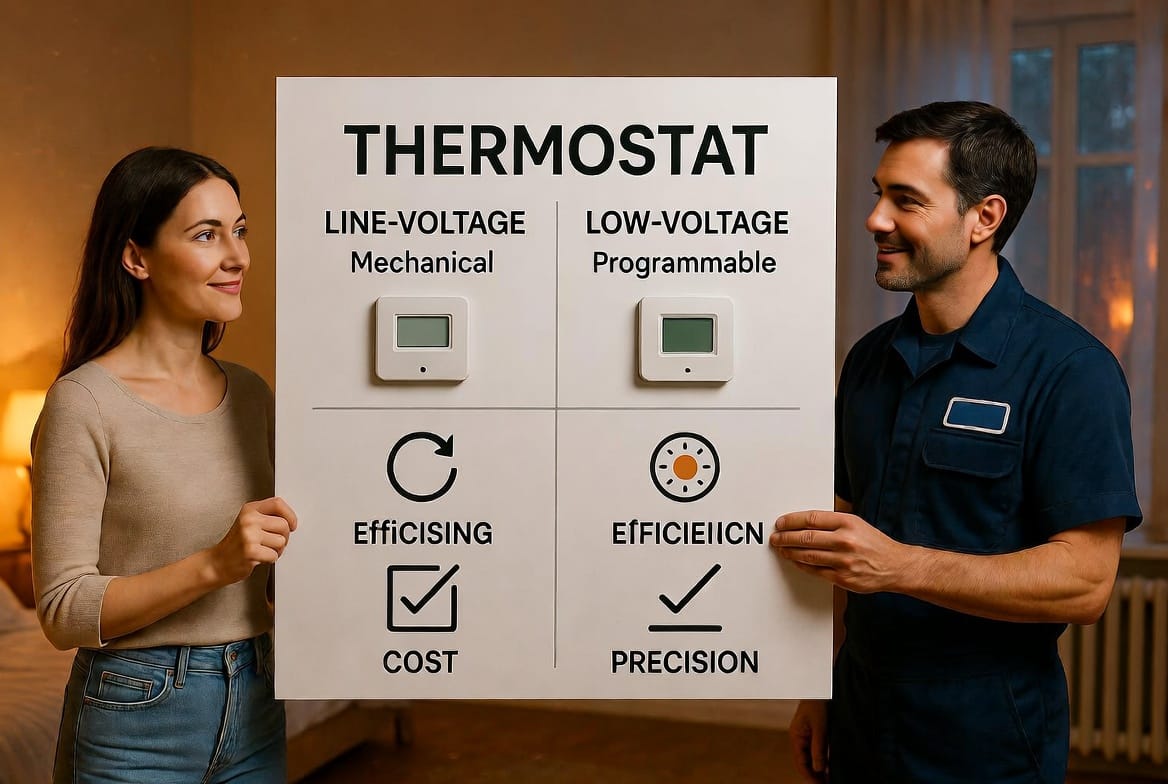
Head-to-Head Comparison: Line-Voltage vs. Low-Voltage
Understanding the practical differences helps you choose wisely:
- Installation Complexity: Line-voltage is simpler and faster for DIY-friendly projects. Low-voltage requires additional wiring for the relay but offers long-term flexibility.
- Precision and Control: Line-voltage provides basic temperature regulation. Low-voltage delivers superior accuracy and programmable comfort.
- Cost: Line-voltage wins on initial price. Low-voltage may cost more upfront but pays back through efficiency gains.
- Compatibility: Line-voltage works best with individual heaters. Low-voltage shines in integrated systems or when pairing with smart home technology.
- Safety: Both are safe when properly installed, but low-voltage setups reduce high-voltage exposure at the thermostat location.
Which Thermostat Should You Choose?
Choose line-voltage thermostats when:
- You have a single room or small zone to heat.
- Budget is a primary concern.
- You prefer simple, reliable mechanical control.
- Your existing heaters use direct high-voltage wiring.
Opt for low-voltage thermostats when:
- You want programmable schedules and smart features.
- Energy efficiency and precise control are priorities.
- Managing multiple heating zones across your home.
- Planning future smart home integration.
For most homeowners seeking long-term comfort and savings, low-voltage options with relays provide superior performance. However, professional assessment ensures the best match for your specific electrical setup and heating layout.
Installation Best Practices and Safety Considerations
Proper installation is critical for both types. Always turn off power at the breaker before working with high-voltage systems.
Key safety steps include:
- Verifying wire compatibility and load ratings.
- Using appropriately rated relays for low-voltage setups.
- Ensuring secure connections to prevent arcing or overheating.
- Testing the system thoroughly after installation.
Bold warning: Incorrect wiring of line-voltage or low-voltage thermostats can create fire hazards or damage equipment. Hiring a licensed electrician eliminates risks and ensures code compliance.
Maximizing Efficiency with Your Chosen Thermostat
Pair your thermostat with good practices:
- Seal drafts around windows and doors.
- Use ceiling fans to circulate warm air.
- Maintain your baseboard heaters by keeping them clean and unobstructed.
- Schedule regular professional maintenance for peak performance.
These steps, combined with the right thermostat, can lower heating costs while maintaining consistent comfort throughout colder months.
Common Questions About Baseboard Heater Thermostats
Can I upgrade from line-voltage to low-voltage?
Yes, with proper rewiring and relay installation. A professional can handle the transition smoothly.
Do low-voltage thermostats always need a relay?
Yes, the relay safely switches the higher voltage required by baseboard heaters.
How much can I save with a programmable thermostat?
Many homeowners report 10-20% savings on heating costs through intelligent scheduling.
Are smart low-voltage options worth it?
For most modern homes, yes. Remote control via apps adds convenience and optimization.
Making the Smart Choice for Your Home
Selecting between line-voltage and low-voltage thermostats depends on your heating goals, budget, and home layout. Both options provide effective control when properly matched to your electric baseboard heaters, but understanding their strengths ensures years of reliable, efficient warmth.
Investing in the right thermostat enhances comfort and protects your heating investment. Don't leave temperature control to chance.
Choose the right thermostat for your heaters today. Our experienced team specializes in professional installation of line-voltage and low-voltage systems for electric baseboard heaters.
Enjoy peace of mind with properly controlled, efficient heating throughout your home.
Professional Baseboard Heater Thermostat Upgrade – Call Today!