The Dryer Start Switch: Why the Machine Won't Run
When your dryer refuses to start, the silence can feel frustrating. You load the wet clothes, close the door, press the button, and nothing happens. Many homeowners immediately worry about major motor failure or costly control board issues. In reality, one of the most common and straightforward causes is a failed dryer start switch. This small component plays a critical role in getting the entire machine moving, and understanding it can save time, money, and unnecessary stress.
Fix Your Dryer Start Switch Today – Call Now!
A properly functioning dryer start switch is the quiet hero that bridges your command to the motor. When it works, the dryer responds instantly. When it fails, the machine stays completely still. The good news is that diagnosing and addressing a bad start switch is often simpler than most people expect. This guide walks you through exactly what the switch does, the clear signs that it has failed, and how a simple switch swap can restore your dryer to full operation.
Understanding the Role of the Dryer Start Switch
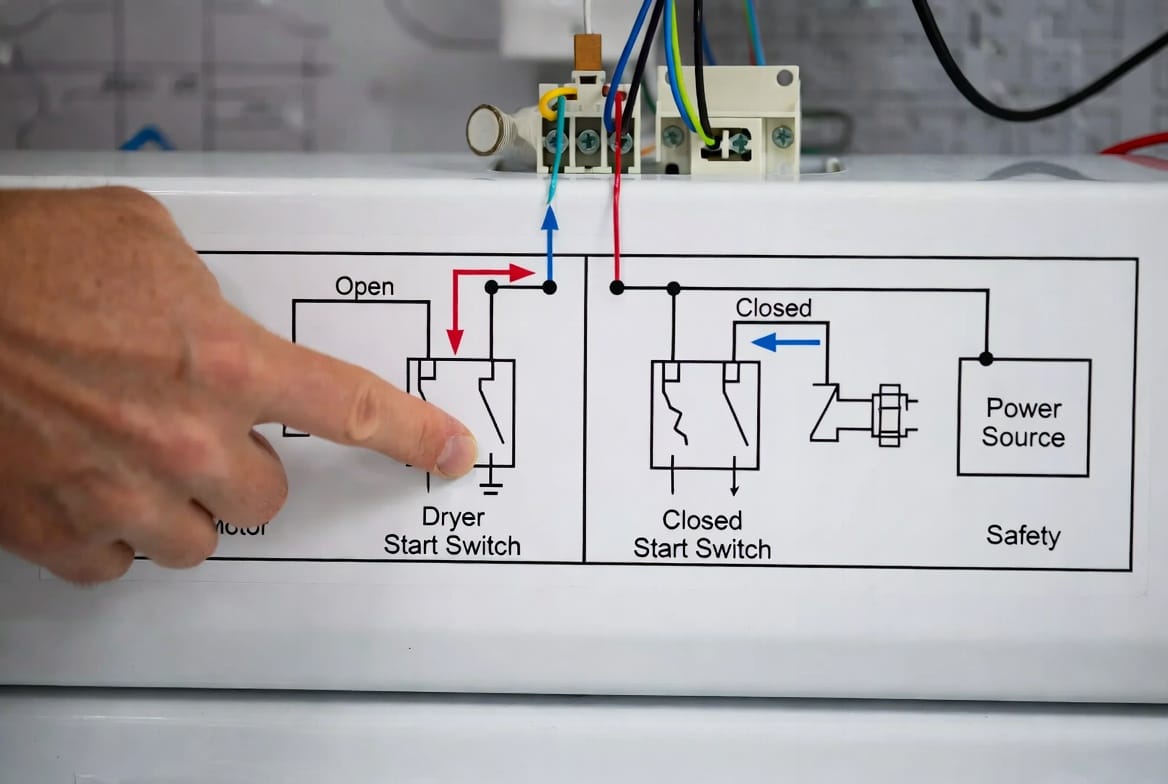
The dryer start switch is a momentary contact switch usually located on the control panel. Its primary job is straightforward yet essential: it sends power to the motor the moment you press the start button. Without that initial surge of electricity reaching the motor, the drum never begins to turn and the heating system never engages.
Think of the start switch as the ignition key for your dryer. The rest of the electrical system may be in perfect condition, the door switch may be closed correctly, and the thermal fuses may be intact. Yet if the start switch cannot complete the circuit, the motor receives no power. The result is a machine that appears completely dead.
Inside most modern dryers the start switch is designed as a spring-loaded push-button or rocker-style component. When you press it, internal contacts close for a fraction of a second, allowing voltage to flow to the motor start winding. Once the motor reaches a certain speed, centrifugal switches or electronic controls take over and keep the motor running. The start switch itself only needs to work for that brief initial moment. Because of this limited duty cycle, the switch can last for many years. However, repeated use, dust, moisture, and normal wear eventually cause the contacts to degrade.
A healthy start switch delivers a clean, reliable connection every single time. A failing one may still look perfectly normal from the outside while its internal contacts have burned, pitted, or lost tension. That is why visual inspection alone rarely reveals the problem. Testing with a multimeter or simply replacing the switch often becomes the most efficient path forward.
Common Signs That Point to a Failed Start Switch
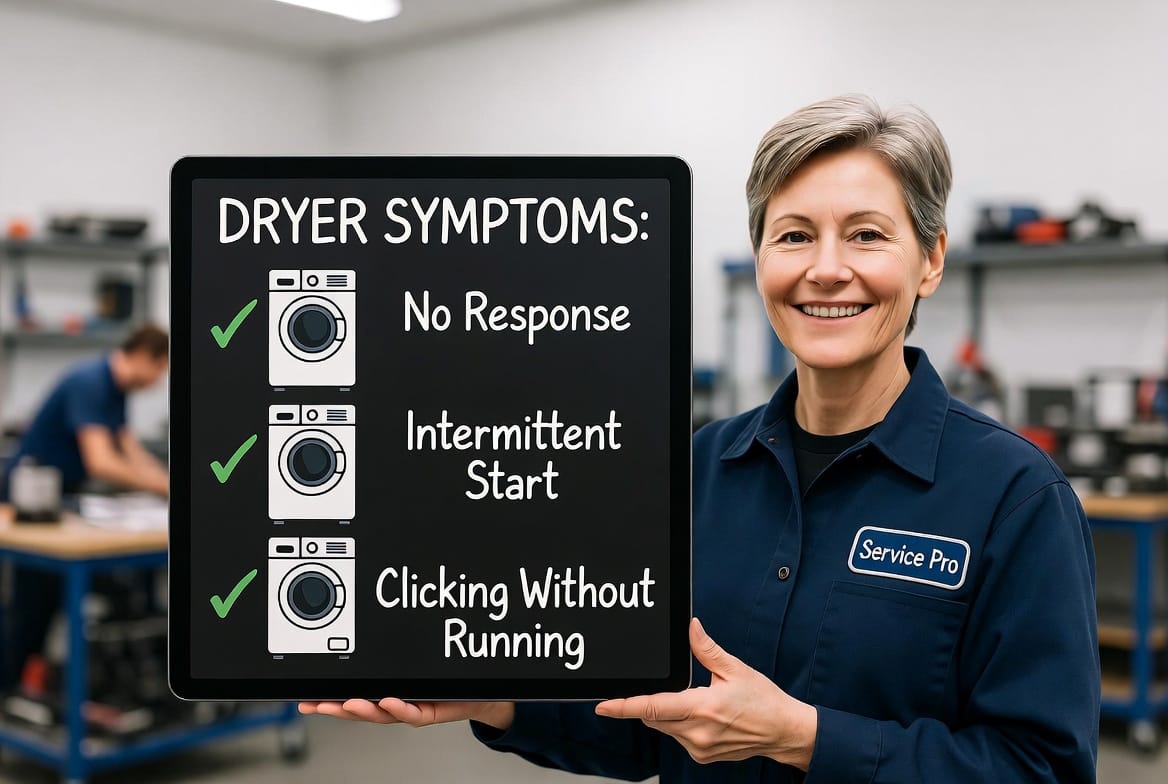
Recognizing the symptoms early prevents you from replacing more expensive parts unnecessarily. The most frequent indicators of a bad dryer start switch fall into three clear categories.
- No response at all when you press the start button. The dryer remains completely silent. No hum, no click, no drum movement. Lights on the control panel may still illuminate, confirming that power is reaching the machine, yet nothing happens when the start command is given.
- Intermittent start behavior. Sometimes the dryer begins running normally. Other times it ignores the button entirely. You may notice that pressing harder, holding the button longer, or trying multiple times eventually produces a response. This inconsistency is a classic sign that the internal contacts are only making partial or temporary connection.
- Clicking without running. You hear a distinct click when the button is pressed, yet the motor never engages. The click indicates that the switch is attempting to close the circuit, but the contacts are no longer capable of carrying the required current to the motor.
These symptoms can occasionally overlap with other issues such as a failed door switch or a tripped thermal fuse. However, when the dryer shows power to the panel and the door is securely closed, the start switch rises to the top of the diagnostic list. Homeowners who experience any combination of the above signs should treat the start switch as the primary suspect.
Why the Start Switch Fails Over Time
Several everyday factors contribute to the eventual failure of a dryer start switch. Heat is a constant companion inside the dryer cabinet. Even though the switch sits on the cooler control panel, residual warmth and vibration travel through the wiring and mounting points. Over thousands of cycles the metal contacts inside the switch oxidize and lose their ability to conduct electricity cleanly.
Dust and lint also play a quiet role. Fine particles can work their way behind the panel and settle on the switch mechanism. When combined with occasional humidity from nearby laundry, these particles create a film that interferes with contact integrity. In households that run the dryer multiple times daily, the mechanical spring inside the switch eventually weakens. The button may still feel normal to the touch, yet the internal pressure required to close the contacts has diminished.
Electrical surges, although less common, can also damage the switch. A sudden spike in household voltage may arc across the contacts and leave microscopic pits that grow worse with each subsequent use. The cumulative effect of these stresses explains why a switch that worked flawlessly for years can suddenly stop performing.
Understanding these causes helps set realistic expectations. A failed start switch is not a reflection of poor dryer quality. It is simply the natural result of a high-use component reaching the end of its service life.
Diagnosing the Problem with Confidence
Before ordering a replacement part, a few simple checks can confirm that the start switch is the true culprit. Always begin with basic safety. Unplug the dryer from the wall outlet or switch off the dedicated circuit breaker. Never work on a live appliance.
Open the control panel according to your model’s access method. Most dryers allow the panel to tilt forward or lift upward after removing a few screws. Once the panel is open, locate the start switch. It is usually the component directly behind the start button and will have two or more wires attached.
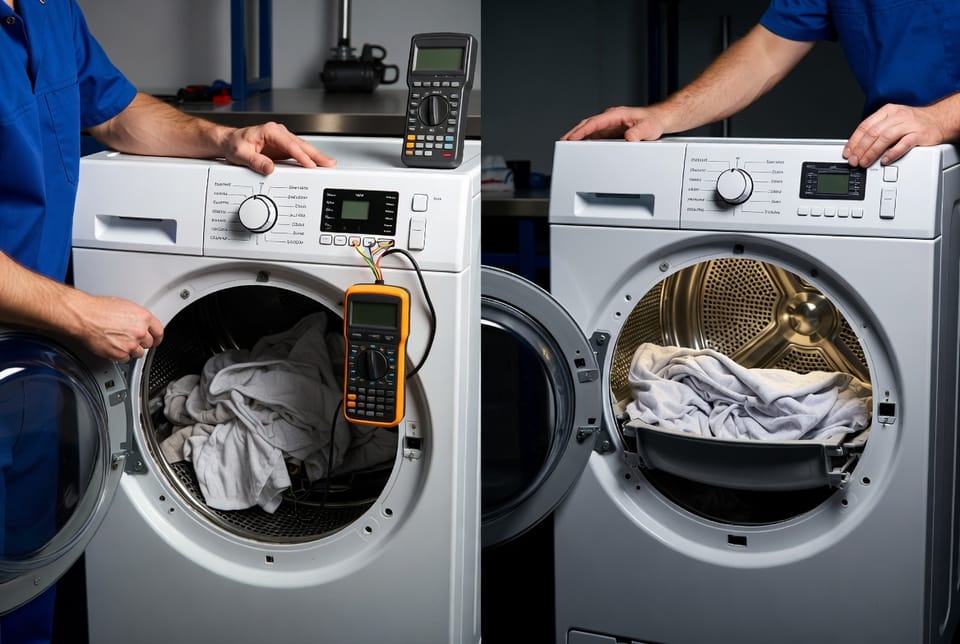
A multimeter set to continuity mode provides the definitive test. Disconnect the wires from the switch terminals. Press the button while touching the meter probes to the terminals. A healthy switch will show continuity (near-zero resistance) only while the button is depressed. If the meter shows no continuity at all, or if the reading fluctuates, the switch has failed.
In the absence of a multimeter, a practical observation test can still be useful. If the dryer exhibits the classic symptoms of no response, intermittent start, or clicking without running, and all other obvious causes have been ruled out, replacement of the start switch is a low-risk next step. The part itself is inexpensive, and the labor involved is modest for anyone comfortable with basic household tools.
The Simple Process of Replacing a Dryer Start Switch
One of the most reassuring aspects of this repair is how straightforward the actual switch swap can be. Most start switches are held in place by plastic clips or a single retaining nut. After the control panel is open and the wires are labeled or photographed for reference, the old switch slides or twists free. The new switch seats into the same mounting location, the wires reconnect to the matching terminals, and the panel closes again.
The entire process typically takes less than thirty minutes once the dryer is safely powered down. No specialized tools beyond a screwdriver, nut driver, and possibly needle-nose pliers are required. Because the start switch is a mechanical rather than electronic component, there is no programming or calibration needed after installation. Simply restore power and test the dryer with a small load.
Homeowners who prefer not to perform the work themselves can still benefit from understanding the simplicity of the repair. When you call a professional, you will know that the technician is performing a focused, efficient job rather than a broad and expensive diagnostic hunt. Clear communication about the symptoms—no response, intermittent start, or clicking without running—helps the service team arrive prepared with the correct replacement part.
Additional Tips for Long-Term Reliability
After the new start switch is installed, a few habits can extend the life of the replacement and protect other components. Keep the area around the dryer free of excessive lint buildup. Vacuum the control panel vents periodically so dust does not migrate behind the console. Avoid pressing the start button with excessive force; a firm but normal press is all that is required.
If your household runs multiple consecutive loads, allow the dryer a short cool-down period between cycles when practical. This reduces cumulative heat stress on the control components. Finally, listen for any change in the way the start button feels or sounds. Early detection of stiffness or unusual clicking can prompt proactive replacement before a complete failure leaves a load of wet laundry stranded.
When Professional Service Makes Sense
While many people successfully replace a dryer start switch on their own, certain situations call for expert assistance. If the dryer is still under warranty, opening the control panel may void coverage. Older models with complex wiring harnesses or electronic control boards can present unexpected challenges. Homeowners who feel uncertain about electrical safety should never hesitate to call a trained technician.
A professional service visit also provides the opportunity to inspect related components at the same time. The technician can verify the condition of the door switch, thermal fuse, and motor connections while the panel is already open. This comprehensive check offers peace of mind that the root cause has been fully addressed.
Restoring Confidence in Everyday Laundry
A dryer that will not start disrupts more than just the laundry schedule. It creates uncertainty about whether a larger, more expensive repair is looming. By focusing on the dryer start switch as the first point of investigation, you regain control of the situation. The component’s job is simple: send power to the motor. When that job fails, the symptoms are equally clear: complete lack of response, unpredictable intermittent starts, or an audible click that produces no motion.
Replacement is equally straightforward—a clean switch swap that returns the dryer to reliable service. Whether you choose to perform the repair yourself or prefer the reassurance of professional hands, the path forward is direct and effective. A bad start switch stops your dryer.
Expert Dryer Start Switch Replacement – Call Today