The Dryer Drum Seal: Preventing Lint Escaping Behind the Machine
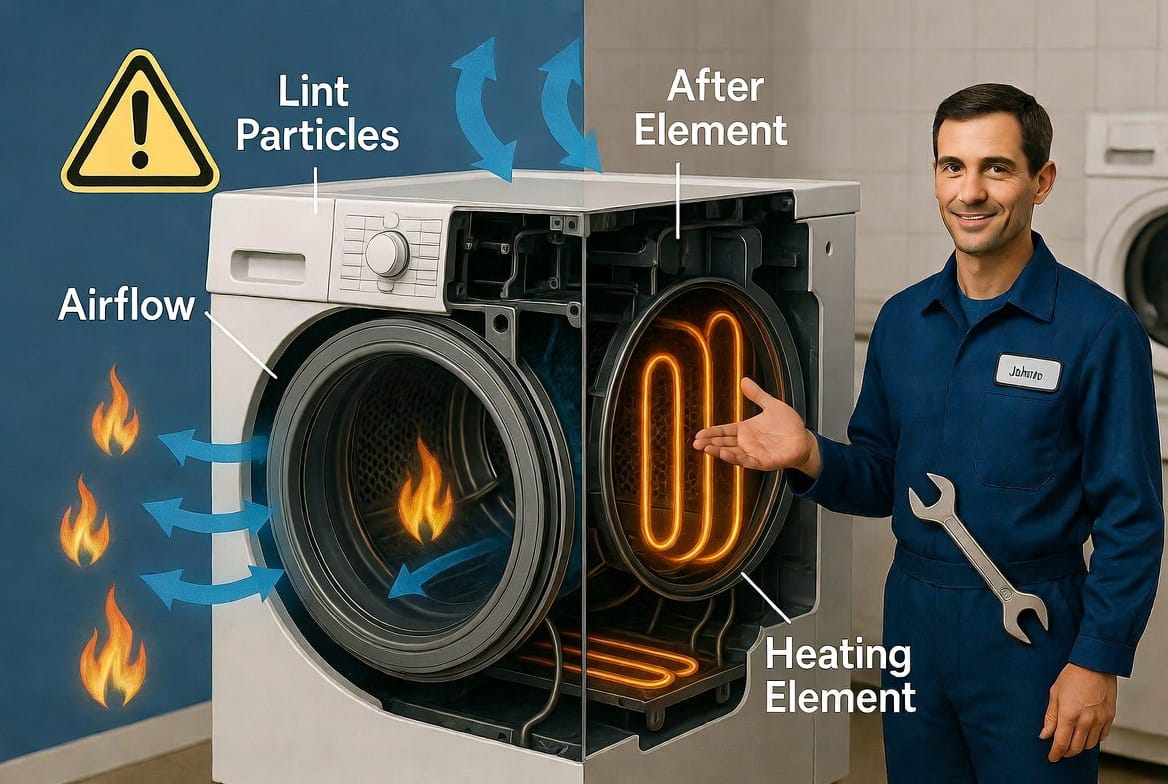
In today’s busy households, the clothes dryer is a true workhorse that handles mountains of laundry without complaint. Yet one critical component often goes unnoticed until trouble arises: the dryer drum seal. This seemingly simple felt or rubber gasket plays a vital role in keeping your dryer safe and efficient. When it wears out, lint can sneak behind the drum and reach the heating element – a direct path to potential fire hazards.
Stop Dryer Fires Before They Start – Call Now!
At our appliance repair service, we specialize in these less-common but essential fixes. A properly functioning dryer drum seal ensures lint stays where it belongs – in the lint trap – instead of accumulating in hidden areas. Replacing a damaged seal is not just about smoother operation; it is about protecting your home and your family. In this comprehensive guide, we explore everything you need to know about the dryer drum seal, why it fails, the serious risks involved, and how professional replacement restores peace of mind.
What Exactly Is the Dryer Drum Seal?
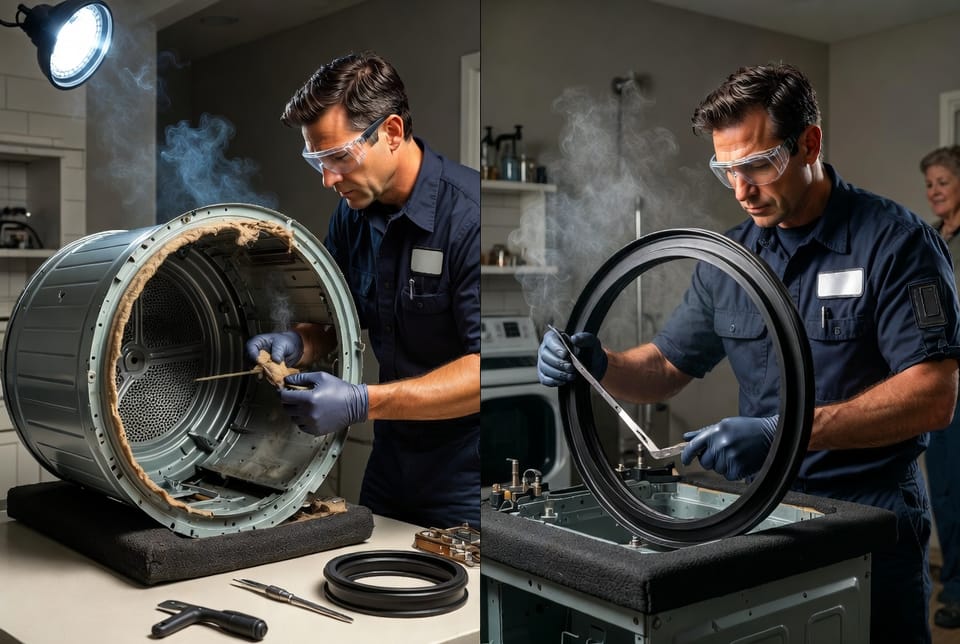
The dryer drum seal (also called a drum gasket or felt seal) is a flexible strip of high-temperature felt or modern rubber that lines the front and rear edges of the dryer drum. Its job is straightforward yet critical: it creates an airtight barrier between the rotating drum and the dryer cabinet. This seal keeps hot air and lint inside the drum during every cycle.
Without an intact dryer drum seal, exhaust air bypasses the lint trap and escapes into the cabinet. Over time, this leads to lint buildup in areas that are difficult to clean. Professional technicians know that both felt and rubber seals eventually degrade due to constant friction, extreme heat, and repeated expansion and contraction. Understanding this component helps homeowners recognize when expert intervention is required.
Key fact: A high-quality replacement seal is engineered to withstand years of heat cycles while maintaining flexibility. Choosing the right material during repair ensures long-lasting performance and maximum safety.
How the Dryer Drum Seal Wears Out Over Time
Daily use takes a toll. The drum rotates thousands of times per load, rubbing against the seal with every spin. High-heat settings accelerate breakdown, while overloading the dryer increases pressure on the gasket. Moisture from damp clothes, combined with fabric softener residue, can cause the felt material to harden and crack.
Rubber seals, while more durable than older felt versions, still degrade from repeated thermal stress. After 5–8 years of average use, microscopic gaps begin to form. These gaps allow lint particles to migrate behind the drum and settle near the heating element or blower wheel.
Bold risk phrase: Once lint escapes the drum, it becomes trapped in confined spaces where airflow is minimal. This hidden accumulation is the silent precursor to bigger problems.
Homeowners often overlook early wear because the dryer still tumbles and heats. But internally, the dryer drum seal is losing its battle against friction and heat. Regular professional inspections catch this wear before it escalates.
The Hidden Danger: Lint Escape and Fire Hazards
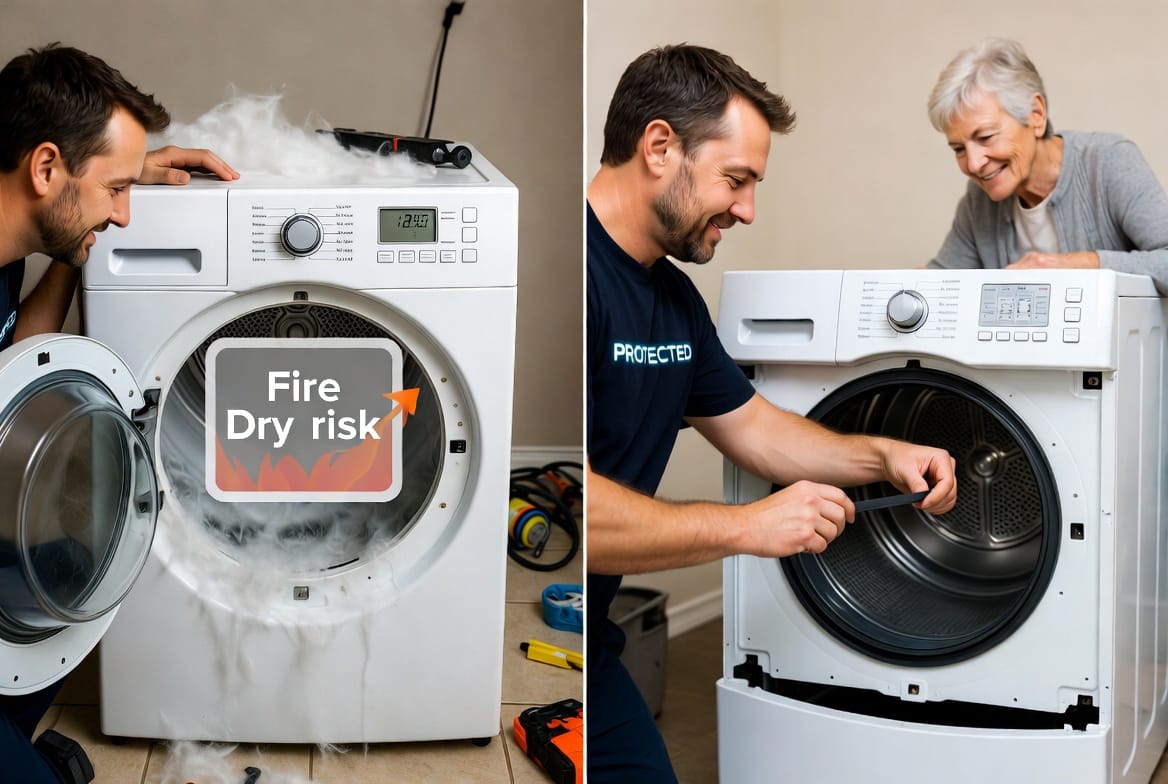
When the dryer drum seal fails, lint particles bypass the trap and drift directly toward the heating element. This is more than a mess – it is a serious fire risk. Lint is highly flammable, and the heating element operates at temperatures exceeding 500°F. Even a small buildup can ignite, sending flames through the cabinet or venting system.
Statistics from fire safety organizations consistently rank dryer fires among the top household fire causes. A compromised dryer drum seal contributes directly by allowing lint to reach ignition sources that are normally protected. The result? Potential property damage, costly repairs, or worse.
Reassuring note: The good news is that professional dryer drum seal replacement eliminates this risk entirely. Our technicians use OEM-spec seals and follow strict safety protocols to restore your appliance to factory standards, giving you confidence that your dryer is operating safely once again.
Recognizing the Warning Signs Early
Catching a failing dryer drum seal early prevents escalation. Watch for these common indicators:
- Lint accumulating around the dryer door even after thorough cleaning of the lint trap.
- Visible lint buildup behind or beneath the machine, often noticed during floor cleaning.
- Increased drying times despite clean vents and proper load sizes.
- Unusual thumping or scraping noises during operation as the drum rubs against a worn seal.
- Hot air leaking from the front of the dryer during cycles.
- Burning smell without visible smoke – a red-flag sign that lint may be contacting the heating element.
If you notice any of these symptoms, do not ignore them. Prompt action with professional service keeps your home safe and your appliance running efficiently.
Why This Repair Is Less Common – Yet Critically Important
Most homeowners focus on lint traps and venting. The dryer drum seal is tucked inside the cabinet, out of sight and out of mind. That is precisely why it is a less-common repair – until it fails dramatically. When overlooked, it leads to costly secondary damage such as damaged blower wheels, overheating motors, or full cabinet fires.
Our experienced technicians encounter this issue more frequently than you might expect, especially in homes with high-volume laundry or older dryers. Replacing the seal is a precise job requiring drum removal, careful alignment, and testing for airtight performance. It is not a quick DIY task for most people.
Authoritative assurance: Trusting a qualified professional ensures the repair is done correctly the first time, avoiding repeated service calls and extending the life of your dryer by several years.
The Professional Dryer Drum Seal Replacement Process
Our step-by-step approach guarantees safety and results:
- Thorough diagnostic inspection – We disassemble the dryer cabinet and examine the existing dryer drum seal for gaps, fraying, or hardening.
- Complete drum removal – The drum is carefully extracted to access both front and rear seals without damaging other components.
- Old seal removal and cleaning – All lint residue is vacuumed from hidden areas, especially around the heating element.
- Precise installation of new seal – High-quality felt or rubber gasket is fitted with industrial adhesive and aligned for perfect drum rotation.
- Reassembly and testing – The dryer is fully reassembled, run through multiple cycles, and checked for leaks, noise, and temperature consistency.
- Final safety verification – We confirm zero lint escape and optimal airflow before returning the appliance to service.
This process typically takes 1–2 hours in your home. Customers appreciate the transparent, no-mess approach and the immediate restoration of safe, efficient drying.
Benefits of Timely Professional Repair
Beyond fire prevention, a new dryer drum seal delivers measurable improvements. Drying times return to normal, energy consumption drops, and your dryer runs quieter. Clothes dry more evenly without hot spots caused by escaping air. Most importantly, you regain confidence that your appliance is not quietly creating a safety hazard.
Preventive Maintenance Tips to Protect Your Dryer
- Clean the lint trap after every load.
- Schedule annual professional vent and seal inspections.
- Avoid overloading the dryer.
- Use lower heat settings when possible.
- Never ignore unusual noises or smells.
These simple habits, combined with occasional expert service, keep your dryer drum seal performing at its best for years.
When to Call the Experts Immediately
If you suspect your dryer drum seal is compromised, do not wait. A damaged drum seal is a fire risk that professional service can resolve quickly and affordably.
Our team is ready to restore your dryer’s safety and performance with the same care and expertise shown in every repair. Contact us today – your home and family deserve the peace of mind that comes with a properly sealed dryer.
Fast Dryer Drum Seal Replacement – Call for Expert Service