The Dishwasher Heating Element: Why Dishes Aren't Drying and Water Isn't Heating
In today’s busy households, a reliable dishwasher is essential for keeping kitchens spotless and efficient. Yet when dishes emerge still wet, lukewarm, or lacking that fresh-from-the-sanitizer shine, frustration quickly builds. The culprit is often the dishwasher heating element — a critical component that many homeowners overlook until problems appear.
Restore Dry Dishes Today – Call Now for Heating Element Repair!
As trusted appliance repair professionals, we’ve seen this issue countless times. The good news? It’s highly fixable with the right expertise. A properly functioning heating element ensures hot water for powerful cleaning, effective sanitization that kills 99.9% of bacteria, and the heated air needed for streak-free drying. When it fails, your entire cycle suffers.
This comprehensive guide explains exactly how the dishwasher heating element works, the clear warning signs of failure, why professional replacement is the smartest choice, and the long-term benefits of restoring it. By the end, you’ll understand why addressing this issue promptly saves time, money, and hassle.
How the Dishwasher Heating Element Works
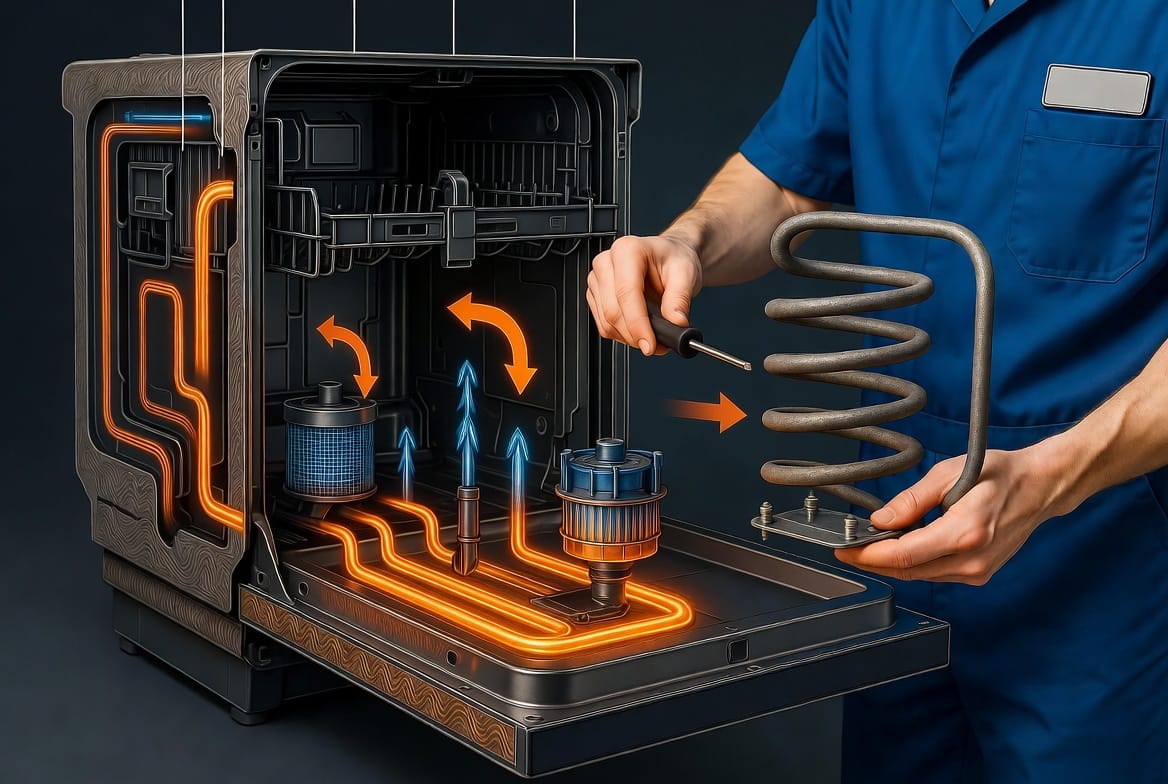
The dishwasher heating element is a coiled, high-resistance metal rod (usually stainless steel or Incoloy) positioned at the bottom of the tub. During the wash cycle, it rapidly heats incoming water to the manufacturer-recommended 120–140°F (49–60°C). This temperature is vital: it activates detergents fully, breaks down grease and food residue, and provides the thermal energy needed for sanitization.
In the final drying phase, the same element continues radiating heat while the fan circulates warm air. Moisture evaporates from dishes, glassware, and utensils, leaving them completely dry and ready to store. Without consistent heat, water simply pools and dishes remain damp — even with a heated dry option selected.
Key functions at a glance:
- Heats wash water for superior cleaning power
- Enables sanitization by reaching temperatures that destroy bacteria and viruses
- Drives the drying process through radiant heat and air circulation
- Maintains energy efficiency by allowing shorter, optimized cycles
When the element operates correctly, your dishwasher delivers restaurant-quality results every time. Failure disrupts all three stages, turning a convenient appliance into a source of extra work.
Common Signs Your Heating Element Is Failing
Recognizing failure early prevents bigger problems. Watch for these bold red flags:
- Dishes and glasses remain wet after a full cycle, even on heated dry
- Water stays lukewarm during wash — no steam when you open the door mid-cycle
- Poor sanitization — lingering odors or visible residue on “sanitize” settings
- Longer-than-normal cycle times or error codes related to temperature
- Higher energy bills as the dishwasher runs extra cycles to compensate
- Inconsistent results — some loads dry better than others depending on water volume
These symptoms rarely appear overnight. Mineral buildup, age, or manufacturing stress gradually weaken the element until it can no longer generate or maintain heat. Ignoring them leads to repeated rewashing, higher utility costs, and potential bacterial growth on “clean” dishes.
Why Dishes Aren’t Drying: The Direct Link to the Heating Element
Many assume drying issues stem from rinse aid, vent blockages, or poor loading. While those factors matter, the root cause is almost always insufficient heat from the dishwasher heating element.
Without adequate temperature, the drying phase cannot evaporate moisture effectively. Water droplets cling to surfaces, especially on plastic items that retain heat poorly. The result? Wet dishes, spotting, and the need to towel-dry everything by hand — defeating the purpose of owning a dishwasher.
Pro tip: If your model has a “heated dry” button yet still delivers damp results, test the water temperature mid-cycle. Lukewarm water confirms the heating element is not performing its job.
The Hidden Risks of a Faulty Heating Element
Beyond inconvenience, a failing element creates several important risks:
- Reduced hygiene — inadequate sanitization allows bacteria and allergens to survive
- Increased energy consumption — the dishwasher compensates with longer run times
- Potential water damage — repeated wet cycles raise humidity inside the unit, encouraging mold
- Premature wear on other components like pumps and seals
Timely repair restores peace of mind and protects your investment in the appliance.
Diagnosing the Problem Safely
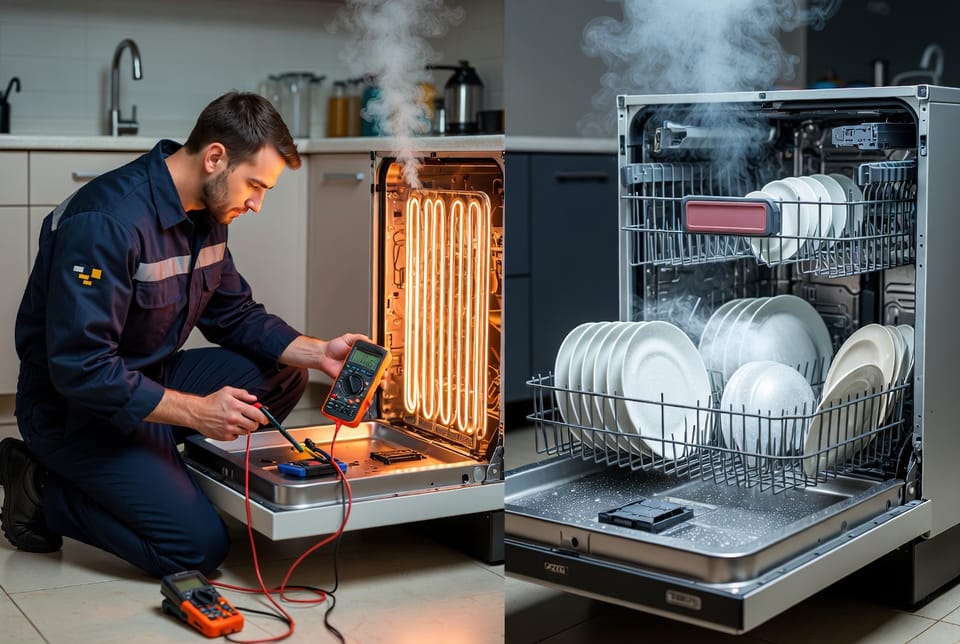
While a multimeter continuity test can confirm a broken element, safety comes first. The component involves high voltage and sits near water lines. Incorrect handling risks electric shock, short circuits, or water leaks.
Our certified technicians follow strict protocols: disconnect power, drain residual water, remove lower racks and spray arms, then access the element from below. This methodical approach ensures accurate diagnosis without damaging surrounding parts.
Professional Replacement: The Smart, Reliable Solution
Replacing the dishwasher heating element is a precise job best left to experts. The process includes:
- Removing the lower access panel
- Disconnecting wiring harnesses
- Extracting the old element (often secured by nuts or clips)
- Installing the exact OEM or high-quality compatible part
- Reassembling, testing for leaks, and running a full diagnostic cycle
Why choose professional service?
- Correct part selection — we match your model precisely
- Warranty protection — manufacturer coverage remains intact
- Time savings — job completed in one visit
- Guaranteed results — we test and stand behind our work
DIY attempts frequently lead to improper seals, stripped threads, or voided warranties. Our team arrives equipped, experienced, and ready to restore full function the same day.
Preventive Maintenance for Long-Term Performance
Extend the life of your new heating element with these simple habits:
- Run a monthly vinegar cleaning cycle to dissolve mineral deposits
- Use high-quality detergent and rinse aid consistently
- Avoid overloading or blocking spray arms
- Check and clean the filter regularly
- Schedule annual professional inspections
These steps keep water temperatures optimal and reduce stress on the heating coil.

The Impact on Daily Life and Energy Efficiency
A working dishwasher heating element does more than dry dishes — it streamlines your routine. Families reclaim valuable time, restaurants maintain health standards, and households enjoy lower utility bills through efficient cycles.
Restoring heat also prevents the hidden cost of manual re-washing and towel-drying entire loads. Over time, the savings add up significantly.
When to Call the Experts
If you notice any combination of wet dishes, lukewarm water, or sanitization concerns, don’t wait. Early intervention avoids secondary damage and keeps repair costs minimal. Our technicians specialize in all major dishwasher brands and models, arriving with the most common replacement elements in stock.
Hot water and dry dishes require a working element. Our team delivers fast, professional dishwasher heating element replacement that restores your appliance to peak performance.
Ready to solve the problem for good? We’ll diagnose the issue accurately, replace the faulty component with precision, and guarantee your dishes come out hot, sanitized, and bone-dry every time.
Get Hot Water & Perfect Drying Back – Expert Repair Call Now!