The Dimmer Switch Compatibility: LED vs. Incandescent

Selecting the correct dimmer switch for your lighting system is one of the most important pairings in modern electrical work. When homeowners upgrade from traditional incandescent bulbs to energy-efficient LED bulbs, the dimmer that once worked flawlessly can suddenly create problems. Understanding dimmer switch compatibility protects your investment, eliminates frustration, and ensures smooth, reliable light control for years to come.
Call Now for Flicker-Free LED Dimmer Solutions
This guide explains why the pairing matters, how LED dimmers differ from older models, the clear signs of incompatibility, and exactly how to choose the right dimmer. With the proper match, your lighting becomes more versatile, efficient, and long-lasting.
Why Dimmer and Bulb Pairing Matters
Every dimmer switch is designed to work with a specific type of load. Incandescent bulbs draw power in a simple resistive way. The dimmer reduces voltage, and the filament responds by glowing less brightly. LED bulbs, however, use electronic drivers and consume far less power. That difference changes everything.
When an older leading-edge dimmer designed for incandescent bulbs is paired with LEDs, the electronic components inside the bulb can receive incomplete or noisy power signals. The result is unreliable performance. Matching the correct dimmer to the bulb type restores clean power delivery and delivers the smooth dimming experience people expect.
Proper compatibility also protects the lifespan of both the dimmer and the bulbs. A mismatched pair forces components to work harder, generating heat and stress that shorten service life. Choosing the right combination from the start is the simplest way to avoid costly replacements later.
Understanding Leading-Edge and Trailing-Edge Dimmers
The technology inside dimmers falls into two main categories that directly affect LED vs. incandescent performance.
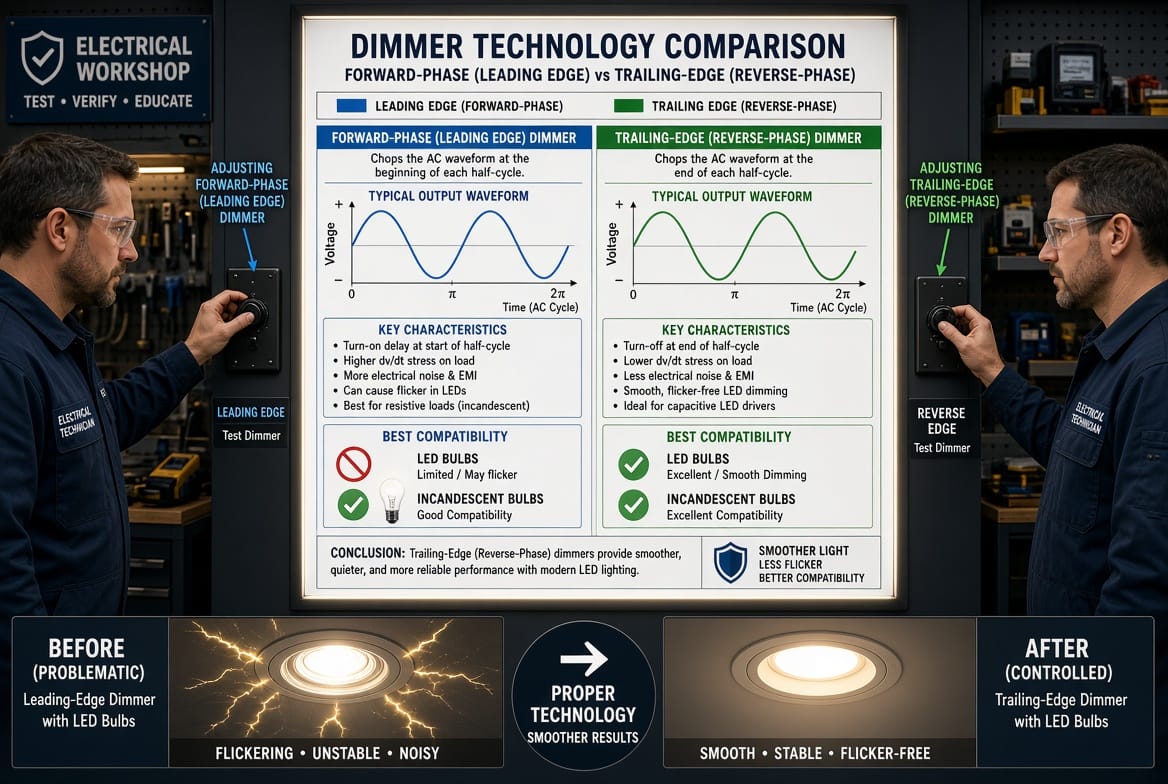
Leading-edge dimmers (also called forward-phase dimmers) cut the beginning of the alternating current waveform. They were developed decades ago for high-wattage incandescent and halogen loads. These dimmers handle large power draws well and remain common in older homes. Because they create a sharp voltage rise, they often produce electrical noise that modern LED drivers struggle to interpret.
Trailing-edge dimmers (reverse-phase dimmers) cut the end of the waveform instead. They rise smoothly and fall abruptly. This gentler action works far better with the low-power electronics inside LED bulbs. Most LED-compatible dimmers on the market today use trailing-edge technology. They deliver quieter operation, wider dimming ranges, and greater stability at low light levels.
Some advanced models are dual-mode and can automatically detect the load type. Even so, verifying compatibility remains essential. Using a trailing-edge dimmer with pure incandescent bulbs is usually fine, but the reverse pairing frequently causes issues.
Clear Signs of Dimmer Switch Incompatibility
When the wrong dimmer is paired with LED bulbs, several noticeable problems appear quickly. Recognizing these signs early prevents further damage.
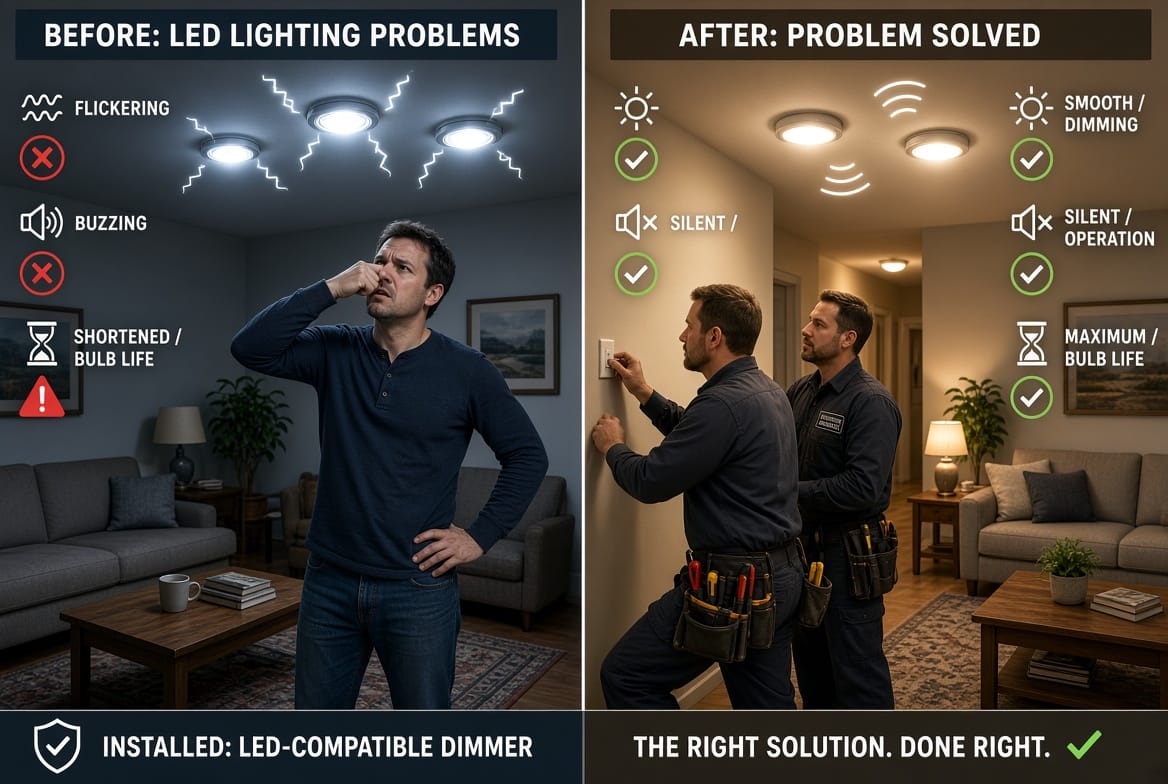
- Flickering – Lights pulse or strobe, especially at lower dimming levels. This occurs when the dimmer cannot maintain a stable current for the LED driver.
- Buzzing or humming – An audible noise comes from the switch or the bulb itself. The sharp switching action of a leading-edge dimmer creates vibration in the electronics.
- Shortened bulb life – LED bulbs that should last 15,000–25,000 hours fail after only a few thousand hours because of repeated stress from incompatible power delivery.
- Limited dimming range – Lights may only dim to 30–40 percent instead of reaching a soft glow, or they may shut off completely below a certain point.
- Delayed response – Bulbs take a second or two to turn on or change brightness after the dimmer is adjusted.
- Overheating of the dimmer – The switch plate feels unusually warm, indicating the dimmer is working harder than designed.
Any one of these symptoms signals a compatibility mismatch. Continuing to use the setup risks premature failure of both the bulbs and the dimmer itself.
How to Choose the Right Dimmer for Your Bulbs
Selecting the correct dimmer involves a few practical steps that anyone can follow.
First, identify the bulbs already installed or planned. Look for packaging that specifically states “dimmable.” Not every LED is designed for dimming; non-dimmable versions will never perform well regardless of the switch.
Next, check the total wattage load. Add up the wattage of all bulbs on the circuit. LED bulbs use far less power, so the total load is often much lower than the dimmer’s minimum requirement. Many older dimmers need a minimum load of 25–40 watts to operate correctly. Modern LED-compatible dimmers are engineered for low-wattage loads and often list minimums as low as 10 watts or less.
Look for clear labeling on the dimmer packaging or specification sheet. Phrases such as “LED compatible,” “trailing-edge,” or “reverse-phase” indicate suitability. Some manufacturers publish compatibility lists that match specific bulb models with their dimmers. Cross-checking these lists removes guesswork.
Consider the desired dimming range. High-quality LED dimmers allow smooth control from 100 percent down to 5 percent or lower without flicker. Cheaper models may stop at 20 percent. For spaces where atmosphere matters—dining rooms, living areas, or bedrooms—investing in a wider-range dimmer pays off daily.
Finally, evaluate installation needs. Many modern dimmers require a neutral wire for proper operation. Older homes may lack this wire in the switch box. A qualified electrician can determine whether the existing wiring supports the new dimmer or if minor updates are needed.
Benefits of Matching Dimmer and Bulb Correctly
When the right dimmer switch is paired with LED bulbs, several advantages appear immediately.
Energy efficiency improves because LEDs already use up to 80 percent less electricity than incandescent bulbs, and proper dimming multiplies those savings. Smooth dimming creates flexible lighting scenes without harsh transitions. Noise disappears, so quiet rooms stay peaceful. Bulb life reaches the full rated hours, reducing replacement frequency and waste. The dimmer itself runs cooler and lasts longer, protecting the entire lighting circuit.
Homeowners also gain better control over ambiance. Soft evening lighting becomes possible without the frustration of flicker or limited range. In commercial settings, the same principles apply to conference rooms, restaurants, and retail spaces where lighting quality directly affects comfort and perception.
Practical Installation Considerations
Even the best dimmer performs poorly if installed incorrectly. Always turn off power at the breaker before working on any switch. Confirm that the total load stays within the dimmer’s stated range. For multi-bulb circuits, ensure every bulb is the same type and wattage for uniform behavior.
If the existing switch box is crowded or lacks a neutral, professional help prevents safety issues. Modern smart dimmers that integrate with home automation systems often require the same trailing-edge technology and careful load calculation. Choosing models rated for both LED and incandescent loads provides flexibility if future bulb changes occur.
Testing after installation is simple: dim the lights slowly through the full range and watch for any residual flicker or noise. A properly matched system remains silent and stable at every level.
Common Myths About Dimmer Compatibility
Several misconceptions still circulate. One is that any dimmer will work with LEDs as long as the bulbs say “dimmable.” In reality, the dimmer technology must also match. Another myth claims that higher-wattage dimmers automatically solve low-load problems. Excess capacity does not help if the minimum load requirement is not met. Some believe that adding a dummy load or resistor fixes incompatibility. While temporary work-arounds exist, they waste energy and are not long-term solutions. The cleanest approach remains selecting a dimmer designed for the bulbs in use.
Long-Term Maintenance and Performance
Once the correct pairing is in place, maintenance stays minimal. Periodically check that bulbs remain seated firmly and that the dimmer faceplate stays free of dust. If new bulbs are added later, verify they match the existing set and stay within the dimmer’s load limits. Over time, technology continues to improve, and newer LED dimmers offer even wider ranges and quieter operation. Upgrading when the time is right keeps the system performing at its best.
Final Recommendations for Reliable Lighting
The key to trouble-free dimming is simple: treat the dimmer and the bulbs as a matched system. Trailing-edge dimmers excel with LED bulbs, while traditional leading-edge dimmers remain suitable for remaining incandescent loads. Watching for flickering, buzzing, and shortened bulb life provides early warning that a change is needed. Selecting a dimmer with the correct phase type, load rating, and compatibility listing delivers smooth performance and protects your investment.
Using the right dimmer for your bulbs eliminates frustration and maximizes both efficiency and comfort. For professional installation that guarantees correct pairing and safe wiring. Experienced technicians will evaluate your existing setup, recommend the ideal dimmer switch, and complete the work so your lighting performs exactly as intended.
Call Today for Smooth, Buzz-Free Lighting Control