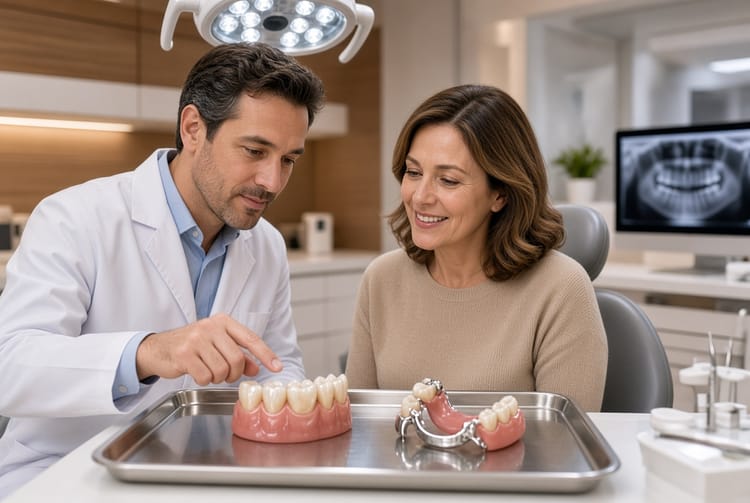
The Dental Implant Crown: Restoring Function and Aesthetics
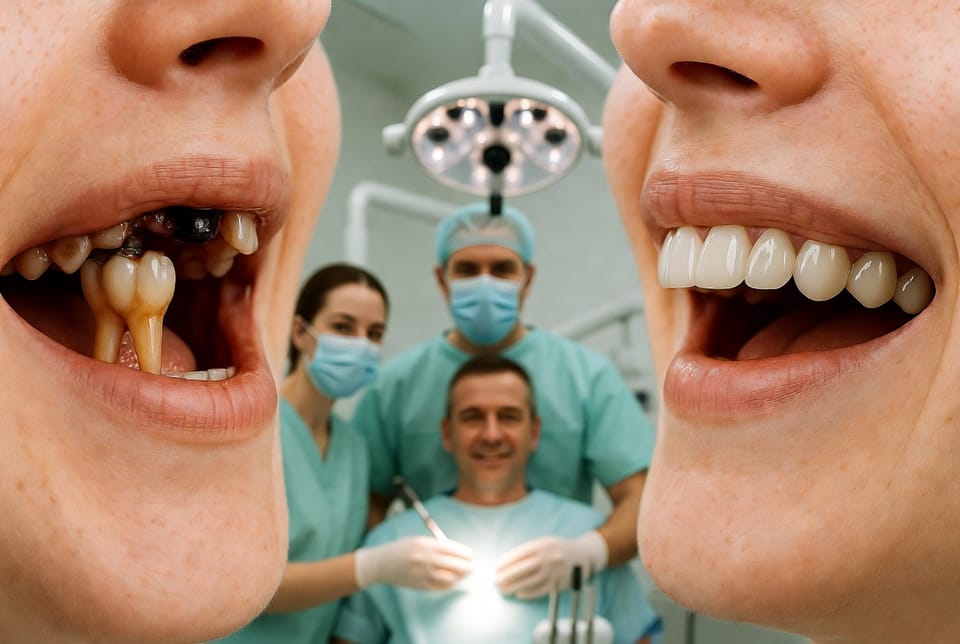
The journey of a dental implant reaches its most visible and rewarding stage with the placement of the implant crown. After the titanium implant has integrated with the jawbone and the abutment has been secured, the crown becomes the final piece that transforms a functional foundation into a tooth that looks, feels, and performs like the original. This restoration is far more than a simple cap; it is a precision-engineered, tooth-like structure designed to deliver lasting strength, natural aesthetics, and everyday comfort.
Get Your Dental Implant Crown – Schedule Consultation
Patients who have waited through the healing phase often describe the moment the crown is seated as the true completion of their smile. The dental implant crown closes the gap, restores bite force, and returns facial support that may have been lost with the original tooth. When executed with careful planning and skilled craftsmanship, the result is indistinguishable from neighboring natural teeth.
Understanding the Implant Crown
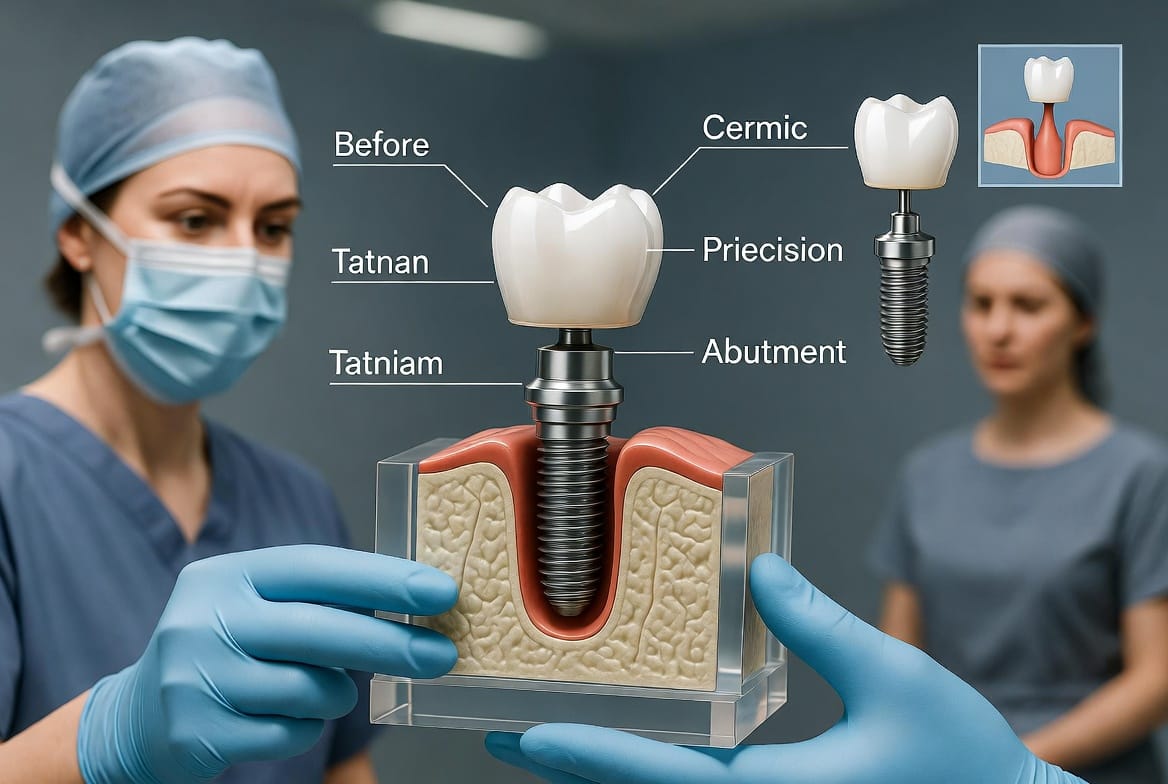
An implant crown is a custom-fabricated restoration that attaches to the abutment—the connector piece that emerges from the gum line above the implant. Unlike a traditional crown that covers a prepared natural tooth, the implant crown replaces the entire visible portion of a missing tooth. It is shaped, shaded, and contoured to blend seamlessly with the surrounding dentition while providing the hard, durable surface needed for chewing.
The crown itself is typically made from high-strength ceramic or porcelain fused to a strong core material. Modern ceramics allow light to pass through in a way that mimics natural enamel, creating a lifelike translucency. The margins are designed to sit at or slightly below the gum line so that no metal or junction is visible when the patient smiles or speaks.
Because the crown is supported by an implant rather than a natural root, it does not rely on the remaining tooth structure. This independence is one of the greatest advantages of implant dentistry: the restoration can be designed purely for optimal form and function without the compromises sometimes required when working with a compromised natural tooth.
The Final Step in the Implant Process
Placement of the implant crown is the last clinical appointment in a carefully sequenced treatment plan. By this stage the implant has fully osseointegrated—meaning bone has grown tightly around the titanium surface—and the soft tissue has matured around the abutment. The dentist or prosthodontist verifies stability, checks the health of the surrounding gum, and takes final impressions or digital scans.
These records are sent to a dental laboratory where a skilled technician creates the crown. The laboratory work involves multiple steps: designing the internal connection that will fit the abutment, building the core for strength, layering ceramic for color and texture, and refining the contours so the crown supports the papillae (the triangular gum tissue between teeth). When the finished crown returns to the office, a try-in appointment allows the patient and clinician to evaluate fit, shade, and occlusion before final cementation or screw retention.
Once the crown is secured, the patient leaves the office with a complete, functional tooth. The transformation is immediate and often emotional. Eating becomes easier, speech feels natural again, and the smile regains its full harmony.
Cement-Retained versus Screw-Retained Crowns
Two primary methods exist for attaching the crown to the abutment: cement-retained and screw-retained. Each approach has distinct advantages, and the choice is guided by clinical factors such as implant position, aesthetic demands, and the need for future retrievability.
Cement-retained crowns are secured with dental cement, much like a traditional crown on a natural tooth. The abutment is shaped like a prepared tooth, and the crown is designed to fit over it. Excess cement is carefully removed, and the margin is polished. This method often produces the most seamless aesthetic result because there is no access hole on the biting surface. It is frequently preferred in the visible front region of the mouth where appearance is paramount.
Screw-retained crowns, by contrast, are fastened directly to the abutment with a small prosthetic screw. A tiny access channel runs through the crown, usually on the chewing surface or the tongue side, allowing the screw to be tightened. After placement the channel is filled with composite resin that matches the crown shade. The major benefit of this design is retrievability. Should the crown ever need adjustment, repair, or replacement, the dentist can simply remove the filling and unscrew the restoration without damaging the underlying implant. Screw-retained crowns also eliminate any risk of residual cement irritating the gum tissue.
In practice, many clinicians select the method that best serves the individual case. Posterior teeth that experience heavy chewing forces may favor screw retention for long-term serviceability, while anterior teeth often receive cement-retained crowns for superior aesthetics. Hybrid solutions and advanced abutment designs continue to expand the options available.
Materials That Deliver Strength and Beauty
Contemporary implant crowns are crafted from materials chosen for both durability and visual realism. High-strength zirconia offers exceptional fracture resistance and can be milled with remarkable precision. Layered porcelain or lithium disilicate ceramics provide the translucent depth that makes a restoration appear alive under natural light. In some cases a zirconia core is veneered with porcelain to combine toughness with refined aesthetics.
Shade selection is a collaborative process. The dentist records the color of adjacent teeth under consistent lighting, sometimes using digital spectrophotometers for accuracy. The laboratory technician then builds the crown in layers, adjusting opacity, chroma, and surface texture so the finished restoration catches light the same way natural enamel does. Characterization—subtle white spots, faint cracks, or cervical staining—can be added to match the unique appearance of the patient’s other teeth.
The result is a crown that does not announce itself as artificial. Friends and family often cannot tell which tooth was replaced.
Caring for Your Implant Crown
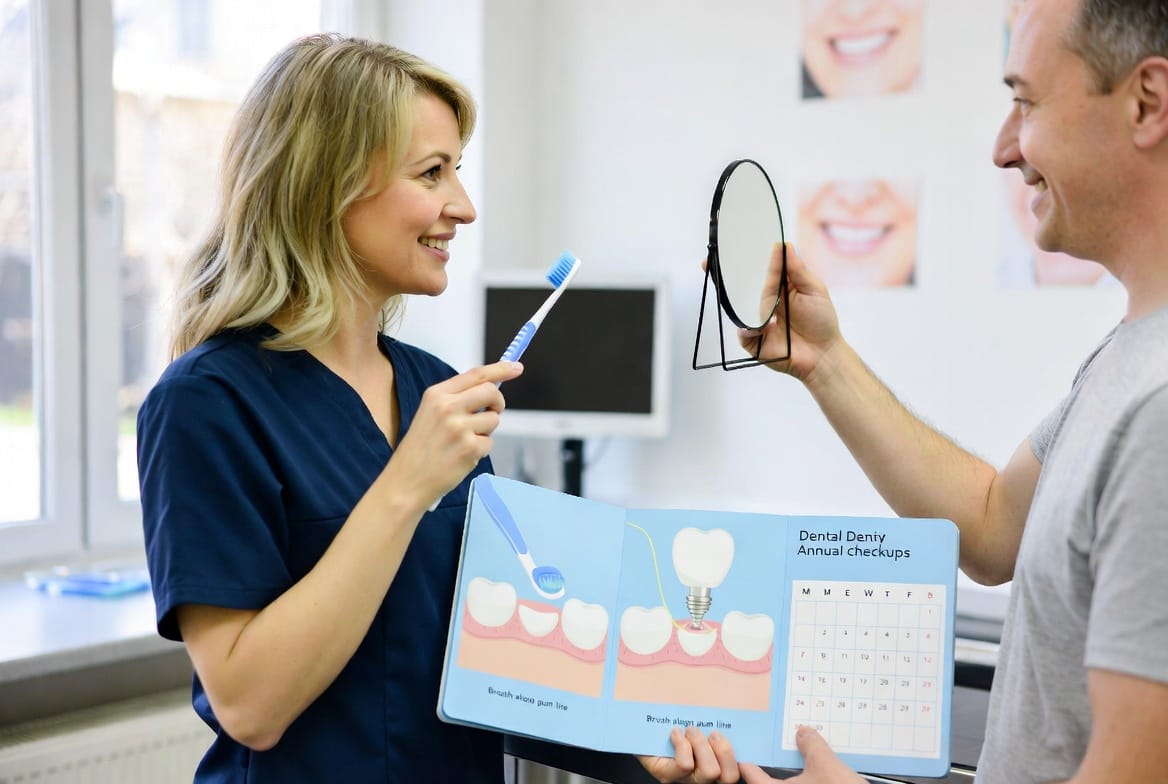
One of the most reassuring aspects of implant dentistry is that daily care closely mirrors the routine for natural teeth. The implant crown itself does not decay, yet the surrounding gum tissue and the bone supporting the implant remain vulnerable to plaque accumulation. Consistent hygiene protects the long-term success of the entire restoration.
Patients are encouraged to:
- Brush twice daily with a soft-bristled toothbrush and non-abrasive toothpaste, paying gentle attention to the gum line around the crown.
- Floss carefully around the abutment and under the crown margins using specialized implant floss, floss threaders, or interdental brushes designed to clean the unique contours of implant restorations.
- Consider an antimicrobial rinse if recommended by the dental team to help control bacteria in the sulcus.
- Schedule professional cleanings and examinations at least once a year—often more frequently in the first two years—so the dentist can monitor tissue health, check occlusion, and evaluate the integrity of the crown.
Neglecting these steps can allow inflammation to develop around the implant, a condition known as peri-implant mucositis or, if progressive, peri-implantitis. Early detection and professional intervention almost always reverse mild inflammation. Patients who maintain excellent home care and attend regular checkups enjoy success rates that remain high for decades.
Function Restored: Chewing, Speaking, and Comfort
Beyond appearance, the implant crown returns full chewing efficiency. Because the implant is anchored in bone, the crown can withstand the same forces as a natural tooth. Patients report being able to enjoy a wider variety of foods without hesitation. Speech that may have been slightly altered by a missing front tooth returns to normal once the crown fills the space and supports the lips and tongue.
Comfort is equally important. A well-designed crown distributes occlusal forces evenly and avoids high spots that could cause discomfort or damage opposing teeth. The dental team carefully adjusts the bite during the seating appointment and may fine-tune it at follow-up visits as the tissues settle.
Aesthetics That Inspire Confidence
The psychological benefit of a complete smile cannot be overstated. Many patients describe feeling self-conscious about a missing tooth, avoiding photographs or covering their mouth when laughing. The placement of a natural-looking implant crown removes that barrier. The restoration supports the facial profile, prevents the sunken appearance that can accompany tooth loss, and allows patients to smile freely again.
Gum contour is shaped carefully during the temporary phase so that the final crown emerges from healthy, pink tissue with natural papillae. When the margins are perfectly adapted, the junction between crown and gum is virtually invisible.
Longevity and Long-Term Expectations
With proper care an implant crown can serve for many years. The underlying implant itself has an excellent track record of long-term stability. The crown may eventually show wear or require replacement after a decade or more, just as natural teeth experience gradual changes. Because the implant remains healthy, a new crown can usually be fabricated and attached without disturbing the foundation.
Factors that influence longevity include the quality of the original surgical placement, the precision of the prosthetic work, the patient’s oral hygiene, and the absence of heavy grinding habits. Night guards are sometimes recommended for patients who clench or grind to protect both the crown and the opposing teeth.
Addressing Common Concerns
Patients often ask whether the crown will feel different from their other teeth. Most report that after a short adaptation period the restoration feels completely natural. Another frequent question concerns temperature sensitivity. Because the implant lacks a nerve, the crown does not transmit hot or cold sensations the way a natural tooth does—an advantage for many people.
Concerns about the appearance of the metal abutment showing through thin gum tissue are addressed by selecting the appropriate abutment material and design. Zirconia abutments or carefully contoured titanium abutments with ceramic coatings minimize any gray shadow under the gum.
Completing the Smile Journey
The dental implant crown represents the culmination of careful planning, surgical skill, and restorative artistry. It restores the ability to eat with confidence, speak clearly, and smile without hesitation. For patients who have lived with a missing tooth, the difference is transformative—not only in function and appearance but in overall quality of life.
Every detail matters: the precise fit of the abutment, the shade and contour of the ceramic, the health of the surrounding tissue, and the ongoing partnership between patient and dental team. When these elements align, the result is a restoration that looks and performs as nature intended.
If you are ready to finish your implant treatment or are considering implants as a solution for missing teeth, the next step is a personal consultation. A thorough evaluation will determine whether an implant crown is the ideal choice for your situation and will outline a clear path forward.
Complete your smile with an implant crown.
Transform Your Smile with Expert Implant Crowns – Call Now