The Dental Cavity Prevention: Diet and Hygiene Tips

Maintaining strong, healthy teeth is one of the most valuable investments you can make in your overall well-being. Cavities remain one of the most common oral health challenges, yet they are almost entirely preventable with the right daily habits. This practical guide walks you through exactly how sugar and acid damage tooth enamel, then shows you clear, actionable strategies using diet and hygiene to stop the process before it starts. By the end, you will feel confident and equipped to protect your smile for years to come.
Protect Your Smile – Book a Dental Checkup Today
Understanding How Sugar and Acid Create Cavities
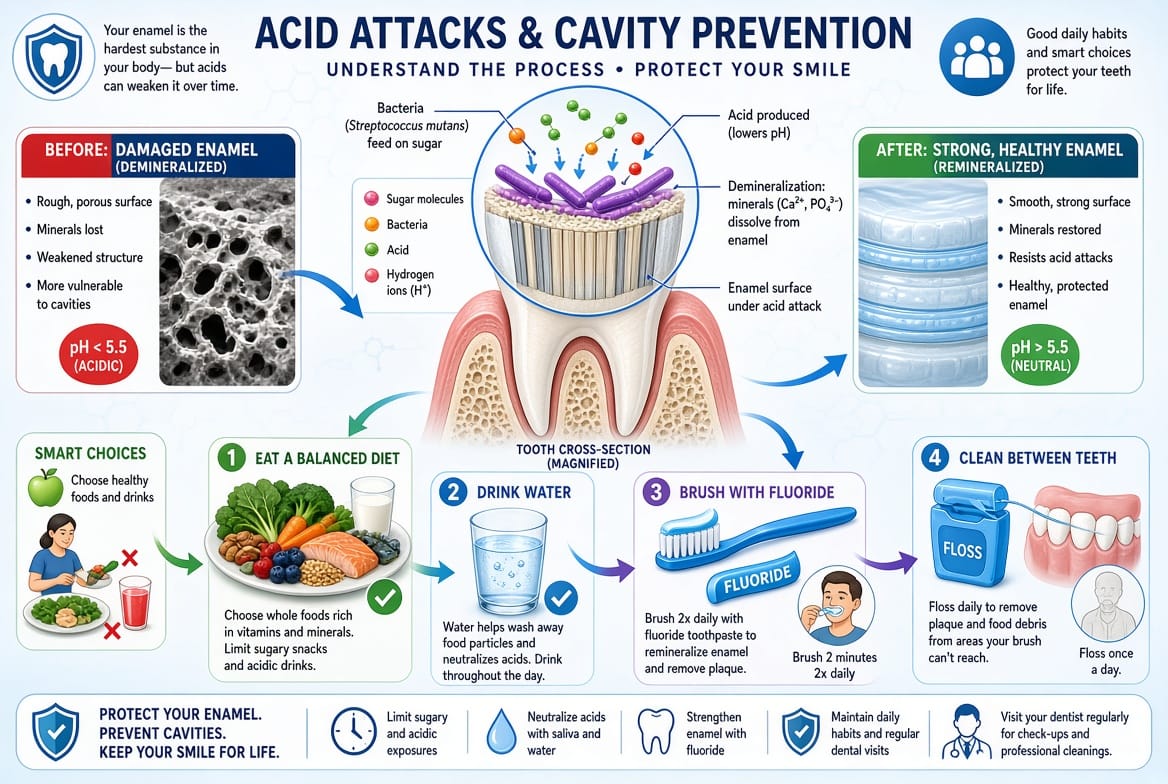
Tooth enamel is the hardest substance in the human body, yet it is constantly under attack. The process begins when bacteria that naturally live in the mouth feed on sugars from the foods and drinks we consume. These bacteria convert sugar into acid within minutes. The acid then softens and demineralizes the enamel surface, creating microscopic openings. Over time, these openings deepen into full cavities.
Every time you eat or drink something containing sugar or acid, your mouth enters a period of heightened risk that can last twenty to forty minutes. Frequent snacking or sipping keeps the acid level elevated for longer stretches, giving enamel less chance to recover. The good news is that saliva acts as a natural buffer. It washes away food particles, neutralizes acid, and supplies minerals that help rebuild enamel. Supporting saliva production and limiting acid attacks form the foundation of effective prevention.
Key risk factors include frequent exposure to sticky sweets, acidic beverages, dry mouth conditions, and inconsistent cleaning. Understanding this cycle empowers you to interrupt it at every stage.
The Role of Diet in Cavity Prevention
Your everyday food choices directly influence how often acid forms in the mouth. A thoughtful diet reduces the fuel available to harmful bacteria while strengthening the natural defenses of your teeth.
Reduce Sugar Intake Strategically
Lowering sugar consumption is the single most impactful dietary change for cavity prevention. Focus on limiting added sugars found in candies, cookies, sodas, energy drinks, and many processed snacks. Natural sugars in whole fruits are less problematic because the fiber slows the release and stimulates saliva. Aim to keep added sugar well below the recommended daily limits and replace sweet treats with satisfying alternatives such as cheese, plain yogurt, nuts, or fresh vegetables.
When you do enjoy something sweet, consume it as part of a meal rather than alone. The other foods help buffer the acid and reduce the overall exposure time. Reading labels carefully reveals hidden sugars in sauces, breads, and even savory items. Small consistent reductions compound into significant protection over months and years.
Drink Water Consistently Throughout the Day
Water is one of the simplest and most powerful tools for oral health. Drinking plain water after meals rinses away residual sugars and acids, restores a neutral pH, and keeps saliva flowing. Choose fluoridated water when available, as it delivers a gentle dose of fluoride that strengthens enamel between brushings. Carry a reusable bottle and make sipping a habit, especially after coffee, tea, or any acidic beverage. Avoid replacing water with sugary or acidic drinks that prolong the attack cycle.
Master the Timing of Meals and Snacks
Timing matters as much as content. Frequent grazing keeps acid levels high for hours. Instead, structure your day around three balanced meals and no more than one or two planned snacks. Allow at least two hours between eating occasions so saliva can neutralize acid and begin remineralization. If you need an evening treat, choose something low in sugar and follow it with water or a piece of cheese, which helps raise the pH quickly. Children and adults alike benefit from this rhythm; it turns mealtime into a protective window rather than a continuous risk.
Combining these three dietary pillars—reducing sugar, prioritizing water, and smart timing—creates an environment where bacteria struggle to thrive and enamel stays resilient.
Essential Hygiene Practices That Protect Enamel
Diet sets the stage, but consistent hygiene removes the bacteria and residual acids that diet alone cannot eliminate. A simple, thorough routine performed twice daily forms the second half of reliable cavity prevention.
Harness the Power of Fluoride
Fluoride is a mineral that remineralizes weakened enamel and makes it more resistant to future acid attacks. Use a fluoride toothpaste every time you brush. Apply a pea-sized amount for adults and a smaller smear for young children. After brushing, spit out the excess but avoid rinsing heavily with water; leaving a thin film of fluoride on the teeth maximizes its protective effect. Many communities add fluoride to the water supply, providing continuous low-level protection. Professional fluoride treatments applied during dental visits offer an extra concentrated boost for higher-risk individuals.
Master Effective Brushing Technique
Brushing removes plaque—the sticky film of bacteria—before it can produce large amounts of acid. Brush for a full two minutes, morning and night, using gentle circular motions rather than aggressive scrubbing. Cover every surface: outer, inner, and chewing surfaces of each tooth. An electric toothbrush with a timer can improve consistency, but a manual brush used correctly works equally well. Replace the brush or head every three months or sooner if the bristles fray. Paying special attention to the gum line where plaque accumulates prevents both cavities and gum irritation.
Make Flossing Non-Negotiable
Brushing alone reaches only about sixty percent of tooth surfaces. Flossing cleans the tight spaces between teeth where food particles and bacteria hide. Use a gentle sawing motion to slide the floss between teeth, then curve it into a C-shape against each side and move it up and down. Floss at least once daily, ideally before bedtime so the mouth remains clean during the night when saliva flow decreases. Interdental brushes or water flossers serve as excellent alternatives for those who find traditional floss challenging. Consistent interdental cleaning dramatically reduces the risk of cavities forming in these hard-to-reach areas.
Together, fluoride, thorough brushing, and daily flossing create a complete hygiene shield that works hand-in-hand with dietary choices.
Putting It All Together: A Daily Prevention Routine
A practical routine blends diet and hygiene into seamless habits. Begin the day with a glass of water, followed by a balanced breakfast low in added sugar. Brush with fluoride toothpaste afterward. Throughout the day, drink water regularly and keep snacks limited and timed. After lunch or any meal, rinse with water if brushing is not immediate. In the evening, floss first, then brush thoroughly, and avoid eating or drinking anything except water afterward. These small, repeated actions compound into powerful protection.
Special situations require slight adjustments. Athletes who sip sports drinks should rinse with water immediately afterward. People with dry mouth from medications can use sugar-free gum or saliva substitutes to stimulate flow. Parents of young children can model the same habits and supervise brushing until the child develops the skill. Everyone benefits from scheduling regular professional cleanings and checkups so early signs of demineralization can be addressed before they become cavities.
Long-Term Benefits and Motivation
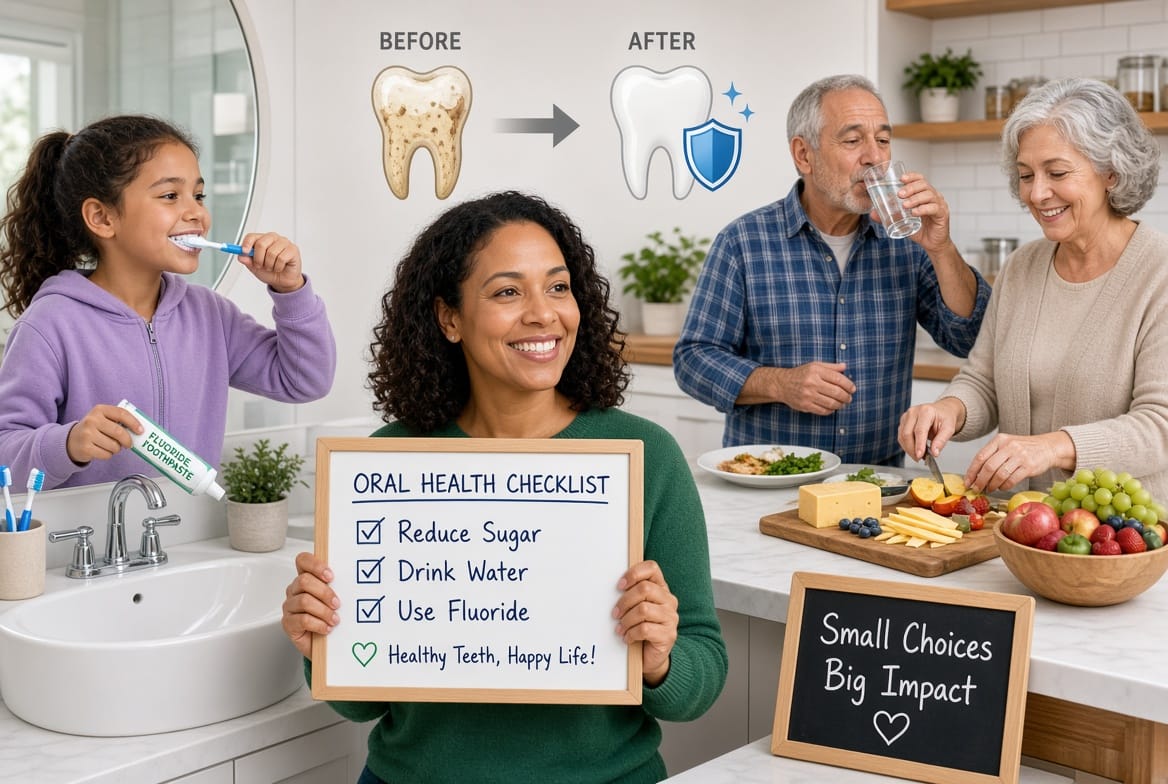
Preventing cavities delivers benefits that extend far beyond the mouth. Healthy teeth support proper nutrition, clear speech, confident smiles, and lower healthcare costs over a lifetime. Children who learn these habits early carry them into adulthood, reducing the need for fillings, crowns, or more complex treatments later. Adults who adopt them often notice fresher breath, less sensitivity, and greater peace of mind. The habits themselves become second nature within a few weeks, transforming what once felt like effort into automatic self-care.
Remember that perfection is not required. Progress compounds. Each time you choose water over soda, each thorough brushing session, and each day you keep sugar lower than usual strengthens your enamel a little more. Over months, the cumulative effect is dramatic. You are not fighting an uphill battle; you are simply giving your natural defenses the support they need to succeed.
Final Encouragement and Next Steps
Cavity prevention is entirely within your control through informed diet choices and consistent hygiene. By reducing sugar exposure, drinking water regularly, timing meals wisely, using fluoride, brushing effectively, and flossing daily, you create an oral environment where cavities struggle to form. These practices are straightforward, affordable, and proven. Start today with one small change—perhaps swapping one sugary drink for water or committing to two full minutes of brushing—and build from there.
Prevent cavities with good habits. Protect the smile you deserve by combining the strategies in this guide with professional oversight. Professional cleanings, and any needed fluoride treatments. Your future self will thank you for the strong, healthy teeth that result from the choices you make now.
Strengthen Your Enamel – Schedule Your Visit Now