The Dental Bridge vs. Implant: Which Is Right for You
Choosing the right tooth replacement option can transform not just your smile, but your confidence, oral health, and overall quality of life. If you're dealing with one or more missing teeth, two leading solutions often come up: the dental bridge and the dental implant. Both are highly effective, yet they differ significantly in procedure, longevity, and impact on your jaw and adjacent teeth.
Discover the Best Tooth Replacement for You – Call Now
In this comprehensive guide, we'll compare dental bridges vs implants to help you make an informed decision. Whether you're prioritizing quicker recovery, long-term durability, or bone preservation, understanding the nuances empowers you to choose what best fits your needs. Both options have helped millions regain full function and aesthetics — and with today's advanced techniques, success rates are exceptionally high.
Understanding Dental Bridges: A Time-Tested Solution
A dental bridge is a fixed prosthetic device that literally "bridges" the gap created by one or more missing teeth. It typically consists of crowns placed on the natural teeth (or implants) on either side of the gap, with artificial teeth (pontics) suspended between them.
How the Bridge Procedure Works
The process usually requires two visits:
- Preparation: Adjacent teeth are reshaped to accommodate crowns.
- Placement: Impressions guide the creation of a custom bridge, which is then cemented in place.
Benefits of dental bridges include a relatively straightforward procedure without surgery into the jawbone. Recovery is typically quick — most patients resume normal eating within days. They also tend to be more affordable upfront compared to implants.
Key advantages:
- Shorter treatment timeline (often completed in weeks)
- No bone grafting usually required
- Effective for replacing multiple adjacent teeth
- Natural appearance when well-crafted
However, bridges do require altering healthy adjacent teeth, which is an important consideration for long-term dental health.
Dental Implants: The Modern Gold Standard
Dental implants are titanium posts surgically placed into the jawbone to serve as artificial tooth roots. Once integrated (a process called osseointegration), a custom crown or bridge is attached to the implant.
This approach stands out because it preserves jawbone density by stimulating the bone, much like natural tooth roots. Over time, this prevents the facial sagging and bone loss that often follows tooth loss.
The Implant Process
- Surgical placement of the implant post
- Healing period (3-6 months for full integration)
- Abutment and crown attachment
While more involved, the result is a standalone replacement that doesn't rely on neighboring teeth.
Benefits of dental implants:
- Superior longevity — many last 20+ years or a lifetime with proper care
- Bone preservation and prevention of further tooth loss
- Independent structure — no stress on adjacent teeth
- Natural feel and function for biting and chewing
Direct Comparison: Dental Bridge vs Implant
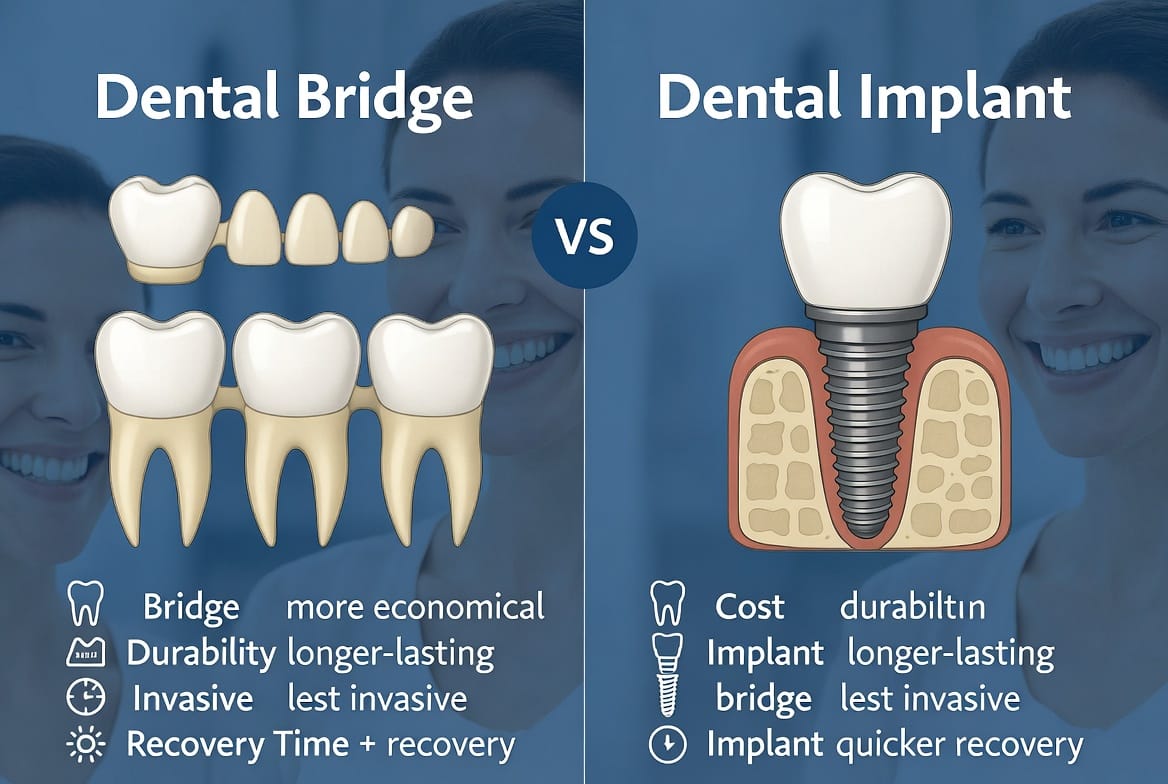
Both options restore your smile effectively, but they excel in different scenarios. Here's a clear breakdown:
Cost Considerations
Dental bridges generally cost less initially — often 30-50% lower than a single implant. However, if adjacent teeth develop issues later, additional treatments may increase long-term expenses.
Dental implants represent a higher upfront investment but frequently prove more cost-effective over decades due to their durability and minimal need for replacement.
Durability and Longevity
Bridges typically last 5-15 years before potential repair or replacement, depending on oral hygiene and bite forces. Implants boast success rates over 95% at 10+ years, with many functioning for a lifetime.
Procedure and Recovery
- Bridges: Less invasive, minimal downtime.
- Implants: Surgical but highly predictable with modern techniques. Initial recovery involves some swelling, but most patients manage comfortably with prescribed care.
Bone Health Impact: This is where implants truly shine. Bridges do not stimulate the jawbone, potentially leading to gradual resorption. Implants actively maintain bone structure.
Key Factors to Consider in Your Decision
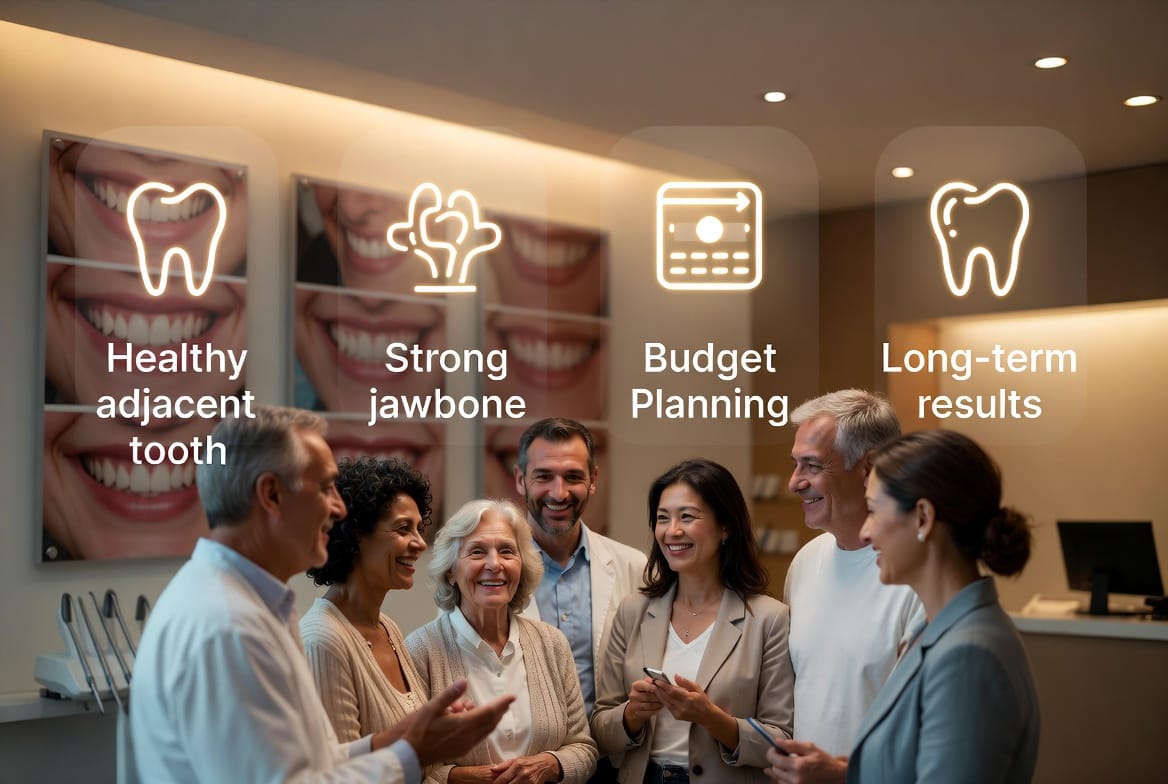
Selecting between a bridge and implant depends on your unique situation. Here are the primary factors:
Adjacent Tooth Health
If neighboring teeth are strong and intact, a bridge may be suitable. Compromised adjacent teeth might benefit more from implants to avoid further stress.
Bone Density and Jaw Health
Sufficient bone is needed for implants. In cases of significant loss, bone grafting can make implants viable. Bridges don't require this.
Budget and Insurance
Bridges are often more budget-friendly short-term. Many insurance plans cover portions of both, but implants may have higher out-of-pocket costs.
Lifestyle and Expectations
Active individuals or those seeking maximum longevity often prefer implants. For faster results with fewer visits, bridges provide excellent outcomes.
Oral Hygiene Commitment
Both require excellent care, but implants demand diligent cleaning around the restoration to prevent peri-implantitis.
Real Patient Scenarios
Case 1: The Busy Professional
A 45-year-old with a single missing molar and healthy adjacent teeth opted for a bridge. Treatment completed quickly, restoring full chewing function without disrupting a demanding schedule.
Case 2: The Active Retiree
A 62-year-old with bone loss concerns chose an implant. After successful integration, the standalone tooth provided confidence for years of travel and enjoyment.
Case 3: Multiple Missing Teeth
Patients missing several teeth may benefit from implant-supported bridges, combining the stability of implants with the efficiency of bridge design.
Potential Risks and How They're Managed
For bridges: Risk of decay on supporting teeth or bridge failure over time. Excellent dental hygiene and regular check-ups significantly reduce these risks.
For implants: Surgical risks like infection or failure to integrate are rare (under 5%) with experienced providers. Advances in materials and techniques make the process safer than ever.
Your dentist will thoroughly evaluate your health history to minimize any complications.
Maintenance and Long-Term Care
Both restorations thrive with consistent oral hygiene:
- Brush twice daily with a soft-bristled toothbrush
- Floss daily (special tools for bridges and implants)
- Regular professional cleanings every 3-6 months
- Night guards if you grind teeth
With proper care, both options deliver reliable, beautiful results for years.
Making Your Choice: Personalized Advice
There's no universal "better" option — the right choice aligns with your oral health, lifestyle, and goals. Many patients find peace of mind after a comprehensive consultation that includes X-rays, 3D imaging, and honest discussion of pros and cons.
Modern dentistry allows for hybrid approaches too, such as using implants to support bridges for optimal strength and preservation.
Reclaim Your Smile with Confidence
Whether you choose a dental bridge for its efficiency or a dental implant for its longevity and bone-preserving benefits, both represent outstanding advancements in restorative dentistry. You deserve a complete, functional smile that supports your health and confidence.
Ready to explore your options? Our experienced team will provide a personalized assessment and help you select the solution that best meets your needs for a brighter, healthier future.
Call Now to Compare Bridge vs Implant Options