The Dental Anesthesia: Types and What to Expect
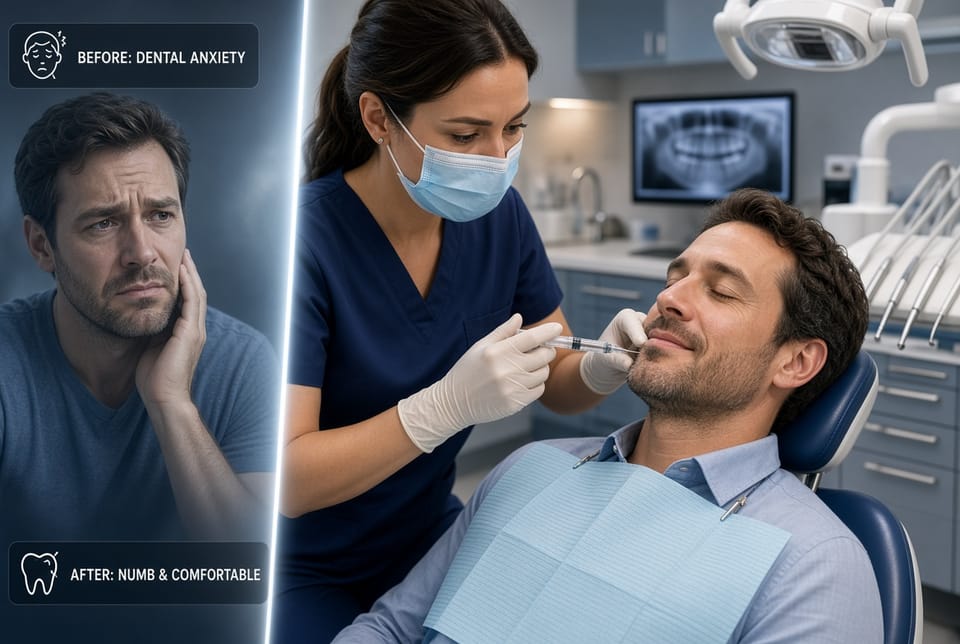
Dental visits no longer need to trigger fear or uncertainty. Modern dental anesthesia options allow patients to experience procedures with minimal or zero discomfort, transforming what was once a source of anxiety into a manageable, even comfortable, process. Understanding the available sedation options empowers you to make informed decisions alongside your dental team. This comprehensive guide explores the primary types of dental anesthesia, explains exactly what happens during administration, outlines realistic recovery times, and highlights important considerations so you know precisely what to expect.
Understand Your Anesthesia Options – Call Now!
Whether you face a routine filling, a more involved extraction, or complex restorative work, the right anesthesia approach can make all the difference. The goal remains consistent: keep you safe, relaxed, and free from pain while your dentist focuses on delivering excellent clinical results.
Understanding Sedation Options in Modern Dentistry
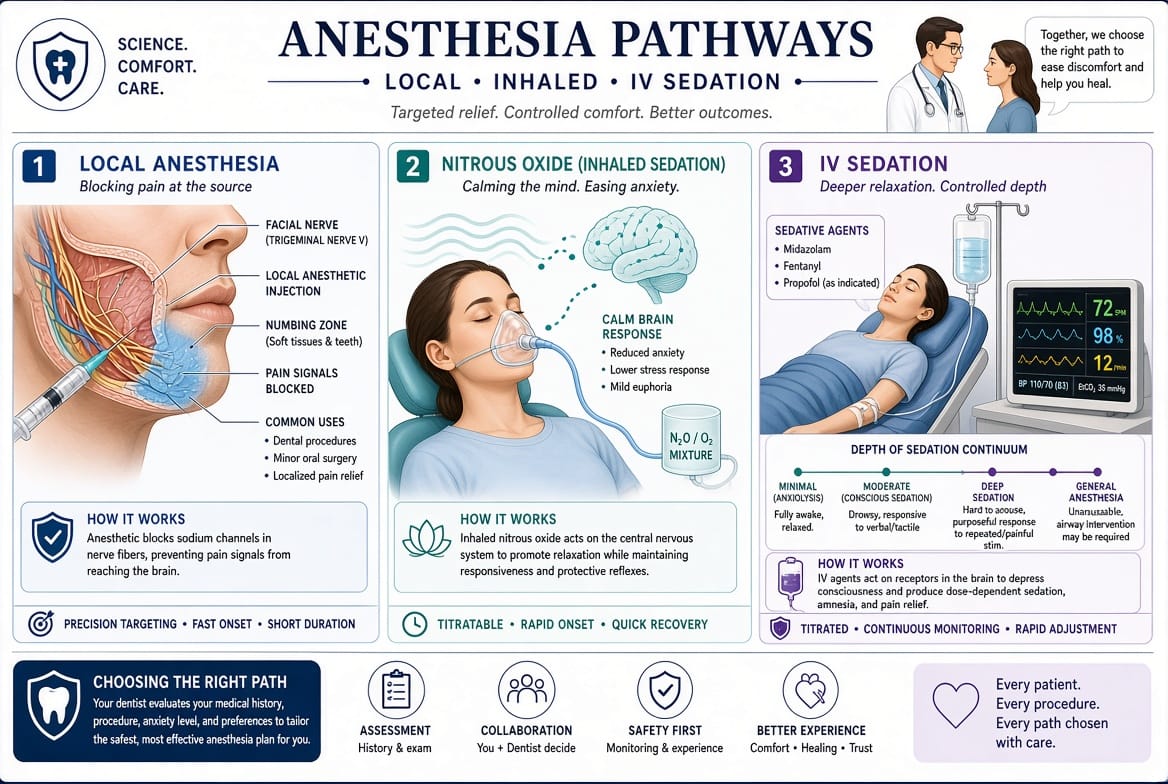
Dentists today offer a range of sedation and anesthesia techniques tailored to the procedure’s complexity, the patient’s medical history, and personal comfort preferences. These options fall into three main categories that most practices routinely provide: local anesthesia, nitrous oxide (commonly called laughing gas), and IV sedation. Each serves a distinct purpose and produces different levels of effect.
The choice depends on several factors. Simple restorative treatments often require only local anesthesia. Patients with mild anxiety may benefit from the addition of nitrous oxide. More extensive or surgical procedures frequently call for IV sedation. Your dentist will review your health background, discuss any previous experiences with anesthesia, and recommend the most appropriate method. Open communication remains essential; never hesitate to share concerns about needles, gag reflex, or past reactions.
Safety protocols form the foundation of every anesthesia decision. Licensed dental professionals monitor vital signs continuously when deeper sedation is used and maintain emergency equipment and training to address rare complications promptly. The result is a controlled, predictable experience designed around your well-being.
Local Anesthesia: The Most Common Numbing Injection
Local anesthesia stands as the foundation of pain control in dentistry and represents the method patients encounter most frequently. Delivered through a carefully placed injection, it temporarily blocks nerve signals in a specific area of the mouth so that you feel pressure and movement but no sharp pain.
The process begins with a topical numbing gel applied to the injection site. This gel reduces the initial sensation of the needle. Within moments the dentist administers a precise amount of anesthetic solution—commonly lidocaine or articaine—near the nerve supplying the treatment area. You may feel a brief pinch or mild pressure lasting only a few seconds. Once the medication takes effect, typically within three to five minutes, the targeted teeth, gums, and surrounding tissues become thoroughly numb.
Local anesthesia remains ideal for the majority of everyday procedures: fillings, crowns, root canals, simple extractions, and periodontal treatments. Because only a limited region is affected, you stay fully awake and aware throughout the appointment. You can communicate with the dental team, respond to instructions, and leave the office under your own power once the work is complete.
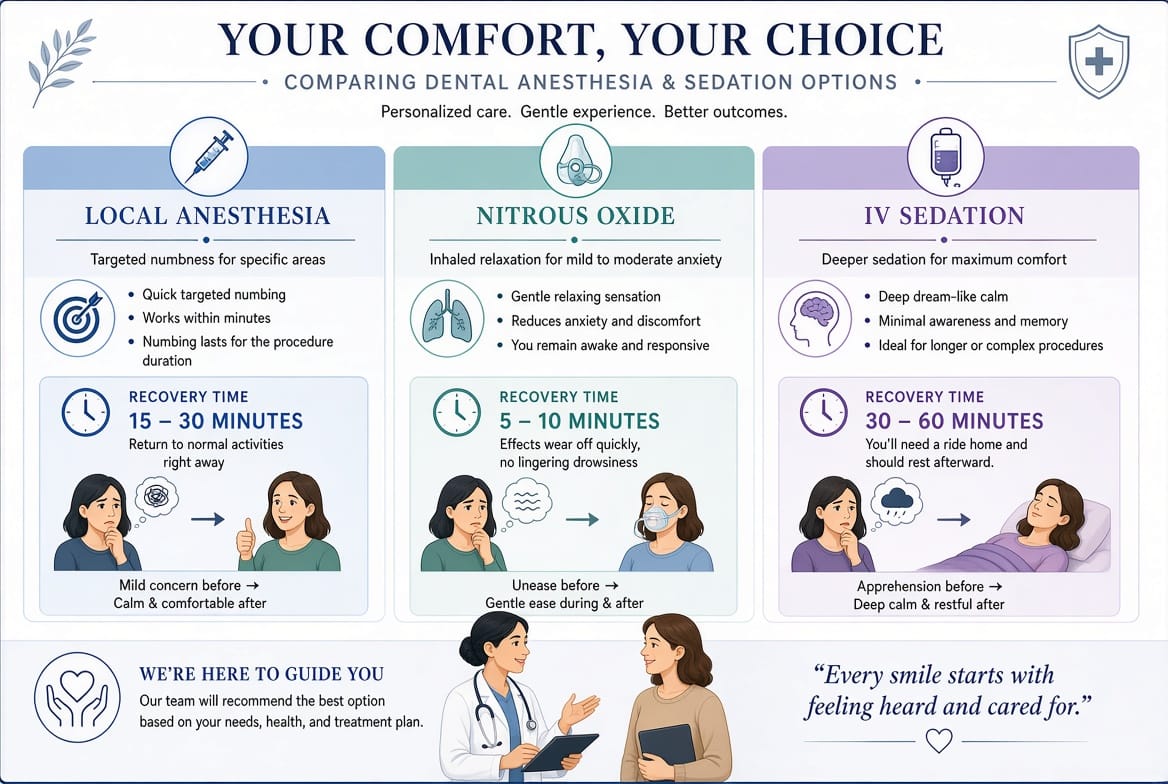
Recovery times for local anesthesia are straightforward. Sensation usually returns gradually over two to four hours, depending on the specific agent used, the dose, and individual metabolism. During this period you should avoid chewing on the numb side to prevent accidental biting of the cheek, tongue, or lip. Soft foods and lukewarm beverages help until normal feeling returns. Most patients resume regular activities immediately after the visit.
Important considerations include notifying your dentist of any allergies to local anesthetics or related medications, as well as disclosing heart conditions, pregnancy, or medications that might interact. In rare cases patients experience prolonged numbness or a temporary metallic taste; these effects resolve on their own. Overall, local anesthesia delivers reliable, targeted comfort with an excellent safety profile and minimal disruption to daily life.
Nitrous Oxide: Laughing Gas That Wears Off Quickly
When mild anxiety accompanies the need for numbing, nitrous oxide—widely known as laughing gas—offers a gentle, reversible layer of relaxation. Delivered through a comfortable nasal mask, a carefully controlled mixture of nitrous oxide and oxygen produces a floating, light-headed sensation that eases tension while leaving you fully conscious and able to respond.
The gas begins working within two to three minutes. Patients often describe a pleasant tingling in the extremities, a sense of warmth, and reduced awareness of surrounding sounds or the length of the procedure. Because the effects remain mild, nitrous oxide pairs seamlessly with local anesthesia; the injection still provides complete numbness while the gas softens any residual nervousness.
Nitrous oxide suits patients of nearly all ages, including children, and proves especially helpful for individuals with a strong gag reflex or those who simply prefer a calmer atmosphere. The dentist or trained assistant adjusts the concentration throughout the appointment to maintain optimal comfort, then switches to pure oxygen for several minutes at the end. Within five to ten minutes after the mask is removed, the effects disappear completely. You can drive yourself home and return to normal activities without residual drowsiness.
Recovery times are among the shortest of any sedation method. The rapid clearance of the gas from the bloodstream means virtually no lingering impairment. Key considerations involve informing the team of any respiratory conditions, recent colds, or pregnancy, as these may influence suitability. Side effects such as nausea remain uncommon when the gas is properly titrated, and the technique carries an outstanding safety record spanning decades of dental use.
Many patients appreciate that nitrous oxide requires no needles beyond the standard local anesthesia injection and leaves the system so quickly that the remainder of the day feels entirely normal.
IV Sedation: Deep Relaxation for Complex Procedures
For lengthy, surgical, or anxiety-intensive treatments, IV sedation provides a deeper level of calm. Also called conscious or moderate sedation, this approach involves medication delivered directly into a vein, typically in the arm or hand. Within minutes a profound sense of relaxation sets in; many patients drift into a dream-like state and retain little memory of the procedure afterward.
IV sedation does not produce full unconsciousness the way general anesthesia in a hospital setting does. You continue to breathe independently and can still respond to verbal cues if necessary, yet the experience feels distant and peaceful. Continuous monitoring of heart rate, blood pressure, oxygen saturation, and breathing ensures safety at every moment. The dental team can adjust medication levels in real time to maintain the ideal depth of sedation.
This method proves particularly valuable for wisdom-tooth extractions, full-mouth rehabilitations, implant placements, or patients whose severe dental phobia would otherwise prevent necessary care. Because the sedation is deeper, local anesthesia is still administered so that tissues remain numb once the procedure begins.
Recovery times after IV sedation require more planning. Although the strongest effects fade within an hour or two, residual drowsiness and impaired coordination can last four to six hours or longer. A responsible adult must drive you home and stay with you for the remainder of the day. Most patients feel ready to resume light activities the following morning, though individual responses vary. Avoid alcohol, operating machinery, or making important decisions until the next day.
Critical considerations include a thorough medical history review, current medications, and any previous reactions to sedatives. Patients with certain heart, lung, or neurological conditions may need additional clearance. The dental office provides detailed pre- and post-operative instructions, including fasting guidelines before the appointment and soft-food recommendations afterward. When properly administered by trained professionals, IV sedation ranks as a highly controlled and reassuring option for complex dental work.
Recovery Expectations and Practical Considerations Across All Methods
Regardless of the anesthesia type selected, certain universal guidelines promote smooth recovery. Stay hydrated, follow any prescribed pain-management plan, and contact the office promptly if unusual swelling, prolonged numbness beyond expected timeframes, or difficulty breathing occurs—though such events remain rare.
Patients with specific medical conditions, allergies, or medication regimens should always disclose full details during the consultation. Pregnancy, uncontrolled hypertension, and certain respiratory issues may influence which options are safest. Your dentist collaborates with your physician when necessary to ensure coordinated care.
Children and older adults often receive modified protocols; dosages and monitoring intensity adjust according to age and physiology. The overarching priority stays identical: deliver effective pain control and anxiety reduction while protecting overall health.
Choosing the Right Option for Your Needs
Selecting among local anesthesia, nitrous oxide, and IV sedation is a collaborative process. During your examination the dentist evaluates the planned procedure’s length and intensity, reviews your comfort level, and explains the benefits and limitations of each approach. Many practices offer a combination—local anesthesia plus nitrous oxide, for example—to fine-tune the experience.
Ask questions freely. Inquire about the expected duration of numbness, whether you will need an escort, and what sensations are normal during recovery. Knowledge reduces uncertainty and builds confidence.
Modern dentistry has refined these techniques over decades, resulting in safer, more predictable outcomes than ever before. Millions of patients complete treatment each year with the assistance of these proven methods and leave the office relieved that the anticipated discomfort never materialized.
Final Thoughts on Comfort and Confidence
Dental anesthesia exists solely to protect your comfort and enable necessary care. From the precise numbing of local anesthesia to the gentle float of nitrous oxide and the deeper calm of IV sedation, each option addresses different needs with reliability and care. Recovery profiles range from immediate return to normal activity to a single day of rest, always guided by clear professional instructions.
By understanding what to expect, you transform potential apprehension into informed readiness. The dental team stands ready to answer every question and customize the approach so that your visit supports both oral health and peace of mind.
Understand your anesthesia options. Schedule a consultation to discuss the method best suited to your treatment plan and personal comfort. Taking this step ensures that your next dental experience is as smooth and reassuring as modern care can make it.
Call Today for Stress-Free Dental Sedation Options