The Dental Anesthesia Recovery: What to Expect and How to Manage

A dental visit that includes local anesthesia ends the moment you leave the chair, yet the real recovery period begins in the hours that follow. The numbness that kept you comfortable during treatment does not vanish instantly. Knowing exactly what sensations to anticipate, how long they typically last, and which simple habits keep you safe turns an uncertain afternoon into a predictable, low-stress process. This guide explains the entire dental anesthesia recovery timeline in clear, practical terms so you can protect the treated area, stay nourished, and return to normal speaking and eating without unnecessary worry.
Get Expert Dental Recovery Tips – Call Today
What Occurs Immediately After the Procedure
Once the dentist finishes the filling, extraction, or other work, the injected anesthetic continues blocking nerve signals in the targeted region. Soft tissues—lips, cheek, tongue, and sometimes part of the palate—remain insensate. You may notice the treated side of your face feels heavy or swollen even though visible swelling is minimal. Saliva can pool because the lips no longer form a tight seal, producing drooling that feels awkward but is completely expected. Speech may sound slurred for the same reason: the tongue and lips cannot shape words with their usual precision.
These effects are the direct, temporary result of the medication doing its job. They do not indicate a problem with the procedure itself. Most patients describe the sensation as similar to the “asleep” feeling after a limb has been compressed, only localized to the mouth. Remaining calm and giving the body time to metabolize the anesthetic is the first and most effective recovery step.
Typical Sensations: Numbness, Drooling, and Speech Changes
Numbness is the dominant experience. The lip on the treated side often feels twice its normal size; the tongue may seem thicker. Because you cannot feel temperature or pressure accurately, even a sip of water can surprise you. Drooling occurs when the orbicularis oris muscle around the mouth cannot contract fully. A tissue or soft towel kept nearby prevents clothing stains and reduces self-consciousness.
Speaking requires extra concentration. Simple phrases come out muffled until sensation returns. Friends or family members who understand the situation can help by speaking slowly and avoiding questions that demand long answers. These changes last only as long as the anesthetic remains active and resolve on their own.
How Long Dental Anesthesia Lasts
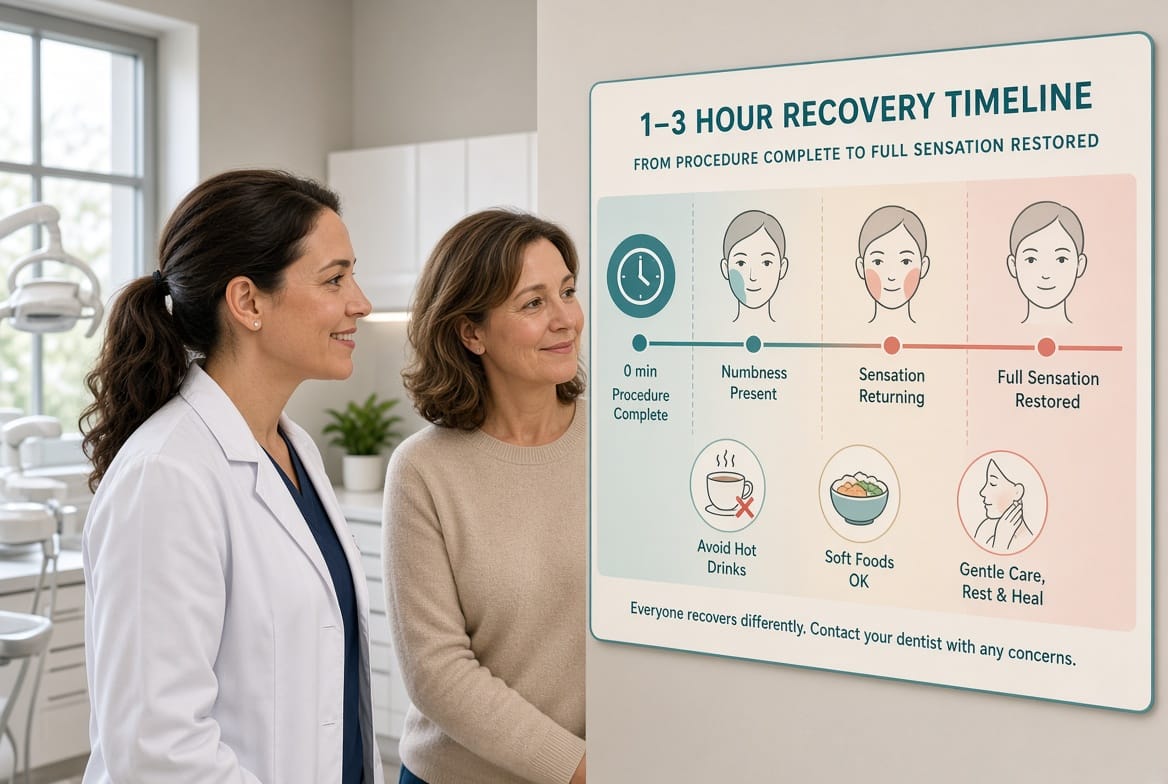
For the majority of routine procedures that use common local anesthetics, soft-tissue numbness lasts 1–3 hours. The exact window depends on the specific agent, the volume injected, whether a vasoconstrictor was included, and individual metabolism. The tooth itself often regains sensation sooner than the surrounding lips and cheek. You will first notice tingling at the edges of the numb zone; that tingling is the welcome sign that normal feeling is returning.
Do not expect the clock to be identical for every visit. A short filling may wear off closer to the one-hour mark, while a more involved treatment can approach three hours. Tracking the time from the moment you leave the office gives you a reliable personal estimate for future appointments.
Eating and Drinking While Numb
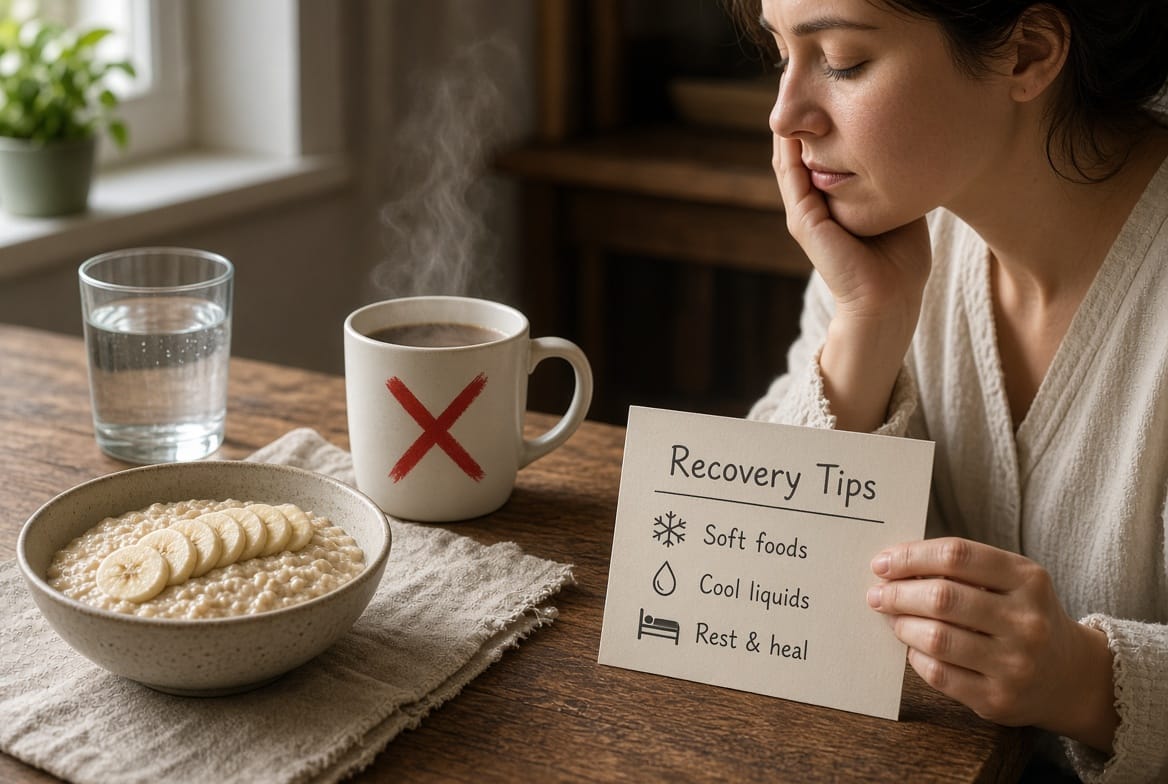
Until feeling returns, the safest choice is soft foods that require little or no chewing. Yogurt, applesauce, mashed banana, lukewarm soup that has been allowed to cool, scrambled eggs, and smoothies consumed with a spoon all supply calories without demanding precise jaw movement. Room-temperature or slightly cool liquids prevent accidental burns. Sip slowly from the untreated side of the mouth.
Avoid anything crunchy, sticky, or chewy. Even a bagel or an apple slice can cause you to bite the still-numb cheek or lip without realizing it. Many patients find that preparing a small plate of suitable foods before the appointment removes decision-making when they first arrive home.
Essential Safety Precautions
Two rules protect you from the most common injuries:
- Avoid hot food and hot drinks completely. Because temperature sensors are blocked, you can scald the tongue or inner cheek without feeling the heat until damage has already occurred. Test every item on the untreated side of the lip first or simply wait until tingling begins.
- Do not chew on the numb side. Shift every bite to the opposite side of the mouth. If both sides were anesthetized, delay solid food until at least partial sensation returns. Accidental cheek or tongue biting produces painful ulcers that can last days.
Additional common-sense measures include staying upright rather than lying down immediately, keeping children under close watch so they do not chew on numb lips, and postponing vigorous rinsing until the anesthetic has worn off. These precautions sound simple yet prevent the majority of post-anesthesia complications.
Extra Comfort Strategies During the Waiting Period
Keep a clean, damp washcloth nearby to dab away excess saliva. A thin smear of petroleum jelly on the lips reduces cracking from drooling. If the treated area begins to ache as sensation returns, an over-the-counter pain reliever taken according to the dentist’s instructions usually suffices. Resting in a comfortable chair with the head slightly elevated can lessen the heavy feeling.
Gentle conversation or listening to music distracts from the odd sensations. Most people discover that the three-hour window passes faster when they stay occupied with light, non-demanding activities.
What to Do If Numbness Lasts Longer
On rare occasions the anesthetic effect extends past three hours. This is more common after larger volumes or in patients with slower metabolism. Continue the same safety rules. If complete numbness persists beyond four to five hours or is accompanied by increasing pain, swelling, or difficulty swallowing, contact the dental office. Prolonged effects are uncommon and almost always resolve, yet professional reassurance brings peace of mind.
Special Notes for Children and Older Adults
Young children lack the self-awareness to avoid chewing numb tissue. A parent should remain present, offer only approved soft foods, and watch for lip biting. Seniors may metabolize the drug more slowly and can benefit from an extra hour of caution before attempting normal meals. In both groups the same core principles apply: soft textures, no heat, and chewing on the opposite side.
Preparing Ahead for an Easier Recovery
A few minutes of planning the night before the appointment pays dividends. Stock the refrigerator with yogurt, applesauce, and other soft options. Set out a box of tissues and a clean towel. Arrange for a ride home if you feel groggy. These small steps remove friction when you first walk through the door still numb.
Returning to Normal After Sensation Returns
Once tingling spreads across the previously numb zone, test a small sip of water on the treated side. If temperature and texture feel recognizable, you may gradually introduce slightly firmer foods. Continue to favor the opposite side for the rest of the day if the area still feels tender. By evening most patients eat a regular dinner without difficulty.
The treated tooth itself may remain sensitive to pressure or temperature for a day or two; that sensitivity is separate from the anesthetic effect and usually fades with routine care.
Final Reassurance and Next Steps
Dental anesthesia recovery follows a reliable pattern for the vast majority of patients. Numbness, occasional drooling, and the need for soft foods last only 1–3 hours. Observing two straightforward precautions—avoid hot food and don’t chew on the numb side—prevents nearly every avoidable injury. With these facts in hand you can leave the dental office confident rather than uncertain.
Manage your anesthesia recovery safely. If you have questions about your specific procedure or want personalized care tips. A short conversation with the team can confirm that your experience is progressing exactly as expected and give you any extra guidance you need.
Call Now for Personalized After-Anesthesia Care