The Dehumidifier Selection: Residential vs. Industrial for Flood Recovery
When flood damage strikes, every hour counts. Excess moisture seeps into walls, floors, and belongings, creating hidden dangers that can compromise your property’s integrity and your family’s health. Choosing the right dehumidifier isn’t just a technical decision — it’s the difference between a successful flood recovery and costly secondary damage like mold growth or warped structures.
Don’t Risk Mold – Call for Industrial LGR Drying Now
At the heart of effective water damage restoration lies one critical choice: residential dehumidifiers for everyday small-scale moisture issues or powerful industrial LGR dehumidifiers built specifically for large-scale flood restoration. Understanding the equipment differences empowers you to make informed decisions and protects what matters most. Rest assured, the right selection combined with professional expertise delivers fast, thorough results you can trust.
Understanding Residential Dehumidifiers
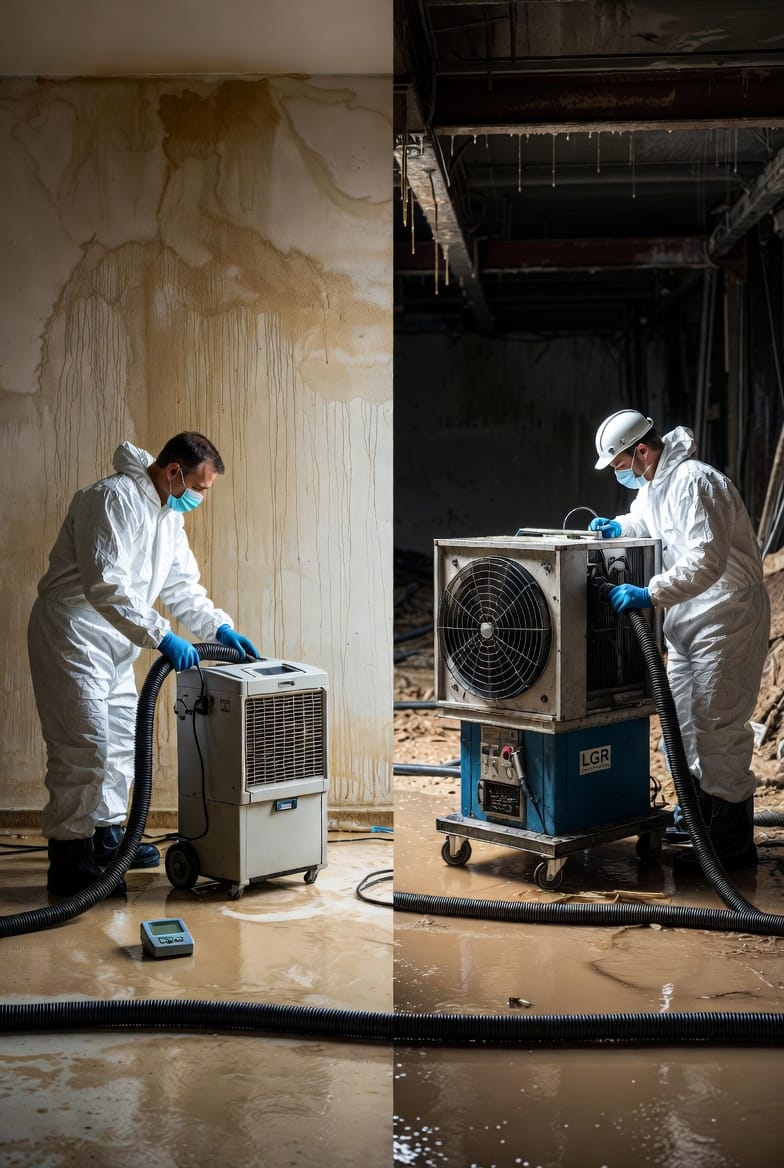
Residential dehumidifiers are compact, user-friendly units designed for everyday home environments. These portable machines typically handle spaces up to 2,000–4,000 square feet and remove between 30–70 pints of moisture per day under ideal conditions. They rely on standard compressor or desiccant technology and work best in controlled indoor settings such as basements, bathrooms, or living areas with moderate humidity spikes.
Homeowners appreciate their plug-and-play convenience, quiet operation, and affordable price point. A typical residential unit fits easily in a corner, features simple digital controls, and requires minimal maintenance — just empty the water reservoir or connect a hose for continuous drainage. They excel at maintaining comfortable living conditions after minor leaks or seasonal humidity changes.
However, residential dehumidifiers reach their limits quickly when facing true flood recovery scenarios. Their smaller compressors and basic refrigerant systems struggle once relative humidity drops below 50% or when temperatures fall, common conditions after major water intrusion. In larger or structurally saturated spaces, these units simply cannot extract moisture fast enough from porous materials like drywall, wood framing, or concrete.
The Power of Industrial LGR Dehumidifiers
Enter industrial LGR dehumidifiers — the heavy-duty champions of professional flood restoration. LGR stands for low-grain refrigerant technology, an advanced system engineered to pull massive volumes of moisture even in challenging low-temperature and low-humidity environments. These rugged units routinely extract 100–300+ pints per day and are built on heavy-duty frames with high-capacity compressors, powerful blowers, and reinforced hoses.
Unlike residential models, industrial LGR units are specifically engineered for structural drying. They work in tandem with air movers and professional moisture meters to target water trapped deep within walls, subfloors, and insulation. Restoration teams deploy multiple units across large square footage, creating a controlled drying chamber that rapidly lowers humidity levels and prevents microbial growth.
Their robust construction allows continuous 24/7 operation on job sites, often powered by generators when electricity is compromised. Technicians monitor progress with precision instruments, ensuring every inch of affected material returns to pre-flood dryness standards. This level of performance simply cannot be matched by consumer-grade equipment.
Key Equipment Differences Explained
The differences between residential and industrial dehumidifiers extend far beyond size. Here’s a clear comparison:
- Moisture Removal Capacity: Residential units top out at modest daily extraction; industrial LGR models deliver 4–10 times more power, essential for saturated structures.
- Operating Conditions: Residential models falter in cooler or drier air; LGR technology maintains peak efficiency down to 33°F and extremely low grains of moisture.
- Build and Durability: Consumer units feature lightweight plastic housings; industrial units use reinforced metal frames designed for rugged job-site abuse.
- Application Scale: Perfect for single rooms or small homes versus entire buildings, commercial spaces, or multi-story properties after major flooding.
- Integration with Restoration Tools: Residential units operate alone; industrial LGR systems pair with air movers, heaters, and monitoring sensors for complete structural drying.
These distinctions become critical the moment floodwaters recede.
When Residential Dehumidifiers Fall Short in Flood Recovery
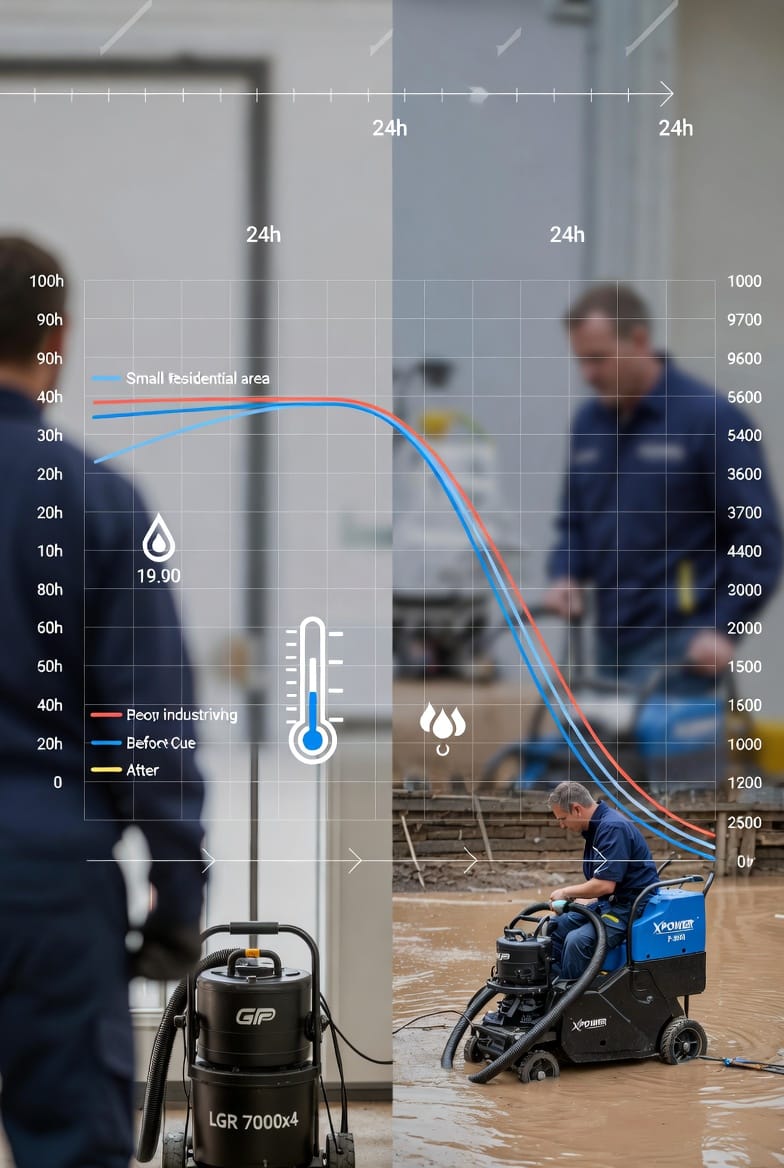
After a flood, standing water is only the visible threat. Hidden moisture lingers in cavities and materials, raising humidity to dangerous levels. A residential dehumidifier may handle a small basement leak, but it cannot keep pace with the sheer volume of water absorbed during major events.
Attempting to dry a flooded property with inadequate equipment extends drying times from days to weeks. This delay allows mold to colonize within 48 hours, compromises structural integrity, and increases restoration costs dramatically. Homeowners who rely solely on consumer units often discover persistent musty odors, warped flooring, or hidden mold behind walls — issues that could have been prevented with professional-grade tools.
Why Industrial LGR Dehumidifiers Excel at Structural Drying
Industrial LGR dehumidifiers are purpose-built for the demands of flood recovery. Their low-grain refrigerant coils pull moisture aggressively from the air while maintaining performance in the exact conditions left behind by flooding — cool, damp environments where standard units lose efficiency.
Restoration professionals position these units strategically, often combining them with negative air machines and specialty drying mats to target specific materials. The result? Rapid, uniform drying that restores wood, drywall, and concrete to safe moisture content levels (typically 6–12% for wood, under 1% for concrete). This precision protects your investment and safeguards indoor air quality.
Recognizing When Industrial Equipment Is Essential
Not every moisture issue requires industrial power, but certain red flags demand it immediately:
- Standing water remains after initial extraction.
- Wet drywall or insulation shows saturation beyond surface level.
- High humidity persists above 60% despite running smaller units.
- Large square footage (over 2,000 sq ft) has been affected.
The Risks of Inadequate Dehumidification — And How to Avoid Them
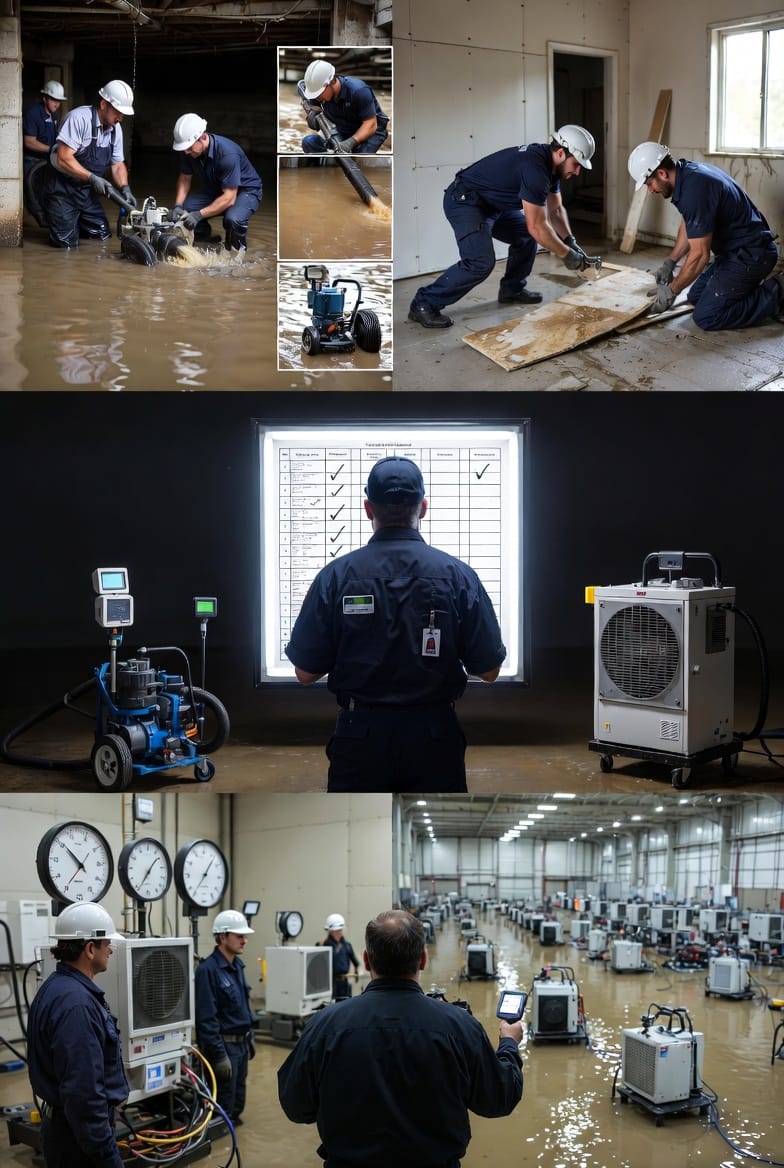
Using the wrong dehumidifier doesn’t just slow progress — it invites preventable disasters. Prolonged high moisture fosters mold, bacteria, and allergens that affect respiratory health. Structural materials weaken, leading to costly repairs or even insurance claim disputes.
Professional restoration teams eliminate guesswork. They arrive with the full arsenal of equipment, conduct thorough moisture mapping, and execute a science-based drying plan. You gain peace of mind knowing every step follows industry standards for complete recovery.
Partner with Professionals for Reliable Flood Recovery
Selecting between residential and industrial dehumidifiers is best left to trained experts who assess your unique situation on-site. They determine the precise equipment mix needed for swift, thorough results while minimizing disruption to your daily life.
Don’t leave your property’s future to chance. The right team combines advanced LGR technology with proven drying protocols to restore your space safely and efficiently.
Don’t fight moisture with inadequate tools. Our certified technicians stand ready 24/7 to deploy the proper equipment and restore your property to pre-loss condition — quickly, completely, and with the care you deserve.
Need Industrial Dehumidifiers for Flood Damage? Call Immediately