The Cork Flooring Maintenance: Cleaning and Protecting
Cork flooring brings natural warmth, resilience, and quiet comfort into any home. Its unique cellular structure provides soft underfoot feel and excellent sound absorption. Yet that same natural composition requires thoughtful care. Proper cork flooring maintenance keeps the surface looking elegant, prevents premature wear, and extends the life of your investment for decades.
Get Professional Cork Floor Protection – Call Today!
This guide delivers clear, practical steps for cleaning and protecting cork floors. You will learn exactly how to clean without risk, what practices to avoid, and the simple protective measures that deliver lasting results. Follow these methods with confidence—your floors will reward you with enduring beauty and performance.
Why Cork Flooring Needs Specialized Care
Cork comes from the bark of the cork oak tree. Its honeycomb cells create a flexible, insulating material that feels different from hardwood or tile. While durable, cork remains porous until properly sealed. Moisture, abrasion, and harsh cleaners can compromise the finish and the material beneath.
Regular, gentle cork floor care preserves the protective topcoat, prevents staining, and maintains the floor’s natural bounce. Neglect leads to dullness, cupping, or surface damage that becomes costly to repair. The good news is that maintenance stays simple and inexpensive when performed correctly. Homeowners who adopt a consistent routine enjoy floors that look freshly installed year after year.
Understanding the material’s sensitivity to water and chemicals forms the foundation of every recommendation that follows. With the right habits, cork remains one of the most satisfying and low-maintenance natural flooring choices available.
Essential Daily and Weekly Cleaning Routine
Daily upkeep prevents grit from scratching the surface and keeps the floor looking fresh. Begin every cleaning session with dry methods before introducing any moisture.
Dry Mopping: The First Line of Defense
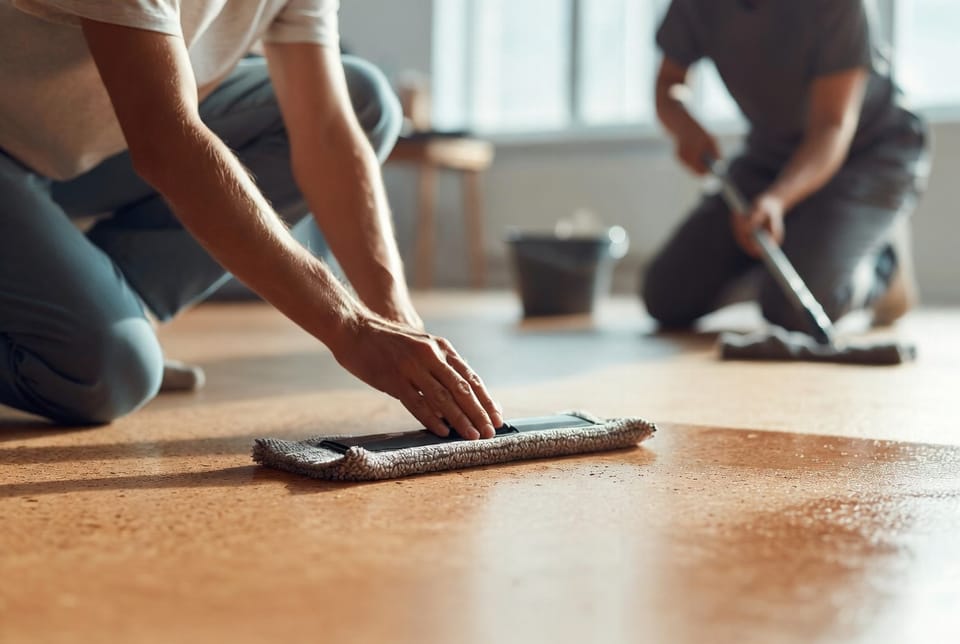
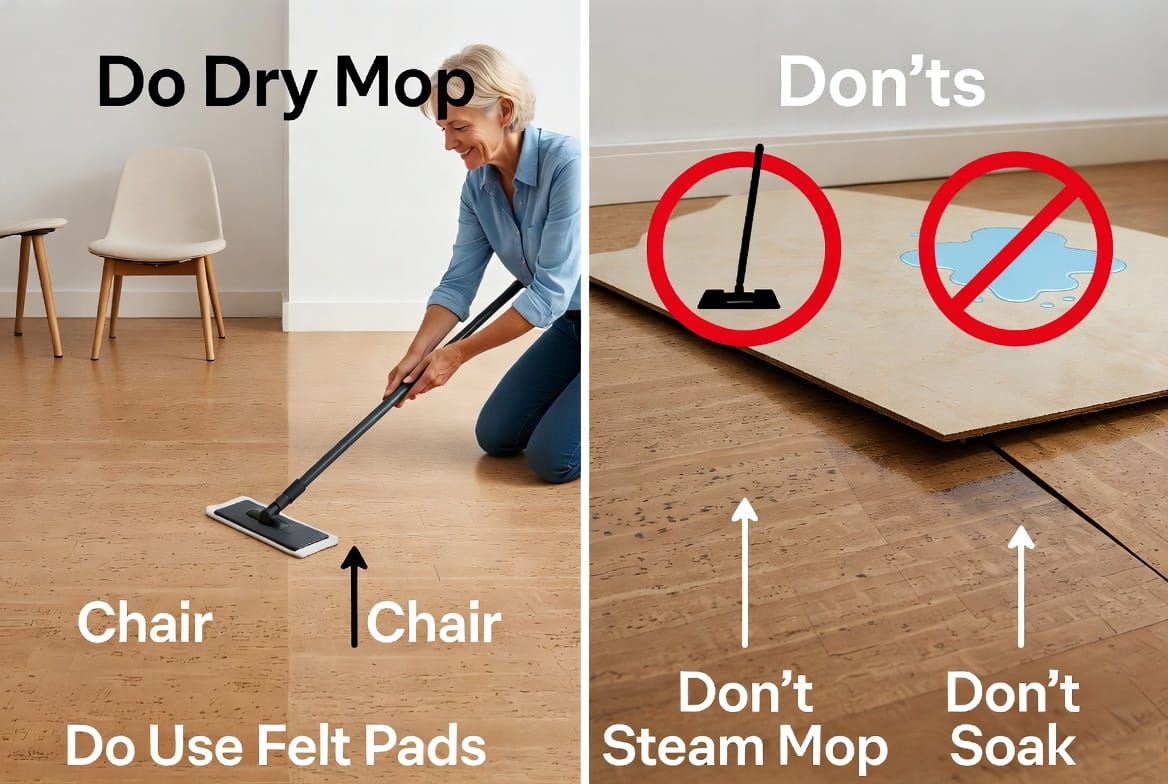
Start with a soft, clean dry mop or microfiber dust mop. Glide the mop slowly across the entire floor to capture dust, pet hair, and fine particles. Work from the farthest corner toward the exit so you never walk over cleaned areas.
A high-quality microfiber pad traps debris effectively without scattering it. Empty or replace the pad frequently during larger rooms. This step alone removes the majority of abrasive material that would otherwise grind into the finish under foot traffic. Perform dry mopping daily in high-traffic zones such as kitchens, hallways, and entryways, and at least two to three times weekly elsewhere.
Damp Mopping with Mild Soap
When the floor needs deeper cleaning, move to a carefully controlled damp mop. Fill a bucket with clean lukewarm water and add a few drops of mild, pH-neutral soap specifically formulated for wood or cork floors. Never use dish soap, all-purpose cleaners, or products containing ammonia, bleach, or wax.
Wring the mop thoroughly until it feels only slightly damp—almost dry to the touch. Excess liquid is the greatest risk to cork. Mop in the direction of the plank or tile pattern using gentle, overlapping strokes. Rinse the mop often in a second bucket of clean water to avoid redistributing dirt.
After mopping, allow the floor to air-dry completely. Open windows or run a fan if humidity is high. In most cases the surface dries within fifteen to thirty minutes. Limit full damp mopping to once a week or as needed when visible soil accumulates. Between sessions, spot-clean spills immediately with a soft cloth and the same mild solution.
These two complementary techniques—regular dry mopping followed by occasional light damp mopping with mild soap—form the complete core of safe cork floor cleaning.
Critical Practices to Avoid
Certain common cleaning tools and habits cause irreversible harm. Understanding what to avoid protects your floor far more effectively than any product.
Never Use Steam Mops
Steam mops force hot moisture deep into the cork cells. The heat and pressure can soften the adhesive, cause swelling, and lift the finish. Even “safe for hardwood” models remain too aggressive for cork. The temporary shine they produce often masks underlying damage that appears weeks later as cupping or discoloration. Keep steam mops completely away from cork surfaces.
Eliminate Excess Water
Cork absorbs water more readily than sealed hardwood. Standing liquid or overly wet mopping leads to warping, staining, and mold risk beneath the surface. Always wring mops aggressively and never allow puddles to form. If a spill occurs, blot—do not wipe—immediately with a dry absorbent cloth, then follow with a barely damp cloth if residue remains.
Reject Harsh Chemicals
Avoid any cleaner containing ammonia, bleach, vinegar in high concentration, abrasive powders, or solvent-based products. These strip the protective sealer, dull the color, and leave the cork vulnerable. Stick exclusively to mild, manufacturer-recommended formulas. When in doubt, test any new product in an inconspicuous corner and wait twenty-four hours before full use.
Additional hazards include abrasive scrub pads, steel wool, and vacuum cleaners with beater bars. Soft brush attachments or pure suction settings are acceptable if used carefully. Furniture dragged across the floor without protection also creates scratches that collect dirt and accelerate wear.
By simply eliminating steam mops, excess water, and harsh chemicals, you remove the three most common causes of cork floor failure.
Protective Strategies That Extend Floor Life
Cleaning removes dirt; protection prevents damage before it starts. Two primary methods deliver outstanding long-term results.
Maintain a Quality Sealer
Most cork floors arrive with a factory-applied polyurethane or acrylic sealer. Over years of traffic this layer gradually thins. Reapplying a compatible sealer every three to five years—or sooner in heavy-use areas—restores the moisture barrier and refreshes the sheen.
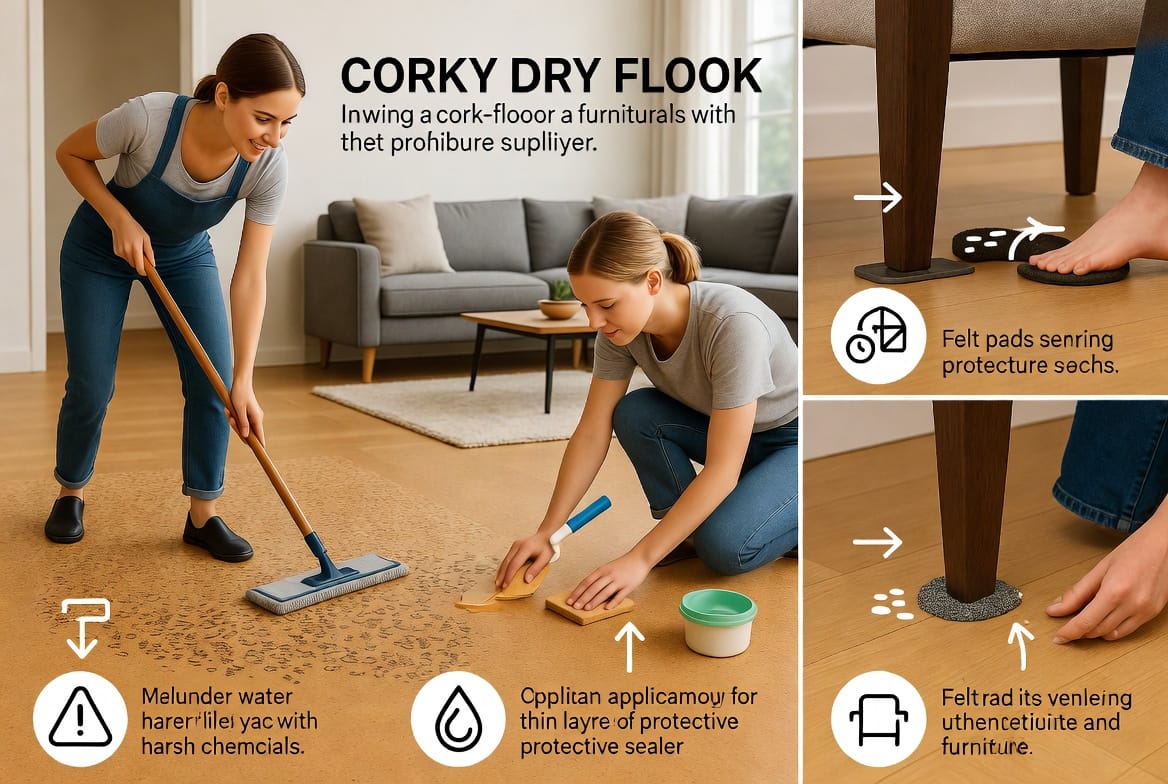
Choose a water-based, low-VOC sealer designed for cork or resilient flooring. Clean the floor thoroughly first, allow it to dry completely, then apply thin, even coats with a soft applicator pad following the manufacturer’s drying times. Light sanding between coats may be required for optimal adhesion; always follow product instructions. Professional application ensures uniform coverage and avoids common DIY mistakes such as thick ridges or missed spots.
A well-maintained sealer keeps water, stains, and everyday abrasion from reaching the cork itself. It also simplifies future cleaning because dirt remains on the surface rather than embedding in the material.
Install Felt Pads Under All Furniture
Furniture legs concentrate weight and create pressure points that crush cork cells or scratch the finish. High-quality felt pads distribute that weight and allow pieces to glide smoothly.
Attach self-adhesive felt pads to every chair, table, sofa, and cabinet leg. Replace pads the moment they become compressed or dirty—usually every six to twelve months. For heavier pieces such as bookcases or pianos, consider larger furniture coasters or professional glides. Never slide unprotected furniture across the floor; always lift or use proper moving equipment.
Additional protective habits include placing walk-off mats at exterior doors to trap grit, using area rugs in high-traffic paths (secured with non-slip pads that do not trap moisture), and keeping pet nails trimmed. These small actions compound over time into dramatically longer floor life.
Seasonal and Long-Term Maintenance Tips
Cork responds to changes in humidity. In dry winter months, maintain indoor relative humidity between 40 and 60 percent with a humidifier if needed. Extreme dryness can cause minor gapping; excessive moisture may lead to expansion. Consistent climate control supports dimensional stability.
Inspect the floor quarterly. Look for areas where the sealer has worn thin, especially near sinks, entryways, and under rolling chairs. Address these spots promptly with a maintenance coat rather than waiting for full refinishing.
For deeper restoration after many years, professional screening and recoating can renew the surface without sanding down to bare cork. This process costs far less than replacement and returns the floor to near-original condition.
Spill response remains critical year-round. Blot liquids at once, clean the residue with mild soap solution, and dry thoroughly. Dark liquids such as wine or coffee may require a specialized cork stain remover if they sit too long; act quickly to limit penetration.
Common Myths and Clarifications
Some homeowners believe cork is too delicate for real-life use. In reality, properly sealed and maintained cork withstands daily family activity remarkably well. Others assume any wood-floor cleaner works interchangeably. Cork’s unique structure demands milder chemistry. Finally, the idea that sealed cork never needs attention is incorrect—protective layers wear and must be renewed.
Clear knowledge replaces these misconceptions with reliable practices. The methods outlined here have proven effective across thousands of installations and remain the industry standard for preserving cork’s distinctive character.
Building a Sustainable Maintenance Habit
Consistency matters more than intensity. A five-minute daily dry mop and a weekly damp mop take less time than many other household chores yet deliver outsized results. Pair these habits with annual inspections of felt pads and sealer condition, and your cork floors will continue performing beautifully for twenty years or longer.
Involve the whole household. Teach children and guests the simple rules—no wet shoes left standing, no dragging furniture, immediate spill cleanup. When everyone understands the value of gentle care, the floor stays protected almost automatically.
Professional assistance remains available whenever you prefer. Many homeowners schedule periodic maintenance visits for deep cleaning and sealer evaluation. This partnership ensures expert oversight while you enjoy the everyday beauty of your floors.
The Long-Term Rewards of Proper Care
Well-maintained cork floors retain their rich color, soft texture, and quiet comfort. They continue to provide natural insulation that reduces energy costs and acoustic benefits that create calmer living spaces. The surface stays hygienic because dirt cannot easily penetrate a sound sealer. Most importantly, you avoid the expense and disruption of premature replacement.
Cork is a renewable resource; extending its service life through careful maintenance aligns with sustainable living values. Every time you choose a dry mop over a steam mop or replace a worn felt pad, you actively protect both your home and the environment.
These practices require no special skills—only attention and the right products. Start today with a thorough dry mopping session, check the condition of your furniture pads, and note the date of your last sealer application. Small, steady actions compound into remarkable longevity.
Protect your cork floor with consistent, gentle care and it will reward you with lasting elegance and comfort. For personalized advice on maintenance products, sealer recommendations, or professional service. Expert guidance ensures your floors receive exactly the protection they deserve.
Protect Your Cork Floor Investment – Call Now!