The Concrete Troweled Finish: Smooth vs. Steel Trowel for Different Looks
Selecting the right concrete troweled finish transforms an ordinary slab into a durable, functional, and visually appealing surface that performs for decades. Homeowners, builders, and facility managers often face the critical decision between a smooth trowel finish and a steel trowel finish. Each technique delivers distinct looks, performance characteristics, and ideal applications. Understanding these differences ensures your concrete surface meets both aesthetic goals and practical demands without costly regrets later.
Get the Perfect Troweled Finish Today – Call Now!
This comprehensive guide explains the two primary finishing techniques in clear detail. You will discover exactly how a smooth trowel finish creates a flat, even surface that can become slippery when wet, while a steel trowel finish produces a very smooth, polished appearance frequently preferred for indoor spaces. We also cover real-world applications, key risks, and practical selection advice so you can choose with confidence.
Understanding the Basics of Concrete Troweling
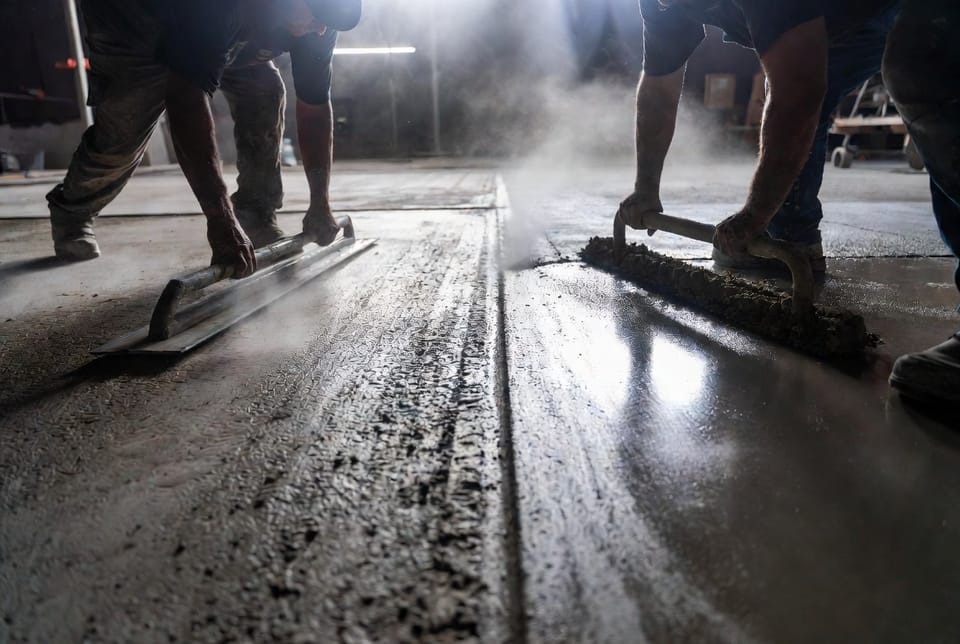
Troweling is the final mechanical process that closes the concrete surface, embeds aggregate, and creates the desired texture and density. Timing is everything. Finishers begin after the bleed water evaporates and the slab reaches the proper plasticity. Using the wrong technique or timing can lead to surface defects, reduced durability, or unwanted appearance.
Professional crews rely on both hand tools and power trowels. The choice between smooth trowel and steel trowel methods determines the final look and performance. Both approaches require skilled operators who monitor moisture, temperature, and set times continuously. When executed correctly, either finish delivers a high-quality result that resists wear and enhances the overall project value.
Smooth Trowel Finish: Flat, Functional, and Practical
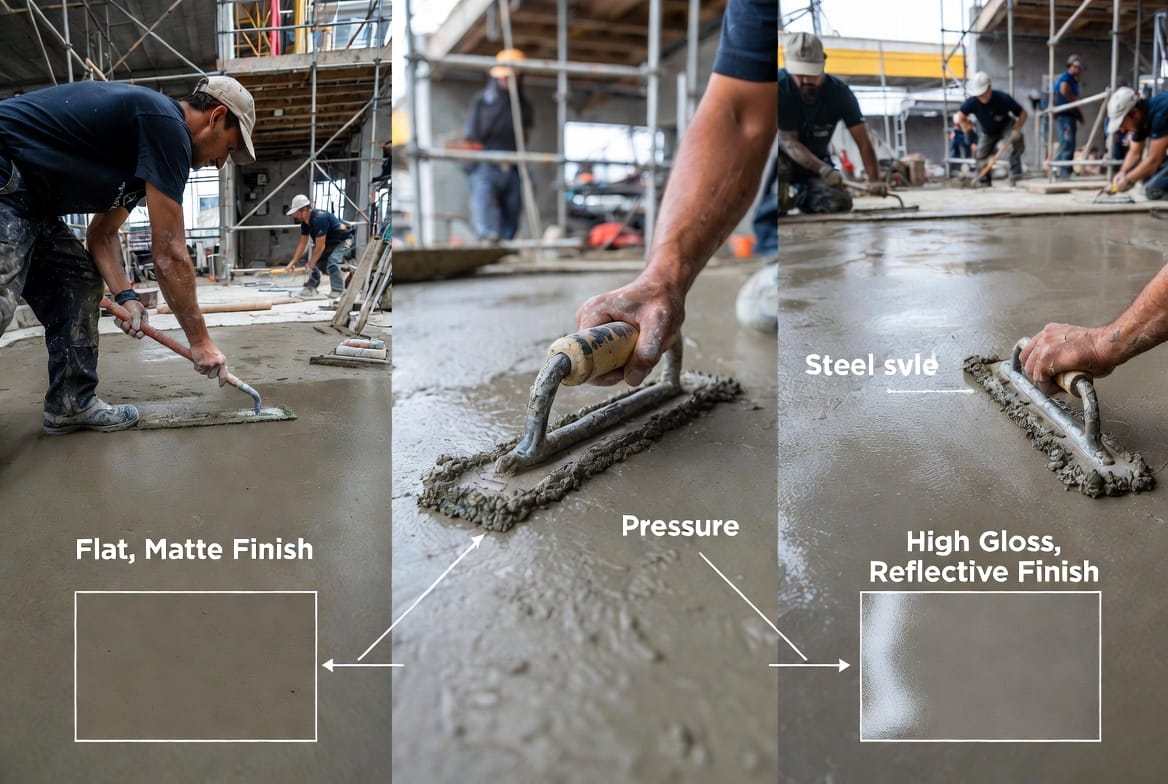
A smooth trowel finish produces a flat, uniform surface free of ridges or heavy texture. Finishers use magnesium or aluminum floats followed by steel or magnesium trowels applied with moderate pressure. The goal is a closed, even plane without excessive densification.
This finish feels smooth underfoot yet retains a subtle matte appearance rather than a high gloss. Because the surface remains relatively closed, water can sit on top and create slippery conditions when wet. In exterior or high-moisture areas, this characteristic becomes an important consideration.
Key advantages of the smooth trowel finish include:
- Excellent flatness ideal for furniture placement and equipment stability
- Faster application compared to highly polished techniques
- Good resistance to dusting when properly cured
- Cost-effective for large open areas
Important risks to note: Without proper slip-resistant additives or later treatments, the surface can become hazardous in wet conditions. Over-troweling too early may trap bleed water and cause blistering or delamination. Experienced crews avoid these issues by carefully watching the set and using the right sequence of tools.
Applications for the smooth trowel finish frequently include residential garage floors, warehouse slabs, sidewalks in moderate climates, and basement floors where a clean, easy-to-clean surface is desired without high polish. Many commercial projects also specify this finish when budget and speed matter more than a mirror-like sheen.
Steel Trowel Finish: Very Smooth and Polished Appearance
The steel trowel finish takes surface densification further. After initial floating, finishers apply multiple passes with steel trowels, increasing pressure and overlapping strokes. Power trowels with steel blades often complete the final stages, burnishing the surface until it develops a hard, dense, and noticeably polished look.
This technique creates an almost glass-smooth plane that reflects light beautifully. The higher density improves abrasion resistance and makes cleaning simpler. Because the surface is so tightly closed, it is most often specified for indoor environments where moisture exposure remains controlled.
Benefits of the steel trowel finish:
- Superior polished look that elevates interior spaces
- Enhanced durability against foot traffic and light wheeled loads
- Reduced porosity that limits staining when sealed properly
- Professional, high-end appearance suitable for showrooms and offices
Critical risks associated with steel troweling: Applying too much pressure too soon can seal the surface prematurely and trap water, leading to map cracking or surface scaling. In exterior applications the extreme smoothness increases slip risk dramatically unless texture or additives are introduced later. Indoor use remains the safest and most common choice for this finish.
Typical indoor applications include retail floors, office lobbies, residential living areas with polished concrete, and light-industrial spaces where appearance and cleanability rank high. Many designers pair the steel trowel finish with later densifiers and sealers to achieve a true polished concrete system.
Direct Comparison: Smooth vs. Steel Trowel Finishes
Side-by-side evaluation clarifies the practical differences:
Appearance and Texture
- Smooth trowel finish: Flat and even with a soft matte quality. Subtle tool marks may remain visible under close inspection.
- Steel trowel finish: Very smooth with a reflective, polished character. The surface appears denser and more refined.
Performance Characteristics
- Slip resistance favors the smoother (less polished) option only when dry; both become slippery when wet unless treated.
- Abrasion resistance is higher with the steel trowel finish because of greater surface densification.
- Cleaning ease is excellent for both, yet the polished steel version sheds dirt more readily.
Installation Time and Skill
- Smooth trowel generally requires fewer final passes and can be completed slightly faster on large slabs.
- Steel trowel demands additional passes, precise timing, and higher operator skill to avoid defects.
Cost Considerations
Labor time and equipment wear increase modestly with the steel method, yet the visual upgrade often justifies the investment for interior projects.
Understanding these contrasts allows project teams to match the finish to the environment rather than defaulting to habit.
Practical Applications Across Project Types
Choosing correctly begins with the intended use of the space.
Garages and Utility Areas
A smooth trowel finish remains the practical favorite. It provides a level surface for vehicles and storage while remaining economical. Adding slip-resistant additives or light broom texture in high-moisture zones further improves safety without sacrificing the flat profile.
Indoor Living and Commercial Spaces
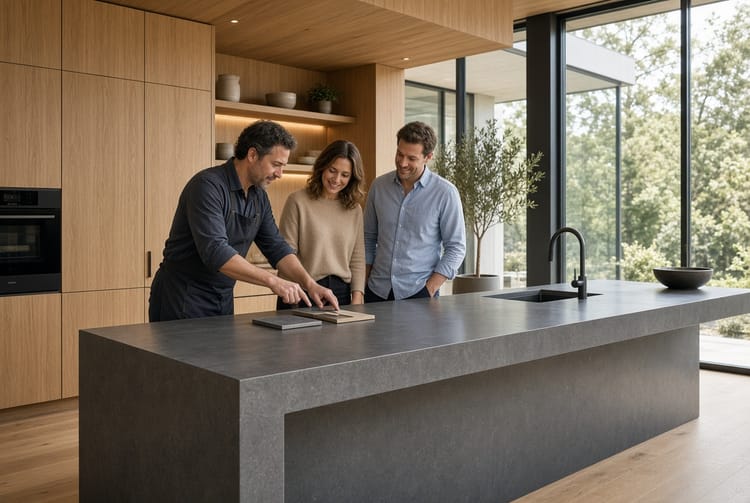
The steel trowel finish shines here. Its polished appearance elevates kitchens, basements converted to living areas, retail showrooms, and office corridors. When combined with proper curing and later densification, the surface delivers both beauty and long-term performance.
Exterior Walkways and Patios
Neither pure finish is ideal without modification. Designers often start with a smooth trowel base and introduce light texture or slip-resistant additives to meet safety standards. Fully polished steel finishes are rarely recommended outdoors because of weather exposure and slip concerns.
Industrial and Warehouse Floors
Heavy traffic favors denser surfaces. A carefully executed steel trowel finish can serve well indoors, while exterior loading docks usually receive a smooth trowel with additional hardener or textured treatment.
Factors That Influence the Final Result
Even the best technique depends on supporting practices. Proper subgrade preparation, consistent concrete mix design, controlled placement, and adequate curing all contribute to success. Temperature and humidity affect set times dramatically; crews adjust schedules and tools accordingly.
Surface hardeners and densifiers can enhance either finish. Applied after troweling, they increase abrasion resistance and reduce dusting. Sealers further protect against stains and moisture while adding optional sheen levels.
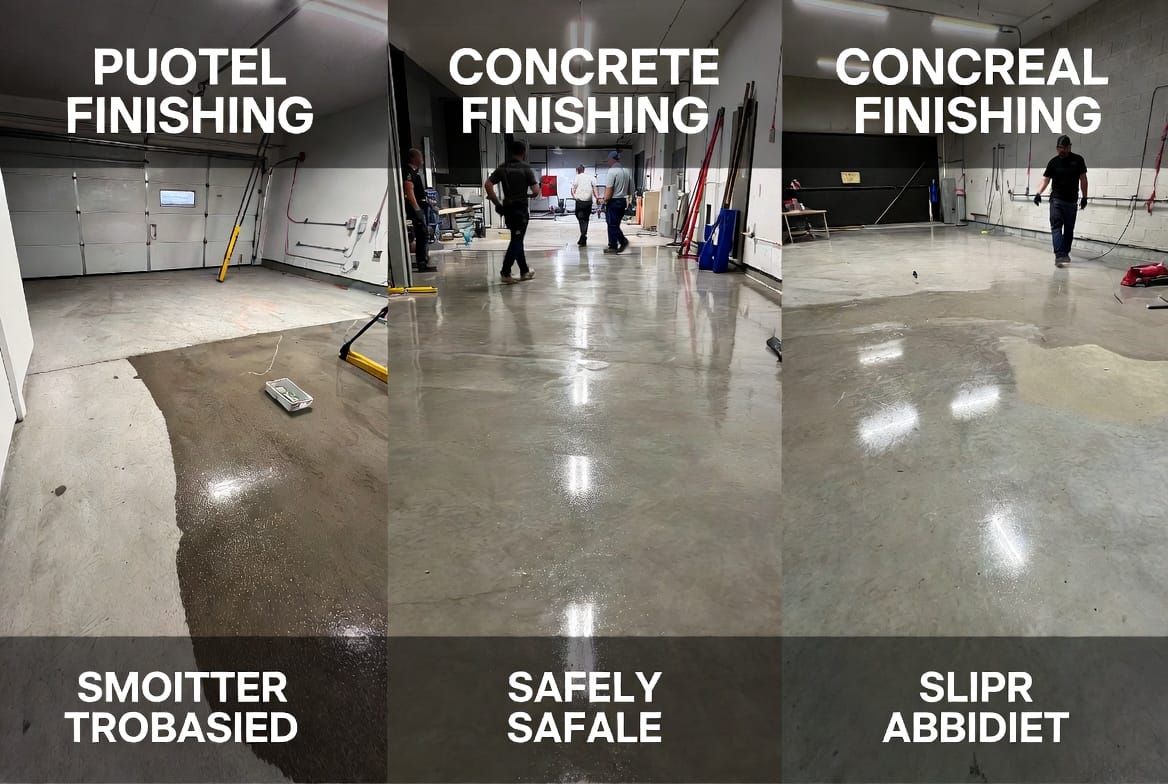
Slip-resistant treatments remain essential wherever moisture is expected. Broadcast aggregates, chemical additives, or later coatings restore traction without destroying the desired look of a smooth trowel finish.
Quality control inspections at each stage—placement, floating, troweling, and curing—prevent expensive corrections. Reputable contractors document moisture levels, temperature, and tool sequences so every slab meets specification.
Common Challenges and How Professionals Overcome Them
Several issues appear regularly when the wrong finish is chosen or timing is missed:
- Premature sealing traps moisture and causes surface defects. Skilled finishers wait for the proper window.
- Over-working the surface can weaken the top layer. Controlled pressure and limited passes solve this risk.
- Inconsistent appearance across large areas results from changing weather or multiple operators. Uniform procedures and overlapping work zones maintain consistency.
- Slippery surfaces surprise owners after the first rain. Specifying slip-resistant additives at the design stage eliminates later complaints.
Experienced teams anticipate these challenges and communicate options clearly before work begins. Their authoritative guidance protects both the project schedule and the final appearance.
Maintenance Tips for Long-Lasting Performance
Once the concrete troweled finish is complete, simple care preserves its value:
- Sweep or dust-mop regularly to remove abrasive grit.
- Clean spills promptly, especially oils and chemicals.
- Reapply sealer according to manufacturer recommendations, typically every few years depending on traffic.
- Avoid harsh acids or aggressive mechanical scrubbing that can dull a polished steel trowel finish.
- Monitor for early signs of wear in high-traffic zones and address them quickly.
Proper maintenance keeps both smooth and steel finishes looking professional for many years and protects the investment made in quality workmanship.
Making the Right Choice for Your Project
The decision between smooth trowel finish and steel trowel finish ultimately rests on three factors: location (indoor versus outdoor), desired appearance, and safety requirements. A flat, functional surface that may need slip resistance suits most garages and utility spaces. A very smooth, polished look elevates interior environments where controlled conditions allow the steel technique to perform at its best.
Discuss your specific use case, traffic expectations, and aesthetic goals with a qualified concrete professional. They can recommend the exact sequence of tools, additives, and curing methods that deliver reliable results. Sample panels prepared on site often help owners visualize the final difference before full-scale work begins.
When every detail aligns—proper technique, experienced crews, and informed selection—the finished concrete surface becomes an asset rather than a compromise. The right concrete troweled finish provides durability, beauty, and peace of mind for the life of the structure.
Choose the finish that matches your use, and protect both appearance and safety from day one. For personalized guidance on finishing options tailored to your project.
Call Today for Durable, Slip-Safe Concrete Finishes